
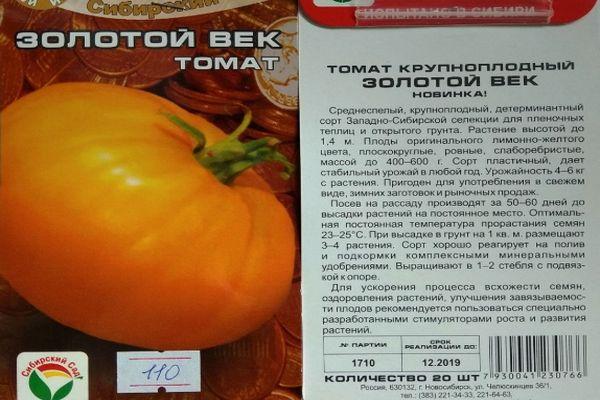
The Zolotoy Vek tomato is a variety from the West Siberian Breeding Station. Developed for the harsh Siberian climate, it is recommended for cultivation in open ground and plastic greenhouses.
General characteristics of the plant
This indeterminate bush can reach a height of 1.5-1.6 m. It requires support. The plant has a strong stem and a strong tendency to form lateral shoots. Zolotoy Vek tomatoes must be trained into 2-3 stems.
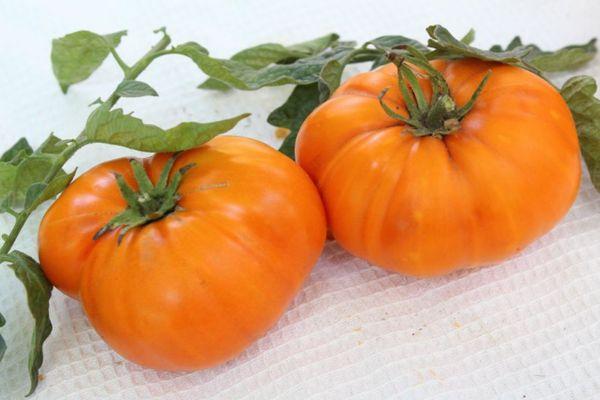
The plant is resilient to temperature fluctuations and sudden weather changes. Tomatoes easily tolerate both intense heat and prolonged cold rains. Gardeners' descriptions and characteristics of the variety note the stability of the yield under various growing conditions.
Zolotoy Vek tomatoes are an early variety: about 115 days pass from sowing to the first tomatoes ripening. Gardeners report that in Siberian and Ural conditions, ripening in open ground can be delayed by 7-14 days. The average yield is about 8 kg per plant.
Tomatoes are highly resistant to fungal diseases; they are resistant to Alternaria blight and Fusarium wilt. However, in late summer, during periods of heavy rainfall, they can be susceptible to late blight. To prevent fungal infection, it is recommended to remove lower leaves, trimming them as flower clusters emerge. This will improve ventilation and light in the planting, minimizing the chance for fungal infection to spread.
Description of fruits
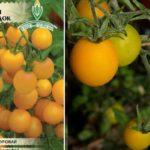
Each cluster produces 3-5 beautifully rounded, flattened ovaries. The plant produces about 6 such clusters per season. The variety's distinguishing feature is the size of its fruits: the Zolotoy Vek variety is a large-fruited beefsteak tomato. Each tomato weighs 450-600 g, and particularly large specimens can weigh even more.
The skin is firm but thin. The fruits may crack when ripe, so avoid overwatering the soil during the fruiting period. Ripe tomatoes can be transported and stored for about 7 days without losing their marketable appearance.
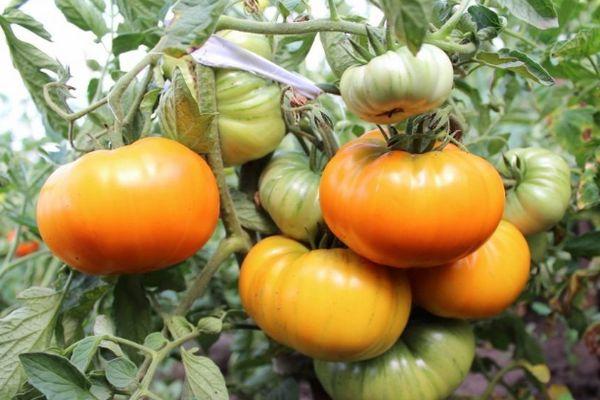
The skin at technical maturity is pale green, with darker longitudinal stripes. As the fruit ripens, it turns straw-yellow and then golden. There are no stripes on a ripe tomato, nor are there any greenish zones on the shoulders.

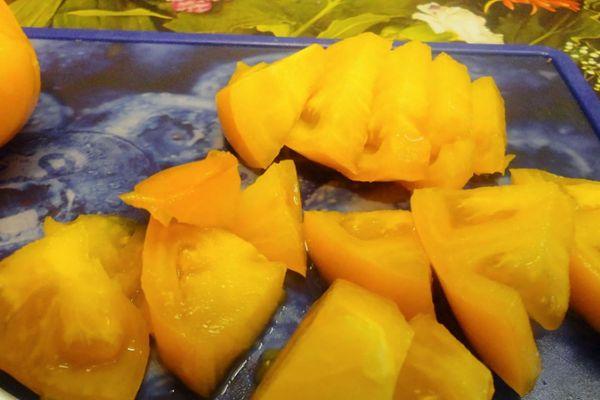
The flesh is fleshy, with a delicate melon-like consistency. It is a rich yellow color, sometimes with a pinkish tint or occasional pink or orange hues. Near the stem, there is a small, light-colored zone visible when cut. The flesh structure is typical of beefsteak tomatoes. The berry contains several small seed chambers containing a small number of small seeds.
The taste is excellent. Gardeners who have grown the Zolotoy Vek variety in their plots note the sweet, tart, dessert-like flavor of these tomatoes. The light-colored flesh is low in allergens, making yellow tomatoes especially recommended for children and dietary nutrition. They are high in lycopene and beta-carotene.
The Golden Age variety is best eaten fresh. Slices of this golden-colored tomato will brighten salads and festive platters. Like other beefsteak tomatoes, the fruit is convenient for making appetizers. Tomato slices can be placed on sandwiches, and the unusually sweet fruit can also be used in an exotic hamburger. If desired, the light-colored flesh can also be used in soups or sauces, but it won't impart the typical reddish-orange hue.
Surplus tomatoes can be preserved for the winter. Large tomatoes can't be preserved whole, but sliced tomatoes can be added to any salads or appetizers. Processing ripe golden tomatoes into tomato juice yields a uniquely colored, yet beautiful and delicious product. The thick consistency of the pulp means less cooking time, so the juice or sauce retains more nutrients and vitamins.
Some of the tomatoes, picked unripe, will be stored until November or December, gradually ripening in boxes.
How to grow a good harvest?
Seeds can be sown for seedlings 60-70 days before transplanting to their permanent location. Prepare the soil by combining equal parts loose humus, fine sand, and fertile soil. To reduce the acidity of the mixture and enrich it with calcium, add 1 tablespoon of chalk or ground eggshells (per 5 kg of mixture).
The substrate is soaked in a hot solution of potassium permanganate, and the seeds are sown as soon as it cools. Golden Age tomatoes are not a hybrid, their seeds can be left for breeding. Planting material collected from your own plants should also be treated with a solution of potassium permanganate (light pink) or Fitosporin (according to the instructions).
Spread the seeds on the soil and cover them with a thin layer of dry sand (0.5 cm). Do not moisten it. Cover the container with plastic wrap or glass and place it in a warm place for germination. At +25°C, seedlings will appear in 4-5 days. After this, remove the plastic wrap.
When the tomato plants have 2-3 leaves (not cotyledons), transplant the seedlings into individual pots. The pots should be moved further apart as the leaves of adjacent plants close together.
Plant tomatoes 40 cm apart. Row spacing should be at least 70 cm. Seven to 10 days after transplanting, fertilize the plants with a nitrophoska or ammonium nitrate solution (follow the instructions).
When the tomatoes bloom, apply a wood ash solution (500 g per 10 l) or a mineral fertilizer containing potassium and phosphorus (Kristalon Tomato, Agricola, etc.). Nitrogen fertilizers and organic infusions should not be used for watering fruiting tomatoes, as the plants begin to actively form foliage and reduce fruit set.
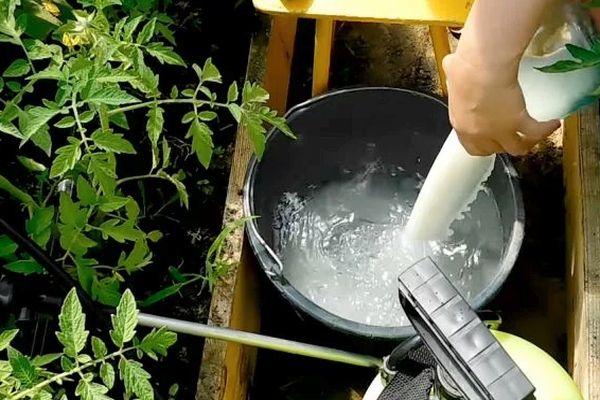
When the bush forms one flower cluster, begin removing the leaves below it. Repeat the process when the second cluster appears, continuing to trim leaves to 1/3-1/2 the height of the stem. Along with removing the foliage, pinch off the side shoots, leaving only 1-2 lateral shoots above the first and second clusters.
Related posts:
 The best eggplant varieties for growing in a polycarbonate greenhouse: planting and care
 Description of the Golden Nugget tomato fruit and tips for growing the plant
 Description of the giant-fruited tomato Zolotoy Bull and the variety's yield
 The best grape varieties for growing in the Urals, planting and care rules in summer
 Description of the Golden King tomato and recommendations for growing the variety
 Description of 30 varieties and types of Muscat grapes, planting, cultivation and care
 Methods for planting and propagating cherries at home
 Is it possible to soak treated cucumber seeds before planting and how to do it correctly?
