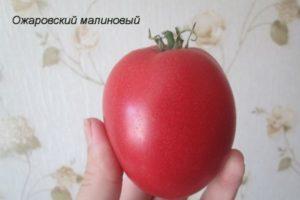
The exotic Berkeley Tie Dye tomato comes in two varieties, differing in flesh shape and color. The large, fruity fruits are used fresh in cooking, for canning, and for making sauces.
Characteristics of species
The Berkeley Tie Dye tomato variety is named after a fabric dyeing technique in which the material is twisted into knots, resulting in multi-colored stripes.
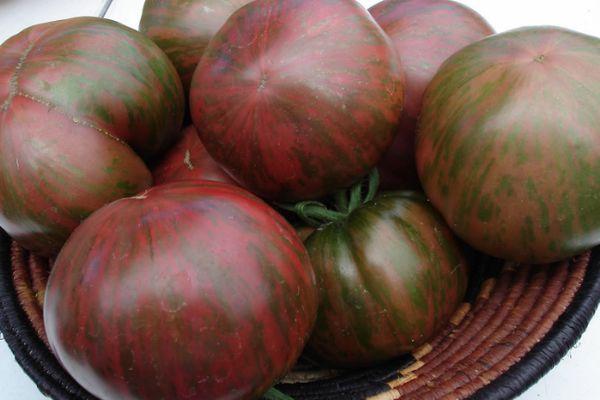
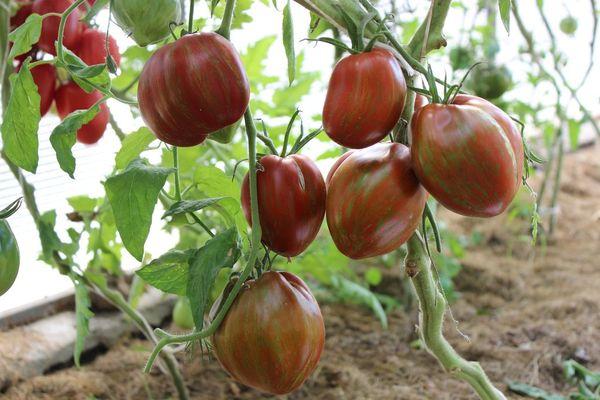
Breeders working to improve the flavor of tomatoes often alter the fruit's appearance. The exotic Berkeley Tai Dai Haat tomato has variegated, heart-shaped fruits with a blunt tip, weighing 150–400 g.
Description of the Berkeley Tai Dai Haat tomato:
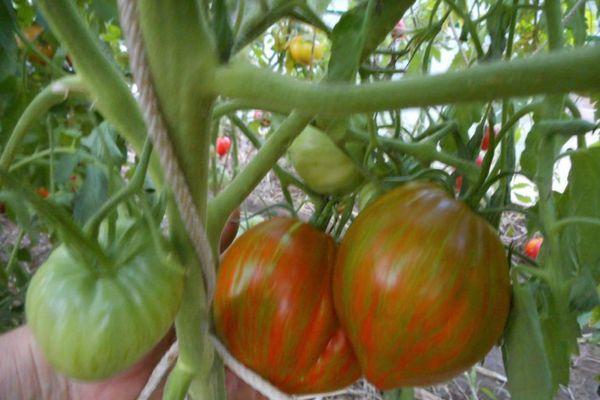
- The tomatoes are red-brown in color and have green stripes on them in the form of strokes.
- The pulp is oily, juicy, chocolate-colored, with a pleasant, distinct fruity flavor.
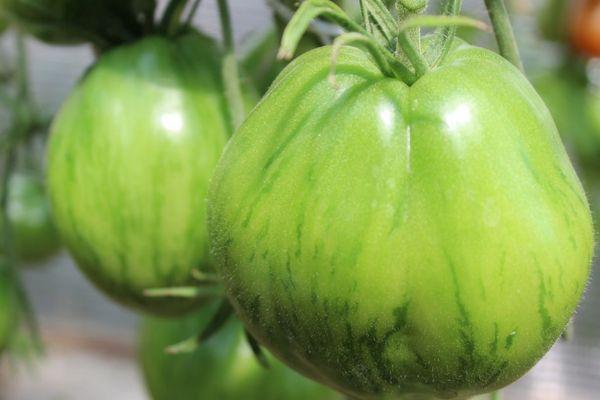
- At technical maturity, the fruits are yellow with green stripes.
The Berkeley Tie Dye Pink tomato has a ribbed shape. When fully ripe, the tomatoes are a rich pink color with distinctive metallic green stripes. They are large, weighing up to 400 g.
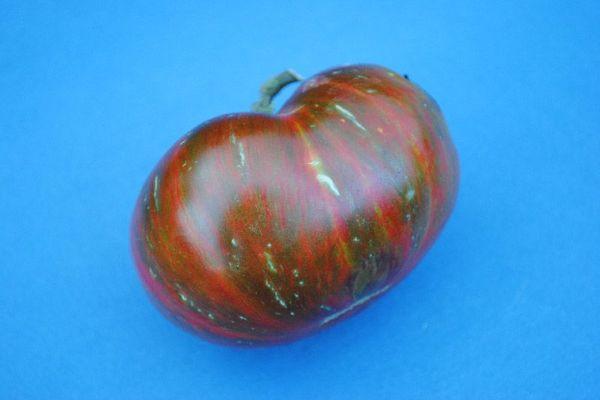
The fruits are sweet in taste. In cooking, they are used for canning, drying, and making salads and sauces.
This variety is intended for growing indoors. It belongs to the unlimited-growing plant species. The stems of the bush can reach 1.8 m in height. The plant requires support. The bush produces 4-8 clusters containing the ovaries.
A mid-early tomato, the first ripe fruits appear 75-85 days after planting the seedlings in the greenhouse. The yield per bush can reach 3 kg. It is recommended to harvest ripe fruits, as the tomato's flavor deteriorates during ripening.
Agricultural technology of cultivation
A prerequisite for cultivating tomatoes is the formation of two main stems on the bush. During this process, excess shoots are removed. Side shoots in the leaf axils are removed after they reach a length of 7 cm.
Pruning shoots too early or too late can damage the plant. When removing shoots, it's recommended to leave a stump of approximately 2 cm at the base to avoid disrupting the plant's metabolism at this level.
This variety is resistant to fusarium wilt. During cultivation, it requires periodic fertilization with potassium fertilizer. The variety is sensitive to temperature changes. In this case, the growth of the tomato stops.
Warm water is used for watering the crop. Irrigate carefully, avoiding contact with the foliage. Watering is recommended in the morning or evening.
Recommendations from vegetable growers
Reviews from gardeners who grow this type of tomato indicate excellent taste and the possibility of using the fruits in cooking, fresh, and for canning.
Serafima Ovchinnikova, 56 years old, Krasnodar:
"I've been growing nightshades for many years, so I often experiment with different varieties. Last season, Berkeley Tie Dye tomatoes caught my eye. It turns out there are two varieties of these tomatoes, differing in shape, flesh color, and outer coloring. I've planted both types of these "striped" tomatoes in the greenhouse. I'm captivated by the fruity flavor and the opportunity to admire these exotic vegetables. After all, the fruits change color as they ripen."
Alexander Shepelev, 61 years old, Tver:
"Tie Dye tomatoes caught my eye with their unusual coloring and large fruits. As an agronomist, I can note that cultivating the plant requires timely watering and removing side shoots. These measures have a positive effect on the yield. Tomatoes should be picked when ripe. The taste of the fruit, which has a fruity flavor, directly depends on the degree of ripeness."
Related posts:
 Description and characteristics of the best indeterminate tomato varieties for greenhouses
 What is the best way to feed tomato seedlings to make them plump?
 Description of the best tomato varieties for pickling and canning
 80 Best Eggplant Varieties for Different Regions with Descriptions and Characteristics
 What varieties of tomatoes are best to plant in a polycarbonate greenhouse?
 Description of the best varieties of black tomatoes for open ground and greenhouses
 Description of the best tomato varieties for open ground and greenhouses in the Krasnodar region
 What fertilizers and when to use for feeding tomatoes in a greenhouse