
The Dietary Zdorovyak tomato was bred by Siberian agrobiologists. This variety is suitable for both open-air and protected cultivation. Its large fruits boast excellent flavor, versatile culinary uses, and can be included in dietary diets.
Advantages of the variety
The Zdorovyak tomato has a mid-early ripening period. From germination to fruiting, it takes 90 to 92 days. The variety's main advantage is its resistance to most fungal and viral diseases of nightshade crops.
Depending on growing conditions, this determinate tomato plant reaches a height of 150 cm during the growing season. When grown outdoors, the tomato plant does not exceed 100 cm in height. The bushes require periodic pruning and tying to a support.
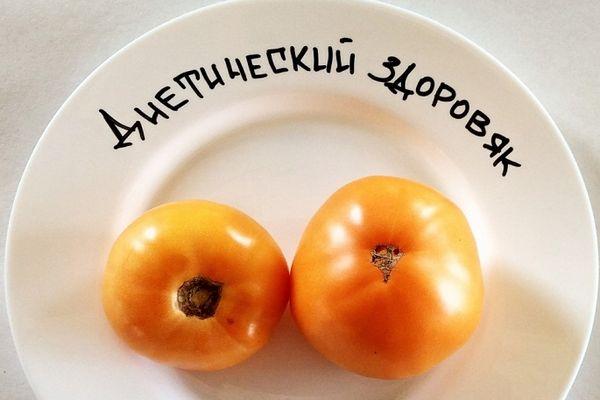
Flower stalks are set low and closely spaced. Four to five fruits ripen in clusters. The variety's description is based on the characteristics of tomatoes. The tomatoes are large, weighing 300-500 g. They have a round, regular shape, a smooth surface, fleshy flesh, and an intense aroma.
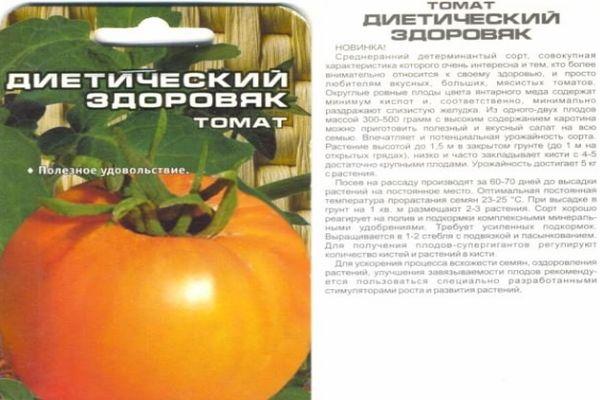
Vegetable growers' reviews indicate that the variety's yield directly depends on proper agricultural practices. Up to 5 kg of vegetables can be harvested from a single bush. Large tomatoes are formed by controlling the number of ovaries within the cluster.
The fruits have a thick skin, which makes them suitable for long-distance transport. At the technical ripeness stage, tomatoes acquire a matte orange color.
The tomato's characteristics include excellent taste and the ability to be included in a diet. This variety is prized by lovers of tasty, large, fleshy tomatoes. In cooking, tomatoes are used fresh, in salads, and in juice.
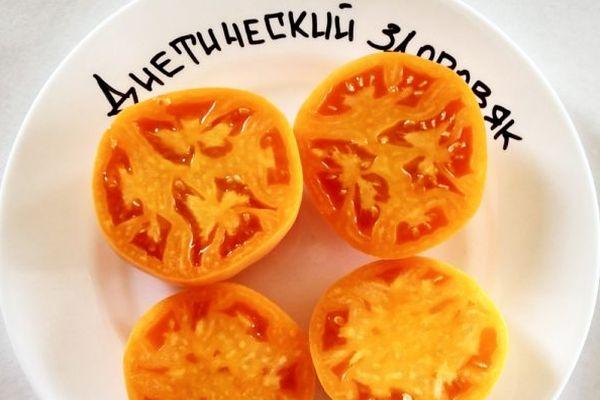
Due to their low acid content, the fruits can be eaten without age restrictions. The Dietary Healthy variety contains a complex of vitamins that improve the functioning of all organs.
Agricultural technology for tomato cultivation
The variety is grown using seedlings. The seeding time is determined so that the plants are 60-70 days old when planted in their permanent location.

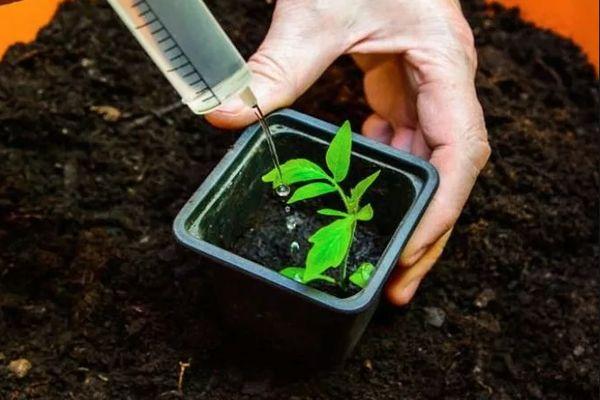
Before sowing, the seeds are treated with an aloe vera water solution and a plant growth stimulant. The planting container is disinfected, and crushed charcoal is added to the bottom for drainage.
To ensure normal seedling growth, prepare a soil mixture consisting of soil, washed river sand, peat, and wood ash. For planting, you can use a substrate, which is available at specialized retailers.
The soil is poured into the containers, lightly compacted, and furrows 1 cm deep are made. The seeds are planted at a distance from each other. The seedings are mulched with a 1 cm layer of peat. A sieve is used to distribute the soil evenly.
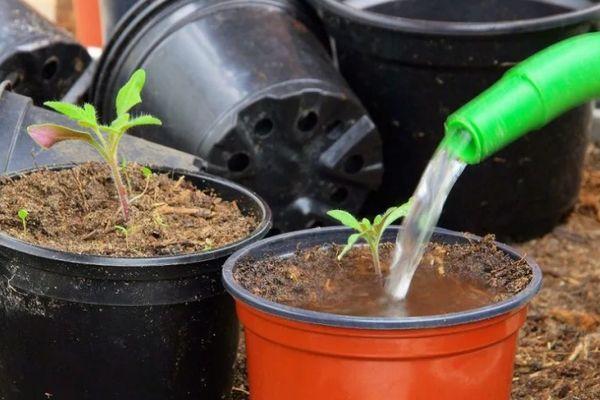
After watering with warm water using a spray bottle, cover the container with glass until the plant loops emerge. To ensure normal seedling development, provide sunlight and maintain optimal temperature and humidity.
When two true leaves have formed, transplant the seedlings into individual containers. Peat pots are used for this purpose, and the seedlings are then transplanted to their permanent location.
Seven to 10 days before planting, harden off the seedlings by placing them outside, gradually increasing the time they are exposed from 30 minutes to several hours. Tomatoes prefer fertile soil, so it's recommended to add humus or compost to the holes.
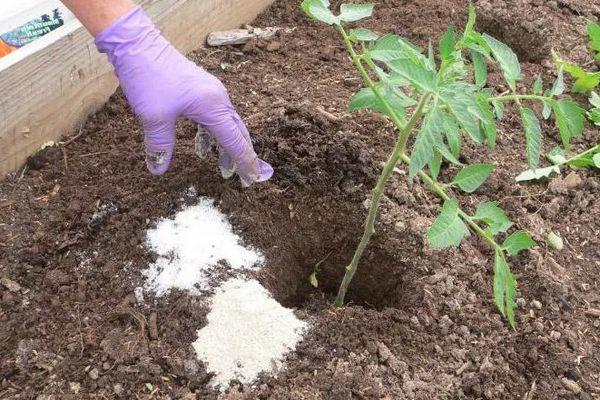
No more than three bushes are planted per square meter. The advantage of this cultivar is its ability to produce fruit in extreme conditions. The variety's productivity is unaffected by difficult growing conditions or poor ventilation in the greenhouse.
High yields are achieved by cultivating the plant in 1-2 trunks. Care involves a range of agricultural practices. The plant requires timely watering.
It is recommended to apply water to the roots as the surface soil dries. Mulching is used to evenly distribute moisture, reduce evaporation, and prevent weed growth.
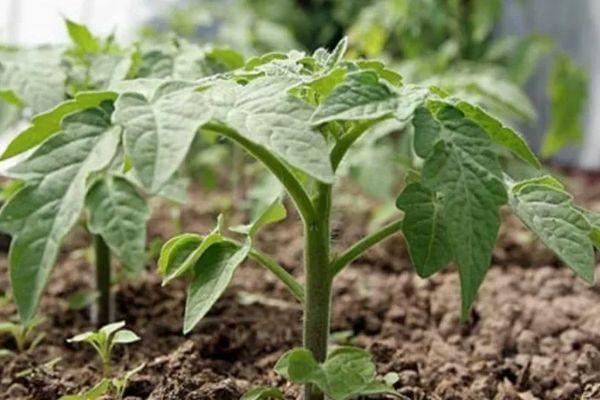
Black non-woven fiber and organic materials (straw, hay, leaves) are used as mulch. To regulate the moisture and air balance, the soil is periodically loosened and the plants are hilled.

Normal tomato development requires mineral fertilizers. The composition of these fertilizers is adjusted depending on the soil type and the stage of the crop's development.
Related posts:
 The best grape varieties for growing in the Urals, planting and care rules in summer
 Description and characteristics of the best seeds of pea varieties and types
 Description of the Velika grape variety, cultivation and care tips
 Description of the best potato varieties of domestic and foreign selection
 80 Best Eggplant Varieties for Different Regions with Descriptions and Characteristics
 Description of the best varieties of onions, planting and care in open ground
 Descriptions of the 20 best cherry varieties for the Moscow region, their planting and care
 Description of varieties of sowing peas and cultivation, to which family they belong