
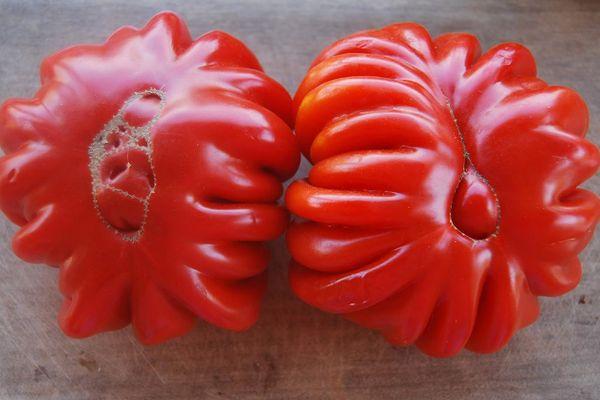
Among the unusual tomato varieties, the Lorraine Belle deserves special mention. This variety will enhance any culinary masterpiece, as its cross-section resembles a flower. Lorraine Belle tomatoes were developed by North American breeders for ornamental purposes. This variety has no commercial value and is primarily grown by collectors and lovers of rare and unusual vegetables. It has deservedly won numerous awards for its appearance at vegetable shows.
Description of the variety
The Lorraine Beauty tomato is a mid-early variety. The plant grows to 1.5–2 m tall and requires regular pinching. The yield is average, with up to 15 heavily ribbed fruits weighing up to 500 g per bush, and some specimens can exceed 1 kg. The tomatoes range in color from yellow-red to ruby-red. They have a good, slightly sweet flavor, with yellow coloring typical of the sweeter varieties. Fruiting continues from July to September. They are intended for fresh consumption.
The variety's characteristics and description are confirmed by the experience of domestic gardeners. However, in our climate, this heat-loving tomato is more of a mid-late variety than a mid-early variety, as described by American breeders.
Advantages and disadvantages
Gardeners' reviews of their experiences growing and tasting the Lorraine Beauty tomato allow us to describe some of the variety's advantages and disadvantages. Characteristic positive qualities include:
- original, decorative appearance of fruits;
- good, moderately sweet taste;
- resistance to many diseases;
- preservation of commercial qualities during long-term storage;
- good yield indicators.
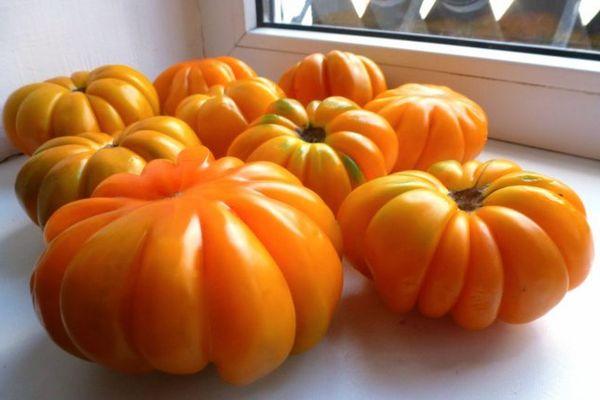
But gardeners also note the disadvantages of this tomato:
- hollowness and dryness of fruits;
- unsuitability for further processing and preservation;
- very thermophilic for growing in our climate.
Features of cultivation
In the first half of March, plant the seeds in a prepared seedling mix. To ensure strong tomatoes, the soil mixture must be properly prepared: mix equal parts peat, sod soil, humus, and rotted sawdust. Then, per 10 kg of the mixture, add 250 g of wood ash, 80 g of superphosphate, 30 g of potassium sulfate, and 10 g of urea.

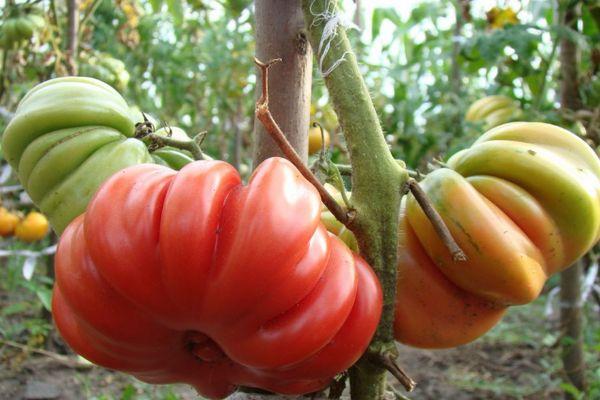
The minimum temperature for seed germination is 25°C. After germination, since the seedlings are heat-loving, it is advisable to grow them under plastic and light them with lamps. Regular fertilizing will ensure strong seedlings by the time they are planted in the ground.
In the second half of May, the seedlings should be planted in a greenhouse using a 50x50 cm pattern. Leave at least half a meter of space between the plants. Within a few days after planting, install supports and tie up the bushes. Since this is not a standard variety and the fruits can grow to impressive sizes, special attention should be paid to staking.
To increase yields, it is necessary to regularly remove side shoots from the bushes and carefully ensure that the lower leaves are not in constant contact with the ground, otherwise the plants may become infected with fungal diseases.
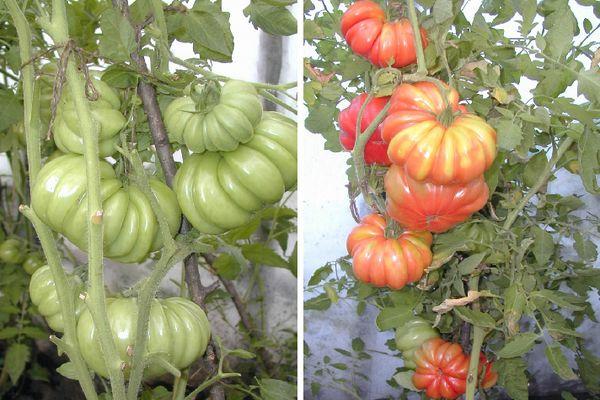
Although the Lorraine Beauty tomato isn't particularly productive or easy to grow, it's still worth trying to grow a few plants in a greenhouse. This rare variety can delight you and pleasantly surprise your family or guests with a culinary masterpiece, beautifully adorned with chrysanthemum-like tomatoes.
Related posts:
 Description and subtleties of growing the Russian Beauty pear variety
 Description of the Forest Beauty pear variety, planting and care specifics
 Description of the Manchurian Beauty plum variety, pollinators, and cultivation details
 Description of the early pear variety Bryanskaya Krasavitsa, planting and care
 Description of the Bashkir Beauty apple tree variety and the subtleties of growing it
 Description of the Talgar Beauty pear variety, planting and care instructions
 Characteristics of the Northern Beauty tomato and description of its fruits
 80 Best Eggplant Varieties for Different Regions with Descriptions and Characteristics
A few years ago, I planted this tomato variety, but I wasn't sure what shape they would be. I was surprised to see the oddly shaped fruits, thinking there was something wrong. Overall, the variety is very tasty and the fruits are quite large. I wanted to buy seeds for planting, but I never found this variety.