
- History of the Bashkir Beauty variety and its characteristics
- Tree size and annual growth
- Lifespan
- All about fruiting
- Flowering and pollinators
- Ripening time and yield
- Tasting qualities of apples
- Fruit collection and use
- Sustainability
- To diseases and pests
- Unfavorable climatic conditions
- Suitable regions for growing
- In the Moscow region
- In the middle zone
- In the Urals
- Subspecies and variants
- Summer
- Late
- Specifics of planting fruit crops
- Deadlines
- Site selection and preparation
- Preparing seedlings
- Technological process of landing
- What can be planted nearby?
- Further care
- Watering
- How often should I fertilize?
- Pruning and crown shaping
- Caring for the tree trunk circle
- Preventive treatments
- Winter protection
- Methods of propagation of the Bashkir Beauty apple tree
- Gardeners' reviews
Any gardener who grows apple trees wants to see only high-yielding and easy-to-grow varieties in their garden. Thanks to breeders, there's a hybrid to suit every taste. For example, the excellent Bashkirskaya Krasavitsa apple variety.
History of the Bashkir Beauty variety and its characteristics
The first mentions of the Bashkir Krasavets apple variety date back to the 19th century. Commercial cultivation of the hybrid began in the late 19th century, in 1886. The variety was registered as a fruit tree by breeder V.P. Strelyaev in 1928. This year, the apple tree was given a name; previously, the hybrid remained nameless. Currently, the Bashkir Krasavitsa variety is grown both commercially and in private gardens.
Tree size and annual growth
A medium-sized tree, the apple tree reaches a height of approximately 4-5 m. The crown is moderately dense and pyramidal in shape. The branches are spreading, growing at a 90-degree angle to the trunk. Annual growth is approximately 10-15 cm.
Lifespan
The tree's lifespan is approximately 40-50 years. The older the tree, the lower the yield.
All about fruiting
Before purchasing a seedling, it is important to study all the characteristics related to fruiting and yield.
Flowering and pollinators
The Bashkirskaya Krasavitsa variety is self-sterile. To ensure pollination, other apple varieties should be planted nearby. For example, the hybrids Seyanets Titovka, Antonovka, and Buzovyazovskoye are suitable pollinators. You can plant several trees of different varieties or choose just one. The tree blooms in the second half of May. The flowers are white and pink.

Ripening time and yield
Apple trees begin bearing fruit in the fourth to sixth year after being planted in open ground. The yield is high, with a single tree producing up to 80 kg of apples per season. Ripening times vary depending on the growing region. Approximate ripening times are August-September. In southern regions, the harvest ripens earlier.
Tasting qualities of apples
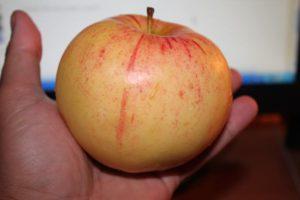
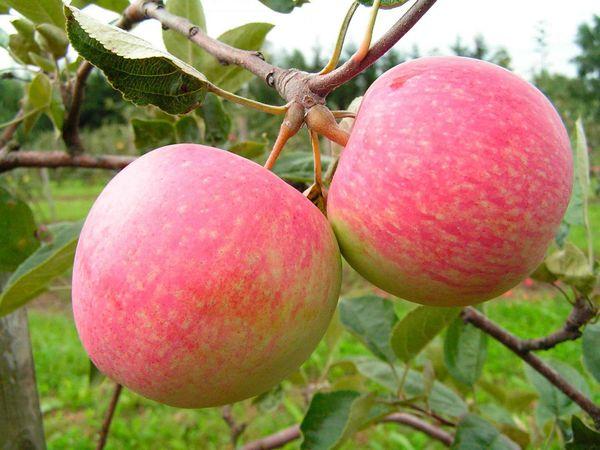
The apples are medium-sized, weighing from 90 to 140 grams. The skin is glossy, smooth to the touch, and slightly oily. A waxy coating is also clearly visible. The skin is green, developing a pink blush and bright red stripes as it ripens. The flesh is fine-grained and juicy. The taste is sweet with a slight tartness. The tasting score is 4.6 out of 5.
Fruit collection and use
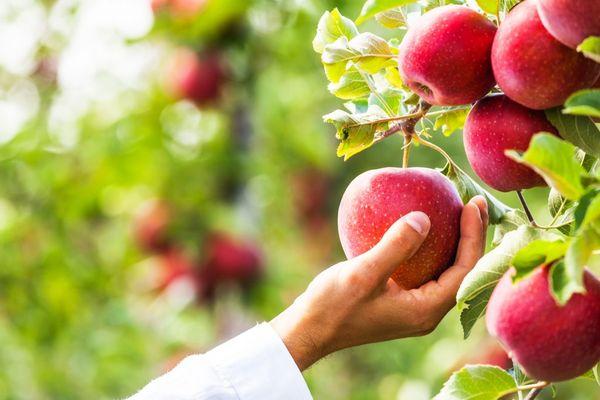
The fruits reach full maturity 5-9 days after harvesting. The harvested crop can be stored for about 6 months.

Sustainability
Another important characteristic is resistance to diseases and pests.
To diseases and pests
Good resistance to pests and diseases.
With proper and regular care, the tree is practically disease-free.
Unfavorable climatic conditions
The apple tree quickly adapts to any climate, even the harshest. It tolerates short-term droughts and frosts down to -25 degrees Celsius. If the roots and bark freeze, the tree quickly recovers.

Suitable regions for growing
The Bashkir Beauty variety adapts well to any climatic conditions.
In the Moscow region
The climate of the Moscow region is well suited for growing the Bashkir Beauty apple tree. Due to the moderate winter and warm summer in the spring, the tree blooms quickly, and the harvest ripens as early as August.
In the middle zone
The climate of the middle zone is ideal for this variety.
In the Urals
The Urals climate is harsher than the central part of the country. Frosty winters can cause trees to freeze. However, they quickly recover, and this doesn't affect the apple tree's yield.
Subspecies and variants
There are several varieties of the Bashkir Beauty variety.
Summer
The tree is low-growing, with a moderately dense crown. After planting a seedling in its permanent location, it begins bearing fruit in the second year. The apples ripen in late summer. The flesh has a sweet and sour flavor. Fruit quality depends largely on care.
Late
This apple tree is medium-sized, with a medium-density crown. To ensure fruit production, pollinator varieties should be planted nearby, such as the Titovka Seedling. Fruiting is abundant and annual. The flesh of ripe apples is sweet, crisp, and fine-grained. The average fruit weight reaches 150 g.
Specifics of planting fruit crops
Choosing the planting time and preparing the site for the seedling is very important for the future yield and health of the tree.
Deadlines
Apple tree seedlings are planted in spring and fall. The planting time largely depends on the growing region. In moderate and cold climates, spring planting is preferable. The seedling will have time to root over the summer, and the risk of freezing in winter will be much lower. Fall planting is suitable for southern regions with warm winters and early springs.
Site selection and preparation
Open, sunny areas are preferable for planting. It's also important to choose a location protected from cold winds. Southern and western exposures are suitable.
In the fall, before planting, dig the soil and add complex mineral fertilizers. Dig to a depth of at least 15 centimeters. In addition to organic fertilizers, you can also use organic fertilizers, such as well-rotted manure or wood ash.
In the spring, the soil is dug over again. Then the weeds are pulled out. After this, you can begin planting the seedling.
Preparing seedlings
Before planting the seedling, check the root system. If any dried roots are present, trim them off. Treat the cut areas with a weak solution of potassium permanganate.
Then soak the rhizome in a growth activator for several hours. Immediately before planting, dip the rhizome in a clay solution. The seedling should be planted immediately, before the clay has time to harden.
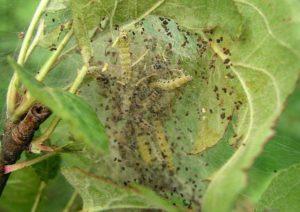
Technological process of landing
How to plant an apple tree seedling:
- Dig a hole about 1 meter deep and 80 centimeters wide.
- Then add fine drainage to the bottom.
- Place the seedling and cover it with soil.
- A wooden stake can be driven into the center of the hole to tie the young apple tree to it.
At the end of planting, water the seedlings generously with warm water.
What can be planted nearby?
You can plant other varieties of apple trees, raspberries, sea buckthorn, plums, cherries, honeysuckle, or pears near the apple tree. Flowering plants or herbs can also be planted under the apple tree. For example, garlic and marigolds repel insects from fruit trees. This saves space and prevents pests.
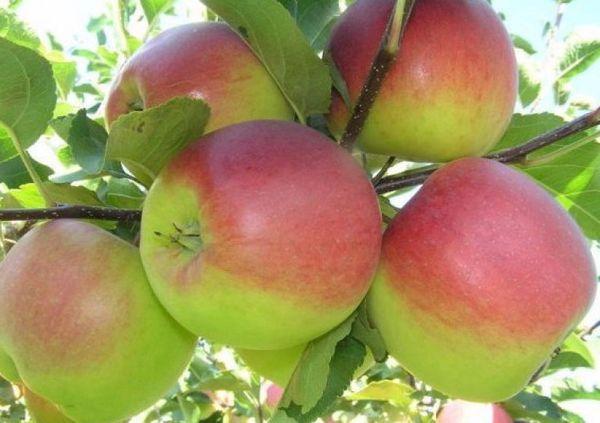 It is not recommended to plant fir, viburnum, juniper, rowan and all types of coniferous trees nearby.
Further care
After planting a seedling, it's important to remember to care for it. The quality of the fruit and the quantity of the harvest depend on this.
Watering
The tree doesn't require frequent watering. The first watering is done in the spring, when the buds are just beginning to swell. Subsequently, water 2-3 times a week. During fruit set, the frequency of watering is reduced. If there is a prolonged drought, the apple tree will need to be watered more frequently.
Irrigation is stopped 2-3 weeks before the onset of cold weather.
How often should I fertilize?
To increase yield, it's essential to apply mineral and organic fertilizers. Nitrogen-containing fertilizers are added to the soil in the spring. Nitrogen improves foliar growth and accelerates fruit set. When the apple tree begins to bloom, potassium and phosphorus are added to the soil. These fertilizers increase the number of fruit sets and improve the taste.
Organic fertilizers include wood ash, manure, compost, bird droppings, and weed infusions. Ash can be sprinkled on the soil before watering. It's also helpful to add bird droppings diluted in water or manure several times a season.
Pruning and crown shaping
The crown is formed immediately after planting the seedling:
- During the first year, part of the top of the trunk is cut off. Three to four large branches are left on the seedling.
- The following year, some of the remaining branches from the previous year are trimmed back. Three to four buds should remain. All small and weak shoots are pruned.
- In the third year, a few more large branches are left. Small branches can be pruned.
By the fourth year the crown will be fully formed.
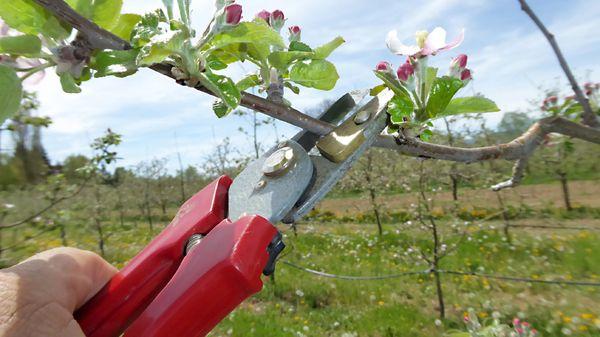
Every fall after the harvest, sanitary pruning is performed. All dead and damaged branches are cut off. In the summer, thinning pruning is carried out as needed. This is necessary if the crown is too dense and the apples growing deep within the crown are not ripening. Small, non-fruiting branches are pruned.
Caring for the tree trunk circle
Several times a month, before watering, the soil is loosened. Loosening the soil before watering ensures that the root system receives oxygen along with water. Weeds in the tree trunk circle are also regularly pulled out.
Preventive treatments
To prevent the tree from becoming diseased, preventative treatments are necessary. In early spring, before the buds open, spray the apple tree with Bordeaux mixture. If necessary, repeat the spraying process if there are signs of disease.
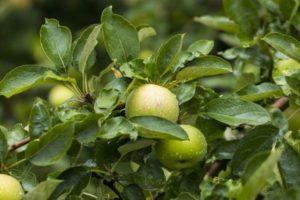
Every spring, the soil is dug over. In the fall, after the harvest and the leaves have fallen, it is raked up. Then the soil is dug to a depth of 15 cm. Insects prefer to overwinter in the soil, and in the spring, they move to nearby trees to lay their eggs.
To avoid having to fight insects in the spring, the soil must be loosened as deeply as possible.
Winter protection
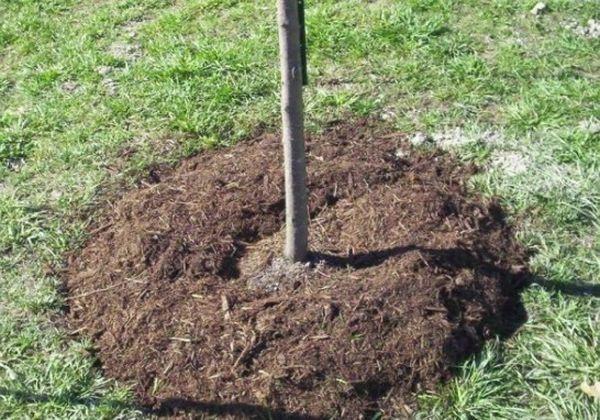
The Bashkirskaya Krasavitsa apple tree is frost-hardy, so no winter preparation is required. However, if winters in the region are very cold, the root system may freeze. To prevent this, mulch the soil around the tree's trunk. Peat, sawdust, or straw are used as mulch. The soil is first dug over, weeds are pulled out by the roots, and the mulch is applied. The mulch layer should be at least 15 cm thick.

Methods of propagation of the Bashkir Beauty apple tree
There are several ways to propagate the Bashkir Beauty apple tree:
- seedlings;
- cuttings;
- seeds;
- undergrowth.
The easiest and most common method of propagation is by seedlings. It's best to purchase apple trees from reputable nurseries. Two-year-old seedlings are ideal.
Another method of propagation is by cuttings. Cuttings are taken in the fall. Two-year-old shoots with 2-3 buds are cut. They are stored in a cool place until spring. In March, the cuttings are rooted indoors. They are then transplanted into open ground.
Young shoots often grow nearby from mature trees. These can be dug up, separated from the parent plant, and replanted separately.
Growing seedlings from seeds is the most difficult method, so this method is rarely used by gardeners. It takes a long time to grow, and at best, only a few seedlings will emerge.
Gardeners' reviews
Anna, 45: "I love this variety. I have several Bashkir Beauty apple trees in my garden. The tree is covered with apples every year, although without pollinators, our yield was significantly lower. Ripe apples are delicious and sweet. Once picked, they keep almost until spring."
Matvey, 49: "It's a good variety, easy to care for. But to get a good yield, you'll need to plant other apple varieties nearby. We planted the tree recently, and the first fruits appeared in its fifth year. The harvest was enough for both eating and canning. The apples are sweet and aromatic. They store well. We kept them almost until winter."
Related posts:
 Description of the Forest Beauty pear variety, planting and care specifics
 Description and subtleties of growing the Russian Beauty pear variety
 Description of the Manchurian Beauty plum variety, pollinators, and cultivation details
 Description of the Volga Beauty plum variety, planting and care
 Description and characteristics of the 45 best pear varieties, how to choose
 Descriptions of the 20 best cherry varieties for the Moscow region, their planting and care
 Description of the Talgar Beauty pear variety, planting and care instructions
 Description of the early pear variety Bryanskaya Krasavitsa, planting and care