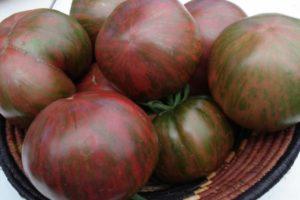
The Raspberry Onslaught tomato was developed through years of breeding by renowned agronomist Myazina. The variety was registered in 2009. Within a few years, it became a sought-after commodity in the agricultural market among gardeners and consumers.
Reasons for the popularity of the species
A huge variety of planting material is provided by hybrid tomato varieties intended for cultivation in greenhouses and open ground.
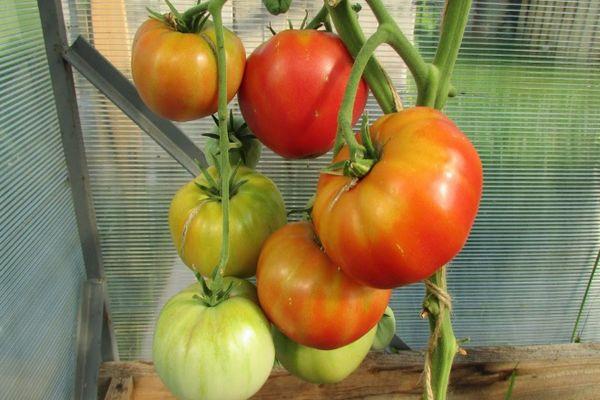
The producer liked the vegetables because of:
- ease of care;
- stable fruiting;
- high level of preservation of marketable appearance;
- long-distance transportation capabilities.
The Raspberry Onslaught tomato, a variety description developed by breeders, has a unique aroma and unrivaled taste.
The plant reaches a height of 1.3 m. It is an indeterminate, standard bush. It is primarily grown in greenhouses, but in the southern regions of Russia, it also produces excellent yields in open beds. As a hybrid with a mid-season ripening period, it begins to bear fruit three months after sowing the seeds.
For central Russia, experts recommend growing this variety in greenhouses. This is due to the early onset of cold nights. The tomato descriptions point to the plant's long, fragile stems, which are susceptible to wind and can break even with sturdy support.
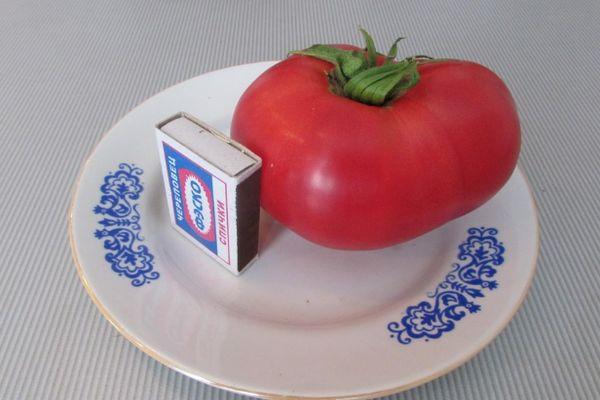
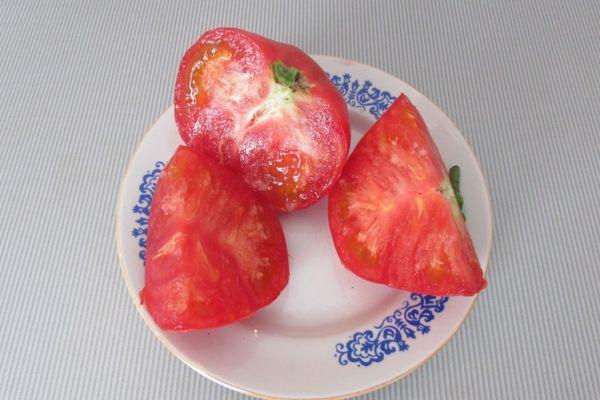
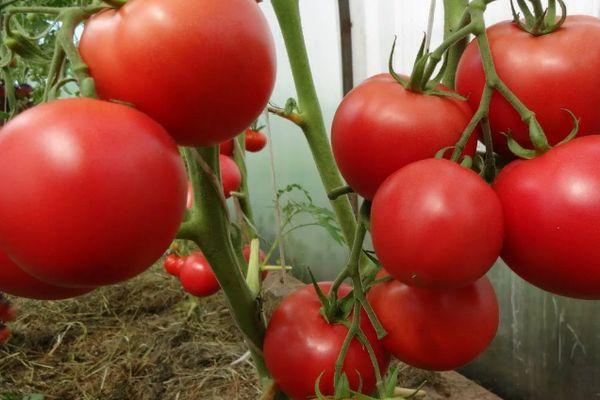
This is a very large-fruited variety with a large number of fruits, ranging from 400 to 650 g. The tomatoes are round in shape with subtle flatness and ribbing, and their color is close to raspberry. The taste is sweet with a slight tartness. Other important characteristics of the variety include dry matter content and the number of chambers, which are 4-6% and 6-8, respectively.
The optimal location for cultivating tomato hybrids in open ground is the southern regions of the country at latitudes:
- Crimea;
- North Caucasus;
- Astrakhan region.
North of Belgorod, it is advisable to grow this variety only in greenhouse conditions.
Productivity, cultivation and disease control
A distinctive feature of Raspberry Onslaught is its high yield. If agricultural requirements are met, up to 40 kg of tomatoes can be harvested from 1 m² of area. This method produces not only large fruits, but also medium and small ones. This versatility allows them to be used in salads, preserves, ketchups, and pastes.

The variety also has other advantages:
- development of a friendly ovary;
- rapid ripening;
- excellent immune system;
- absence of cracking of the skin in large fruits.
The hybrid's disadvantages include the inability to collect sufficient planting material, i.e., seeds. Hobby gardeners will have to buy them before each new season.
The plant is sensitive to changes in humidity, air temperature, and irrigation levels. Therefore, it is recommended for growing in areas with a longer summer season.
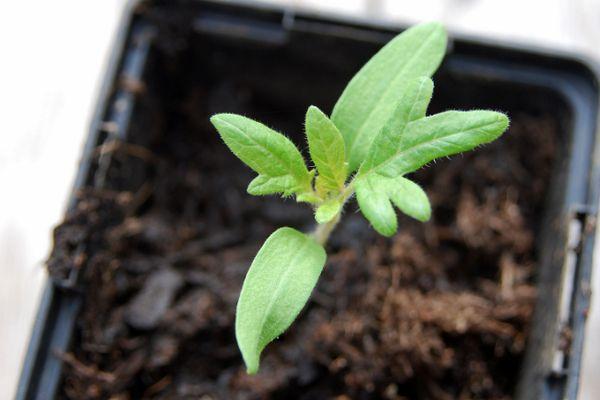
Planting seeds should begin in late March or early April. When the tomato seedlings have 1-2 true leaves, thin them out by picking out weak and non-viable seedlings. At this time, apply root fertilizing with organic and mineral nutrients.
It is recommended to harden the seedlings 10-14 days before transplanting them to their permanent growing location. Initially, this procedure lasts 15-20 minutes, and after 10 days, this period is extended to several hours.
The description indicates the formation of large fruits, which forces gardeners to be very careful about tying the stems to support stakes in a timely manner. Although the plant loves sunlight, high temperatures and lack of ventilation can cause blossom-end rot. To prevent the disease, it is necessary to reduce nitrogen supply to the soil and increase calcium levels.
Raspberry pressure is often affected by brown spot. To prevent this disease, reduce moisture and strictly monitor the temperature in greenhouses.
The greatest damage to the plant is caused by the Colorado potato beetle and its larvae. In small plantings, the insects are collected and destroyed by hand. If necessary, the bushes are treated with chemicals two weeks before harvest.
Related posts:
 The best grape varieties for growing in the Urals, planting and care rules in summer
 The best eggplant varieties for growing in a polycarbonate greenhouse: planting and care
 80 Best Eggplant Varieties for Different Regions with Descriptions and Characteristics
 Descriptions of the 20 best cherry varieties for the Moscow region, their planting and care
 Description of 30 varieties and types of Muscat grapes, planting, cultivation and care
 Description of the 90 best varieties of beans for open ground with names
 Description of the best varieties of black tomatoes for open ground and greenhouses
 Beginner's Guide to Growing Grapes in Open Ground in Central Russia
Take a look Also