
- Advantages and disadvantages of the method
- Suitable tomato varieties for growing in bags
- What you need to grow tomatoes
- What kind of bags are needed?
- Suitable soil
- Supports
- Soil preparation and technology for planting tomatoes in bags
- Growing nuances
- In open ground
- In greenhouses
- Agricultural technology and plant care
- Irrigation and fertilization
- Garter and shaping the bush
- Loosening the soil
- Pinching out stepsons
- Yield characteristics
- Common mistakes
- Reviews from summer residents
One alternative method for growing tomatoes is planting them in bags. This method has several advantages and benefits over traditional soil planting. Growing tomatoes in bags is recommended when space is limited and when sowing indoors.
Advantages and disadvantages of the method
The method's popularity is due to its numerous advantages, including the following:
- bags can be placed in any convenient place: both in the apartment and outdoors;
- when cold weather sets in, it is enough to move the plants to a warm room;
- In dense containers, moisture evaporates more slowly, which reduces the number of waterings;
- harmful insects, which often attack the roots of plants grown in beds, do not penetrate the soil;
- A small amount of soil warms up faster and cools down more slowly, which has a beneficial effect on root development.
The only drawback of this technology is that flimsy bags can tear. Therefore, special care must be taken when choosing the material.
Suitable tomato varieties for growing in bags
It is more convenient to grow low-growing varieties of tomatoes in bags, which, despite their compact size, produce a bountiful harvest.
Similar varieties include Red Pearl, Cascade Red, and Mikron-NK. Tall varieties can also be grown using this technique, but they will be more difficult to care for.
What you need to grow tomatoes
Before planting tomatoes, several preparatory steps are necessary. To grow the vegetables, you'll need to select suitable bags, fertile soil, and supports to support the plants. Additional resources include fertilizers, disinfectants, and covering material if you plan to grow in cooler climates.
What kind of bags are needed?
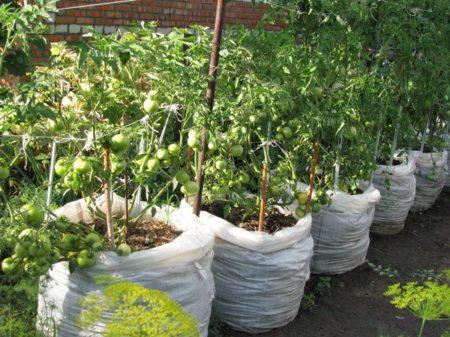
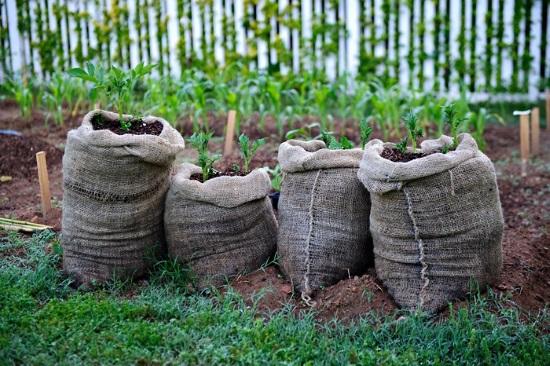
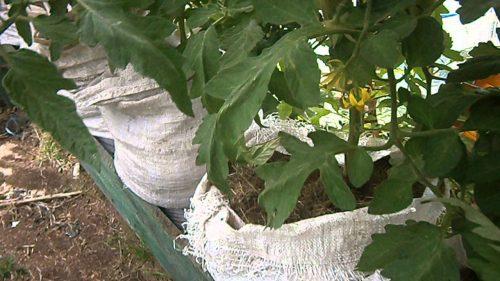
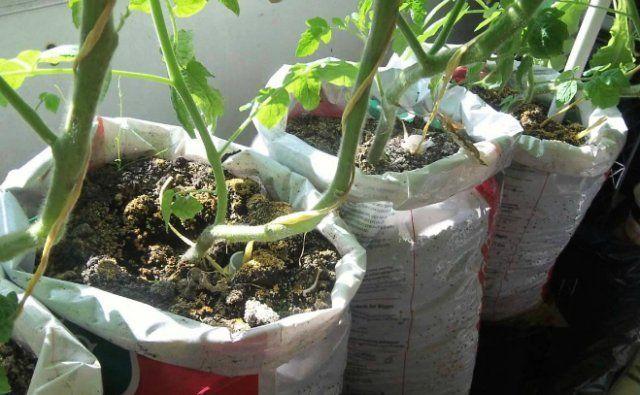
For convenience, use large sugar bags with a capacity of 30 to 50 kg. These containers are highly durable and allow better air and moisture permeability than polyethylene. Drainage holes are easy to make in the bags: just trim the corners on both sides.
Suitable soil
Tomatoes grown in bags require a soil mixture with a neutral pH. In acidic or alkaline soil, plants will develop more slowly and poorly, which will negatively impact fruiting. To loosen the soil, vermiculite granules or wood shavings are added. Humus or well-rotted manure is added to the bottom of the bag, eliminating the need for additional fertilizers until the first ovaries form. Experienced gardeners often use compost exclusively as a filler.
Supports
Plants can be secured with slats, wire, or rope stretched at a low height, and the shoots tied with twine. For additional security, wooden stakes can be used. Installing supports helps keep tomato plants upright, which is especially important when growing outdoors.
Soil preparation and technology for planting tomatoes in bags
The key to a bountiful harvest is proper soil preparation and following a step-by-step planting process. The planting process requires the following steps:
- Fill the bags with compost or humus and loose soil. Depending on the container size and vegetable variety, the substrate should fill the bag to ½ or ⅓ of its total volume.
- Fold the top of the bag outward.
- Moisten the soil in which the seedlings are grown in advance and carefully remove the seedlings, being careful not to touch the roots.
- Make small holes in the soil of each bag, water them and plant 2 seedlings.
Growing nuances
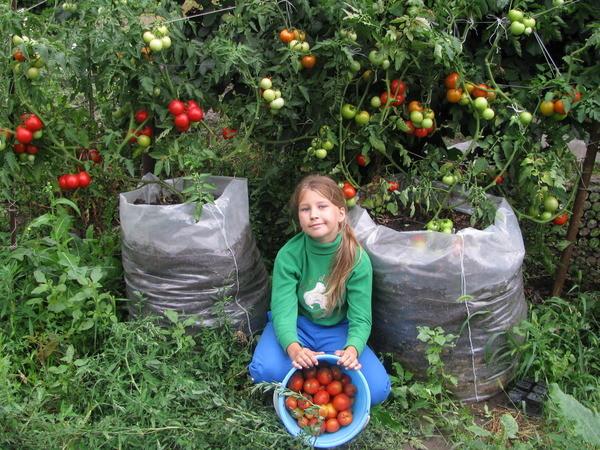
Depending on whether the bags will be placed outdoors or in a greenhouse, there are certain care considerations. Adhering to these guidelines will help prevent plant death and ensure a consistent harvest.
In open ground
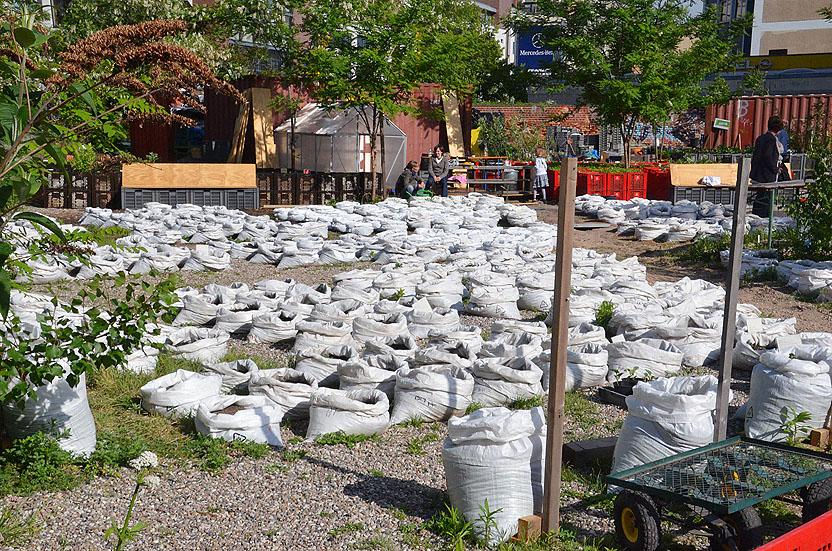
When growing tomatoes outdoors, pay special attention to the air temperature. If the weather gets cold, unfold the open end of the bag and cover the seedlings. If the temperature drops to a critical level, it's enough to temporarily move the containers indoors.
In greenhouses
When placing bags in a greenhouse, it's not recommended to over-water the soil, as excess moisture will slowly drain out of the container, causing root rot. As the seedlings grow, add more soil to the bags to cover the roots growing from the stems.
Agricultural technology and plant care
Caring for tomatoes after planting in bags is largely similar to traditional cultivation. However, there are several specific considerations that affect the vigor of the plants' development and fruiting. By following basic care guidelines and taking all the nuances into account, you'll be able to grow large, healthy tomatoes in a timely manner.
Irrigation and fertilization
Tomatoes in bags should be watered as the soil dries out. Before watering, make sure that not only the top layer of soil is dry, but also the deeper layer. A good starting point is to check the soil at a depth of 4-5 cm. Avoid using large amounts of water, as excess moisture often promotes the development of infectious diseases and the spread of rot.
If plants are grown outdoors, watering should be done only at the roots.
Adding fertilizer to the soil promotes rapid and healthy growth of the bushes, as well as intensive fruiting. If the soil mixture consists of humus or compost, fertilizer should only be applied when fruit buds begin to form. Otherwise, fertilizer is applied before planting the seedlings, during flowering, and 7-10 days before the expected fruiting.
Garter and shaping the bush
Plant staking is necessary when growing tall varieties and when placing containers outdoors. Staking the plants prevents damage from the weight of the fruit and wind gusts. It also ensures that the stems grow vertically without bending.
The shaping process involves removing excess foliage, deformed and old branches, and rotting parts. Bush shaping has the following advantages:
- Nutrients from the soil reach only healthy parts of plants;
- the bushes acquire a decorative appearance;
- More natural light reaches the fruits, which has a positive effect on ripening times and taste characteristics.
Loosening the soil
After each watering, loosen the soil to ensure better aeration. Plant roots need oxygen to thrive. Initially, loosen the soil to a depth of 3-5 cm; as the plants develop, loosen the soil to a depth of up to 12 cm.
Pinching out stepsons
Many tomato varieties develop lateral shoots during development. If the lateral shoots are left on the stem, they will begin to grow vigorously and form clusters of fruit. If the bushes become overgrown, the fruit will become smaller and lose flavor.
To remove shoots in a timely manner, it is necessary to regularly inspect the plants.
Side shoots can be removed manually or using specialized equipment. By hand, the shoots are snapped off sideways. If a small stub remains on the stem after the break, this will not affect the plant's development. It's easier to trim side shoots with sharp garden shears, disinfected in a solution of potassium permanganate. The shears should be disinfected after each pruning to prevent the spread of possible infections.
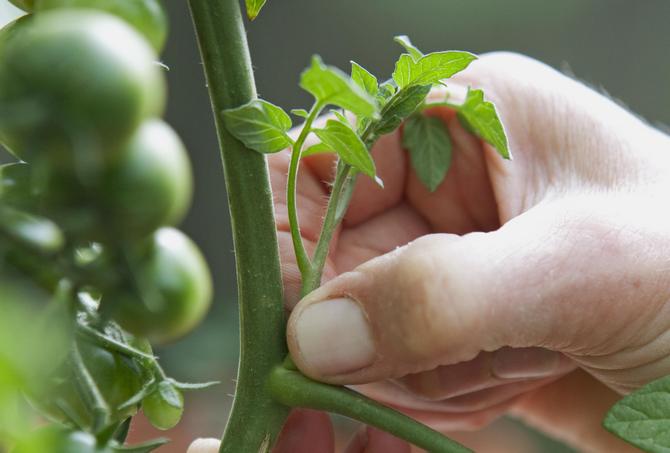
Some tomato varieties are trained with multiple stems. Determinate varieties grown in temperate climates are recommended to be trained with 3-4 stems, while in southern climates, no side shoots are required. For medium-sized determinate varieties, it's best to leave two stems.
Yield characteristics
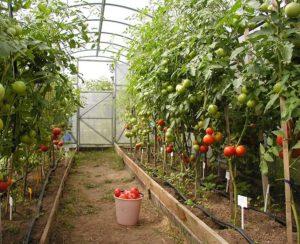
Tomato yields from bagged tomatoes are comparable to those from traditional growing methods. With favorable environmental conditions and comprehensive care, the fruits grow large and juicy.
Common mistakes
Beginner gardeners often make mistakes when planting in bags. The most common mistakes include the following:
- The absence of drainage holes in the containers through which excess moisture can escape.
- Using dark fabric bags prevents sunlight and air from passing through, leading to root dehydration. Translucent or light-colored containers are preferable.
- Growing tomatoes without staking helps the plants support the weight of ripening fruit. Support is also essential when growing tall varieties.
- Planting varieties that are not suitable for growing in individual containers. Certain varieties can only thrive and bear fruit when grown outdoors and in unprotected soil.
Reviews from summer residents
Vasily: "I've been growing tomatoes in bags for several seasons now. I use this method because I'm running out of space in my garden beds and have to grow them separately. I'm happy with the yield; I get several kilograms from each plant."
Anatoly: "I grow tomatoes using several methods, and the most convenient is sowing in bags. Due to the variable climate, I planted the vegetables indoors and, with simple care, got a good harvest. I haven't encountered any diseases or pests, even without protective measures."
Galina: "I planted tomatoes in bags for the first time and am very pleased with the results. The taste and quality of the vegetables are exactly the same as when grown in a greenhouse. The only problem I had was proper watering—I initially overwatered the plants, and some started to rot. Over time, I adjusted my care and solved the problem."
Related posts:
 The best eggplant varieties for growing in a polycarbonate greenhouse: planting and care
 A step-by-step description of the technology for growing potatoes in bags
 How to properly plant peas in a greenhouse and open ground
 Step-by-step technology for growing strawberries in bags in open ground and a greenhouse
 Methods for planting and propagating cherries at home
 80 Best Eggplant Varieties for Different Regions with Descriptions and Characteristics
 How to propagate and grow peas, cultivation technology, and care in open ground
 How to plant, grow, and care for cucumbers in bags step by step