
The Katrina f1 tomato, described as an early-ripening hybrid intended for cultivation in open ground and under film shelters, is distinguished by its good taste, resistance to cracking, and the ability to be transported over long distances.
Advantages of a hybrid
The Katrina f1 tomato variety is a first-generation hybrid. Gardeners have already appreciated this variety, praising its flavor and robust plants with abundant, intensely red tomatoes.
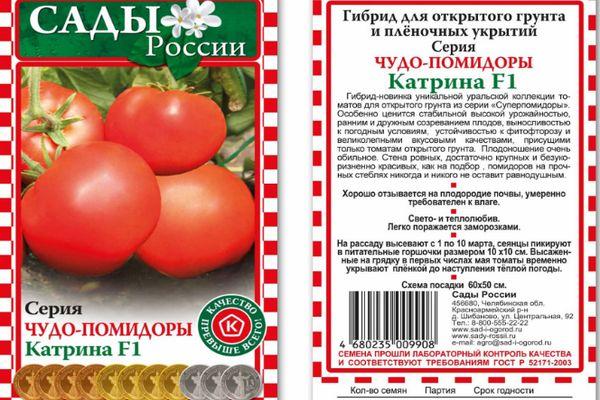
The variety's characteristics are related to the plant's description. The 60-120 cm tall bush bears a smattering of small, green foliage. A single inflorescence produces 5-7 ripening fruits. The first tomato harvest occurs 85 days after germination.
In open ground conditions, excess shoots are not removed from the plant. In plastic greenhouses, it is recommended to train the bush to 2-3 stems.
Description of fruits:
- Tomatoes of the Catherine variety are round, slightly flattened, and ribbed at the stem.
- When ripe, tomatoes are red in color and weigh 140–150 g.
- The yield per bush per season is up to 5 kg.
- The fruits have a dense, glossy skin and a sweet taste.
- Tomatoes retain their taste and commercial qualities for a long time.
- Tomatoes are a universal use; they are consumed fresh and for preserving whole fruits.
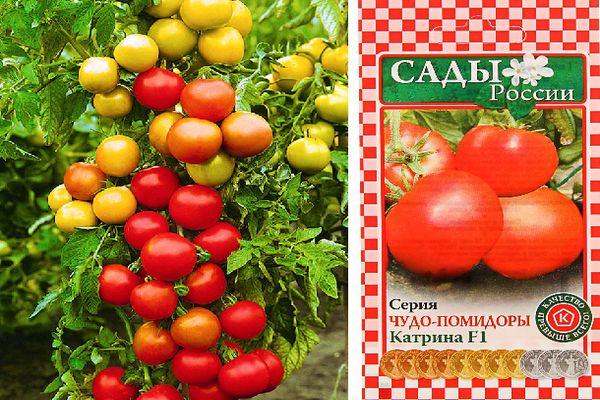
A distinctive characteristic of this variety is its resistance to temperature fluctuations. The plant has good immunity to most diseases.
Agricultural technology of cultivation
The Katrina hybrid has the advantage of being suitable for cultivation in open ground or low-roofed greenhouses. Tomatoes are grown from seedlings. For this, seeds are planted in containers with prepared soil at a depth of 1.5 cm.
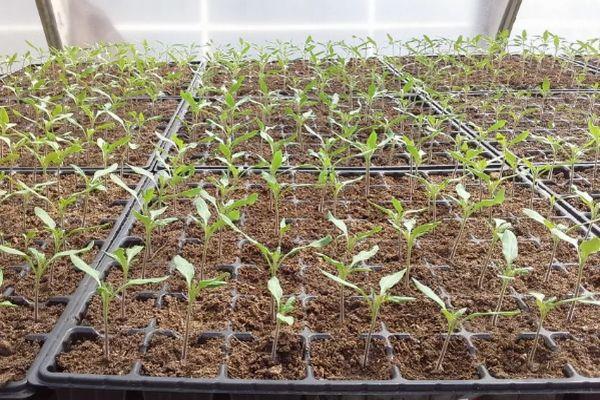
The seeds are moistened with warm water using a spray bottle, thus maintaining a loose topsoil. This ensures uniform emergence of the plants.
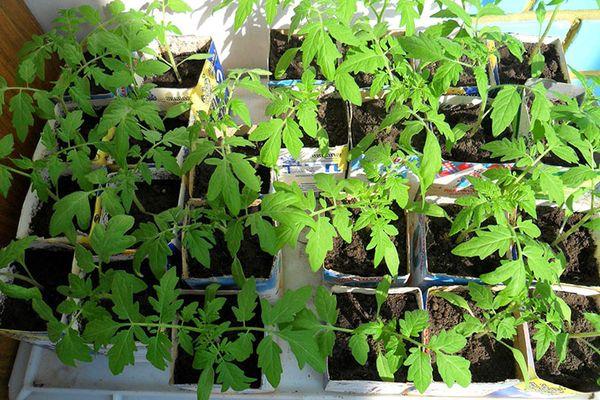
When two true leaves have formed, transplanting is performed. Throughout the growing period, maintain a consistent temperature regime, apply mineral fertilizers periodically, and water.
Poor crop establishment after transplanting and transplanting the crop with an open root system to a permanent location can slow down the plant's development and delay the ripening of the fruit. Therefore, it is recommended to use peat pots to avoid damaging the roots.
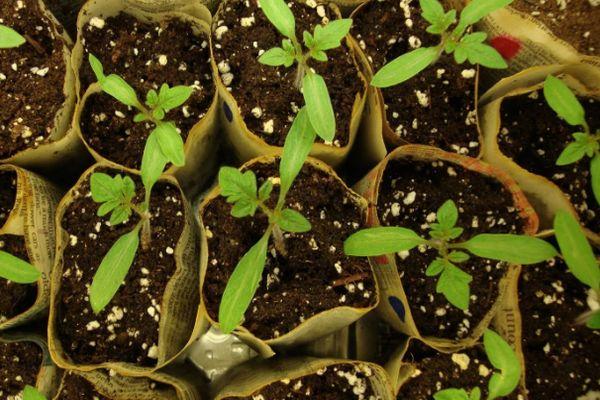
The hybrid doesn't require bush training, so planting outdoors doesn't require stem shaping. As the tomatoes grow, they need to be tied to a support structure.
Two weeks after planting, it is recommended to loosen the soil to create a balance of moisture and air around the roots. This stimulates growth. Water moderately as the soil dries out.
Uniform distribution and nutrition of moisture to the roots can be achieved by mulching the soil with grass or special black fiber.
Opinions and recommendations of vegetable growers
Gardeners' reviews point to the hybrid's positive characteristics. Tomatoes of this variety produce a generous harvest and save space. The plant's resistance to many diseases eliminates the need for additional treatment with fungicides and biological pesticides.
Alexey Grebenshchikov, 56 years old, Volgograd:
"I was drawn to the description of the Katrina hybrid and the ability to plant it outdoors. I grew it from seedlings, then transferred the finished saplings to the garden and planted them at a rate of three plants per square meter. I added compost to the holes to provide the root system with additional nutrition and air. As a result, one plant yielded a bucket of bright red tomatoes with a pleasant tomato aroma within a season. I was surprised that the whole tomatoes retained their shape even when canned."
Antonina Frolova, 59 years old, Belorechensk:
"A colleague recommended the Katrina variety. She noted the high yield per plant and the ability to store the fruit for a long time. I purchased the hybrid seeds from a specialized retailer. Growing from self-collected seeds is not recommended, as hybrids do not retain the qualities of the parent plants. I grew the plants from seedlings, following my friend's recommendations and drawing on my own experience with tomato care. I was pleased with the plants' consistent fruit production and the ability to harvest them periodically. The fruits are very aromatic and delicious fresh and canned."
Related posts:
 80 Best Eggplant Varieties for Different Regions with Descriptions and Characteristics
 Description and characteristics of the best seeds of pea varieties and types
 Description of the best tomato varieties for open ground and greenhouses in the Krasnodar region
 Description of the best varieties of black tomatoes for open ground and greenhouses
 Description of the Velika grape variety, cultivation and care tips
 Description of the best early-ripening cucumber varieties for open ground and greenhouses
 Description and properties of the 50 best varieties of asparagus beans, benefits and harms
 The best eggplant varieties for growing in a polycarbonate greenhouse: planting and care