
By growing the Orange tomato, gardeners will not only get delicious produce but also a true garden decoration. Large, spherical tomatoes look decorative when ripe, but their main advantage lies in the rich fruit composition.
General description of the plant
Orange tomato plants are indeterminate; they don't produce self-topping after several clusters have formed. Fruit sets continue throughout the season.
Orange tomato bushes reach a height of 80 cm. Despite their relatively short stature, they require support. Bush shaping is also necessary: if side shoots (side shoots) are not removed, the plant will develop too much foliage. This will result in virtually no fruiting.
This variety emerged several decades ago and has already been tested by many gardeners in various regions of the country and under various weather conditions. It should not be confused with the relatively new Big Orange variety (also spelled Bigorang) and first-generation hybrids (Orange F1, Orange Boy, Orange Flavor, Orange Forte, and others). These varieties also have orange skin, but differ in bush structure and fruit size.
Gardeners' reviews particularly note the high and consistent yield of the Orange tomato variety. Each plant can yield up to 4 kg of marketable produce. By planting 4-5 plants per square meter, gardeners can reap a good return on their efforts. Overly dense plantings are not recommended.
The Orange variety is resistant to many fungal diseases of tomatoes and tobacco mosaic. Late blight can attack crops in the second half of summer if the weather cools and there are prolonged rains. This is usually the beginning of the main fruiting period, so fungicides should not be used.
To prevent the disease, all lower leaves are removed from the bushes, up to approximately ½ the height of the stem. The variety is immune to the pathogens of alternaria.

Fruit characteristics
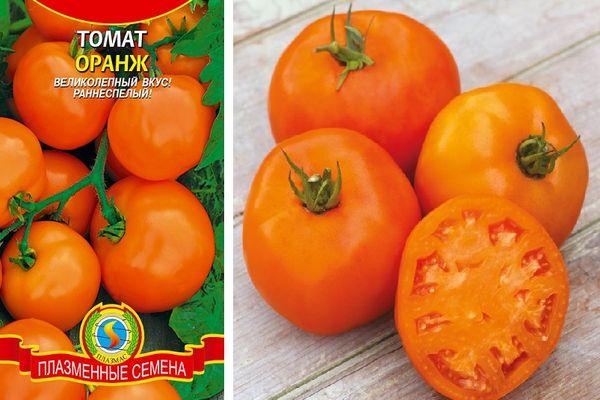
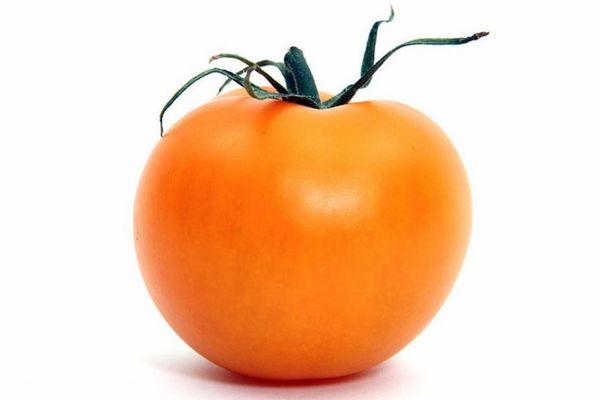
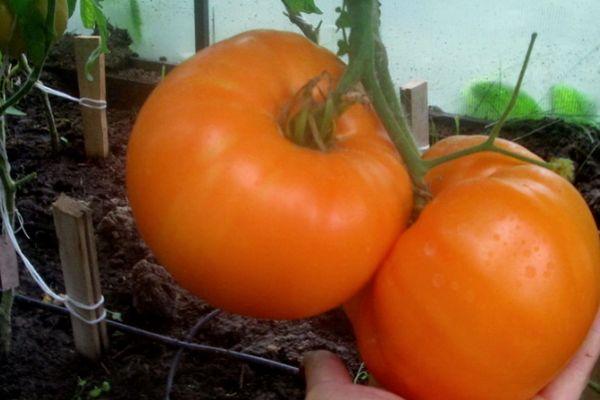
The plant produces 4-5 simple, unbranched fruit clusters. Each cluster contains 5-6 neat, spherical tomatoes, approximately 7 cm in diameter and weighing 120-150 g. The ovaries develop and ripen uniformly. At technical maturity, the fruit is pale green, with a darker area at the base. As they ripen, the tomatoes turn bright orange, resembling small oranges. There are no green areas left near the stalk.
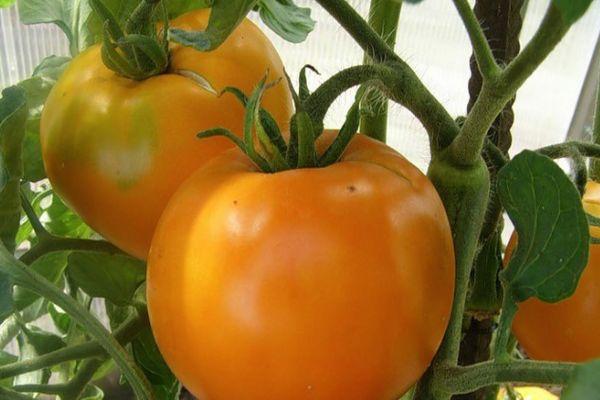
The fruit's skin is very strong; the tomatoes do not crack during ripening or when exposed to heat. They are easy to transport—their durable skin allows them to retain their marketable appearance and not spoil for several days. Unripe Orange tomatoes, picked at technical or blanched ripeness, ripen well at room temperature, with virtually no loss of flavor or vitamins.
The flesh is orange, juicy, and quite firm in slightly unripe tomatoes, and has a pleasant melon-like consistency in berries that have reached biological ripeness. The fruit's structure resembles that of a beefsteak tomato: several small seed chambers are concentrated within the flesh; the fruit is fleshy.
The variety's characteristics and description note the high sugar content of the tomato pulp and its rich beta-carotene content. This substance is what gives the fruit its color and flesh, as well as its valuable qualities. The lycopene content in orange-fruited varieties is just as high as in red ones. The reduced allergenicity of lighter-colored tomato varieties makes them suitable for children and dietary nutrition.
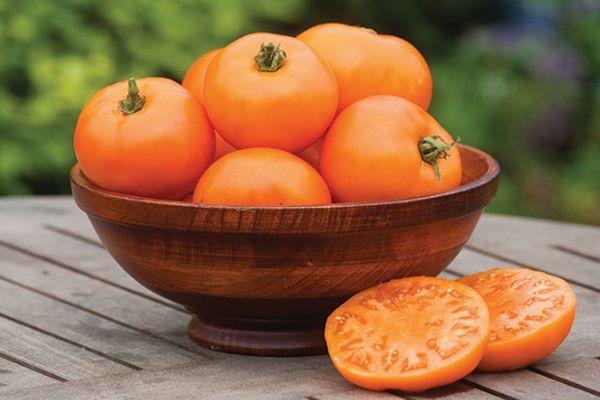
Gardeners rate the taste as high or excellent. The flesh has a distinctly sweet flavor; in cooler seasons, it acquires a slightly piquant tartness. The aroma is classic tomato, not overly strong.
These brightly colored tomatoes are best enjoyed fresh. Beautiful slices add a touch of color to salads and holiday platters; they're also perfect for sandwiches. Their pleasant flavor makes them perfect for elegant appetizers. They can also be used in hot dishes that call for tomatoes. Sauces and soups made with them will be lighter in color than usual, but the golden color can be an attractive highlight.

Surplus vegetables can be preserved for the winter using any traditional methods. Small tomatoes are selected for whole-fruit canning. Very ripe and large tomatoes can be processed into a thick, pleasantly orange-hued juice. This preserves all the beneficial properties of the fresh fruit and is a favorite among children. An unusual tomato-based appetizer filling can be used to create original sauces and lecho.
Agricultural technology of the variety
Growing delicious garden "oranges" isn't too difficult, as the principles of caring for these unusually colored tomatoes are no different from those for growing regular red tomatoes. You can buy Orange variety seeds only once, and then leave them to reproduce on the best plants. Plants grown from these seeds will inherit all the parent's qualities. Sow 1.5-2 months before transplanting outdoors.
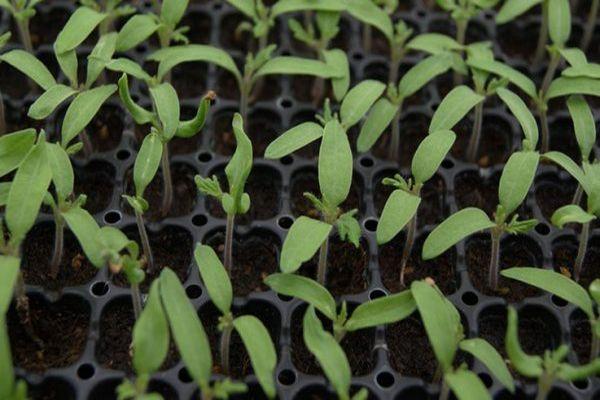
Before sowing, seeds should be soaked in a weak, warm solution of potassium permanganate or Fitosporin to kill any remaining fungal pathogens. The soil should be prepared from equal parts fine sand, garden soil, and humus. To reduce the acidity of the mixture, add 1 tablespoon of ground chalk or dolomite flour for every 5 kg of soil.
You can disinfect the soil directly in the seed tray by soaking it in a hot solution of potassium permanganate. Sow the seeds after the substrate has cooled.
After soaking, the seeds need to be dried slightly to restore their flowability. Spread them over the damp soil and cover with a thin layer of dry sand or previously stored soil (0.5 cm). Cover the box with glass or plastic film with 2-3 holes and place in a warm place (+25°C). Under these conditions, the tomatoes will begin to sprout in 4-5 days. Remove the film, and grow the plants until 2-3 true leaves appear.
When the seedlings reach this age, they are transplanted into individual pots or a common box using a 10x10 cm pattern. Care for the seedlings consists of watering them as the top layer of soil in the containers dries out. There is no need to feed the plants.
Take a look Also

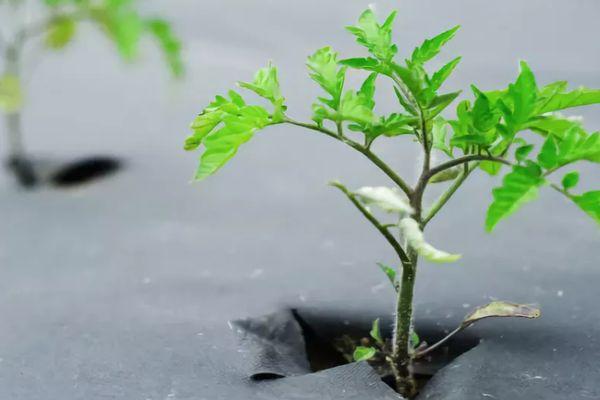
In their permanent location, seedlings should be planted in a 40x40 cm pattern. If the plants have grown tall, it's convenient to plant them horizontally: in furrows about 20 cm deep. Place the stems with their tips facing north and cover with soil, leaving 4-5 upper leaves exposed. If flower clusters have appeared, cover them with soil 1-2 leaves below them.
The plant is trained as it grows throughout the season. Before the first flower cluster appears, all side shoots should be removed. A second stem is formed from the side shoot above this cluster, continuing to remove the remaining side shoots until the second cluster with buds appears. A third stem should be left above this cluster. After this, side shoots should be removed until the end of summer, and in mid-August, the stem tips should be pinched to ensure all buds have time to reach technical maturity.
Related posts:
 Description and characteristics of the sweetest tomato varieties for greenhouses and open ground
 How to choose a tomato variety for growing in Ukraine and when to plant seedlings
 How to properly grow a peach tree from a seed at home, planting and care
 Planting and caring for cherries, feeding and growing rules
 Is it possible to grow an apricot tree from a seed in your garden? How to plant and care for it?
 The best grape varieties for growing in the Urals, planting and care rules in summer
 The best eggplant varieties for growing in a polycarbonate greenhouse: planting and care
 Descriptions of hosta species and the top 25 most beautiful varieties, growing rules