
- Potential danger to the plant
- Causes of yellowing pumpkin leaves
- Temperature conditions
- Malnutrition
- Influence of weather conditions
- Violation of agricultural technology
- Diseases
- Chlorosis
- Anthracnose
- Powdery mildew
- Root rot
- Pests
- Spider mite
- Mole cricket
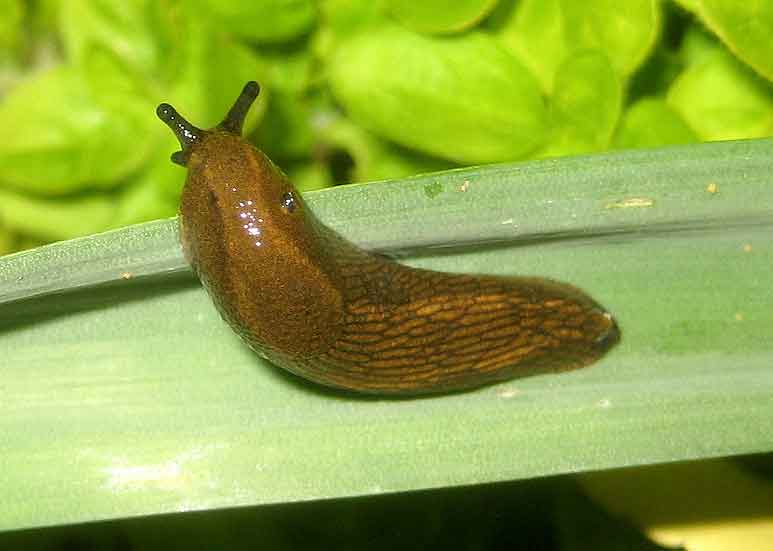
- Slugs
- What to do if the leaves turn yellow?
- Preventive measures
Pumpkin is a tasty and healthy vegetable that grows widely in gardens. Growing it is usually a breeze, as it's relatively low-maintenance. However, sometimes a problem arises: yellowing leaves. Why pumpkin leaves turn yellow, and how to combat it, is discussed below.
Potential danger to the plant
It's not the yellowing of pumpkin leaves itself that's dangerous, but the underlying causes. The color change indicates that the plant is damaged and requires attention. Plants that are diseased for any reason will be unable to produce healthy, large fruits, as they will lack nutrients.
Causes of yellowing pumpkin leaves
Pumpkin leaves can turn yellow and dry out for a variety of reasons. This can be caused by adverse weather conditions or improper care. Pest infestations and plant diseases are also possible causes.
Temperature conditions
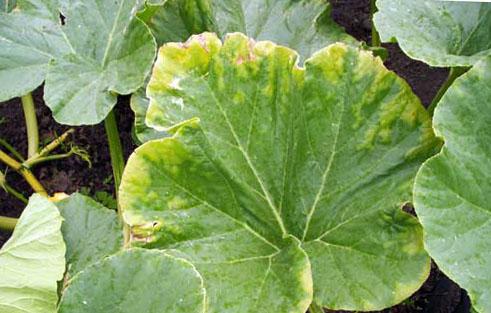
A sudden change in temperature can cause leaf blades to dry out or turn yellow. Hot daytime temperatures and low nighttime temperatures cause stress, which the plant responds to by changing the color and structure of the leaves. Excessively high daytime temperatures cause leaf blades to turn yellow and develop burns.
Malnutrition
Nutritional deficiencies are a possible cause of yellow leaves. Magnesium and iron deficiencies are the most common causes of leaf discolouration. To promote fruit production and a healthy appearance, pumpkin plants are fed with alternating organic and mineral fertilizers.
At the beginning of the growing season, plants require nitrogen fertilization, then with a predominance of potassium and phosphorus, as well as microelements.
Influence of weather conditions
Leaf discoloration can occur after early planting of pumpkin seedlings in open ground, as spring weather is still unstable and night frosts are possible. To prevent negative effects of cold, the plants should be planted in holes filled with plant debris to keep them warm. Another method is to install arches in the garden bed and cover them with plastic. Leaf blades also change color with excessively frequent and heavy rainfall, or, conversely, prolonged drought.
Violation of agricultural technology
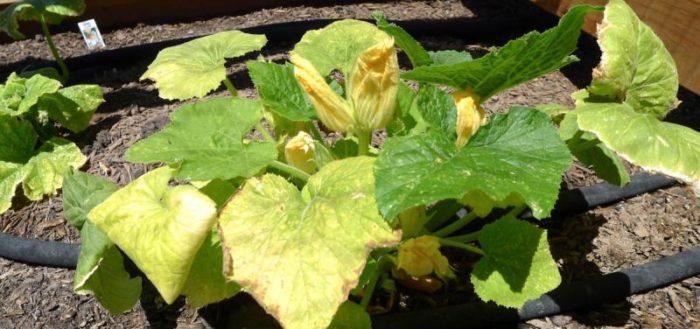
Overhead watering in hot weather can cause leaf burn, causing brown spots to appear on the leaves. Overhead watering at night can also have a negative effect. It's recommended that plants be left dry during the dark period, otherwise, pumpkins can be susceptible to fungal diseases, one of the symptoms of which is yellowing of the leaves.
Diseases
Pumpkin leaf discoloration can be caused by disease or pests. Regular inspections are essential to identifying the problem early. The sooner the cause of yellowing leaves is identified, the easier it will be for gardeners to restore their plants to health.
Chlorosis
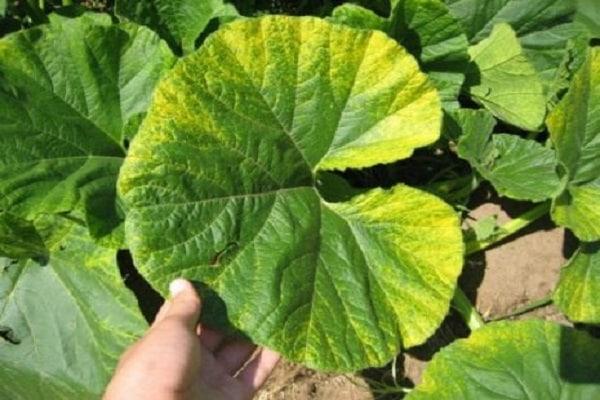
This disease occurs due to a deficiency of iron, magnesium, and other micronutrients in the soil. The leaves become smaller and turn yellow, but the veins remain green. To eliminate this problem, spray the plants with iron chelate. You can prepare it yourself as follows:
- dissolve 4 grams of iron sulfate in 1 liter of water;
- then add 2.5 grams of citric acid.
Important! When using chemicals, observe safety precautions: wear gloves, a mask, and protective goggles.
Anthracnose
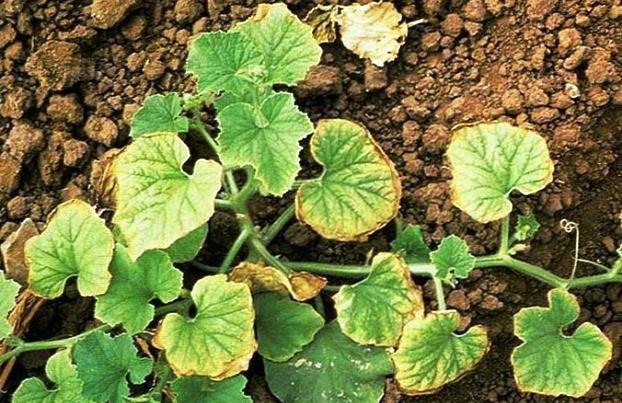
This fungal disease manifests itself as yellow or yellow-brown spots on the leaves. The disease subsequently spreads to other parts of the pumpkin. To combat anthracnose, the pumpkin is sprayed with a fungicide solution.
Powdery mildew
When leaves are affected by powdery mildew, they appear as if they're covered in flour. They subsequently begin to turn yellow and dry out as the plant's immunity weakens. In the early stages of the disease, pumpkins are sprayed with a solution consisting of the following:
- 20 grams of colloidal sulfur;
- 10 liters of water.
In addition, you can use the ready-made Topaz preparation.
Root rot
The disease affects plants due to overwatering or infestation of harmful microorganisms. To combat the problem, follow these steps:
- the top layer of soil is removed;
- the underground part is treated with an antifungal drug;
- the above-ground part is dusted with wood ash.
Many diseases can be prevented by following crop rotation and treating seeds with disinfectants before planting.
Pests
Another possible cause of yellowing leaves is an infestation of insects or underground pumpkin pests. If these are detected, immediate action is needed; otherwise, the plants will weaken and the yield will be significantly lower than expected.
Spider mite
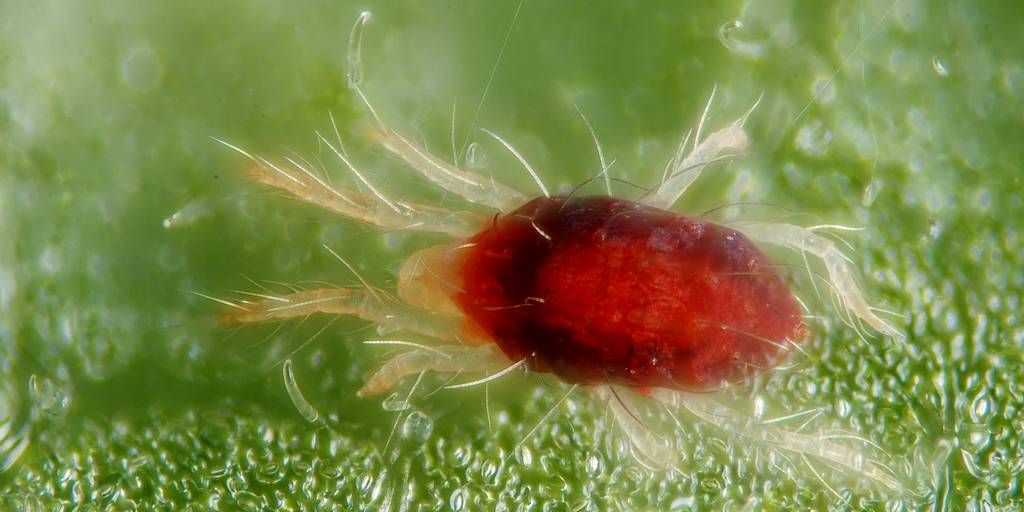
The pest reveals itself by the presence of webs entangling the leaves. It feeds on the sap, weakening the plant. If left untreated, the skins of fruits grown outdoors will eventually begin to crack. Various insecticides are used to combat the problem.
Mole cricket
When mole crickets damage the root system, the leaves also suffer. They begin to lack nutrients and signal the problem by changing color. To get rid of the pest, bury jars of beer or spoiled jam between the rows. Attracted by the aroma, the mole cricket falls into the container and is unable to escape on its own.
Slugs
These pests are removed by hand. Additionally, pumpkin leaves can be sprayed with tobacco infusion to prevent slugs from infesting the plants in the future. A soap solution can also be used to combat pests. Grate it or mix it with a knife, mix it with warm water, and then spray the plants.
What to do if the leaves turn yellow?
When leaf color changes, you should first thoroughly determine the cause of the problem and then address it. If the pumpkin is affected by disease, spray the plant with a fungicide. Insecticides are used to control harmful insects.
If the yellowing of the leaves is due to a lack of nutrients in the soil, the bushes are fed with fertilizers.
Preventive measures
To avoid the need to use chemicals in the future, the following preventative measures must be taken:
- Observe crop rotation, do not plant pumpkins after zucchini, cucumbers, or melons.
- Before planting, soak the seeds in a disinfectant.
- If there is a risk of night frosts, cover young plantings with film.
- Spray the seedlings with a decoction of phytoncidal herbs.
- Water the pumpkin only in the morning, before the midday heat sets in, or in the evening, long before dark.

To grow a healthy plant, proper agricultural practices are essential. Periodic inspections are necessary to identify pests and diseases. By identifying problems early and taking prompt action, gardeners can enjoy healthy and tasty vegetables until next season.
Related posts:
 Why do pumpkin ovaries turn yellow, fall off, and rot in open ground, and what can be done about it?
 Growing and caring for pumpkins in open ground, planting rules for a good harvest
 50 Best Pumpkin Varieties with Descriptions and Characteristics for Outdoor Planting
 Rules for growing pumpkins on a balcony at home and how to choose the right variety
 How to shape and pinch pumpkins in open ground to get a good harvest
 How often should you water pumpkins in open ground in August during hot weather?
 Why pumpkins aren't setting fruit and what to do about it. Hand pollination and tips on how to fix it.
 Description of 25 varieties of butternut squash, cultivation and care in open ground