
- Brown spots on apple tree leaves: causes and symptoms
- Deficiency of fertilizers and nutrients
- Unsuitable climatic conditions
- Scab infestation
- Infection with fungal colonies
- Copperhead and mineral deficiency
- How to treat and process apple plantings
- Adding fertilizer and necessary macro- and microelements
- Elimination of fungal diseases
- Copper-containing drugs
- Sulfur-containing drugs
- Treatment of apple tree leaves with biological preparations
- What are the consequences for the apple tree and the harvest?
- Other preventive measures for improving the health of your orchard
Brown spots on apple tree leaves are a sign of disease. Causes include pest infestations, nutritional deficiencies, and fungal infections. Each situation requires an individual solution. Below are effective recommendations for saving your apple tree.
Brown spots on apple tree leaves: causes and symptoms
If dark spots appear on apple tree leaves, this indicates they may be drying out. The sooner a gardener addresses the problem, the better the chances of saving the fruit tree.
Deficiency of fertilizers and nutrients
Apple trees need to be fertilized according to a predetermined schedule. When nutrient deficiencies occur, spots may appear on the leaves. Nitrogen-rich fertilizers are needed in the spring, and phosphorus and potassium in the fall. Overfeeding with nitrogen can lead to copper deficiency, which negatively impacts the growth of any apple tree variety. To mitigate this deficiency, spray with a copper sulfate solution or use copper-containing fertilizers.
An effective method is to dissolve the dry components in water and gradually pour it around the tree trunk.
When spraying, it's important to remember that copper sulfate is toxic and dangerous to humans and bees. The latter can affect pollination if the variety isn't self-pollinating. The air temperature during spraying should not exceed 25 degrees Celsius, or it will be ineffective.
Unsuitable climatic conditions
Unfavorable weather conditions affect the health of apple trees. During severe, prolonged frosts, black spots often appear on the leaves. This isn't a problem, and new foliage grows back. The situation gets worse when the wood is damaged. This manifests itself when the apple tree wakes up late after the winter, then recovers somewhat, but the leaves become small and sprout later than usual in the spring.
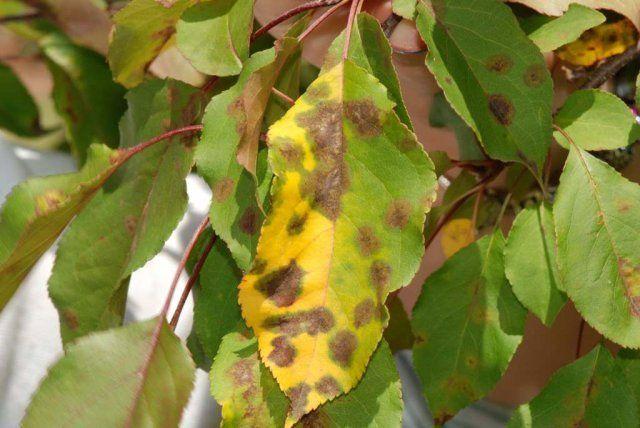
The effects of freezing become apparent over the next 3-4 years. The extent of damage can be determined by cutting weakened shoots. Darkened areas indicate frost damage in these areas. The affected areas are no longer capable of regeneration, but with proper care, the tree can live for another 6-8 years. During this period, a new apple tree can be grown. Proper care includes rejuvenating pruning, increased irrigation, and fertilizing.

Scab infestation
Black spots on leaves sometimes appear as a result of scab. Its development is preceded by a fungus that attacks not only the leaves but also the flowers and stalks. The disease can be detected at the development stage, when the leaves become covered with a brown coating. In the next stage, they dry out and turn brown. Eventually, the leaves die and fall off.
The disease appears on apple trees in early summer and progresses rapidly. After scab infects the leaves, the fungus migrates to shoots, ovaries, and even the fruit. Improper watering, frequent heavy rains, and morning fog accompanied by heavy dew trigger the development of the disease.
Infection with fungal colonies
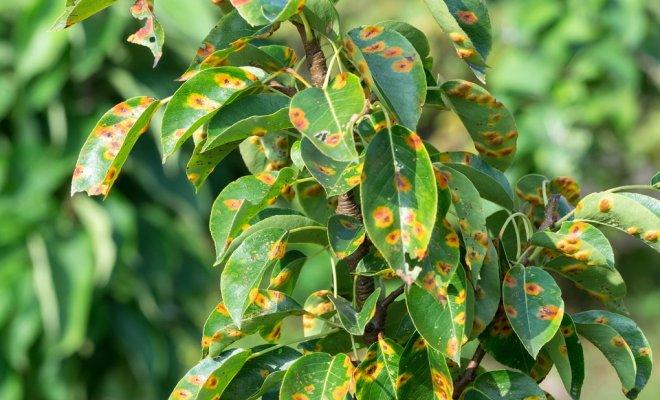
If apple tree leaves are covered in rust, it could indicate a fungal attack. Small dark spots appear along with spores on nearby plantings. Initially, the tissue expands, forming star-shaped growths on which new spores are visible. These spores are carried by the wind to the fruit trees.
Copperhead and mineral deficiency
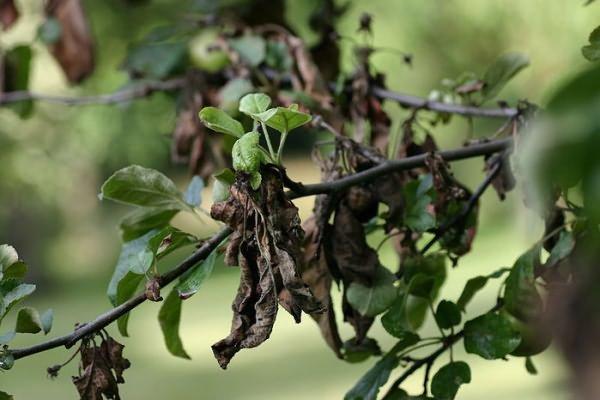
The leafhopper and its larvae suck the sap from young apple tree leaves and flower stalks. The insect causes the death of flowers, the loss of ovaries, the reduction of foliage, and the general weakening of trees. The larvae secrete a sticky, honeydew-like substance in the form of light-grayish balls. This melts, gluing together the inner parts of unfolding buds, flower stalks, and young leaves at the tips of branches.
Black mold settles on the sweet secretions, causing the leaves, shoots and fruits to become covered with black spots.
Females can lay up to 1,200 eggs over the summer, as the pest develops through several generations. In March, before the sap begins to flow, apple trees should be sprayed with hot water at 60 degrees Celsius (140 degrees Fahrenheit). During bud break, before the pollen appears, the leafhoppers can be controlled with Inta-Vir at a rate of 1 tablet per 10 liters of water. Spraying with infusions of garlic, celandine, onion peel, tansy, potato tops, and tobacco mixed with wood ash during the growing season has shown excellent results.
How to treat and process apple plantings
When an apple tree is attacked by pests, the following steps should be taken: first, they should be destroyed with insecticides. Second, any nutrient deficiencies should be replenished with fertilizers. Third, the diseases should be treated with fungicides and folk remedies.
Adding fertilizer and necessary macro- and microelements
Apple tree leaves become deformed and brown spots appear on them, usually due to a lack of mineral components in the soil.
- When there's a calcium deficiency, leaves become discolored, curl, and fall off. This problem can be solved by adding calcium sulfate-based fertilizer, but only if the soil pH is normal. If the pH is elevated, the pH should be adjusted to 5.1-7.5.
- If an apple tree lacks boron, the leaves turn yellow, curl, and show dead spots along the edges. To replenish this deficiency, the tree is treated with a boric acid solution at a rate of 15 grams per 10 liters of water.
- Magnesium deficiency is indicated by yellow or brownish spots on the leaves, which curl up. Trees should be fed with potassium magnesium sulfate, magnesium sulfate, or dolomite flour at a rate of 30 g per square meter of soil.
- When an apple tree experiences a phosphorus deficiency in the spring, leaves fail to open and new shoots fail to form. A deficiency of this micronutrient during the growing season results in yellowing and curling of leaves, and premature flower and fruit drop. To address this problem, foliar feeding with a 3% superphosphate solution is recommended.
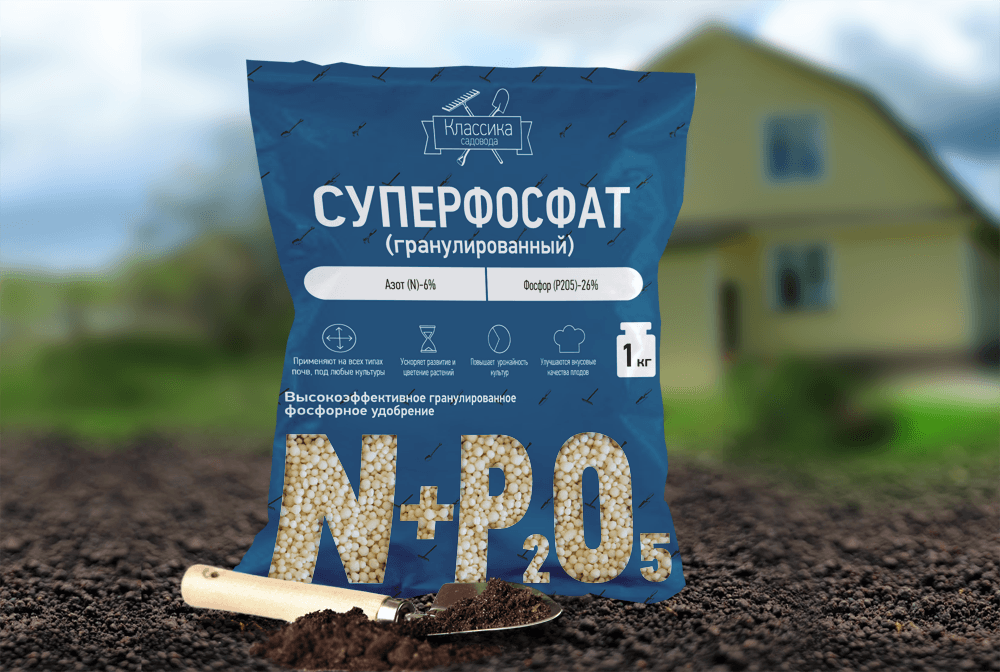
If you follow these rules, you will be able to restore the apple tree to a healthy appearance within 1-2 months.
Elimination of fungal diseases
To eliminate fungal infections of apple trees, fungicides are used. Topaz, Fitosporin, and Topsin are effective against powdery mildew. When the infestation is severe, penconazole-based products are used.
Copper-containing drugs
Copper-containing products should be used in warm, cool weather. Otherwise, leaf burns are possible. The following products are widely used.
- Blue Bordeaux is a granular product that mixes easily with water and can be used in inclement weather. It effectively eliminates spore colonies.
- Abiga Peak – the active ingredient is copper; it's a contact product applied to the affected areas. It should only be used in dry weather. To prepare a solution, mix 50 grams of the product with 10 liters of water.
- Cuproxate. This product contains nitrogen and copper acetate. A 0.25% solution eliminates all fungal colonies. It can be used as a root irrigation. It eliminates rust and supplies the soil with beneficial elements.
- Champion. Used for medicinal and preventative purposes, it coats leaves with a protective film. It prevents the spread of fungi throughout the apple tree. While it doesn't completely eliminate fungal spores, it creates an unfavorable environment for them. Use 60 g of the product per 10 liters of water. Avoid using the product during hot weather.

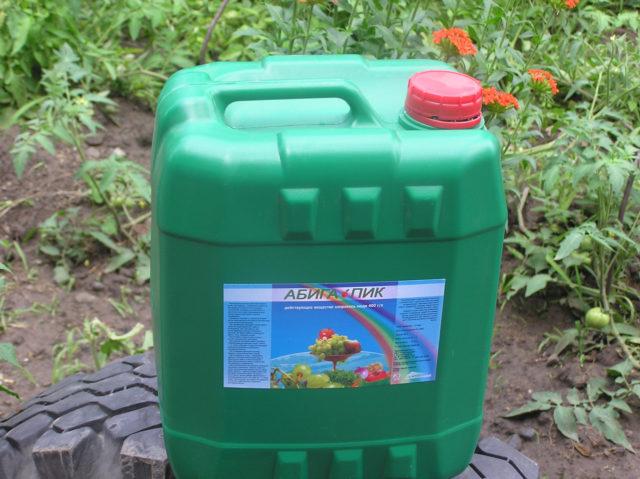
The above mentioned products must be diluted according to the instructions, otherwise, you may harm the apple tree or not achieve the desired result.
Sulfur-containing drugs
To remove brown spots on leaves, you can use sulfur-containing products.
- Colloidal sulfur. It is used as a solution. To prepare the solution, take 40 g of sulfur powder and 5 liters of water. Do not use this solution if the plant is blooming.
- Cumulus. The main ingredient is sulfur. The product is easily soluble in water and does not cause dust.
When purchasing, pay attention to the expiration date of the drugs.
Treatment of apple tree leaves with biological preparations
Biological products serve as an alternative to chemicals and have a milder effect on plants. It is advisable to use products based on biological toxins for spraying young seedlings. This procedure helps boost the immunity of apple trees, protect them from diseases, and eliminate the effects of rust.
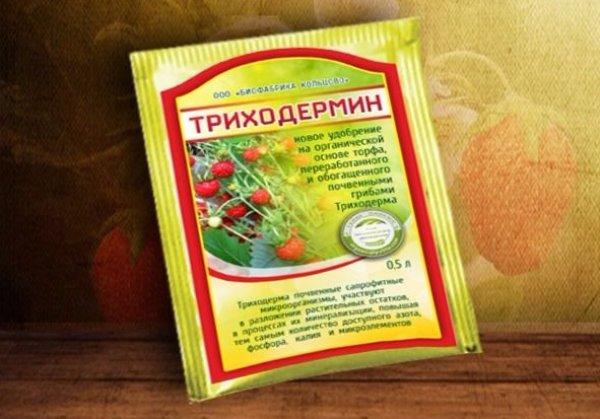
- Trichodermin. Take 50 grams of the powder and dissolve it in 1 liter of water. Stir the mixture, then add another 5 liters of water.
- Planriz. This product contains rhizosphere bacteria that actively suppress rot and promote a protective microflora. Dissolve 100 ml of the product in 10 liters of water.
- Phytodoctor. Dissolve the powder in water and treat the rhizomes with the solution. This solution inhibits fungal growth.
You can make your own biological solution by mixing the components in the required proportions.
What are the consequences for the apple tree and the harvest?
If apple trees are left untreated, the spots expand, the leaves dry out and fall off, and the yield decreases. Additionally, the fruit's flavor suffers. The trees' photosynthesis and nutrient metabolism are disrupted, and their water balance is disrupted.
Other preventive measures for improving the health of your orchard
Apple trees should be planted away from conifers. In the spring, clear away affected areas until a layer of healthy wood appears. As a preventative measure, spray young trees with a copper sulfate solution. Space seedlings 3 meters apart.
Related posts:
 Signs and treatment of apple tree cancer, varieties resistant to the disease
 Description and varieties of the Sinap apple tree, planting and care rules
 Description of the Chudnoe apple variety, planting and caring for a dwarf tree
 Description and characteristics of the columnar apple tree President, planting and care
 Description and planting of the Dream apple tree variety, care and propagation
 Description and subtleties of growing the Sverdlovsk Beauty apple tree variety
 Description of the ornamental Nedzvetsky apple tree, cultivation technology
 Description and characteristics of the Orlovim apple variety, cultivation nuances