
- History of selection
- Description and characteristics of the variety
- Height of a mature tree
- Flowering and ripening period
- Productivity
- Transportability
- Drought resistance
- Frost resistance
- Applications of berries
- Pollinators
- Advantages and disadvantages
- How to plant
- Recommended timeframes
- Choosing a location
- Preparing the planting hole
- How to select and prepare planting material
- Roots
- Fibrous roots
- Trunk
- Age
- Leaves
- Requirements for neighbors
- Planting diagram
- Care Features
- Watering mode
- Top dressing
- Spring
- Summer
- Autumn
- Crown formation
- Preparing for winter
- Sanitary pruning
- Weeding and loosening
- Spring processing
- Crown thinning for a mature tree
- Diseases and pests
- Reproduction of culture
- Harvesting and storage
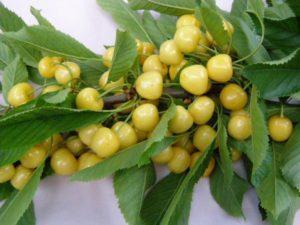
Standard cherry varieties include red and black varieties. Yellow cherries can add variety to your garden; they require less care and produce equally delicious and juicy fruits. The light-colored berries are resistant to high humidity, do not spoil, and are not susceptible to rot. One of the best yellow varieties is the Chermashnaya cherry. Before planting a tree in your garden, it's important to familiarize yourself with all the nuances of its cultivation and care.
History of selection
The cherry was developed at the All-Russian Selection and Technological Institute of Horticulture and Nursery through breeding work. A. Evstratova, Kh. Enikeev, and N. Morozova are considered the originators of the new variety. They sowed open-pollinated seeds, and the breeders chose the Leningradskaya Zheltaya variety as the parent material.
The resulting cherry variety was documented in the State Register of the Russian Federation in 2004. The characteristics of the yellow cherry make it suitable for cultivation in the Moscow, Nizhny Novgorod, and Vladimir regions.
Description and characteristics of the variety
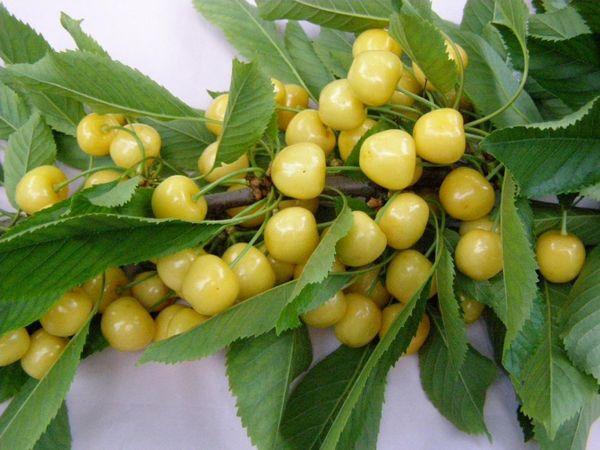
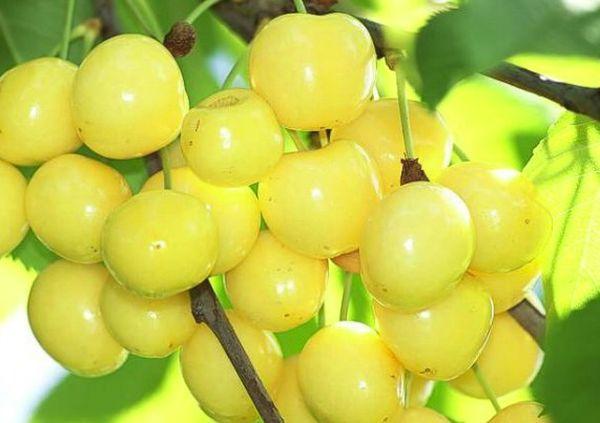
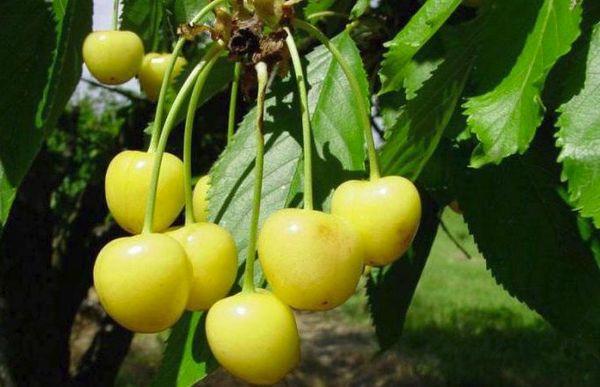
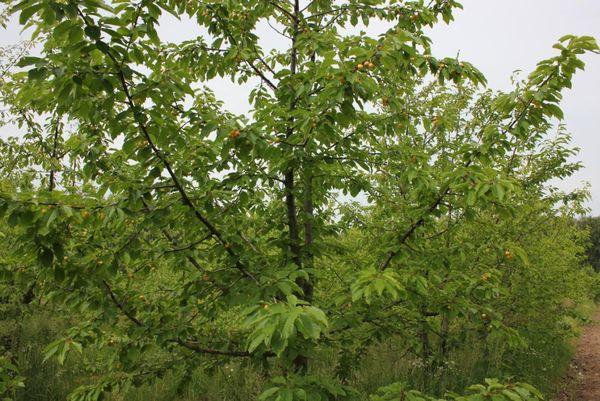
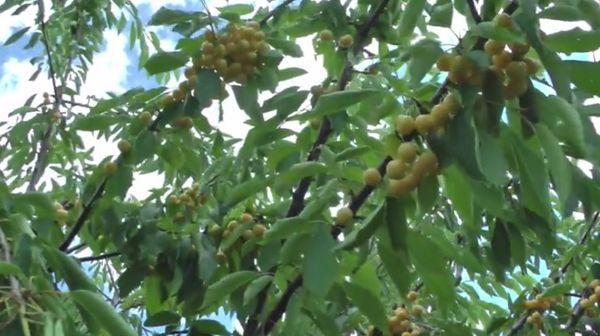
The plant is considered medium-sized, growing up to 4-5 m. The tree is characterized by vigorous growth, with the formation of straight, red-brown shoots. The foliage is medium-dense and round-oval in shape. Chermashnaya's leaves are medium-sized, dark green, and glossy.
The berry is highly resistant to fungal diseases and parasites and can survive for long periods without watering. Cherry trees are winter-hardy, with roots and branches surviving sub-zero temperatures. In undernourished specimens, flowers and buds are susceptible to freezing.
Height of a mature tree
The trees are not particularly tall, growing to 4-5 m. The foliage is rounded, upturned, and of medium density. Cherry leaves are medium-sized, elongated, and oval, with a pointed tip and a medium-serrated margin.
Flowering and ripening period
Fruiting occurs on bouquet branches and shortened shoots. Cherry blossoms are umbel-shaped and white. Flowering occurs before the leaves and vegetative buds emerge. The first harvest of Chermashnaya cherries can be obtained as early as three years after planting a two-year-old seedling. By the sixth or seventh year, the harvest will reach its peak.
Ripening begins around the 20th of June, and the berry picking period can last for several weeks.
Productivity
A mature Chermashnaya tree produces up to 30 kg of berries. Growing cherries on an industrial scale allows for yields of up to 85-90 centners of fruit. The key to a healthy yield is the presence of nearby pollinators.
Transportability
Cherries have poor transportability due to their juicy flesh. They should be sold immediately after picking. To transport cherries to another city, they must be kept in a refrigerator for 1-2 days at a temperature of 6-7°C.OWITH.
Drought resistance
The plant can survive without water, but lack of water will negatively impact the taste of the fruit. For a tasty harvest, regular irrigation is essential.
Frost resistance
Cherry trees tolerate subzero temperatures well. In temperate regions, the wood is susceptible to frost damage.
Applications of berries
Cherries are best consumed immediately after picking. The berries and cuttings are stored in a refrigerator for 3-4 days. When frozen, the produce can be stored for up to six months. The fruits are used to make preserves, jellies, compotes, juices, liqueurs, and jellies.

Pollinators
Cherry cherry is considered a self-sterile variety; ovaries can only be produced by pollination with other fruit crops.
The best pollinators for Chermashnaya cherry are considered to be:
- Raditsu. It produces large, delicious, dark-red berries. The plant ripens early and is self-sterile.
- Shokoladnitsa. It boasts abundant yields, self-fertility, longevity, drought tolerance, and frost resistance. The berries are tasty and attractive.
- Krymskaya. Distinguished by its small black berries, it has a bird cherry flavor with a slight tartness. It is a pollinator for other cherry varieties.
- Fatezh. An early-ripening, high-yielding, frost-resistant variety. The berries are sweet, juicy, and have excellent transportability.
- Leningrad Black. An early-ripening plant with a large yield. Its frost and drought tolerance, as well as resistance to diseases and pests, are excellent.
- Iput. It bears fruit consistently and is highly resistant to frost and fungal diseases. The fruits are tasty and attractive.
The flowering and ripening times of pollinator trees must coincide.
Advantages and disadvantages
Agronomists consider the following to be the positive aspects of the Chermashnaya cherry:
- good adaptation of cherries to cold weather;
- high resistance to fungal infections, heat;
- growth intensity, fruiting rate.
A disadvantage is that the plant is self-sterile, unable to self-pollinate. For a bountiful harvest, multiple pollinators are needed. Their flowering and ripening periods must be simultaneous.
How to plant
Before starting planting, it is important:
- decide on the location where the cherry tree will be located;
- prepare the soil;
- remove all weeds and debris;
- dig a hole;
- prepare planting material.
The Chermashnaya variety is suitable for temperate climates, where winters are cold and summers are humid and warm. The plant's survivability and adaptability to all weather conditions determine the timing and method of planting.
Recommended timeframes
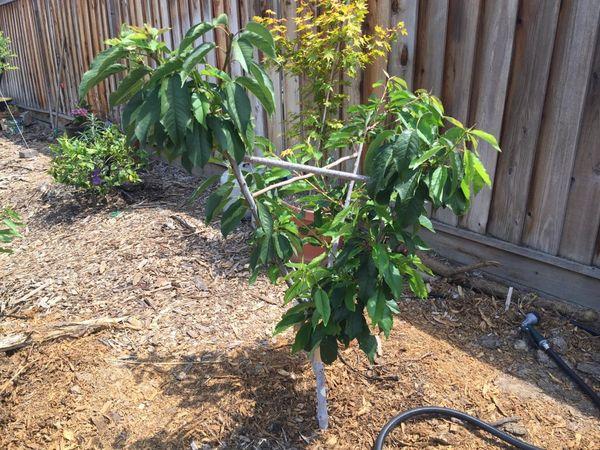
The best time to plant Cherry trees is spring; some gardeners prefer to plant seedlings in the fall. Planting cherry trees in the fall is easier, but not safer, as the seedlings may not fully establish and may freeze. After planting the tree in the ground, the trunk needs to be insulated with a protective covering.
Choosing a location
The Chermashnaya variety should be planted in a well-lit, sunny location. The planting site should be free of drafts and near groundwater. Loamy soils are required for proper growth. Peaty, sandy, and clayey soils are unsuitable. Acidic soils are also considered unsuitable. Liming can reduce the acidity of clay soils.
Preparing the planting hole
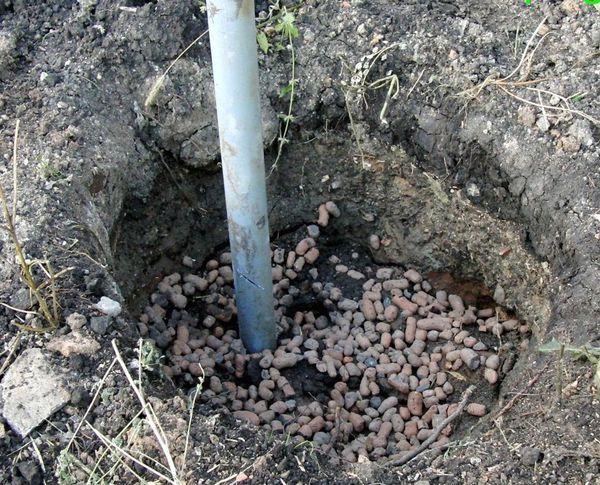
Digging and preparing the hole begins in autumn. The hole should be 65-70 cm deep and 90-100 cm wide. The bottom soil is removed, replacing it with a drainage layer of gravel or pebbles. The topsoil is mixed with a fertilizer mixture. Effective fertilizers include humus (20 kg) and wood ash (10 kg). Superphosphate and water (5 buckets) are also added to the depleted soil.
How to select and prepare planting material
The growth and fruiting of the Chermashnaya cherry tree depend on healthy, high-quality planting material. Experienced gardeners recommend purchasing cherry seedlings from a certified garden center or nursery. There are several criteria for selecting seedlings.
Roots
The cherry tree's root system should be free of swelling, damage, or rot. Healthy roots are flexible. A healthy root system can be identified by the following parameters:
- Length. The optimal size of the main roots is 25-30 cm. It is necessary to examine the fibrous roots; there should certainly be a lot of them;
- frostbite. Cherry roots should not have any dried or frostbitten areas;
- White color. The inside of the root should be white. Brown color indicates frost damage or drying out of the roots;
- for cancer. The root collar and roots should not have swellings or growths—these indicate root cancer.
Fibrous roots
There should be 3-5 main branches, dotted with absorbent roots.
Trunk
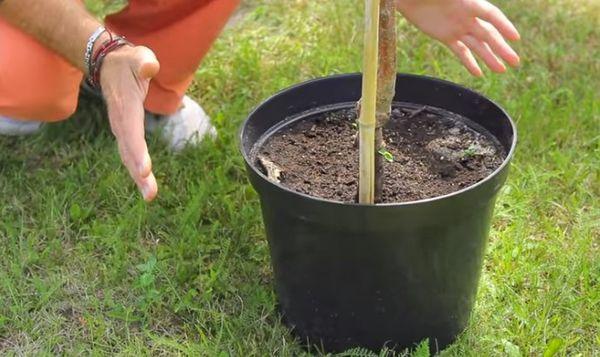
The trunk should be straight, the bark should be smooth, grayish-brown, without cracks, spots, or signs of rot.
Age
A two-year-old cherry seedling is distinguished by a straight central conductor with several developed skeletal branches.
Leaves
Agronomists recommend giving preference to trees without leaves, as they deprive plants of moisture.
Before starting work, the seedlings are stripped of leaves and mixed with clay slurry or Kornevin.
Requirements for neighbors
Pollinator trees such as cherries and sweet cherries should be planted near the Chermashnaya cherry tree, spaced 3-5 meters apart. It's not recommended to plant cherries near shrubs or apple trees.
Planting diagram
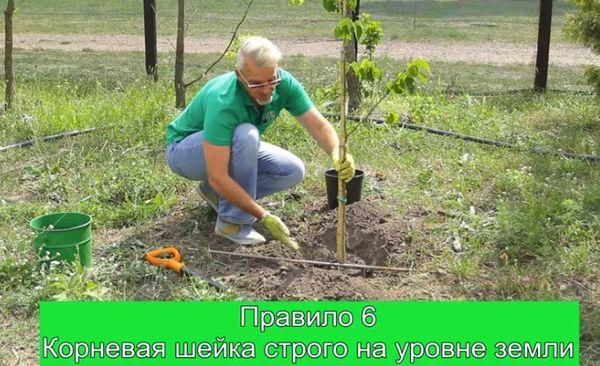
The process of planting Chermashnaya occurs in stages:
- First, examine the root system and, if necessary, soak them in a bucket of water;
- The soil is removed from the hole and a small mound is placed at the bottom. The seedling is placed in the middle of the hole and the roots are spread out;
- After securing the trunk, the excavated soil is returned to its place. To ensure even distribution of the roots, the tree is periodically shaken;
- The soil is compacted, the plant is tied to the support, and a trunk circle is formed.
Water the planting with 2-3 buckets of water.
Care Features
Chermashnaya care determines the quality and quantity of the future harvest. This is impossible without proper pruning, fertilizing, spraying, weeding, watering, and loosening the soil.
Watering mode
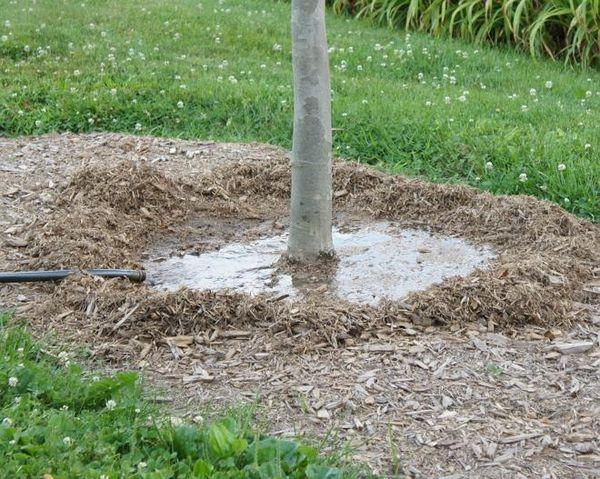
The Chermashnaya cherry variety is considered moisture-loving. It's important not to overwater or allow the soil to become waterlogged. Given the climate of the Central District, watering should be done three times per season:
- at the beginning of the growing season, during bud swelling;
- 2 weeks after flowering;
- a few weeks before the fruits begin to ripen.
Pre-winter watering involves loosening the soil beforehand. This will improve water penetration into the root system. One tree will require 5-6 buckets of water.
Top dressing
For the first few years, the planting is fed with fertilizer mixtures added during planting. In the fourth year, the soil is enriched with mineral fertilizers. Humus and urea, either dry or dissolved, are often used.
Spring
Root feeding is performed in late March, May, and August. Fertilize the soil with dry ammonium nitrate and a mineral solution containing urea and water. A solution of chicken manure and water is also effective.
Summer
At the beginning of the summer period, foliar enrichment of the soil is carried out with potassium-phosphorus mixtures such as Planriz, potassium chloride, potash, and humated ammophos.
Autumn
In September, the Chermashnaya cherry tree is given additional feeding, enriched with compost, peat, and manure. If necessary, the soil is limed with chalk, lime, and ash.
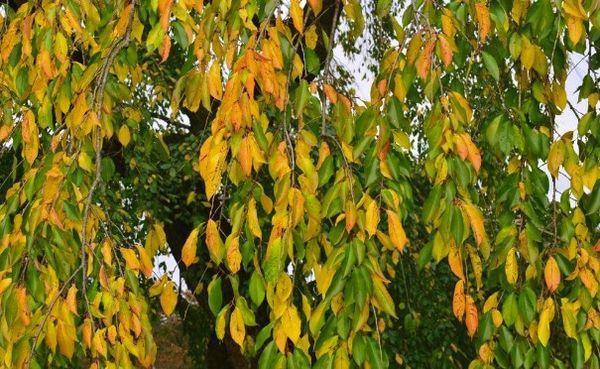
The soil's acidity should be checked every 3-4 years and adjusted if necessary. If the pH level rises significantly, dilute the soil with high-moor peat. Frequent application of fertilizer mixtures can cause the soil to acidify. In this case, sprinkle the area around the tree trunk with chalk or slaked lime.
Crown formation
It's best to prune the Chermashnaya cherry tree in early spring, before the buds swell. In the second year, it's time to begin shaping the crown. Formative pruning is performed year by year:
- During the first year, the lower tier is formed. After pruning, the skeletal branches should reach 65 cm from the ground and be spaced 25 cm apart. The remaining branches are reduced by half. The central branch should be 18 cm taller than the others.
- In the second year, the second tier begins to form; it should rise 95 cm above the first. The other shoots are shortened by one-third. The central branch remains erect.
- By the 3rd year, the lowest tier is formed; it should be at a distance of 95 cm.
- Growth. Over the course of 5 years, cherry trees develop long shoots that need to be cut back to 50 cm in length.
The standard crown shape is sparsely tiered. This type of foliage consists of four skeletal branches in the upper tier, two or three branches in the second tier, and a couple of branches in the last row.
Preparing for winter
Preparatory procedures include pre-winter watering and limewashing of the trunk. The trunk should be insulated with a covering material such as burlap, agrofibre, or polyethylene film. To protect the roots from pests, roofing felt or fine metal mesh is placed around the trunk circle.
Sanitary pruning
Cherry trees require annual sanitary pruning and thinning of foliage. This procedure involves removing branches growing in the inner part of the crown, as well as dried and rotten branches. It is important to promptly remove infected areas.
Weeding and loosening
Weeds are harmful because they rob the tree of nutrients and clog the soil. To ensure a high-quality harvest, the soil around the trunk is regularly loosened and weeded.
Spring processing
In the spring, after watering, loosen the dried soil. This is necessary to stabilize gas exchange in the cherry tree's root system and retain moisture in the soil. For greater moisture retention, mulch with dry grass, leaves, hay, or sawdust. To protect the plant from the hot summer months, whitewash the trunk with lime mortar.
Crown thinning for a mature tree
Spring thinning pruning prevents the foliage of the Cherry tree from becoming dense. This increases the number of berries, maintains the tree's health, and regulates the crown's height. Closely spaced branches and underdeveloped shoots should be removed.
Diseases and pests
The Chermashnaya cherry variety is susceptible to diseases such as:
- Moniliosis (gray mold). A gray, fluffy coating gradually appears on leaves, shoots, flowers, and fruits. As the berries soften, fungal spores spread. Affected branches will need to be pruned and treated with copper oxychloride and urea.
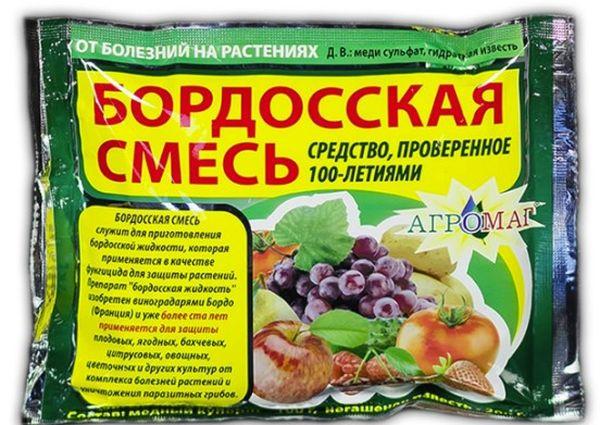
- Brown spot. Identifiable by yellow spots that gradually increase in size, darken, and spread across the entire leaf. As a result, the leaves curl and dry out. The process can be stopped with copper sulfate or Bordeaux mixture.
- Clasterosporium. In April and May, leaves become covered with round, light-brown spots bordered by red. After 1-2 weeks, the spots dry up, forming holes. The spots spread to fruits, buds, and shoots. This disease can be prevented by timely spraying with Bordeaux mixture and Nitrafen.
Cherry is a tasty plant for the following insect pests:
- Cherry aphid. Characterized by a sticky coating on the leaves, the presence of sooty mold, and leaf curling and dropping. Treat with Actellic, Fitaverm, and Inta-Vir.
- Cherry trumpet fly. Feeds on buds, flowers, leaves, and ovaries. Controlled by Chlorophos, Metaphos, Actellic, and Korsar.
- The cherry sawfly lays its eggs on the underside of leaves. In early summer, it entangles the foliage in webbing, consuming the leaves. Control can be achieved with Karbofos, Iskra-DE, Decis, and Iskra-M.
You can prevent the appearance of unpleasant insects by taking preventative measures such as removing cherry tree leaves, weeding, digging, and loosening the soil.
Reproduction of culture
The optimal method of propagation is by cuttings. First, prepare a planting hole 40-50 cm deep and drain the soil. The cuttings should be at least 25-30 cm long. Place the plant in a basin of water with a growth stimulant added, and cover the basin with plastic wrap. After three weeks, roots will begin to form. Then, transplant the cherry tree to the open ground.
Harvesting and storage
Cherry cherries should be picked carefully, stems included. They should not be wet, as this will accelerate rotting. The harvesting container should be 4-5 liters. Because of their thin skin and tender, juicy flesh, these cherries are difficult to transport over long distances. Refrigeration can prevent mold during short-term storage.
Related posts:
 Planting and caring for cherries, feeding and growing rules
 Description and cultivation of the Bryansk pink cherry variety, pollinators
 Description and characteristics of the Veda cherry variety, planting and care scheme
 The health benefits and harms of cherries, rules of consumption, and their effects on the body
 Descriptions of the 20 best cherry varieties for the Moscow region, their planting and care
 Description of the cherry variety Lyubimitsa Astakhova, planting and care
 Description and cultivation of the Revna cherry variety, pollinators
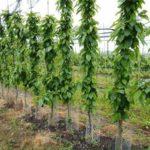 Description and characteristics of columnar cherry varieties, planting and care