
Residents of the southern region and other regions with developed agriculture can enjoy a harvest of delicious and healthy cherries. However, difficulties and setbacks can arise. Errors in agricultural practices, the development of diseases, and unfavorable climatic conditions can cause cherry trees to wilt after they've blossomed. The tree requires good care and timely disease prevention to ensure consistent fruit production and protection from pests and pathogens.
Description of the problem
Gardeners most often identify problems that arise with cherries based on primary signs:
- wilting of leaves;
- shedding of leaves;
- shedding of ovaries.
If leaves on a cherry tree suddenly begin to wilt, it's important to determine the cause and begin eliminating it as quickly as possible, before the cherry tree dries out completely. Otherwise, you could not only lose your harvest but also completely destroy the plant.
Possible reasons why young cherries wilt
There can be several causes of leaf wilting, each with its own specific remedies. It's especially helpful for beginning gardeners to understand these.
Mistakes when planting a seedling
The most common reason for young cherry trees to gradually dry out is improper planting. The tree requires good light and sunlight, as well as protection from drafts and cold winds.
When selecting and purchasing planting material, be sure to pay attention not only to the appearance of the above-ground part, but also to the condition of the root system.
It is recommended to plant trees aged 1-2 years, since they have the best survival rate.
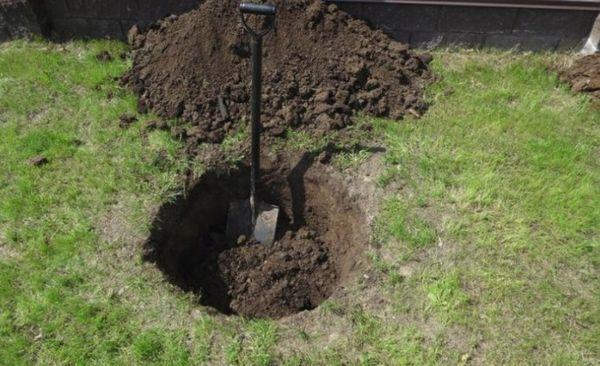
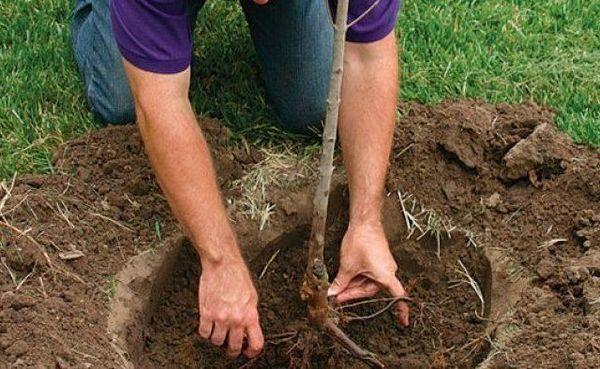
Cherry tree planting should be done in a timely manner. Prepare the planting hole in advance to allow the soil to settle. The root collar should be slightly above ground level. Planting in a freshly dug hole causes the tree to settle along with the soil, which will further inhibit its growth and development. Shallow planting leads to root system desiccation. Excessive mineral fertilizers in the planting hole can also cause the seedling to dry out.
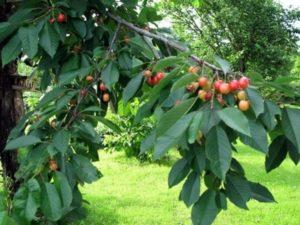
Adverse weather conditions
Hot and dry weather causes not only young saplings to dry out, but also cherry trees that have already begun bearing fruit. As soon as they begin to blossom, they begin to consume more moisture.
During drought, it's necessary to provide regular, systematic watering and dig a shallow trench around the seedling. It's a good idea to mulch the soil around the trunk using grass or sawdust. Make the mulch layer at least 10 cm thick.
Cherry trees are heat-loving plants, so special attention must be paid to preparing them for winter. Otherwise, the leaves that emerge in the spring will fall off, and cracks will appear on the trunk. This can be prevented by taking the following steps:
- remove damaged branches in a timely manner;
- remove dead bark from the trunk;
- In the fall, wrap the young seedling with non-woven, breathable material;
- fertilize the tree trunk circle in preparation for the winter period;
- whitewash the trunk with a lime solution or paint specially designed for this purpose.
Presence of diseases
The negative impact of pathogens not only leads to reduced yields but also to leaf wilting and shoot drying. Early detection and treatment of disease signs can prevent major problems and maintain high yields.
Ticilliosis
A dangerous disease that ultimately causes cherry trees to die back. It most often affects young seedlings. Signs of damage include:
- curling of the edges of the leaf blade along the vein;
- the blossoming buds wither after a week;
- the fruits that have set do not ripen.
As a result, the leaves fall off completely, leaving the trunk bare. Cherry trees can be saved by applying a root fertilizer containing wood ash, potassium sulfate, or urea.
Moniliosis
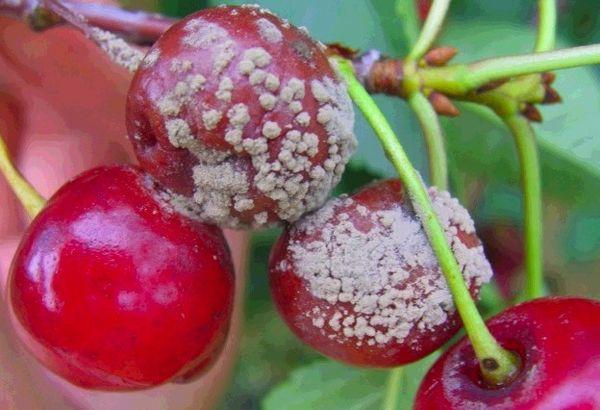
Signs of this disease include wilted leaves, withering flowers, and rotting berries. The ends of the shoots appear scorched, and gray growths are visible on the bark. The disease is controlled by removing diseased branches and leaves. Cherry trees are also treated with fungicides.
Take a look Also

After flowering, it's advisable to treat the tree with copper-containing products. Preventative spraying is also recommended on nearby trees.
Impact of pests
Pests also cause cherry tree leaves to wilt. Early detection and eradication are key to controlling pests.
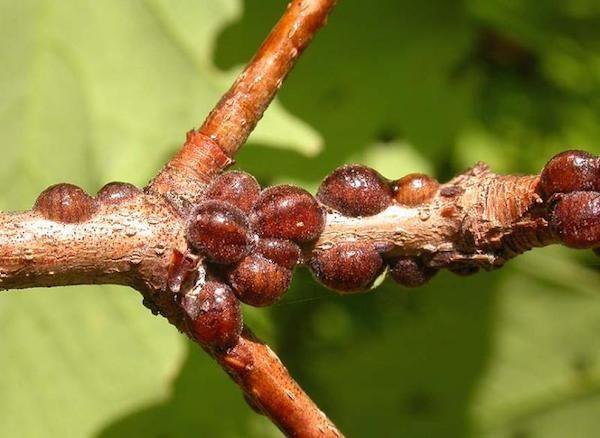
California scale insect
This pest is extremely difficult to detect because it resembles tree bark. The insect sucks the sap from the cherry tree, causing its death. Signs of scale insect infestation include:
- yellowed and prematurely fallen leaves;
- cracked bark;
- slow plant growth.
The primary causes of the pest's appearance are an excess of nitrogen fertilizers in the soil and prolonged drought. It is extremely difficult to get rid of scale insects, since they are covered with a dense shell and pesticides do not work on them. Remove insects mechanically using a wire brush. Afterward, it's recommended to spray the branches and trunk with a solution of laundry soap.
Bark beetle
The pest gnaws through the bark and causes a fungal infection of the cherry tree. Over time, the insects multiply rapidly, making it nearly impossible to get rid of them. If bark beetles are detected, the bark should be scraped off immediately with a bark scraper. Affected plants are treated with specialized chemicals. In severe infestations, individual branches, even those bearing fruit, should be completely removed and burned.
Improper care of the seedling
Improper care of young cherry trees can cause leaf wilting. Fertilizing beyond the recommended rates is detrimental to the tree's growth and development. Problems can also be caused by the larvae of the cockchafer and mole cricket, which appear after organic fertilizers are applied to the tree's trunk.
How to prevent drying out
When the first signs of wilting leaves and drying out of fruits on a cherry tree are detected, preventative measures should be taken immediately:
- cut off and burn infected branches;
- to generally monitor the condition of the tree crown, perform sanitary pruning;
- coat all cracks in the trunk with garden pitch;
- remove and burn fallen leaves;
- perform deep digging of the soil in the tree trunk circle;
- After flowering has finished, treat the cherry tree with Bordeaux mixture or copper sulfate.
Take a look Also
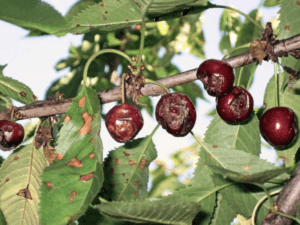
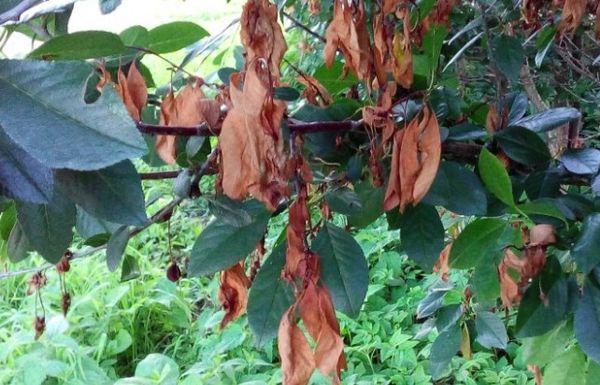
Preventative spraying should be done regularly, even if the cherry tree appears healthy. The tree also needs regular watering, mulching around the trunk, whitewashing the trunk, and winter shelter. Before bud break, spray the plant with ferrous sulfate. Repeat the treatment in the fall. It's also a good idea to spray the cherry tree with Zircon or the biocomplex Ecoberin before preparing for winter.
Gardeners' Tips
Experienced gardeners recommend not waiting for the first signs of disease or pest infestation, but taking care of the cherry tree's health in advance. To achieve this, plant crops with a strong odor (such as marigolds and garlic) nearby. Planting tobacco nearby also deters pests.
Before fruiting, cherry trees should be sprayed with fungicides and insecticides to ensure an environmentally friendly and safe harvest. During fruiting, only biological products should be used when absolutely necessary. It is also worth noting that each variety has its own specific agricultural practices and care requirements, which should be carefully reviewed beforehand. How to choose a cherry tree seedling for planting on your own plot.
Related posts:
 Planting and caring for cherries, feeding and growing rules
 Description and cultivation of the Bryansk pink cherry variety, pollinators
 The health benefits and harms of cherries, rules of consumption, and their effects on the body
 Description and characteristics of the Veda cherry variety, planting and care scheme
 Description of the cherry variety Lyubimitsa Astakhova, planting and care
 Descriptions of the 20 best cherry varieties for the Moscow region, their planting and care
 Causes and treatment of cherry diseases, methods of pest control
 Description and cultivation of yellow cherry variety Chermashnoy, pollinators