
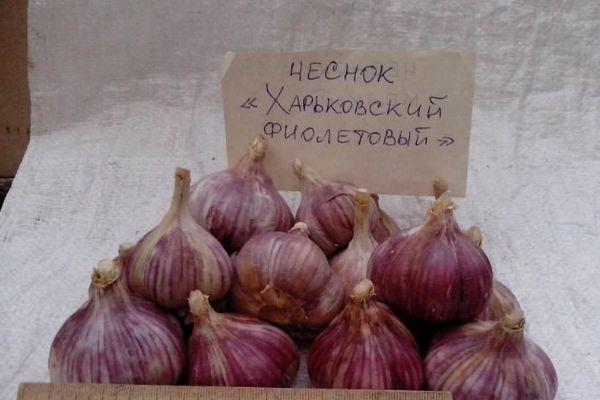
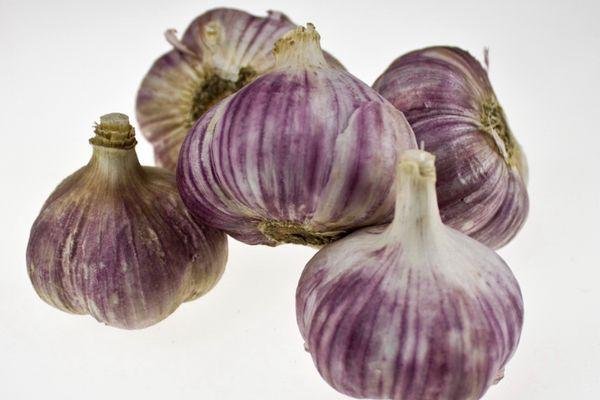
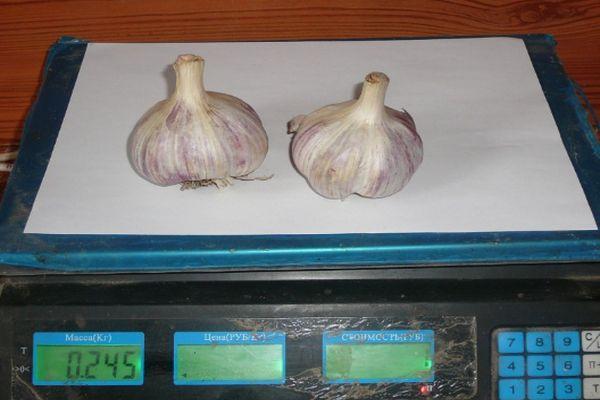
The Kharkiv Purple garlic variety was first developed at the Ukrainian Institute of Vegetable and Melon Growing. This winter variety has soft purple scales. Each bulb weighs approximately 30 to 60 g and contains 4-6 cloves. The yield is 10-12 tons per hectare (100-120 kg per 100 square meters). The variety is fairly disease-resistant.
Garlic is one of the oldest cultivated plants, used fresh for its flavor and medicinal properties: unripe leaves, bulblets, shoots, and bulbs are eaten. Garlic stores well. The plant is used in processing and for medicinal purposes.
Description of the vegetable
This is a mid-season variety, with a growing season of 110-115 days. The bulb is rounded and flattened, elongated, and of normal density. The leaves are dark green with a medium waxy coating.
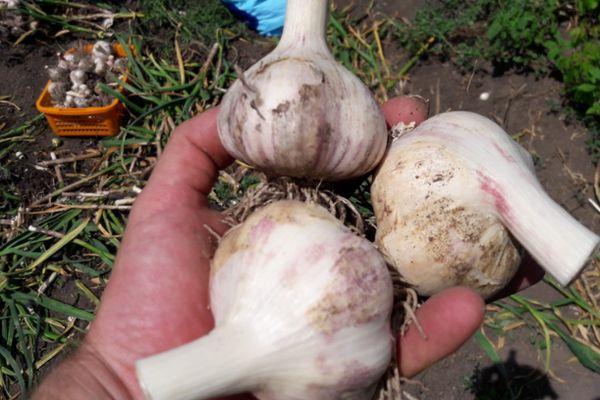
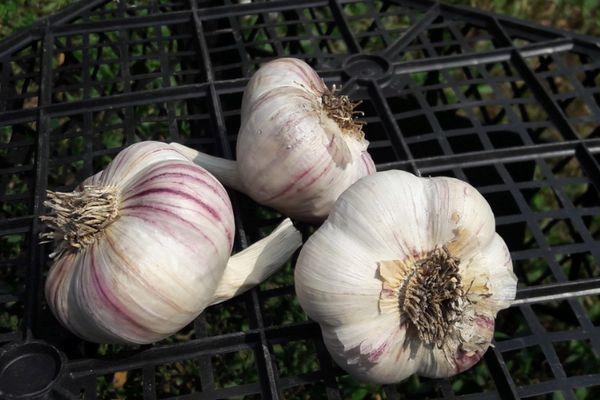
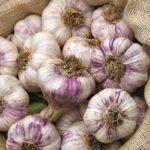
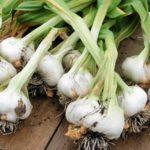
Freshly dug Kharkivsky garlic has whitish outer scales with bright purple flecks. The vegetable's appearance changes as the scales dry: they become matte, and the purple veins widen.
Garlic plants grow to 60-80 cm in length, typically producing 8-10 leaves. The stem reaches a height of approximately 90-130 cm.
Features of landing
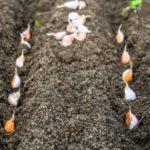
The beds are prepared in advance, 1-2 weeks before planting, and the largest garlic bulbs are selected. The cloves are separated immediately before planting, and the hard bottoms must be removed. The planting depth is determined by the soil type and the size of the cloves. The distance from the top of the clove to the ground should be 4-5 cm. Planting the bulbs higher than this risks freezing.
The relatively weak root system requires highly fertile soil. Garlic is planted in loamy and sandy loam soils rich in organic matter. The soil should have good water retention properties; the ideal pH is 6.5-7.9.
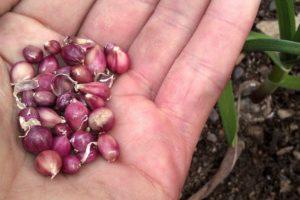
Garlic is unique in that it is propagated vegetatively, meaning a new plant is formed from the parent part. The planting material used is a single clove, a single clove, or aerial bulblets (bulbs).
This material is not the actual plant seeds. The inflorescence produces actual seeds, but during garlic growth, their formation ceases with the formation of aerial bulblets.
Garlic adapts to changing growing conditions with difficulty and over a very long period of time, meaning it is characterized by a pronounced zonal distribution.
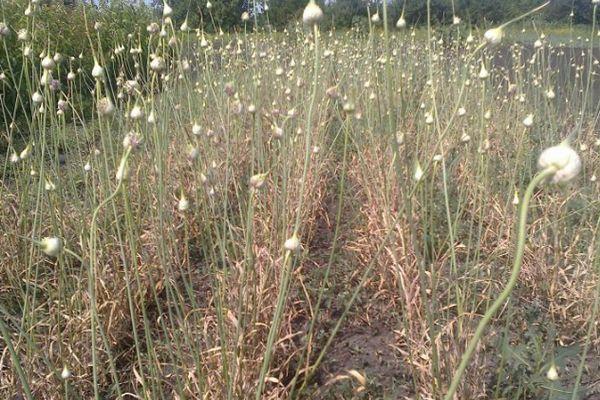
Planting can also be done using aerial bulbs, and this method has several advantages:
- in 1-2 years, you can significantly increase the number of cloves on the bulb, and soon the yield will be full;
- This method makes it possible to reduce costs on planting material, since only a few shoots need to be selected for sowing.
It is worth noting that if garlic is propagated for too long solely through cloves, all sorts of diseases begin to develop in the plants, and the garlic gradually degenerates.
To prevent the occurrence of diseases, it is also necessary to inspect planting material, treat it with disinfectant solutions, and thoroughly dry the harvest before storing it.
To destroy weeds when growing on a large scale, the herbicide Totril is used.
Recommendations
Garlic is best planted after legumes, squash, cabbage, and early greens. Avoid planting garlic after potatoes, onions, and tomatoes, as they are susceptible to the same diseases and pests.
Planting on fresh manure has a negative impact. Garlic should not be planted in low-lying areas, where meltwater accumulates during thaws, or on elevated areas, where blizzards can blow away the snow cover during freezing temperatures, potentially killing the plant.
Phosphorus and potassium are applied during primary tillage. Nitrogen fertilizers are added in the spring, when young shoots emerge. A mixture of micronutrient fertilizers or soaking the cloves in a solution of micronutrients and fungicidal seed dressings is very beneficial. Soaking the bulblets in humic fertilizer for 12 hours before sowing improves yield by 20-30% and approximately doubles the chance of germination.
Take a look Also
Planting and harvesting times
Each region has its own typical standard period for planting winter garlic:
- western and southern territories - the third ten days of October;
- eastern and northern regions - the second ten days of September;
- central regions - the period from the third ten days of September to the beginning of October.
During the winter, bulbs should emerge as 0.7-1.5 cm sprouts with strong roots. The planting window coincides with the period when soil temperatures drop to 10-12°C.
Garlic is harvested in dry, sunny weather when the lower leaves have almost completely yellowed. The garlic is then left to dry in bright sunlight. During the sorting process, the garlic is cleaned of soil, the roots are trimmed, the false stems are reduced to 10-20 mm, and damaged and rotten bulblets are removed.
The vegetable is used in garlic sauce, tinctures, added to various dishes and serves as a good preventative for common illnesses.
Related posts:
 The best varieties and types of early and winter garlic with descriptions and names
 How to properly grow and care for spring garlic in open ground and when to tie it into knots
 Description and yield of the Lyubasha garlic variety, planting and care
 Description and cultivation of single-clove garlic, planting and care rules
 When can spring garlic be harvested in 2025? Harvesting from the garden and storage
 Garlic cultivation technology in open ground, planting times, and care guidelines for a good harvest
 Features of planting and caring for family garlic, description of varieties, pest control
 How to properly plant garlic outdoors and prepare the soil