
Fungal diseases, which often develop in unfavorable weather conditions, reduce potato yields and negatively impact the quality of tubers. To combat pathogenic microorganisms, farmers and small gardeners use chemicals. A variety of potato fungicides are available commercially; the key is to choose the right product for your specific situation and apply the correct treatment.
Description and classification of funds
Fungicides are specifically designed to combat fungal pathogens, including those affecting potatoes. They contain various active ingredients that determine their mode of action. Based on their mechanism of action, chemical agents are divided into systemic and contact. Systemic agents penetrate the plant tissue after treatment and begin to destroy microorganisms, while contact agents remain on the leaf surface, creating a protective film and preventing pathogen penetration.
Another principle for classifying potato fungicides is based on application time. Some chemicals are intended for pre-planting treatment of tubers to prevent disease, while others are used to treat the crop at the first signs of disease. Another option is to classify products based on the pathogen they target.
Mechanism of action
The mode of action of fungicides depends on the active ingredient they contain. Contact fungicides are effective only at the site of application, while systemic fungicides penetrate plant tissue and spread throughout the body, destroying pathogens.
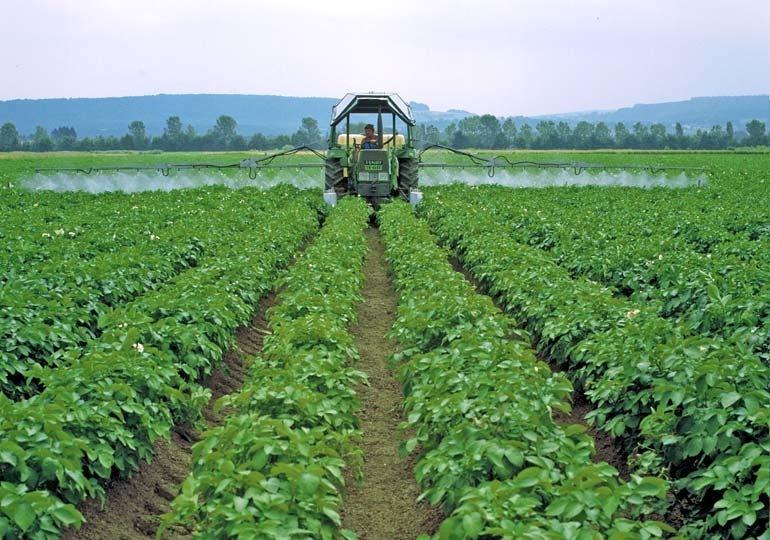
The active ingredients of chemical agents work in several directions:
- cause blockage of the pathogen's respiratory processes;
- stop the division of fungal cells and sporulation;
- contribute to increasing the immunity of the crop, as a result of which the plant independently suppresses the development of the disease;
- areas are created on the surface of the tuber that stop the further spread of pathogenic microorganisms;
- destroy enzymes that take part in biochemical reactions;
- block the formation of nucleic acids.

Depending on the principle of action, there are drugs intended for prevention, drugs for treating the disease, and fungicides with a dual effect.
List of fungicides for treating potatoes against late blight
Just a few years ago, only fungicidal products with chemical active ingredients were available commercially. Today, thanks to innovative scientific developments, it's possible to purchase biological products containing natural microorganisms that have a negative effect on pathogens.

Chemical fungicides
Fungicides containing a chemical active ingredient can be single-component or multi-component. These products are available commercially in various forms: powder, suspension, emulsion, aqueous solution, and granules.
Among chemical fungicides, gardeners have identified:
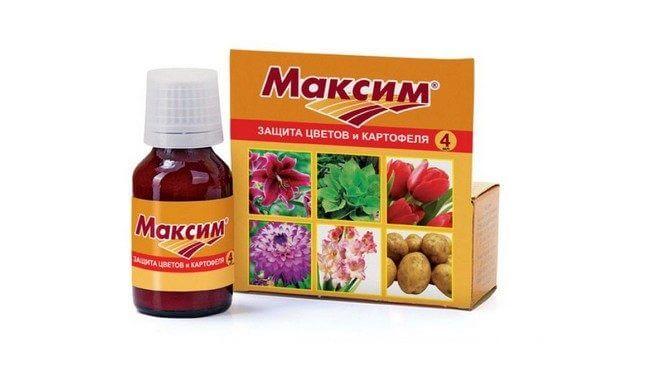
- "Maxim." This chemical contains only fludioxonil. It is available as a suspension concentrate. It is intended for pre-planting treatment of potato tubers. It is effective against fungi of the ascomycetes and basidiomycetes genera. Thanks to its active ingredient, "Maxim" has no adverse effects on crops and is low-risk for humans and beneficial insects. It is classified as a contact fungicide.
- Shirlan is a contact fungicide with protective properties. It contains a new active ingredient, fluazinam. The product works by inhibiting zoospore formation. Its main advantage is its immediate action after application. It effectively kills late blight pathogens that attack crops under adverse weather conditions. The protective period is approximately two weeks after spraying.
- Flanobin. Two active ingredients—azoxystrobin and fluazinam—are responsible for the drug's effectiveness. The fungicide is available as a suspension concentrate. Flanobin has both therapeutic and protective effects. It is most effective when applied at the first signs of disease and also prevents secondary infections.
- Ridomil Gold. This product features a combined action and is effective against potato diseases such as Alternaria leaf spot and late blight. The fungicide is available in water-soluble granules. Ridomil Gold contains two active ingredients—mancozeb and mefenoxan—that work differently against pathogens and provide protection for two weeks, even in adverse weather conditions.
Biological fungicides
Biological preparations are less toxic to crops and humans; they are based on bacterial strains that destroy pathogenic microorganisms that cause fungal diseases of potatoes.
Farmers and gardeners consider the following to be the most effective means:
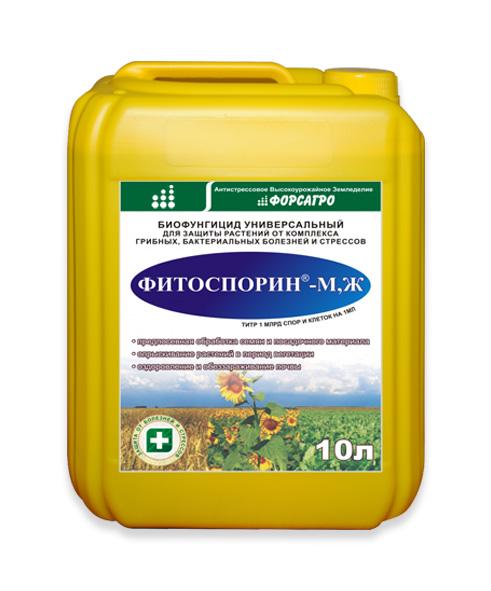
- Fitosporin-M. The active ingredient of this fungicide is the bacterial strain Bacillus subtilis 26 D. It is available in three forms: powder, paste, and aqueous solution. Its advantages include enhanced immunity of treated plants, the ability to be used at any stage of the growing season, and a beneficial effect on soil bacteria.
- Gamair. This fungicide contains the same active ingredient as Fitosporin. Gamair is particularly effective against potato late blight. It is available as an aqueous solution, tablets, or powder. However, this fungicide has a drawback: to achieve results, it must be used in conjunction with Alirin-B.
- Trichocin SP. The active ingredient is the G-30 VIZR strain of the soil fungus Trichoderma harzianum. It is effective in combating root and basal rot. In addition to protecting potato crops, Trichocin also helps increase yields.
Which remedy is better to use?
When choosing fungicides for potatoes, consider the intended application. Most often, gardeners look for two-component products that simultaneously treat and protect plants. If you prefer environmentally friendly products, then it's better to choose biofungicides; although they act more slowly, they are less toxic than chemical products.
Features of use and dosage
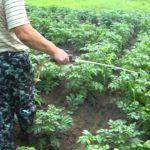
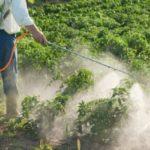
The specifics of using fungicides on potatoes depend on the intended use. Generally, plants can be treated throughout the growing season. The key is a clear, dry day, as the components need time to penetrate the plant tissues and form a protective film on the foliage surface.
The exact dosage and permissible frequency of application are indicated in the instructions for the fungicide.
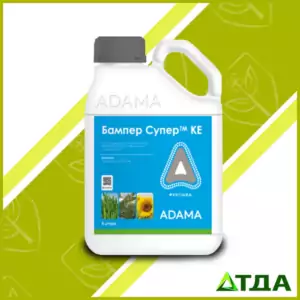
For example:
- "Maxim" - 4 ml per 50 ml of water.
- "Shirlan" - 4 ml per 4 liters of water.
- "Flanobin" - 750 ml for processing 1 hectare of field.
- "Ridomil Gold" - 25 grams per 5 liters of water.
It is not recommended to exceed the recommended norms in order to avoid toxic effects on plants, especially when it comes to chemicals.
Related posts:
 Why potatoes aren't growing well in the garden, and what to do to ensure a bountiful harvest
 Description and treatment of potato pests, control measures
 Description and treatment of potato diseases, methods of control using folk and chemical means
 Types of garden fungicides and descriptions of the top 24 best, instructions for use
 Pre-plant potato treatments for Colorado potato beetle
 Description of the best potato varieties of domestic and foreign selection
 Instructions for the use of herbicides for potatoes, similar preparations
 The benefits and harms of potatoes for the body and human health