
Fungicides are applied to strawberries at the first sign of disease. Chemical treatments are recommended. Biofungicides can be used as a preventative measure against fungal diseases. Disease resistance in strawberries depends on preventative measures and proper plant care (fertilizing, watering).
What are fungicides used for and what are their types?
Fungicides are used to treat and prevent fungal plant diseases. Depending on their components, they can be chemical or biological. These products are used for seed treatment, soil disinfection, and crop spraying during the growing season.
Biofungicides are typically used in the early stages of infection or to prevent fungal diseases. Biological products consist of spores of beneficial bacteria and fungi.
Fungicides (biological and chemical) can be contact, meaning they act on the pathogen through direct contact, or systemic, meaning they penetrate the plant. Fungicides come in various packaging forms. Fungicides are sold as dry powder, suspension, or concentrate. Before use, they are diluted with water according to the dosage specified in the instructions.
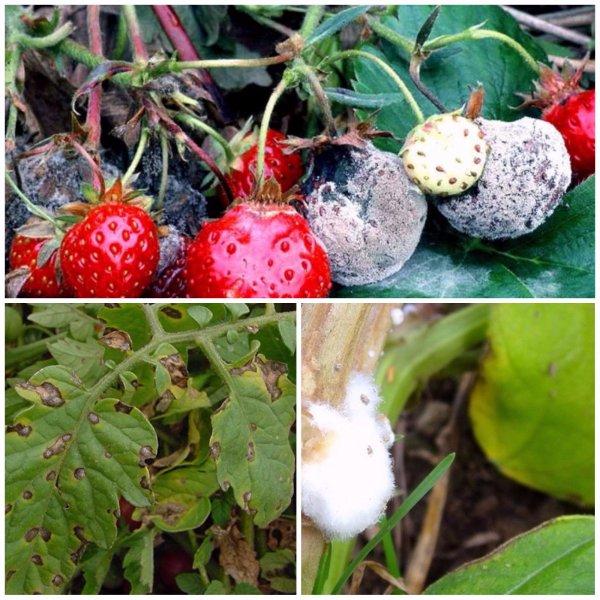
How they work and their functions
The activity of a fungicide depends on its composition. Chemical fungicides act through direct contact with fungal cells, killing the pathogen. These agents kill fungi, inhibit mycelial growth, and inhibit spore germination.
By penetrating inside, fungicidal chemicals destroy pathogens, prevent fungal infections, and stimulate the protective properties of plants.
Biofungicides compete with pathogenic strains, immunize crops, increase their resistance to pathogens, and release toxins that kill fungi. The main functions of fungicides are treatment, prevention, and immunization of plants.
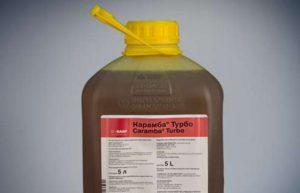
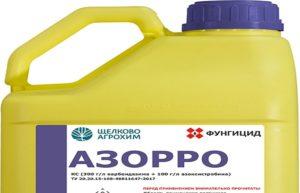
List of the best preparations for strawberries
List of the best fungicides:
- colloidal sulfur (sulfur) - against powdery mildew;
- Bordeaux mixture (lime and copper sulfate) - against spots and rot;
- "Hom", "Oxyhom" (copper oxychloride) - from brown spot, powdery mildew, rot;
- "Abiga Peak" (copper oxychloride) - against spotting and powdery mildew;
- "Fitosporin" (biological product) - against rot, late blight;
- "Horus" (cyprodinil) - against powdery mildew, rot;
- "Euparen" (tolylfluanid) - against rot, spotting;
- "Fundazol" (benomyl) - against fusarium, late blight, rot;
- "Alirin B" (biological product) - against fusarium, rot;
- "Quadris" (azoxystrobin) - against spotting, powdery mildew;
- "Gliokladin" (biofungicide) - against root rot;
- "Maxim" (fludioxonil) - against fusarium, rot, powdery mildew.

Which product is better to choose?
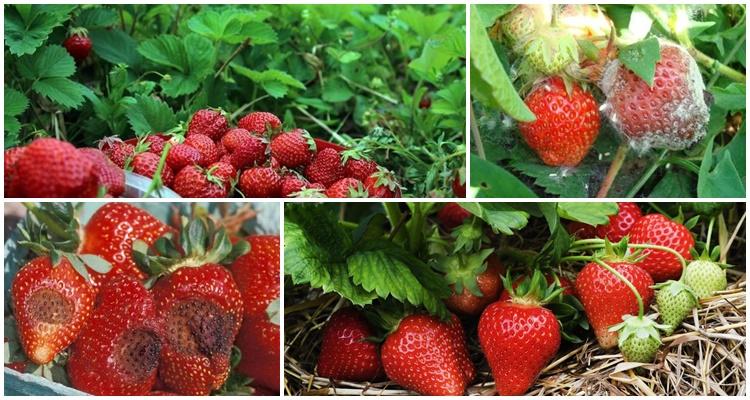
Fungicides are applied at the first signs of damage to strawberries and wild strawberries. These berry crops can be susceptible to fungal diseases such as powdery mildew (a white coating on the leaves), black or white rot of fruit or roots, brown, red, white, or black leaf spot, late blight, and fusarium wilt.
As a preventative measure against diseases, it is recommended to spray plants with biofungicides in the spring. If a severe fungal infestation was observed last summer, it is advisable to water the beds with Bordeaux mixture and colloidal sulfur at the beginning of the new season. If fungi appear during the growing season, a suitable chemical treatment is selected. It is recommended to treat not only the berry bushes but also the soil in which they grow.
Rules and terms for plant treatment
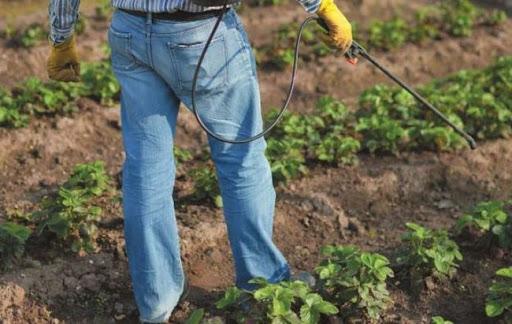
Strawberries are treated with fungicides 2-3 times during the growing season. It is recommended to treat not only the plants but also the soil in which they are grown. The pathogens that cause most fungal diseases are found in the soil, as well as in old leaves and weeds. Many factors influence the health of strawberries and their susceptibility to disease. Plant immunity depends on the quality of the soil in which they grow, as well as timely fertilization and watering.
Spring procedures
In early spring, it's recommended to clear strawberry and strawberry plantings of last year's leaves, old flower stalks, weeds, and runners. Weak or diseased bushes should be dug up. The soil around the plants should be loosened.
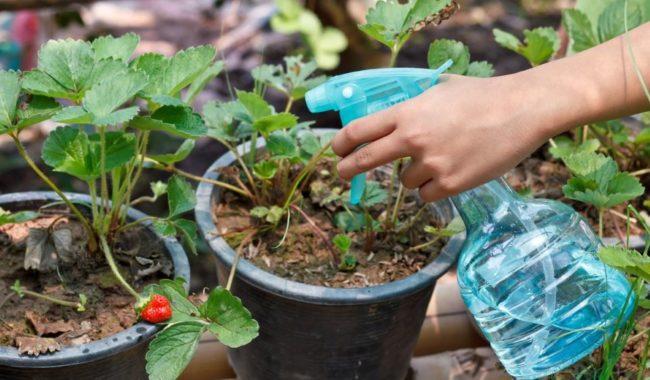
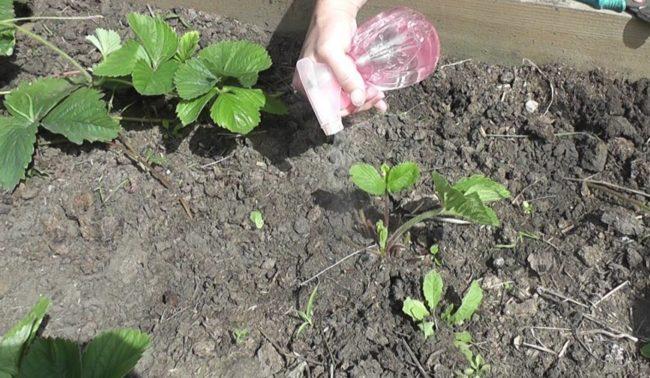
It is recommended to water strawberry beds with a solution of Bordeaux mixture, colloidal sulfur or a copper-containing fungicide.
The bushes are sprayed again before flowering (in May). Biofungicides are used for this treatment. During flowering, it's best to avoid spraying strawberries. In early summer, the bushes are treated with chemical fungicides if signs of damage appear. The final spraying is done 30 days before harvest.
To prevent fungal diseases, strawberries and wild strawberries are well fertilized in the spring (with well-rotted manure or nitrogen, potassium, and phosphorus). Fertilizing strengthens the plants' immune system. Preventive measures include periodic loosening of the soil, weed removal, timely watering, and avoiding overwatering.
Autumn processing
In the fall, after harvesting, it's best to mow down any fungus-infected leaves, remove them from the garden bed, and plant phytoncidal plants (onions, garlic) between the rows to repel pests and act as natural antibiotics. It's best to cut back old plants completely. New leaves will grow in the spring. Young plants can be left in place.
If severe damage from powdery mildew, spotting, or rot occurs, water strawberry and wild strawberry plantings with a solution of Bordeaux mixture or colloidal sulfur. After treating with fungicides, it is recommended to fertilize the beds and cover them with a thin layer of mulch (peat, manure, sawdust, dried pine needles, or leaves). Mulching will help plants survive severe frosts.
Related posts:
 Description of the Florence strawberry variety, planting and care features
 How to grow strawberries at home
 Description and characteristics of the Vima Zanta strawberry variety, planting and care scheme
 Description of the everbearing strawberry variety Selva and cultivation technology
 Signs of disease and pest attacks on strawberries, treatment methods
 Description of the Holiday strawberry variety, cultivation and propagation methods
 Timing and rules for fertilizing strawberries, and the best fertilizer for a good harvest
 The best varieties and cultivation of everbearing strawberries, fertilizing and propagation
How and with what should I disinfect strawberry seedlings before planting them hydroponically?
Preparing seedlings is an important step that requires due attention. Before processing, carefully select the strawberries, removing any weak, damaged, or diseased plants with signs of pest infestation. Such seedlings are unsuitable.
Once the seedlings have been selected, we begin treatment. Suitable products include Epin-Extra and Zircon. Details on how to perform the treatment can be found in the instructions for the product.