- Composition and existing forms of release
- Pros and cons of the product
- How does the active substance work?
- Features of preparing the working solution and how to use it
- Vineyards and berry bushes
- Cucumbers
- Roots
- Fruit-bearing trees
- Safety precautions
- How toxic is the product?
- Possible compatibility with other drugs
- How to store it correctly and for how long
- Similar herbicides
Growing various crops on farms requires careful protection from diseases and harmful insects. Topsin-M effectively addresses this. It protects against pests, fungi, and infectious diseases, and also strengthens the plant's immunity. Before using, please read the instructions for Topsin-M fungicide to avoid mistakes and unforeseen consequences.
Composition and existing forms of release
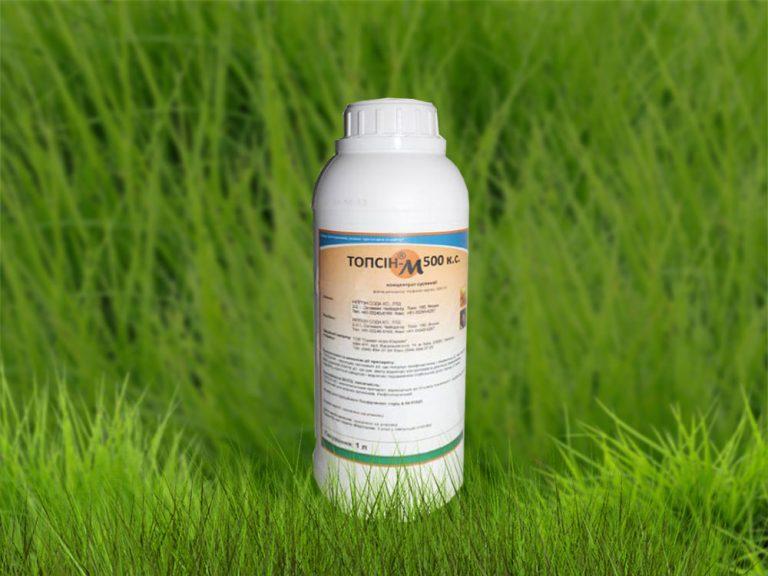
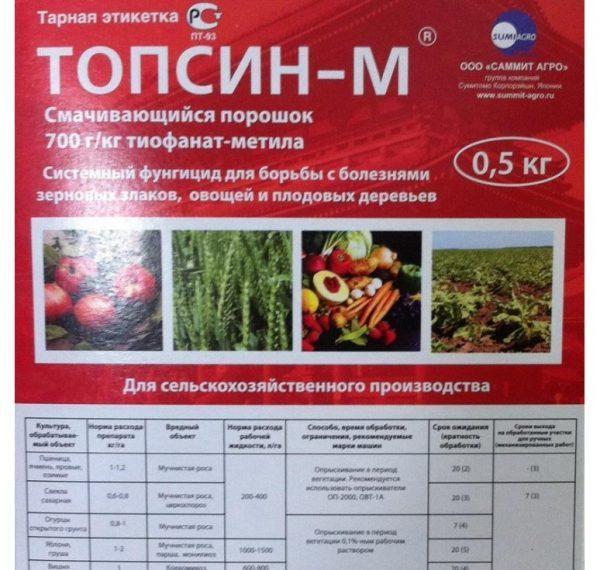
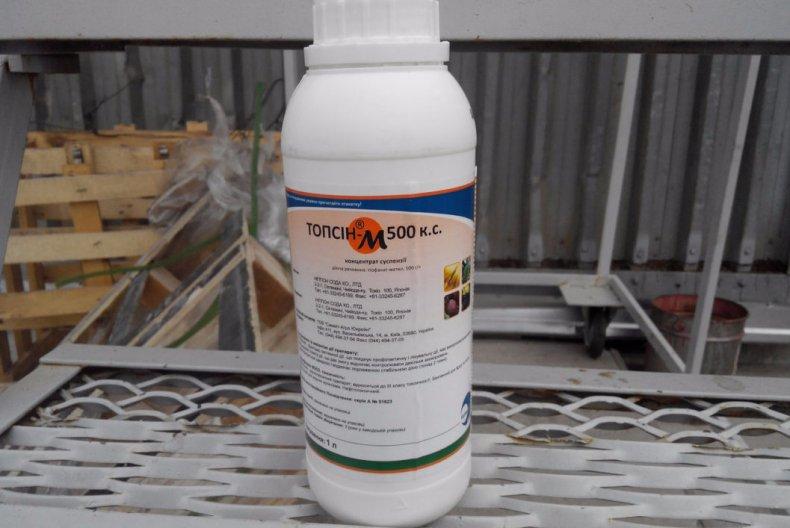
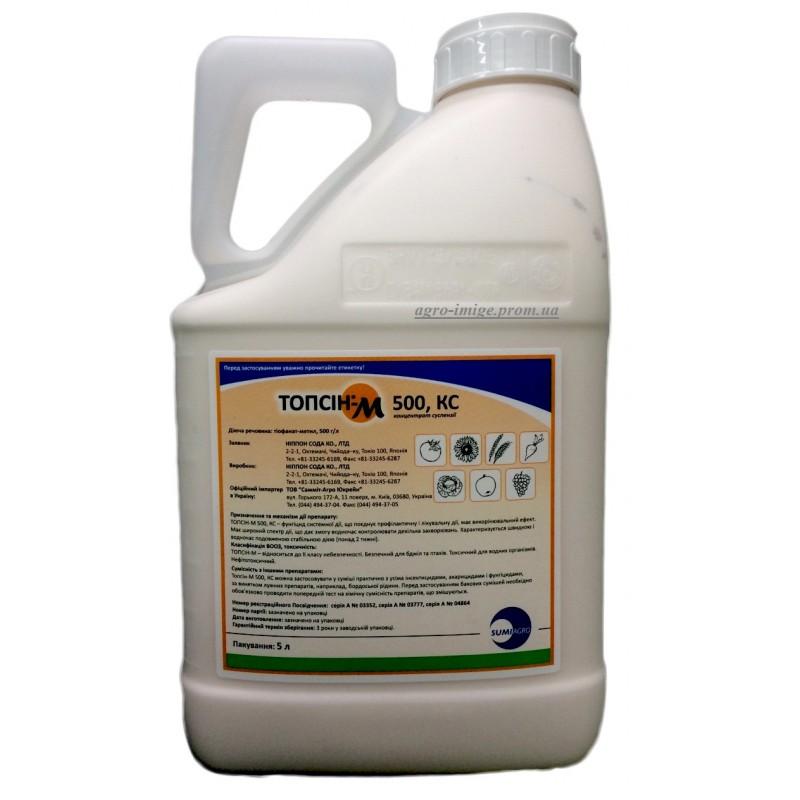
Topsin-M is available in 10, 25, or 500-gram sachets. It is a water-soluble powder. Farmers purchase packages ranging from 2 to 10 kilograms. Suspensions for dilution are also available in 1- and 5-liter bottles.
The main ingredient that actively combats crop diseases is thiophanate methyl. The powder contains 70 percent of the active ingredient per liter of diluted product, while the liquid contains 50 percent.
Pros and cons of the product
Benefits of the fungicide:
- rapid action occurs within 24 hours after treatment and lasts for 1-2 months;
- is considered an environmentally friendly product;
- after application – effective result, excellent harvest, no diseases;
- not harmful to bees and bumblebees;
- Plants and trees have a healthy appearance and grow better.
Disadvantages include addiction with continued use and toxicity if instructions and dosage are not followed. Treatment is best carried out in warm weather; the substance is ineffective at temperatures below 16 degrees Celsius.
How does the active substance work?
During treatment, the active ingredient penetrates evenly into the leaves and roots, detecting diseases and pests. The fungicide's function includes prevention, protection, and treatment. It is effective against powdery mildew, coccomycosis, fusarium, and attacks by soil-borne bacteria and fungi.
Topsin inhibits the development and division of pathogen cells, preventing further infection. The drug is also lethal to various insects that attack foliage and transmit dangerous diseases.
Features of preparing the working solution and how to use it
The powder or suspension should be diluted immediately before treating crops. Use approximately 15 grams of the substance per 10 liters of water. Add it gradually, stirring gently. To prevent sediment from settling to the bottom, stir or shake the mixture as you work. Spray the prepared solution on plants and trees.
Vineyards and berry bushes
If grapes and berry bushes are affected by gray mold, they will recover after three treatments with Topsin. Treatment is carried out at a dose of 1 liter per hectare. Do not apply before harvest, only during the fruit setting period.
Cucumbers
Fungicide treatment is carried out before flowering and fruit set in cucumbers. It is recommended to apply approximately 30 ml of the diluted solution per square meter.
If the fruits are already ripe, then cancel the treatment, otherwise the fruits will be poisonous.
Roots
Apply the product when powdery mildew and fungal diseases are detected. It can be used three times per season. The first application is for prevention, and the second application is repeated a month later to consolidate the results. Stop treatment three weeks before harvest. Use one liter of the prepared product per hectare of land.
Fruit-bearing trees
To protect trees from diseases and insects, Topsin-M is applied three times before fruiting. Large trees may require 8-10 liters of solution. It's best to dilute it in the spring, before flowering. This allows the substances to accumulate within the shoots and roots, resulting in a more effective treatment. The recommended dosage is 1.5 liters per hectare of soil.

Safety precautions
When working with such a drug, it is necessary to know all the rules for safe use:
- Wear gloves, boots, socks, a mask, and cover your eyes with glasses.
- Do not use near children, animals or water containing living creatures.
- It is better to throw away any remaining product away from bodies of water and living quarters.
- After finishing, wash your hands and face thoroughly with soap.
How toxic is the product?
Like any chemical, Topsin is toxic to humans and other living creatures if not used according to instructions. It has no effect on the skin, but it is best to cover your hands, feet, and eyes when working with it. It is dangerous to use in windy conditions. It is harmless to bees, wasps, and bumblebees, so there is no need to worry about pollination. However, the active ingredient is extremely harmful to aquatic life and fish; if accidentally released into a body of water or a spring, it causes immediate death of local wildlife.
Possible compatibility with other drugs
The fungicide can be combined with other crop care products. It's important to follow the correct dosage and avoid using it in conjunction with copper-containing products.
How to store it correctly and for how long
The package can be stored tightly sealed at temperatures between -15°C and +30°C. If it has been opened, it's best to wrap it in plastic or paper. Use the diluted product the same day. Keep away from water, pets, and children.
Similar herbicides
The main active ingredient in Topsin-M is methyl thiophanate. Other known analogs include Pelt 44, Ciaban, Enovit-M, Mildonat, Thiofen, and Tsikozin. To prevent the development of fungi and infectious diseases, these products should be used regularly as a preventative measure when growing crops and trees.
Related posts:
 The best eggplant varieties for growing in a polycarbonate greenhouse: planting and care
 Methods for planting and propagating cherries at home
 Is it possible to soak treated cucumber seeds before planting and how to do it correctly?
 The best grape varieties for growing in the Urals, planting and care rules in summer
 Causes and treatment of eggplant pests and diseases, how to combat them at home
 Top 40 DIY New Year's Baking Recipes for 2020
 The health benefits and contraindications of black currants
 The health benefits and harms of cherries, rules of consumption, and their effects on the body