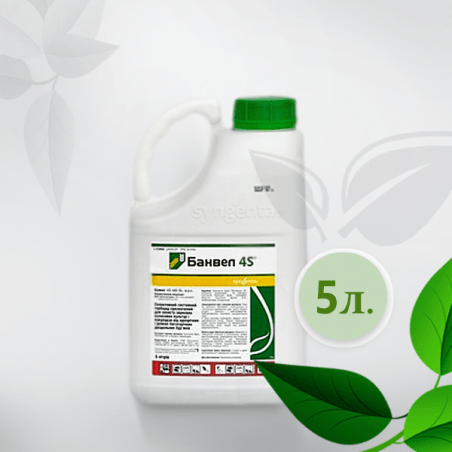
Herbicides are essential for eliminating unwanted vegetation that interferes with the growth of crops. This group includes products used in commercial crops and private farms. Let's look at the action and purpose of the post-emergence herbicide "Banvel," including dosage and application rates, advantages and disadvantages, compatibility, and alternatives.
Composition, dosage form and purpose
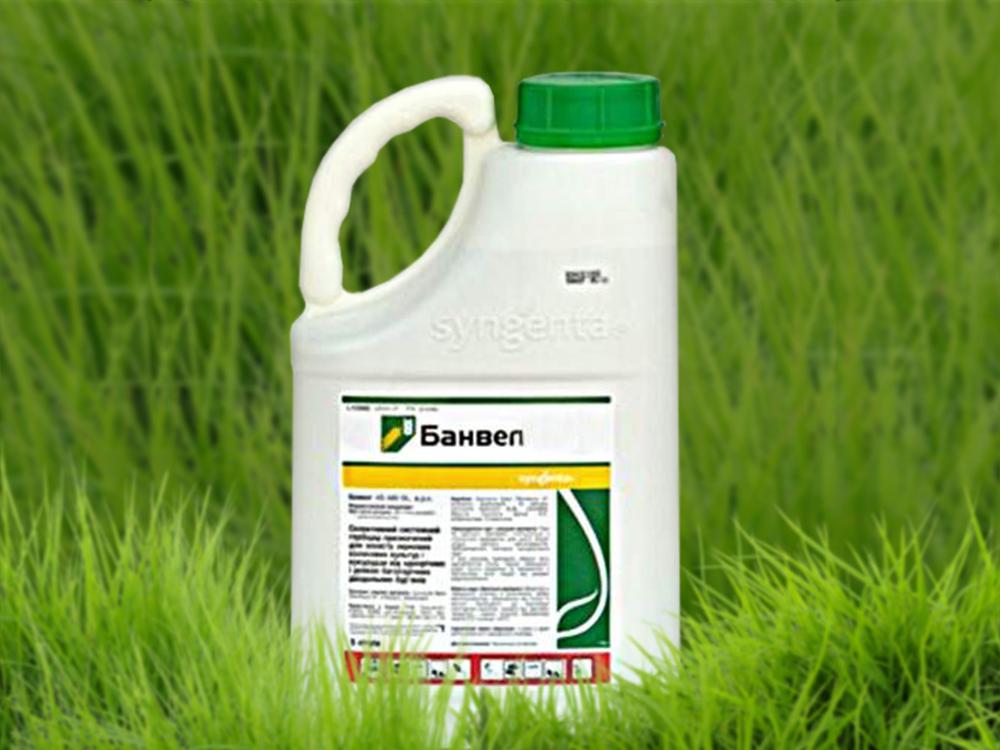
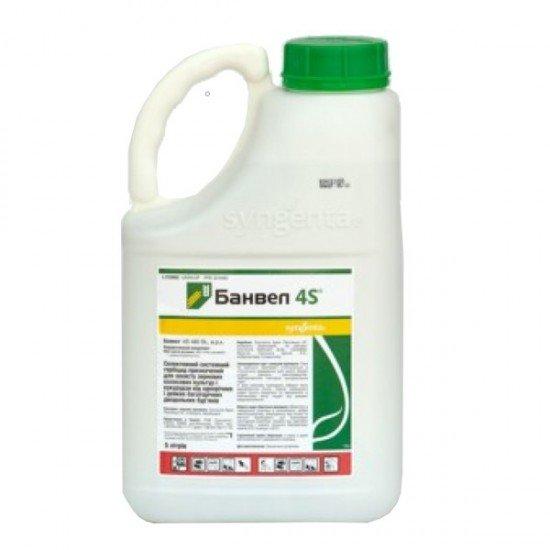
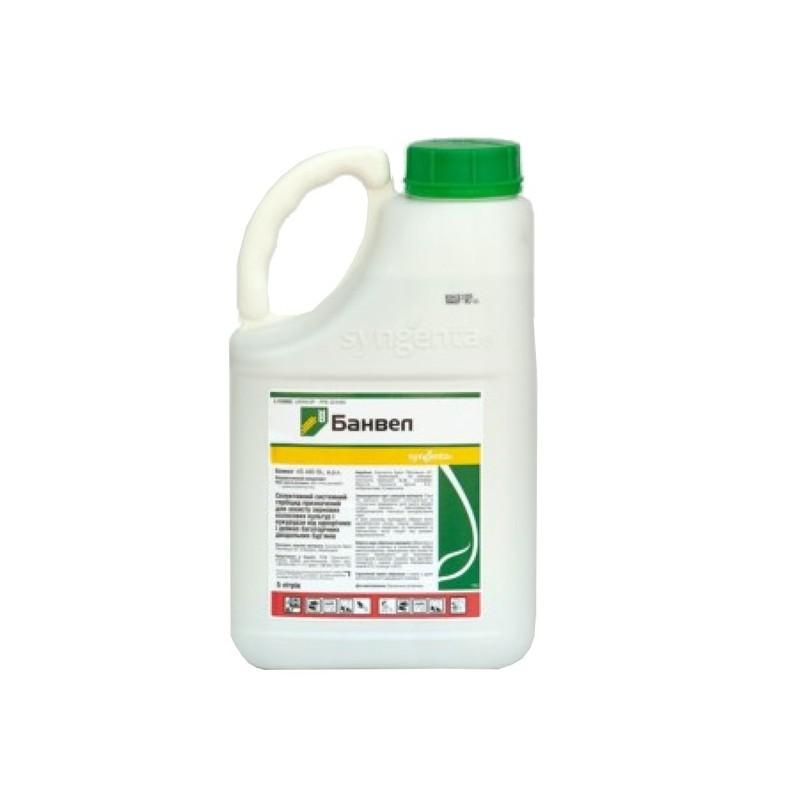
The active ingredient is dicamba, which contains 480 g per liter. It is a benzoic acid derivative. It is produced as an aqueous solution by Syngenta. It is packaged in 5-liter canisters, with four canisters per package. Banvel is classified as a systemic pesticide by its mode of penetration and a selective herbicide by its mode of action.
Mechanism of action
Banvel is used to treat grain crops and corn against annual broadleaf weeds and certain perennial varieties. Treatment is carried out after emergence. How it works: dicamba is absorbed by weeds through the leaves and, if the soil is well-moistened, also through the root system. It disrupts the hormonal balance in weeds, disrupts photosynthetic processes, and affects auxin activity and transport.
How quickly does it work?
Weed death is observed 1-2 weeks after spraying. The speed of response is affected by weather conditions and the type of weed.
Pros and cons of the product
Calculation of consumption for different plants
Application rate of "Banvel" for processing (l per hectare):

- grain crops – 0.15-0.3;
- pastures – 1.6-2;
- corn – 0.4-0.8;
- non-agricultural lands – 1.6-3.1;
- pastures and hayfields – 2.6-3.1.
Spraying is carried out at various stages of crop or weed growth. The number of treatments is one, with a waiting period of 55 days for grain crops and 50 days for corn. The solution consumption rate is 150-400 liters per hectare.
Preparation of the working mixture
Standard sprayers operating at 2.5-3 bar are suitable for treatment. Fill the tank with water to a third of its capacity, add the required dosage of the product, then top up with water to the required volume and mix.
Terms of Use
Banvel is applied to growing weeds at temperatures ranging from 10°C to 28°C. For severe infestations and overgrown weeds (more than 4 leaves), it is recommended to prepare a solution at the maximum permitted concentration. A lower concentration of Banvel is used to control sensitive weeds in the early stages of their development (when 2-3 leaves have formed).
Do not use the herbicide on grain crops containing legumes. According to the instructions, do not apply if there is heavy dew or if rain is expected.
Precautionary measures
Do not use the herbicide near water bodies; it may be toxic to aquatic life and fish. Wear protective clothing, rubber gloves, goggles, and a respirator when diluting and spraying. Do not eat, drink, smoke, or remove protective equipment.
P
How toxic is it?
Banvel is a hazard class 3 herbicide, meaning it is low-hazard. It is classified as a hazard class 4 herbicide for bees. It is not phytotoxic to plants when used at the recommended concentration.

Possible compatibility
This product can be used in conjunction with 2,4-D herbicides (such as Milagro) when treating corn at the 3-5 leaf stage and to control annual weeds at the 2-4 leaf stage and perennial weeds with a rosette size of 5-8 cm. For the control of resistant weeds, it is recommended to use Banvel with the herbicide Callisto. The temperature during application should be between 12-25°C.
Storage rules and shelf life
Banvel should be stored in a dry, dark place away from medications, food, and animal feed. The manufacturer's shelf life is 5 years. After this period, the medication is no longer effective. The prepared solution should not be stored for more than one day.
Analogues
Substitutes for Banvel based on their active ingredients include Advocate, Alliance, Antal, Vspolokh, Governor, Deimos, Dialen Super, Diamax, Diamond, Dicambel, Dikoherb Super, Dimesol, Cowboy, Kordus Plus, Lintur, Monomax, Optimum, Propopol, Referee, Serto Plus, and Fenizan. Deimos, Lintur, and Propopol can be used in private households.
Banvel is used to control annual and perennial weeds in grain and corn crops. It is applied post-emergence. It is cost-effective, non-phytotoxic, compatible with many pesticides, and decomposes quickly in the soil. It destroys species resistant to other herbicides. It does not cause tolerance in weeds and prevents the development of resistance to other classes of herbicides. It has no restrictions on crop rotation.
Related posts:
 The best eggplant varieties for growing in a polycarbonate greenhouse: planting and care
 Instructions for use and composition of Glyphora for weed control, dosage, and analogues
 How to make a garden bed from scratch without grass and weeds: ideas and methods with and without weeding
 Instructions for use and composition of the herbicide Tifi, dosage and analogues
 Methods for planting and propagating cherries at home
 Instructions for use of Cassius and the herbicide composition, dosage, and analogues
 Instructions for use of the weed killer Propol and application rates
 Instructions for use and composition of the herbicide Dicamba, dosage and analogues
Take a look Also