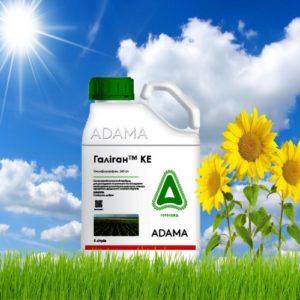
Weeds can infest fields, hayfields, and fallow land. In any case, they need to be controlled, which is what herbicides are for. Let's look at the composition and form of the herbicide "Dicamba," its advantages and disadvantages, consumption calculations, its application instructions, toxicity, storage conditions, and alternatives. We'll also discuss safety precautions for handling the solution.
Composition, dosage form and purpose
Dicamba is produced by Alsiko-Agroprom LLC as an aqueous solution. The active ingredient is dicamba at a concentration of 480 g per liter. The solution is available in 5-liter canisters. It is a systemic pesticide with selective action.
It is used after crop emergence (wheat, barley, rye, corn) and on fallow lands to destroy annual and perennial weed species, including those resistant to 2,4-D; in hayfields and fallow lands – to destroy various types of sorrel, buttercups, hogweed, hellebore and other weeds.
Mechanism of action
Dicamba is easily transported through soil and plants. In weeds, it accelerates RNA synthesis, increases concentrations, accelerates lipid and protein formation, and increases cell membrane extensibility and elongation.
The product begins to work effectively 2-3 hours after application, under favorable conditions: air temperature of 18-24°C and no rain. Complete weed control is observed within 2-4 weeks. The protective effect lasts for 1-1.5 months.

Pros and cons
Advantages of the drug "Dicamba":
- used for processing fields, fallow lands and areas for haymaking;
- destroys many types of weeds;
- performance;
- long-lasting protective effect;
- low toxicity to humans, bees, plants;
- a good "partner" for pesticides in general working mixtures;
- does not interfere with crop rotation.
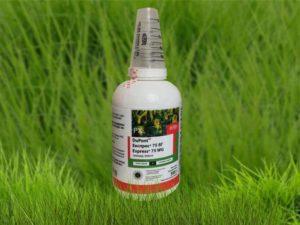
Disadvantages: of cultivated plants, it is used only on cereals and corn.
Calculation of consumption for plants
Application rate of Dicamba, in l per ha:
- cereals – 0.15-0.3;
- corn – 0.4-0.8;
- for processing hayfields in spring – 1.6-2;
- for autumn processing – 2.6-3.1;
- pairs – 1.6-3.1.

Spray grain crops in the spring during tillering, when weeds are at the 2-4 leaf stage, and perennial weeds at 15 cm. The product can be used alone or mixed with 2,4-D and MCPA. Corn is sprayed at the 3-5 leaf stage, and fallow land is sprayed on growing weeds. The application rate is the same in all cases: 150-400 liters per hectare.
Preparation of working solution
The Dicamba solution is prepared according to a standard procedure: first, a third or half of the volume of water is poured into the tank, the preparation is diluted in it, after complete dissolution, the remaining volume of water is added and mixed again.
Instructions for use
According to the instructions, Dicamba should be sprayed in calm weather, in the morning or evening, when there is no intense sunlight, to prevent the solution from evaporating before it reaches the weeds. There should be no rain for at least 3-4 hours after spraying.

Precautionary measures
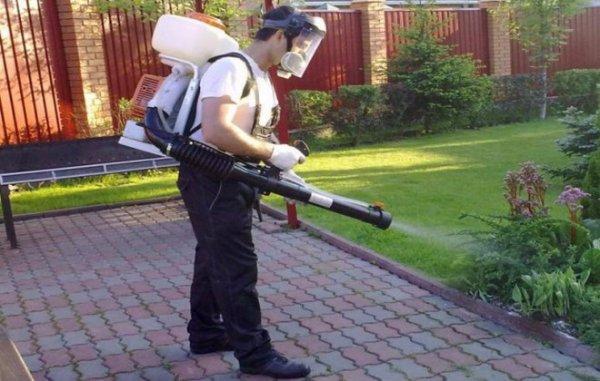
When working with Dicamba and its solution, wear protective clothing. It should cover exposed parts of the body to prevent splashes. A respirator and safety goggles should also be worn for the same purpose. Do not remove protective equipment while working. Avoid drinking, eating, or smoking to avoid getting liquid in your mouth. Keep others away from spraying areas.
How toxic is it?
Dicamba is classified as a Class 3 pesticide (for humans and bees). It should not be used near water bodies, as it may be toxic to fish.
Take a look Also
Storage terms and conditions
Dicamba has a shelf life of three years from the date of manufacture. Storage conditions are standard: a dry, dark, well-ventilated place at a moderate temperature. Pesticide and fertilizer warehouses are ideal for storing the herbicide.
Do not store food, animal feed, or medications near the product. Do not use the herbicide after its expiration date.
The solution can be stored for no more than 1 day, after which time it loses its effectiveness.
Analogues
Dicamba has many similar active ingredients: Vitara, Diamant, Dicambel, Advocate, Dekabrist, Deviz, Governor, Dianat, Alpha-Dicamba, Diastar, Damba, Banvel, Deimos, Herb-480, Senator, Titus Plus, Monomax, Sanpei, Shans, Dikoherb Super, Speaker, Lart, Optimum, Corleone, Stellar, and StarTerr. All of these are used in agriculture. The herbicide Deimos has been developed for private farms.
Dicamba herbicide is effective against a variety of annual and perennial weeds in cereals and corn, fallow land, and hayfields. It suppresses weeds that have developed resistance to 2,4-D and prevents the development of resistance to sulfonylurea herbicides. It has no restrictions on crop rotation and is a good component for tank mixes.
The herbicide is so effective that just one spray is enough to kill the grass and prevent it from growing back. Dicamba has a low application rate and low solution consumption. This makes it cost-effective. When used on cereals, it improves grain quality and yield because the plants are free of weeds. When used on hayfields, it improves the quality of the harvested grass and hay, which is free of weeds.
Related posts:
 Instructions for use and composition of the herbicide Stellar, dosage and analogues
 Instructions for use and composition of the herbicide Cordus Plus, application rates
 Instructions for use of the weed killer Propol and application rates
 Composition and instructions for use of the herbicide Dianat, application rates and analogues
 How to propagate and grow peas, cultivation technology, and care in open ground
 Instructions for use and composition of the herbicide Banvel, dosage and analogues
 Description of varieties of sowing peas and cultivation, to which family they belong
 How to control onion flies using natural and chemical methods