Multicomponent herbicides are widely used in agriculture to treat crops against weed infestation. Let's look at the capabilities of the herbicide "Cordus Plus," including its composition, mode of action, pros and cons, dosage, and consumption. We'll also discuss how to prepare and use the solution, its toxicity, compatibility, storage conditions, and similar herbicides.
Composition, dosage form and purpose
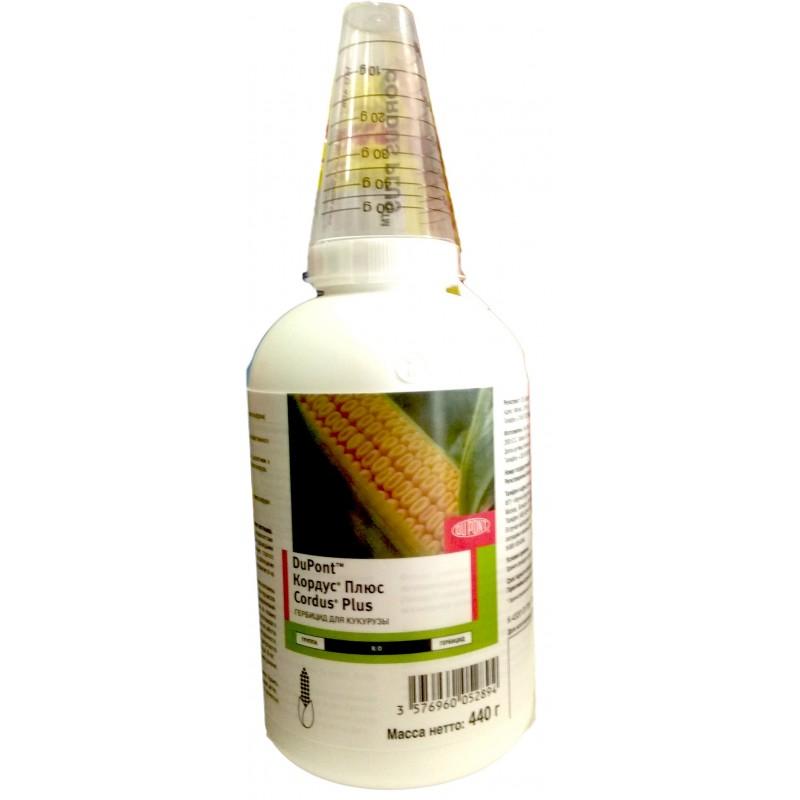
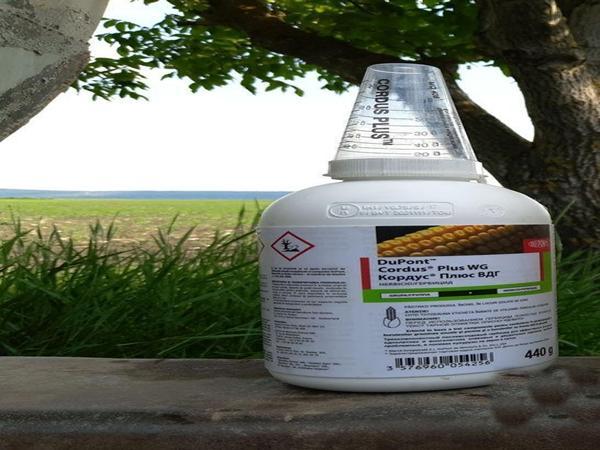
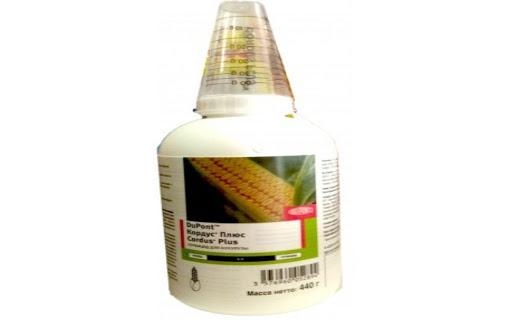
Cordus Plus is manufactured by DuPont Khimprom. It comes in water-dispersible granules and is packaged in 440g cans. Active ingredients: dicamba at 550g per kg, nicosulfuron at 92g per kg, and rimsulfuron at 23g per kg. Cordus Plus is a systemic pesticide with selective action.
The product is used to treat corn crops against annual and perennial bilobate and grass weeds. It is also effective against species resistant to 2,4-D. The herbicide should not be used on sweet corn or popcorn grown for seed production.
Mechanism of action
After being absorbed by the leaves, the Cordus Plus solution migrates to the growing points. Nicosulfuron and rimsulfuron inhibit acetolactate synthase in weed cells, while dicamba stops cell division. Weed growth ceases within a few hours after application. According to the instructions, only one application is required, which protects crops from overgrowth until the end of the corn growing season.
Advantages and disadvantages
The herbicide has the following advantages:
- acts on all types of bilobed and cereal weeds;
- is characterized by its speed of operation;
- can be used on corn at the stage of up to 6 leaves;
- effective both when used alone and in tank mixtures;
- no restrictions on crop rotation;
- long-lasting protection.
Disadvantages of the drug: it is used only on corn.
Calculation of consumption
According to the instructions, "Kordus Plus" is diluted at a rate of 0.22-0.44 kg per hectare. Corn is sprayed when it is in the 2-6 leaf stage, one-year-old weeds are sprayed when they are in the 1-4 leaf stage, perennial weeds are sprayed when they are in the rosette stage, and perennial rhizomatous weeds, such as couch grass, grow to a height of 10-15 cm. For increased effectiveness, the herbicide is mixed with "Trend 90," a surfactant, at a rate of 200 ml per hectare. The solution consumption rate is 200-300 l/ha. The number of treatments is one, and the waiting period before corn harvest is 60 days.
Preparation of working solution
Preparing a solution of the herbicide "Cordus Plus" is easy. According to the instructions, fill the sprayer halfway with water, add the required amount of the product, and stir. After dissolving, add the remaining water and stir again.
Instructions for use
To ensure the product is effective, use it in warm, humid weather. It is recommended to postpone use in dry or cold weather. The air temperature should be above 10°C and below 25°C.
After treatment, inter-row cultivation is possible 7-12 days later. If reseeding is necessary in a herbicide-treated area, only corn should be sown there. In the fall, it is recommended to sow winter grains there; in the spring, any crops can be planted or seeded.
Precautionary measures
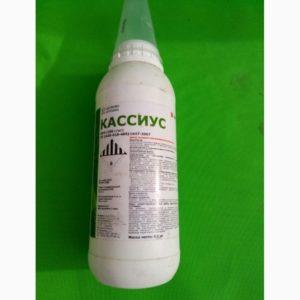
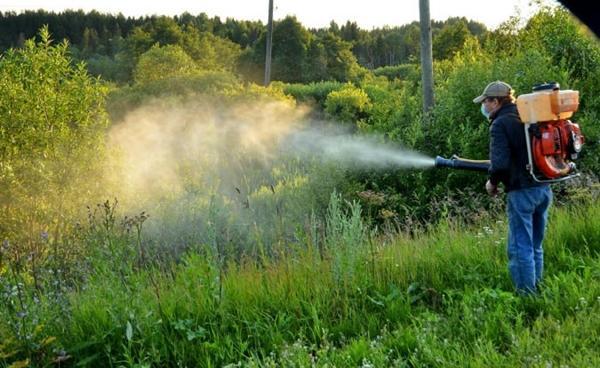
When handling the product, wear protective clothing, a respirator, goggles, and long rubber gloves to minimize contact with the solution. After handling, be sure to wash your face and hands with soap. If the solution comes into contact with your skin or eyes, rinse immediately with plenty of water.
How toxic is it?
Cordus Plus is classified as hazard class 3 for humans and bees. According to the instructions, it cannot be used in fields located near bodies of water or fish farms. It is non-toxic to plants, provided the recommended dosage and application rates are met.
Possible compatibility
Do not mix Cordus Plus with organophosphate-based insecticides. A two-week break is also required before or after organophosphate-based treatments. Do not mix with herbicides containing MCPA, 2,4-D, or foliar fertilizers.
To enhance the herbicide's effectiveness, it is recommended to mix it with the surfactant-containing product "Trend 90" (100 ml per 100 l). The mixture wets weed leaves better and stays on them longer.
How to store it correctly and for how long
The shelf life of this herbicide is 3 years. Storage conditions: Store in a dark, dry, and ventilated area. Other agricultural chemicals and fertilizers may be stored nearby. Do not store with food, medications, household products, or animal feed. Store the product diluted with water for 24 hours.
Analogues
Based on the active ingredients, you can select analogs for use in agriculture: "Alliance", "Deimos", "Diamax", "Governor", "Diakem", "Alpha-Dicamba", "Dimesol", "Dicambel", "Diamant", "Dekabrist", "Cowboy", "Dialen Super", "Lintur", "Monomax", "Propolol", "Cowboy-Super", "Serto Plus", "Lart", "Diastart", "Referee", "Vspolokh", "Optimum", "Fenizan", "Banvel", "Dianat", "Deviz".
The herbicide "Kordus Plus" is used on corn to protect it from annual and perennial weeds. It is fast-acting and provides long-lasting protection against re-infestation. Just one application early in the crop's development is sufficient to keep the crops clean until harvest. Compatible with other pesticides, it is recommended to use it in conjunction with surfactant-containing products.
Related posts:
 Serkadis Plus instructions for use, fungicide dosage, and analogues
 Instructions for use and composition of the herbicide Rimanol, dosage and analogues
 Instructions for use and composition of the fungicide Acanto Plus, application rates
 Instructions for use of insecticide 30 Plus, composition, and operating principle
 How to propagate and grow peas, cultivation technology, and care in open ground
 Instructions for use of Grand Plus, herbicide dosage, and analogues
 How to properly plant peas in a greenhouse and open ground
 Description of varieties of sowing peas and cultivation, to which family they belong