
Using herbicides on grain crops helps protect fields from weeds. Weed control ultimately results in increased yields. Let's look at the composition, action, and purpose of the Florax herbicide, its advantages, dosage, and consumption. We'll also discuss how to prepare the working mixture, its toxicity, compatibility, storage, and alternatives.
Composition, dosage form and purpose
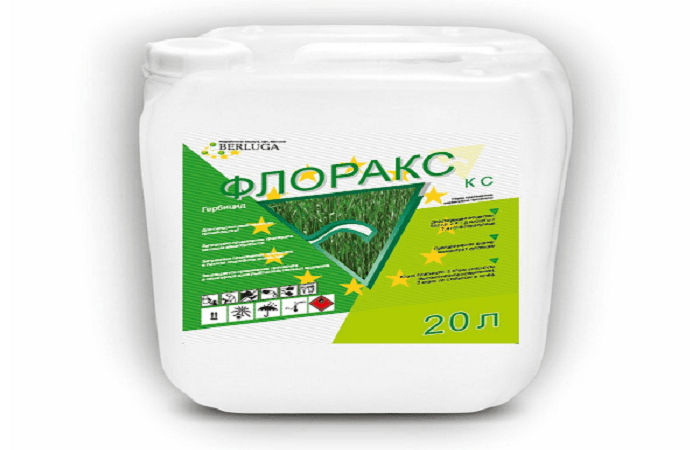
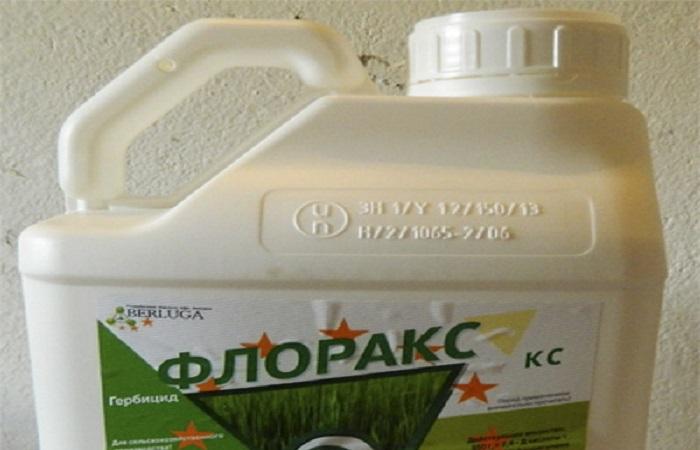
Florax is produced by AGRUSKHIM LLC and AFD LLC as an emulsifiable concentrate in 5-liter canisters. It contains two active ingredients: 2,4-D (2-ethylhexyl ether) at 550 g per liter and florasulam at 7.4 g per liter. This systemic herbicide has a selective effect on weeds.
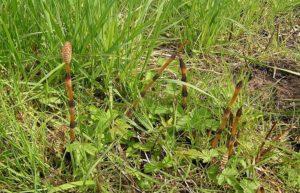
It is used to control annual weeds, including those resistant to 2,4-D and 2M-4X, as well as some bipartite perennial weeds. It is not effective against cereal weeds. It is used for spring and winter wheat and spring barley.
Operating principle
Florasulam inactivates acetal lactate synthase, thereby disrupting the synthesis of essential amino acids. 2,4-D in the herbicide acts as a growth inhibitor. The product penetrates weeds in just an hour and spreads throughout their entire structure, including the roots. Weed growth stops within a day.
Signs of suppression become noticeable 3-4 days after spraying. Weeds are finally killed within 2-3 weeks, the duration of which depends on the weather, species, and age of the weeds. A rapid effect is observed when spraying one-year-old bipartite grasses when they reach 5-10 cm, as well as perennial grasses when they are in the rosette stage. The optimal temperature for application is 8-25°C, but temperatures as low as 5°C are acceptable.
Advantages of the drug
Florax herbicide has the following advantages:
- acts against many types of weeds, mainly 1-year-old weeds, including those resistant to 2,4-D;
- effective at temperatures from 5 °C;
- it can be sprayed on grain crops at different stages of development;
- suppresses even overgrown weeds;
- is distinguished by its speed of operation.
The herbicide is used only in agriculture, for treating grain crops.
Calculation of consumption
The application rate of Florax depends on the developmental stage of wheat and barley at the time of application. If the crops are sprayed at the tillering stage, when weeds are still in the early stages of development, the dosage will be 0.3-0.4 liters per hectare. If weather conditions require a delay in spraying, it can be applied to the crops at the booting stage. In this case, the dosage is higher – 0.5 liters per hectare.
Winter wheat is sprayed with a herbicide solution in the spring. The application rate is always the same: 200-300 liters per hectare of crop.
Preparation of the working mixture
To prepare the Florax herbicide solution, fill the tank with water and add the concentrate. Mix thoroughly. During preparation, be careful not to spill the solution. Use the solution the same day. Afterward, rinse and dry the sprayer.
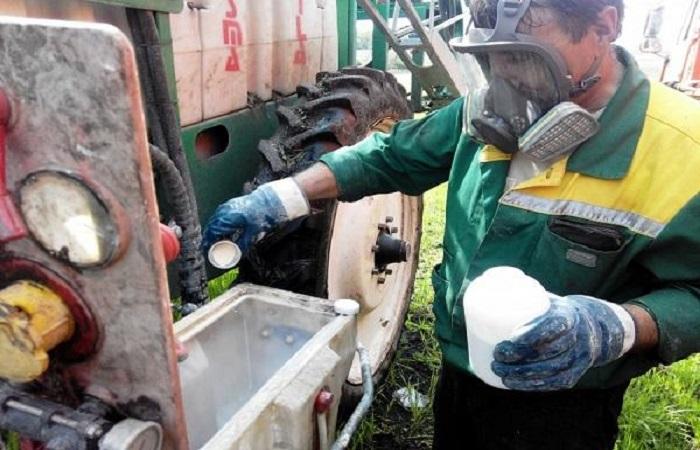
The working solution should be prepared in designated areas covered with asphalt or concrete, or in a well-ventilated area. If Florax is spilled, it must be neutralized. Cover the spilled concentrate with sand or sawdust, collect it in a container, and then flush the area with a bleach solution, which neutralizes 2,4-D. Rinse with clean water.
Instructions for use
Spray wheat and barley within the timeframes specified by the manufacturer to ensure the product is effective. Spray once, then wait 60 days. Despite this extended period, the plant will no longer contain any of the product's ingredients before harvesting.
Precautionary measures
All work with Florax herbicide must be performed using protective equipment: coveralls, a gas mask or respirator, goggles, safety shoes, and gloves. After use, neutralize safety clothing by washing with soap and soda (2.5% soap and 0.5% soda). Rinse gloves and boots with water.

How toxic is it?
Florax is classified as a Class 2 toxicity product, meaning it may be hazardous. It is a Class 2 hazard product for bees and toxic to aquatic organisms.
Possible compatibility
"Florax" can be mixed to prepare a general solution with preparations containing sulfonylureas, with dicamba substances, fenoxaprop-P-ethyl, and can also be mixed with insecticidal and fungicidal agents.
How to store it correctly and for how long
Florax herbicide should be stored in undamaged, factory-sealed containers with the lids closed. Store in a dry, dark place, maintaining a temperature between -10°C and 30°C. The concentrate has a shelf life of 2 years, and the herbicide solution has a shelf life of 1 day.
Analogues
For 2,4-D, Florax has analogues: Disulam, Camaro, Aurorex, Crossbow, Zernomax, Dartik, Lambada, Oprichnik, Octigen, Primavera, Prishans, Svarog, Florastar, Chistalan, Elant, Endymion, Estet, Esteron. Analogs for florasulam: “Agrostar Grand”, “Assoluta”, “Bomba”, “Derby 175”, “Cayenne”, “Lugger”, “Octave”, “Speaker”, “Tandem”, “Flagship”.
Florax herbicide is designed for spraying grain crops against various weeds. Treatment is performed once, during the initial stages of crop and weed development. It reliably protects grain crops from overgrowth.
Related posts:
 Hermes herbicide instructions for use, dosage, and analogues
 Composition and instructions for use of the herbicide Ballet, application rates and analogues
 The best eggplant varieties for growing in a polycarbonate greenhouse: planting and care
 Instructions for use and composition of the herbicide Aksifor, dosage and analogues
 Instructions for use and composition of the herbicide Esteron, dosage and analogues
 Instructions for use and composition of the herbicide Basis, application rates and analogues
 Luger herbicide instructions for use, dosage, and analogues
 Instructions for use and composition of the herbicide Callisto, dosage and analogues