
- Composition and existing forms of release
- What weeds does it work on?
- Mechanism of operation
- How quickly does it work?
- Pros and cons
- Calculation of consumption
- Preparation of the working mixture
- Rules of application
- Precautionary measures
- How toxic is it and is compatibility possible?
- What to do in case of poisoning
- Storage rules and shelf life
- Analogues
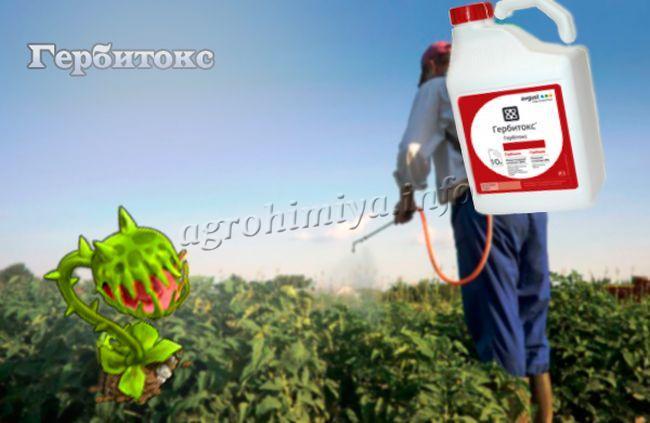
Treating cereal crops is essential in modern agriculture. The herbicide Gerbitox is used to spray cereals, peas, rice, and forage grasses. Let's explore the product's capabilities, its composition and action, its mechanism of action, and its speed of action. What dosage and application rate are required? What pesticides is the product compatible with, and what alternatives can it be used with?
Composition and existing forms of release
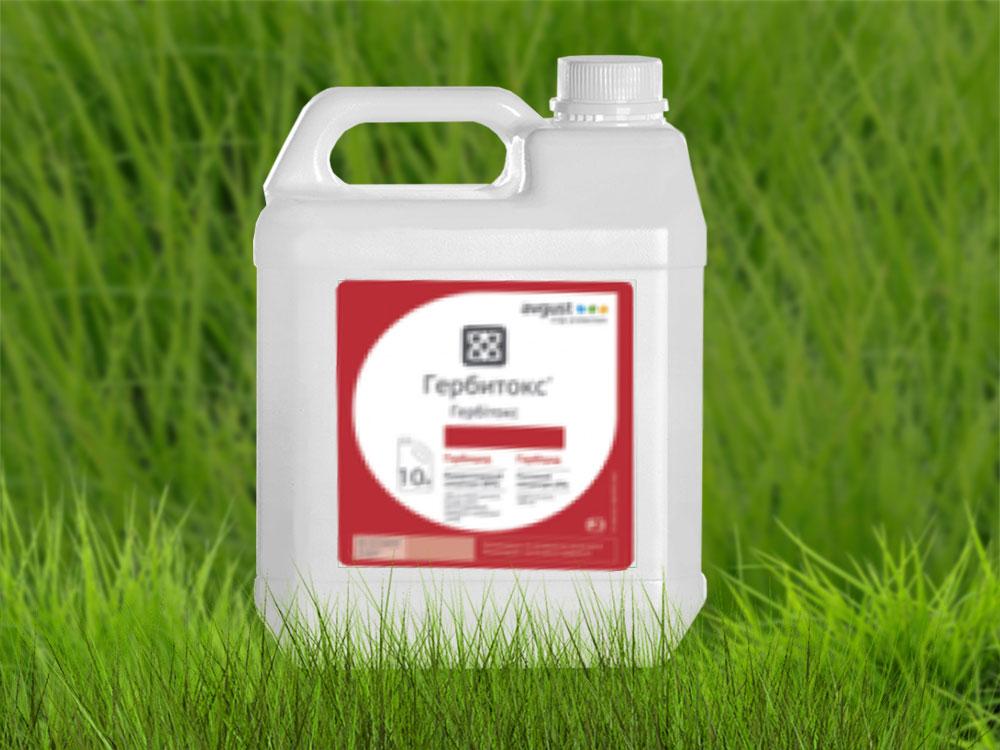
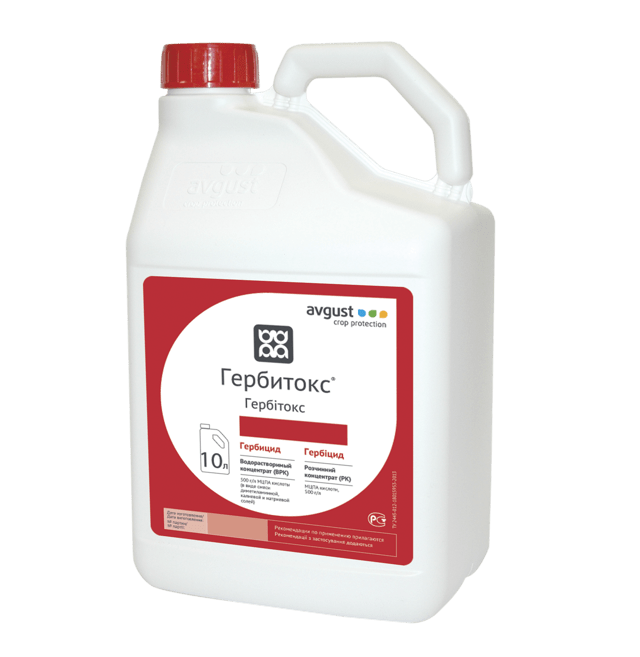
"Gerbitox" is produced by August, a ZAO company, as a soluble concentrate. The active ingredient is MCPA, available at a concentration of 500 g per liter. Based on its mode of penetration, "Gerbitox" is classified as a systemic pesticide, and based on its mode of action, it is classified as a selective herbicide. The product is packaged in 10-liter canisters.
What weeds does it work on?
The herbicide is used to treat spring and winter grains, legumes, flax, and forage grasses against annual dicotyledonous weeds. Hayfields are treated against harmful and poisonous grasses that contaminate hay and rice from marsh weeds.
The herbicide is effective against noxious weeds such as ragweed, cornflower, vetch, field mustard, groundsel, orach, goosefoot, dandelion, rhizome, celandine, nettle, sow thistle, sedge, shepherd's purse, and wild radish. It is used against arrowhead, cudweed, amaranth, stachys, water lily, deadnettle, and field pennycress. It is less effective against knotweed, black nightshade, wormwood, fumitory, thistle, chamomile, chamomile, and campion. The herbicide inhibits but does not kill them.
Mechanism of operation
The product, applied to weeds, is absorbed by the leaves, stopping photosynthetic processes. The weeds then die.
How quickly does it work?
"Gerbitox" suppresses weed growth within 3-7 days, and kills weeds completely within 2-3 weeks. Optimal results are achieved when applied at temperatures ranging from 18-30°C. "Gerbitox" provides long-term protection for crops before a new wave of weeds emerges.
Pros and cons
Calculation of consumption
"Gerbitox" is applied to winter wheat, barley, and rye at a rate of 1-1.5 liters per hectare, and to spring crops at a rate of 0.7-1.5 liters per hectare. Spray at the tillering stage at a rate of 200-300 liters per hectare. One treatment is sufficient, with a waiting period of two months.
Application rate for other crops:
- millet and sorghum – 0.7-1.2;
- rice – 1.5;
- peas – 0.5-0.8;
- flax – 0.8-1;
- clover – 0.8-1.2;
- meadow grasses and hayfields – 1-1.5.
Spraying liquid consumption is 200-300 l per hectare, waiting period is 60 days.

Preparation of the working mixture
To prepare Gerbitox for spraying, first fill the tank with 1/3 water, then add the required amount of concentrate, then add the remaining water. Mix thoroughly.
Rules of application
The herbicide is most effective when weeds are in their early stages of development (2-5 leaves) and actively growing. Therefore, it is recommended to apply the herbicide as early as possible, when the weeds are at the appropriate stage of development.
The instructions warn that the product's effectiveness may be reduced during drought, as it penetrates and migrates more slowly through plant tissue. It is not recommended to apply before rain or at temperatures above 20°C.
Precautionary measures
When working with the herbicide solution, wear thick protective clothing, gloves, goggles, and a respirator. Do not remove them while working. Do not eat, drink, or smoke.

How toxic is it and is compatibility possible?
It is classified as a toxicity class 2 product for humans and 3 for bees (it can be used on crops near apiaries and pastures). It is non-toxic to soil and cultivated plants and non-toxic to aquatic organisms.
It can be combined with other herbicide-active preparations, but if there is no precise compatibility information specified in the instructions, you should conduct a test yourself - combine a small amount of one and the other preparation in a separate container and, if there is no reaction, you can mix the required amount in a common tank.
Herbitox may cause chlorosis and temporary growth inhibition in peas, some legumes, and flax. However, this occurs when using the product at maximum application rates. Do not spray legumes that are weakened by adverse weather conditions.
What to do in case of poisoning
If Gerbitox solution accidentally comes into contact with mucous membranes, eyes, or mouth, rinse with water. This product is classified as moderately hazardous, so poisoning is possible. Symptoms include dizziness and headache, nausea, weakness, and vomiting. In case of poisoning, take activated charcoal at a dose of 1 g per kg of body weight, wash it down with water, wait 10 minutes, and induce vomiting. If the condition does not improve, call a doctor.
Storage rules and shelf life
The fungicide is stored in warehouses designated for pesticides. Canisters must be tightly sealed. Storage conditions include temperatures from -16 to +40°C, in a dry, dark place. Under these conditions, the herbicide can be stored without losing its properties for five years from the date of production. After the expiration of the storage period, the product is no longer suitable for use.
The Gerbitox solution should be prepared on the day of use, in the amount required for treatment. It cannot be stored; any remaining liquid should be discarded.
Analogues
In terms of active substance, substitutes for "Gerbitox" are the drugs "Agritox", "Agroshans", "Ametil" and "Lintaplant".
"Gerbitox" controls a wide range of one-year-old broadleaf weeds in cereals, legumes, forage grasses, rice, millet, and sorghum. It is non-toxic to crops when applied according to recommended rates and dosages, and it combines well with other herbicides and pesticides. This product is considered one of the best for weed control in cereal crops mixed with clover.
"Gerbitox" acts quickly; signs of weed suppression can be seen within 3-7 days after application. Weeds are completely killed within 2-3 weeks, during which time no growth occurs. The treatment protects crops from weed infestation until the next weed wave appears. While the product has many advantages, its significant drawbacks include its use only in fields, making it limited for use on private farms.
Related posts:
 The best eggplant varieties for growing in a polycarbonate greenhouse: planting and care
 Top 40 DIY New Year's Baking Recipes for 2020
 The health benefits and contraindications of black currants
 The best grape varieties for growing in the Urals, planting and care rules in summer
 Methods for planting and propagating cherries at home
 How to control carrot flies with medications and folk remedies
 Descriptions of the 20 best cherry varieties for the Moscow region, their planting and care
 Is it possible to soak treated cucumber seeds before planting and how to do it correctly?