
- Composition and existing forms of release
- Advantages of the product
- How does it work?
- What weeds are best to use against?
- Average consumption rates and how to prepare a working solution
- Instructions for use of herbicide
- Safety precautions at work
- Degree of toxicity
- Crop rotation restrictions
- Possible compatibility with other drugs
- Storage rules
- Similar means
Weeds in fields suppress crop yields, causing partial loss of crops. Various chemicals are used to preserve them. Harmony, a selective herbicide, is effective in eliminating problematic plant pests. It protects grain crops, soybeans, flax, and corn from weeds. It controls annual and a range of perennial broadleaf pests.
Composition and existing forms of release
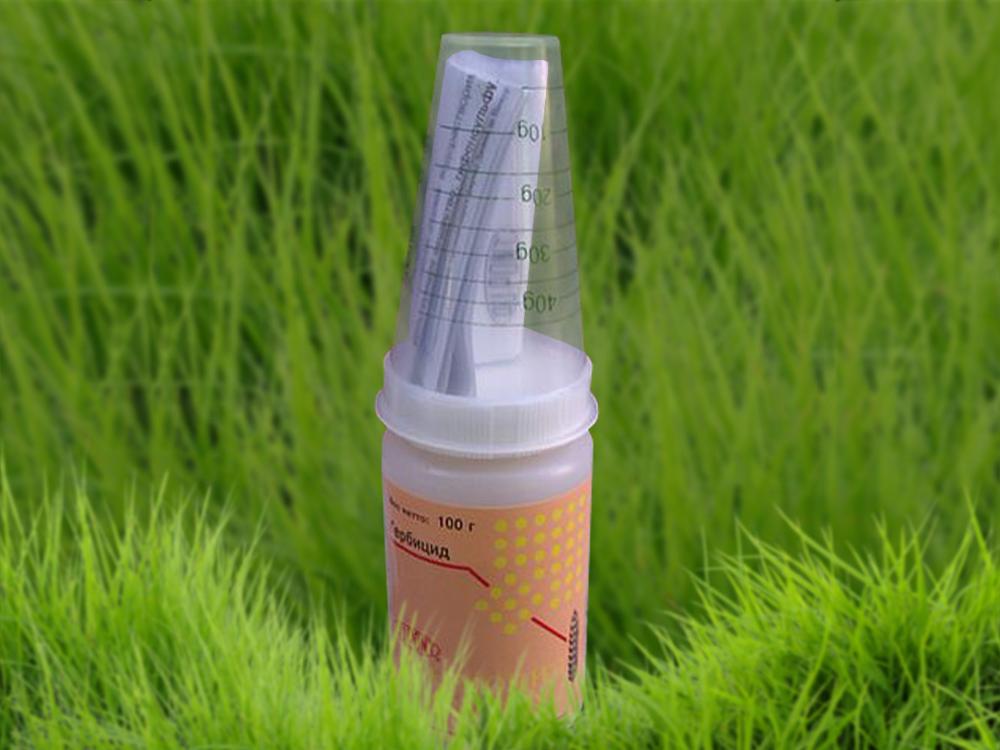
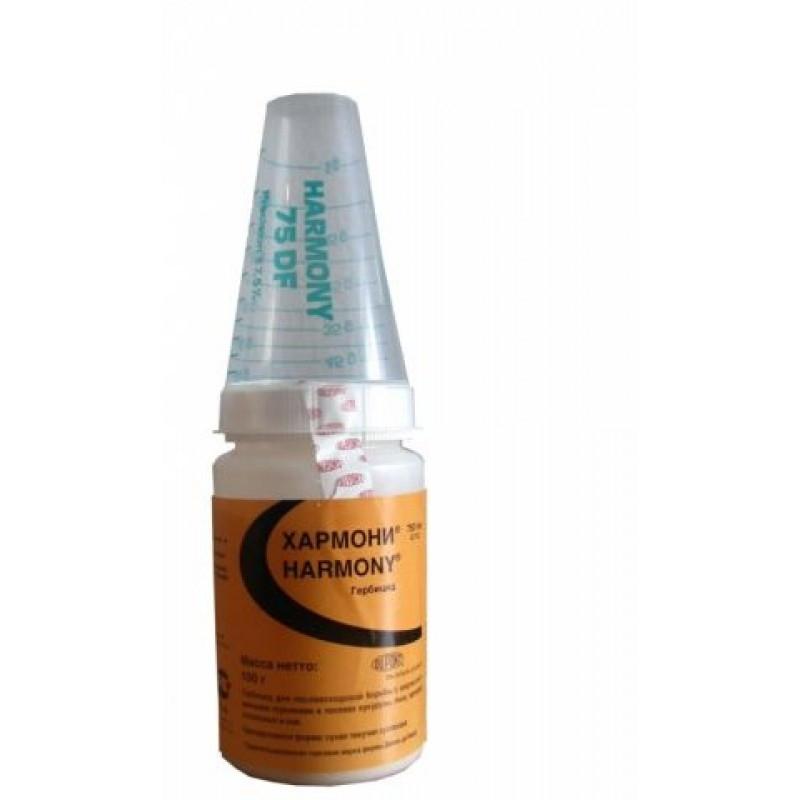
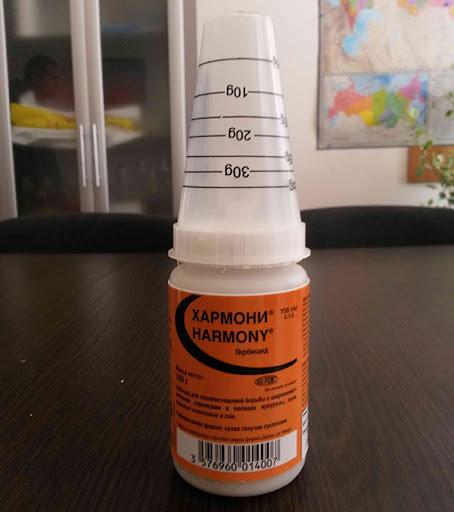
The drug belongs to the sulfonylurea class of drugs. The active ingredient is thifensulfuron-methyl, present in a concentration of 750 grams per kilogram. Harmony is sold as a dry, viscous suspension packaged in 100-gram plastic containers. The drug "Harmony Classic" contains 50% thifensulfuron-methyl together with chlorimuron-ethyl, in the same amount of 187.5 grams per kilogram of the drug.
Advantages of the product
This agrochemical stands out among its peers for its excellent price-quality ratio. Its advantages include:
- cost-effectiveness due to low consumption rate (25 g per 1 ha of area);
- there are no temperature restrictions, the herbicide is effective at +5 degrees;
- rapid solubility in soil;
- If the instructions are followed, the herbicide is safe to use;
- does not harm humans or insects;
- processing near water bodies is permitted;
- protection of a wide range of crops;
- suppresses most types of plant pests;
- The herbicide can be used as a base in tank mixtures.
The chemical works quickly. The first signs of action appear within 3-5 days. Complete weed death occurs within 10-20 days.
How does it work?
The active ingredient penetrates the plant through the leaves, spreading throughout the cells. The substance enters the root system, destroying the enzyme acetolactate synthase, halting cell division. Within a few hours of treatment, weed growth ceases. Complete weed death occurs within two to three weeks.
What weeds are best to use against?
The product is effective against most types of annuals. The following are particularly susceptible to the agrochemical:
- ambrosia;
- quinoa;
- chamomile;
- deadnettle;
- mint;
- pigweed;
- cocklebur;
- amaranth;
- nettle;
- sorrel;
- Highlander.
Weeds are classified into types: sensitive, moderately sensitive, and resistant. Harmony inhibits all of these pests. Galinsoga, wild nightshade, and bindweed are resistant to the herbicide.
Average consumption rates and how to prepare a working solution
Prepare the solution before use. Partially fill the container with water, turn on the mixer, and add the product in the amount specified in the instructions. If necessary, add another pesticide. Stop the mixer, add water, and add TREND 90. Mix again.
Consumption rates are presented in the table:
| Culture | Processing time | Consumption rate g/100 l |
| Soybeans | 1-3 trigeminal leaves | 6.0-8.0 |
| Flax | When the crop grows to 5-12 cm | 15.0-20.0 |
| Cereals | In spring, during the tillering phase of the crop | 15.0-25.0 |
| Corn | 3-5 true leaves | 10.0 |
The average consumption rate of the preparation is 25 grams per 1 hectare of area, the ready-made solution is 200-300 liters per hectare.
Instructions for use of herbicide
The product is not used on disease-prone crops. Do not use during prolonged cold spells, droughts, or after precipitation.
Safety precautions at work
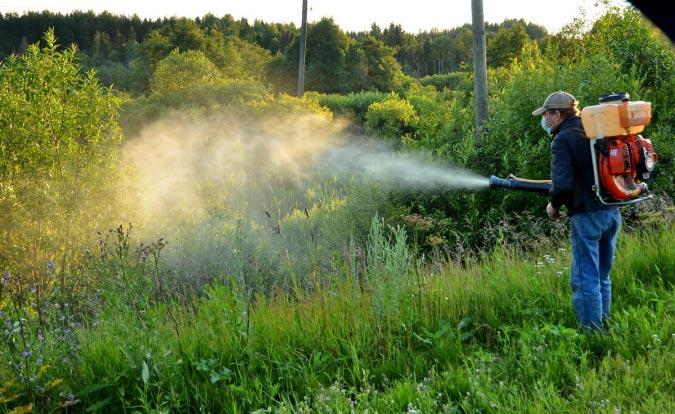
Before using plant protection products, wear protective clothing, latex gloves, a respirator, and boots. Wearing a hat and mask is mandatory. Avoid contact with mucous membranes and exposed skin.
Degree of toxicity
Harmony is classified as hazard class 3 for humans and class 4 for bees. It is safe for use near bodies of water.

Crop rotation restrictions
One of the main advantages of this agrochemical is the lack of specific crop rotation restrictions. Farmers recommend adhering to the following guidelines:
- After soybeans, sow only soybeans;
- three months after spraying, sow only winter crops;
- After chemical treatment, it is advisable to sow rapeseed and sunflower only the following year;
- after spraying in the second year, sowing potatoes, onions, and sugar beets is allowed;
- In spring, sowing of corn, soybeans, oats, peas, and spring crops is permitted.
Possible compatibility with other drugs
The herbicide can be combined with other pesticides, except for organophosphorus insecticides.
To avoid negative consequences, compatibility testing is carried out beforehand.
Storage rules
The shelf life in original packaging is 36 months from the date of manufacture. Store the chemical at a temperature of 0 to +30 degrees Celsius in a dry place.
Similar means
Preparations with a similar active ingredient in their composition have the same functions as Harmony:
- "Tifi";
- "Formula";
- "Orion".
Agrochemicals are used on large agricultural enterprises. These products are effective for treating grain crops, soybeans, corn, and flax.
Related posts:
 The best eggplant varieties for growing in a polycarbonate greenhouse: planting and care
 How to properly plant peas in a greenhouse and open ground
 How to propagate and grow peas, cultivation technology, and care in open ground
 Methods for planting and propagating cherries at home
 Instructions for use and composition of the herbicide Caliber, consumption rate and analogues
 Description of varieties of sowing peas and cultivation, to which family they belong
 Nitrophoska composition and instructions for use of fertilizer, errors
 The best grape varieties for growing in the Urals, planting and care rules in summer