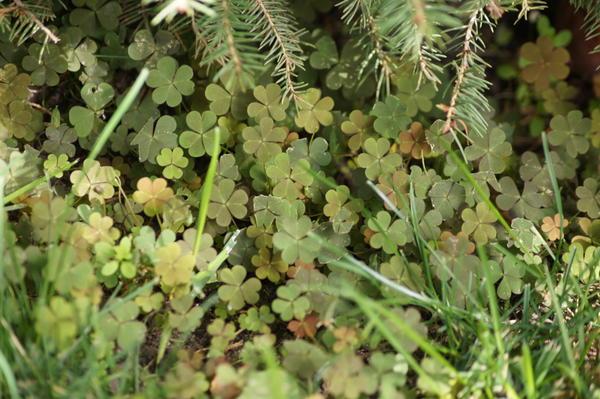
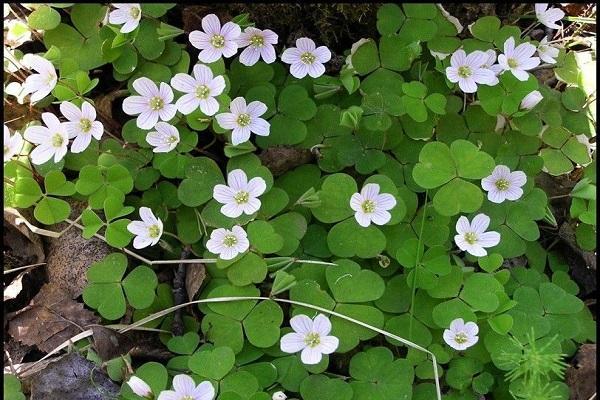
Wood sorrel is a herbaceous plant that belongs to the Oxalis family. Botanically, it is known as oxalis. The plant is also known as "hare's cabbage" and "false clover." This herb is characterized by rapid growth, which can lead to it taking over an entire garden. Therefore, many beginning gardeners are interested in how to get rid of wood sorrel.
What is the plant?
Wood sorrel is a flowering herb. It is characterized by a creeping rhizome with bulbous or tuberous growths. The plant can reach a height of 15-30 centimeters.
It is characterized by palmate or trifoliate leaves with petioles up to 20 centimeters long. The leaves grow to 5-15 centimeters in length. They can fold or droop at night. This occurs when physically stimulated or in cloudy weather. The leaves can be burgundy or green in color. They can be single-colored or multicolored.
The plant blooms in late spring or early summer, a process that lasts for one month. A long flower stalk with one or more buds emerges from the leaf axils. The plant has a regular corolla consisting of five petals fused into a tube. These petals are characterized by a rounded edge that curves strongly outward. Similar to the leaves, the flowers close completely at night.
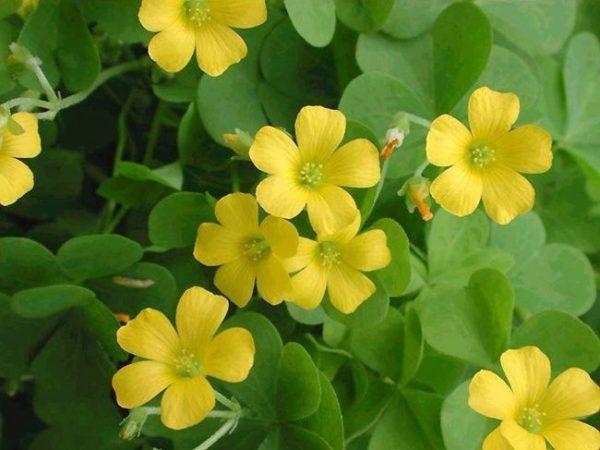
The plant's petals come in white, lilac, pink, and yellow. The flowers are bisexual and tend to self-pollinate. Insects can also do this. The central part of the flower contains 5-10 long stamens and a single ovary. The ovary may be longer or shorter than the stamens.
The fruits are fleshy seed capsules. They are elongated and have green valves. Inside are small, teardrop-shaped seeds, covered with a thick skin.
The outer layer of the peel contains a lot of sugar. This attracts ants, which help disperse the seeds over long distances. Once ripe, the wood sorrel fruits open easily. At this point, their contents are dispersed over considerable distances.
What is the danger?
Many gardeners plant wood sorrel for ornamental purposes. However, the plant is capable of reproducing very quickly. Wood sorrel fruits are capsule-shaped pods. When they open, they release numerous tiny seeds that resemble poppy seeds. These seeds are carried by the wind up to 1.5 meters. Once planted in the soil, the seedlings germinate very quickly.
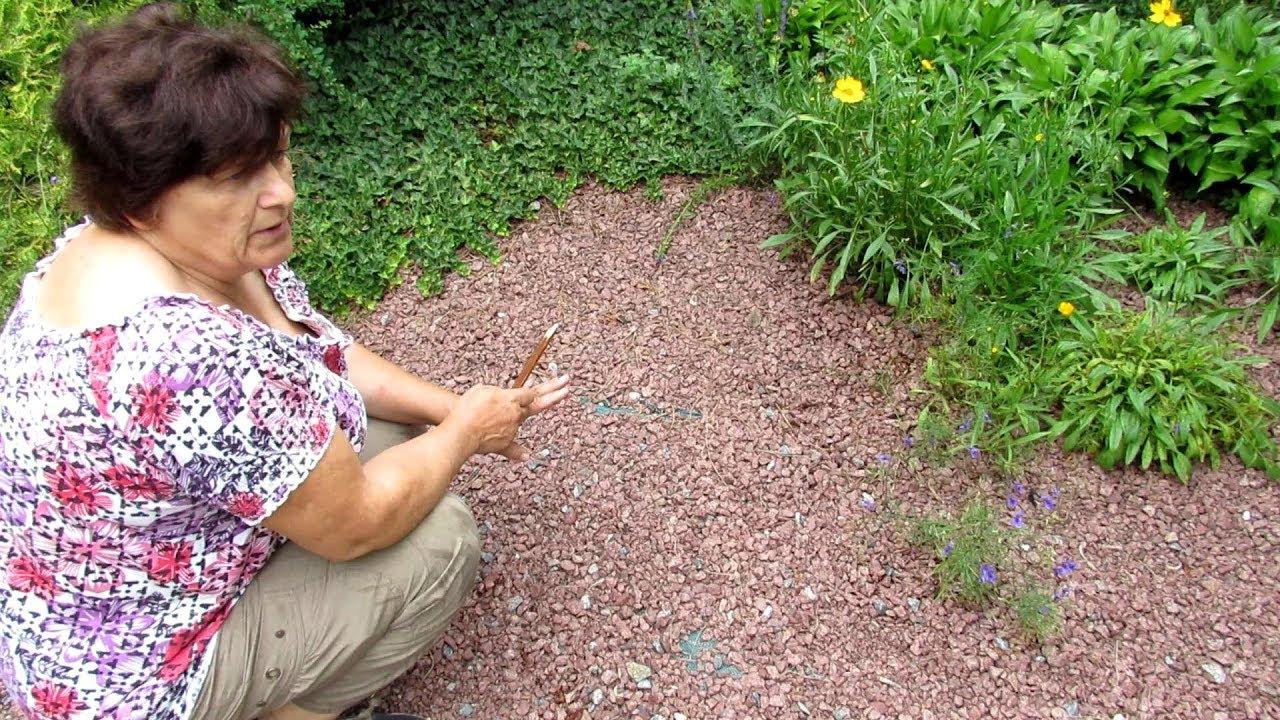
Such productivity suggests that without preventative measures and control, the area will quickly become covered in a dense carpet of wood sorrel. Within one season, the plant can occupy up to one square meter. After several seasons, above-ground shoots can cause damage to the entire garden.
If wood sorrel is present in one area, it may also appear in neighboring areas. This is due to the aerial dispersal of seeds.
Methods for getting rid of weeds
Preventing the spread of wood sorrel is much easier than fighting it later. Once the weed appears, it will take a lot of effort to clear the beds. This can be done mechanically, chemically, or with traditional methods.
What herbicides are suitable?
Using chemicals in private gardens is not recommended. However, if weeds are widespread, it may be necessary.
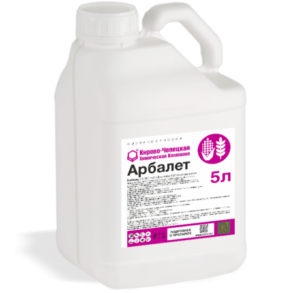
Roundup helps control wood sorrel. Products with similar chemical properties can also be used. Affected beds should be treated in the spring or fall.
Use of mechanical methods
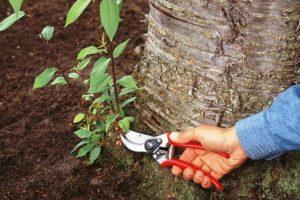
Wood sorrel is most often destroyed mechanically. Frequent weeding is recommended. This is done when the soil is dry, before the flowering period begins. Careful root removal is essential, including pulling even the smallest roots out of the soil. It's easiest to pull out the mature stems, which are preparing to form buds. They become less brittle and less likely to break. Weeding small shoots is quite difficult.

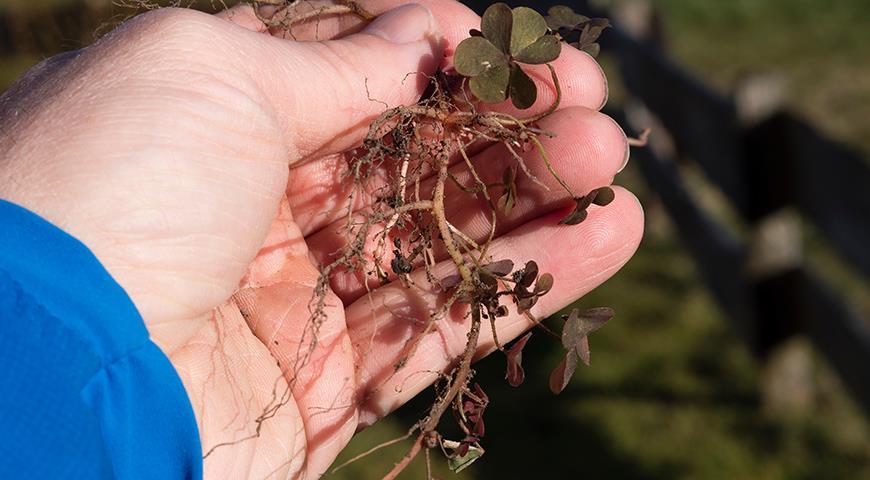
Removed grass should be carefully raked away. It's important not to leave shoots or roots in the beds. The plants should be disposed of immediately.
Tossing bushes into compost is not recommended. This plant has a very resilient root system. If the grass is placed among rotting debris, it can remain viable for two years. Using prepared compost in the garden runs the risk of reintroducing weeds.
Traditional methods
To get rid of wood sorrel, it is recommended to use the following methods:
- Remove any flower stalks that appear.
- Mulch the affected areas with dark cloth.
- It's good to lime the soil. Wood sorrel doesn't tolerate lime well.
- Create natural shade. It hinders plant growth.
- Systematically water the beds with strong tea.
Prevention of occurrence
To prevent the appearance of wood sorrel, it is worth following these rules:
- Remove weeds by the roots. They should not flower or produce seeds.
- Do not leave pulled out grass in the beds.
- Don't compost collected bushes. They can spread even faster than the wind.
- Mow down ornamental wood sorrel at the root.
What mistakes do gardeners make?
When growing ornamental wood sorrel, many gardeners make a number of mistakes, which lead to problems:
- Don't overwater the beds. The fine roots will dry out in dry soil.
- You shouldn't make decorative flower beds near garden beds.
- When weeding, it is better to use a pitchfork rather than a shovel.
Wood sorrel is considered a rather beautiful plant. However, it can spread rapidly across a property. Chemical, mechanical, or traditional methods can be used to control the weed.
Related posts:
 Useful properties and contraindications for the use of wood sorrel, application
 The best eggplant varieties for growing in a polycarbonate greenhouse: planting and care
 Description and rules for growing Solaris grapes
 Growing and caring for hazelnuts in open ground, rules for planting hazelnuts
 Causes and treatment of cherry diseases, methods of pest control
 Description of 30 varieties and types of Muscat grapes, planting, cultivation and care
 The best methods for growing grapes from seeds at home
 Is it possible to soak treated cucumber seeds before planting and how to do it correctly?