
- Composition and existing forms of release
- Mode and spectrum of action
- Advantages of the herbicide
- Disadvantages of the product
- Average application rates for different plants
- Rules for preparing a working solution
- Methods of use
- Possible compatibility with other products
- Safety precautions
- What to do in case of poisoning?
- How to store and what is the shelf life?
- Similar means
The presence of weeds in a garden affects the quality of the lawn and crops. Gardeners use chemicals to control various weeds. The selective herbicide "Lontrel" is designed for lawns and areas with various crops. It effectively removes sow thistle, milk thistle, and dandelion by penetrating the roots. It has no adverse effects on crops or lawn grass.
Composition and existing forms of release
The active ingredient of this post-emergence herbicide, clopiralid, has a systemic effect. It penetrates tissue, is immediately absorbed, and spreads throughout the structure. The concentration is 300 grams per liter of product. It is available as an aqueous solution or granules. It is packaged in 1.5, 3, and 9 milliliter sachets and 0.5 and 0.9 milliliter bottles. "Lontrel 300D" for use in larger areas is sold in 5-liter canisters. Granulated "Lontrel Grand" is packaged in 2-kilogram containers and contains 75 percent of the active ingredient.
Mode and spectrum of action
The herbicide is applied to the area during the weed growth period. It hits the plant and immediately spreads throughout it. Clopyralid interferes with hormones and disrupts metabolic processes. This causes the weed to stop growing and die.
Advantages of the herbicide
The fast-acting substance has positive qualities:
- quickly removes weeds that are difficult to remove on your own;
- works selectively;
- removes unwanted vegetation at any stage of vegetation;
- has high selectivity in relation to protected crops;
- does not have a phytotoxic effect;
- No resistant weeds were found.
Take a look Also


Lontrel is cost-effective and requires minimal dosages. It effectively cleans the area until the next season.
Disadvantages of the product
The product's effectiveness is reduced by precipitation or high humidity. It is completely washed away after rain. The herbicide is ineffective against cruciferous plants and some weeds. Lontrel is expensive.
Average application rates for different plants
The regulations for use are indicated in the table:
| Cultivated crops | Unwanted vegetation | Processing period | Consumption (ml/m2) |
| Cereal crops | Annual dicotyledonous weeds | The entire growing season | 0.01-0.06 |
| Strawberries | Perennial dicotyledonous weeds | After harvesting the fruits | 0.05-0.06 |
| Lawn grass | Annual and perennial weeds | After the first mowing | 0.01-0.03 |
| Beet | Chamomile, lettuce, knotweed | After three leaves appear | 0.03-0.05 |
| Flower crops | Sorrel, plantain | During the growth period | 0.02-0.05 |
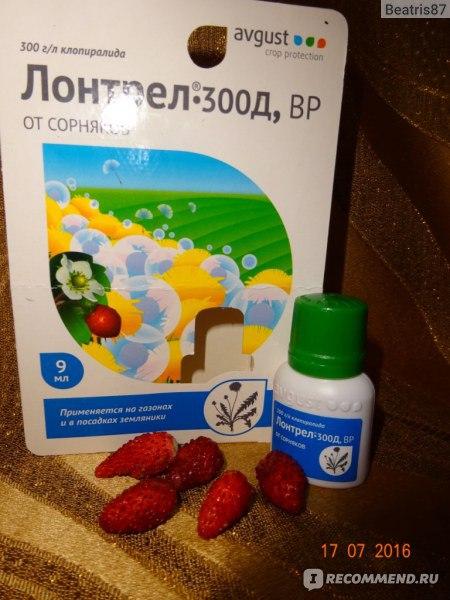
Rules for preparing a working solution
Prepare the product according to the manufacturer's instructions on the packaging. Shake the aqueous solution well. Fill the sprayer 1/3 full with water. Add the product according to the dosage. Add water if necessary and mix thoroughly. The more weeds in the area, the higher the concentration of the solution.
Methods of use
Before starting work, read the instructions for use. Prepare the solution immediately before use. The mixture is prepared for a single application and used within an hour and a half, after which the active ingredients' activity diminishes. Work at temperatures ranging from 10 to 25 degrees Celsius. The area should be treated in dry, windless weather.

Possible compatibility with other products
Lontrel is compatible with other herbicides. It is compatible with the following chemicals: Fusilad, Zellek, and Victor. It is also compatible with the following pesticides: Biceps, Pilot, and Triceps. Before using the products together, mix them in small quantities to test the reaction.
Safety precautions
Keep children and animals away from the area during spraying. Wear personal protective equipment: protective clothing, a mask, and latex gloves. Keep the aqueous solution away from children, animals, food, and medications.
While working with the product, do not smoke, eat, or use household utensils. Wash your hands thoroughly with soap after use.
What to do in case of poisoning?
If the solution comes into contact with skin or mucous membranes, rinse the affected area immediately with running water. If signs of irritation appear, consult a doctor. If the solution enters the esophagus, induce vomiting, administer activated charcoal, and drink plenty of water. If nausea or dizziness occurs during treatment, leave the treatment area.
Take a look Also

How to store and what is the shelf life?
Store the herbicide in its original packaging according to the manufacturer's expiration date. The shelf life is 36 months from the date of manufacture. Store out of the reach of children and animals at a temperature of 5 to 40 degrees Celsius.
Similar means
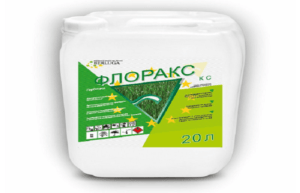
Among the highly effective Lontrel alternatives on the market are Percalid, Zircon, and Mastak. These selective treatments share one common drawback: their instability in the face of adverse external factors, such as high humidity and precipitation.
Related posts:
 The best eggplant varieties for growing in a polycarbonate greenhouse: planting and care
 Methods for planting and propagating cherries at home
 Nitrophoska composition and instructions for use of fertilizer, errors
 Review and application of herbicides for winter and spring garlic against weeds
 How to properly plant peas in a greenhouse and open ground
 How to propagate and grow peas, cultivation technology, and care in open ground
 Description of herbicides for treating cabbage and their use after emergence
 The best grape varieties for growing in the Urals, planting and care rules in summer