
Weeds successfully compete with wheat for growing space, nutrients, and moisture. The grain yield depends on the number of weeds per square meter of the field. One weed reduces productivity by 25 to 70 kilograms of grain per hectare. Using herbicides on wheat allows for successful weed control.
What weeds harm wheat crops?
To control weeds, fields are surveyed in the spring to determine the level of infestation. The use of chemical weed killers (herbicides) is considered necessary if there are 10 to 15 annual weeds or 2 to 3 perennial weeds per square meter.
Weeds are divided into monocotyledons and dicotyledons, as well as annual and perennial.
When cultivating field crops, it is necessary to remove from cultivated areas:
- ambrosia;
- knapweed;
- chamomile;
- white clover;
- field bindweed;
- shepherd's purse;
- cleavers;
- sow thistle;
- field thistle;
- quinoa;
- couch grass.
Wild oat grass and scaly grass are considered the most harmful weeds for wheat. Wild oat grass is an annual plant that infests spring wheat, causing double damage: small seeds end up in the soil, and large grains end up in the seed. Scaly grass is an overwintering biennial that infests winter wheat. At a density of 30 seedlings per square meter, yield losses will reach 30%.
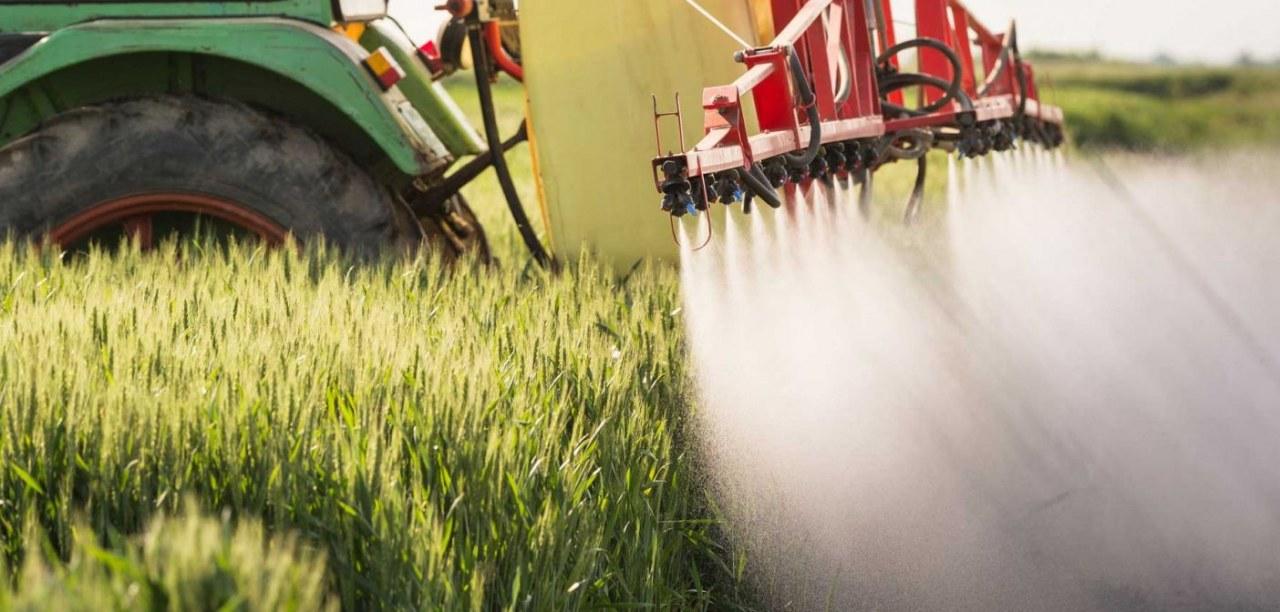
Description of the best products
Herbicides such as 2,4 D and 2M-4X (amine) are affordable, but are ineffective when fields are infested with weeds other than wild oats and broomcorn.
To control crops, herbicides with other compositions are used.
"Starane Premium 330"
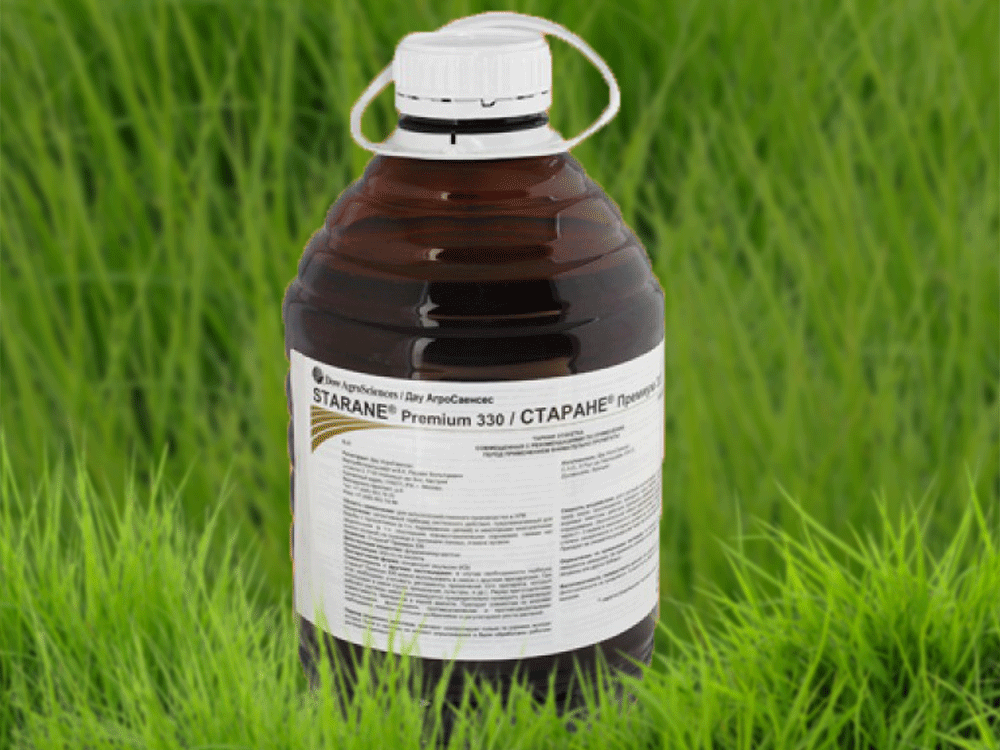
A selective herbicide, produced in the form of an emulsion.
Average consumption rate is 0.3-0.5.
"Bucephalus"
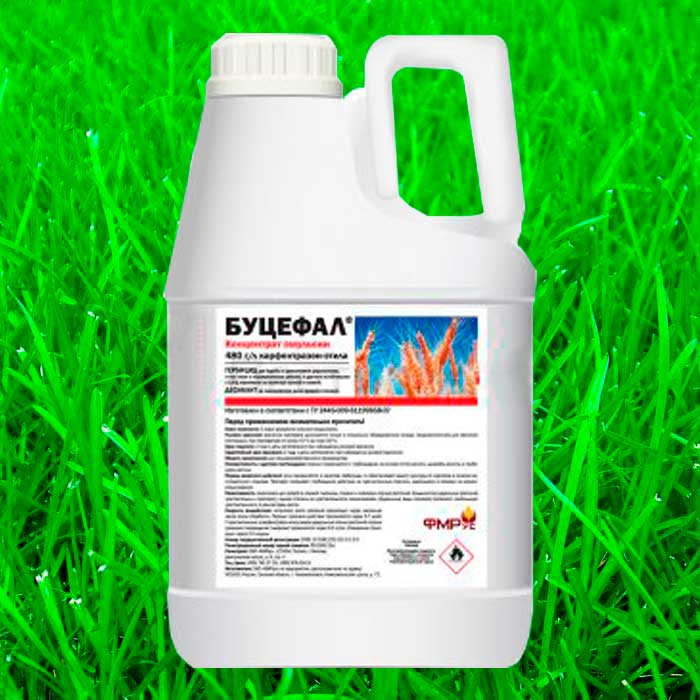
Available as an emulsion (in 5-liter canisters).
Average consumption rate is 0.025-0.03.
Ferat
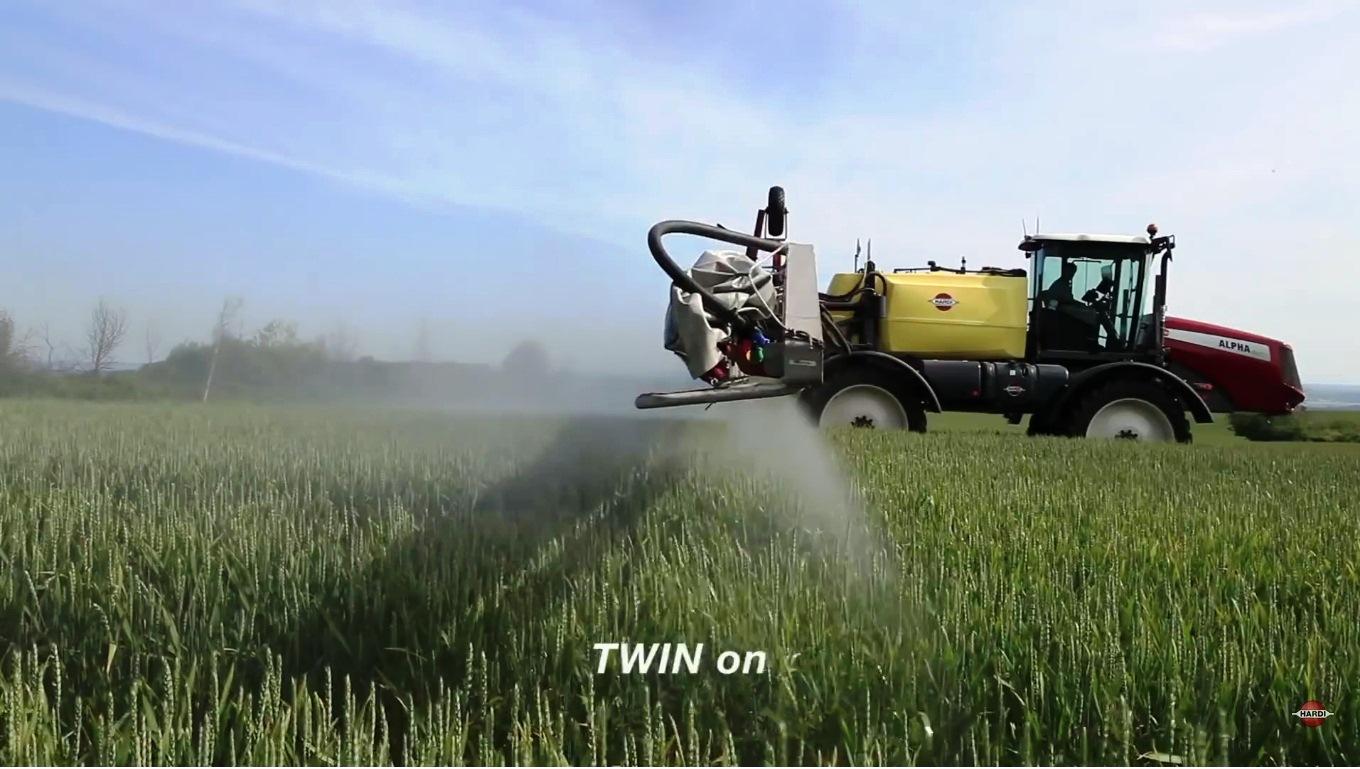
Available in water-soluble granules. Contains sulfonylurea.
Average consumption rate: from 0.015 to 0.02.
Granstar Pro
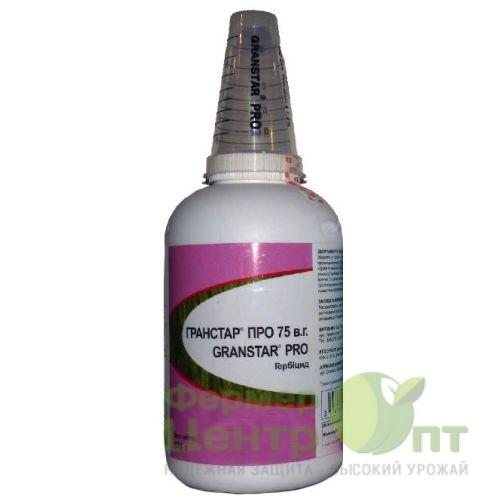
The herbicide is produced in granulated form, packaged in 500 gram quantities.
Approximate consumption rate: 0.01-0.02.
Aurorex

A complex product based on triazolinones and carboxylic acids. Available as a concentrated emulsion, packaged in 5-liter canisters.
Consumption rate: 0.5-0.6.
Demeter
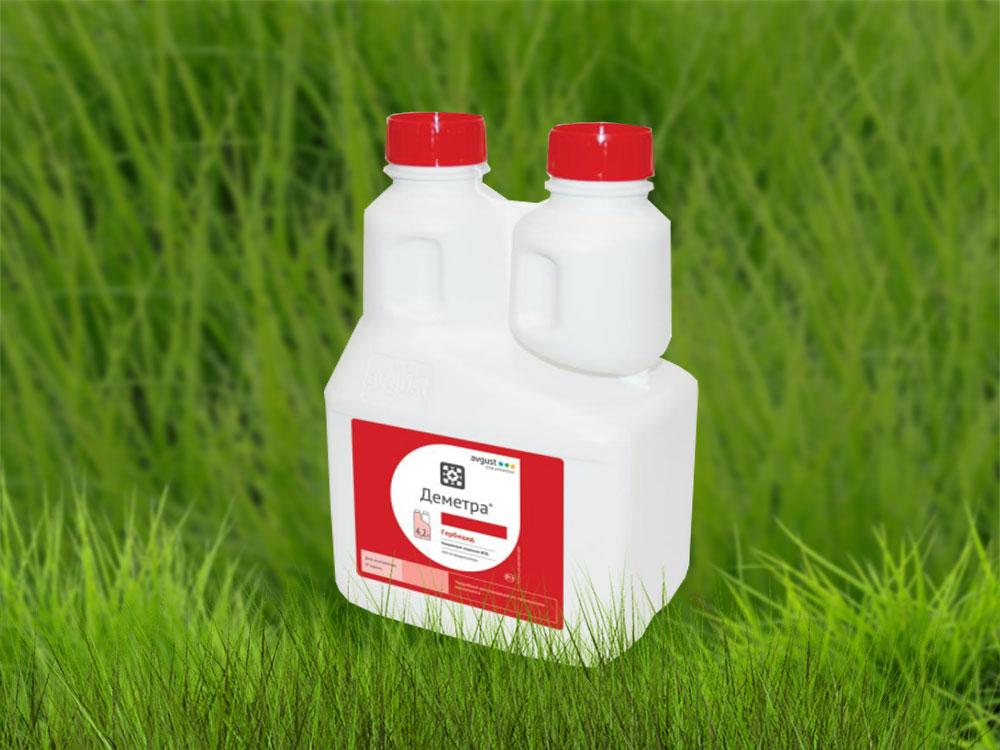
The herbicide is available in the form of an emulsion and contains fluroxypyr.
Average consumption rate is 0.5.
Take a look Also
Lancelot 450
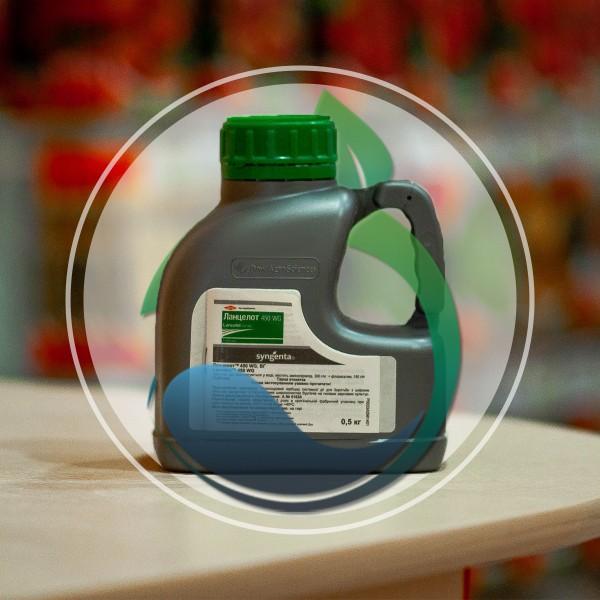
Release form: water-soluble granules.
Average consumption rate is 0.03.
Which drug should I buy?
The choice of herbicide depends on the type of weed, the infestation of the crop area, the air temperature, and the stage of wheat development.
In winter wheat fields with significant infestations of winter weeds (sow thistle, bedstraw, cornflower, and chamomile), use "Starane Premium 330." Granstar is effective for controlling annual and perennial broadleaf weeds in cold spring conditions. Most herbicides are designed to suppress dicotyledonous annual weeds.

Instructions for use
The use of herbicides for treating crops requires compliance with certain rules:
- Do not spray in strong winds or before rain.
- The optimal air temperature is 16-25 degrees Celsius. When the temperature drops to 8 degrees Celsius, the effectiveness decreases to 0. Cold stress and chemical treatments can lead to reduced yield or even death of wheat seedlings.
- Use at the tillering stage of winter crops.
Prepare the working solution according to the manufacturer's instructions, taking into account the expiration date. Working with chemical compounds requires safety precautions: protective clothing, gloves, and respirators.
Related posts:
 Classification, selection and application of herbicides for beet treatment
 Top 10 Systemic Herbicides and How to Choose the Right One
 A review and description of the top 8 herbicides for sunflower protection: which one to choose?
 Which herbicide is best for treating strawberries and how to get rid of weeds?
 Description of herbicides for treating cabbage and their use after emergence
 Types of herbicides for weeds and which ones are best to use, examples
 How to make a garden bed from scratch without grass and weeds: ideas and methods with and without weeding
 Descriptions of the top 13 herbicides for onions and which one is best to buy
Take a look Also
