- Composition, purpose and existing forms of release
- What weeds does it affect?
- Mechanism of action and how quickly it works
- How long does the protective effect last?
- Calculation of consumption
- How to make a working mixture and instructions for its use
- How toxic is it?
- Is there resistance?
- Can it be combined with other products?
- Storage terms and conditions
- Analogues
Soil herbicides applied to the soil before sowing help control weed emergence in agricultural crops. Let's review the instructions for the herbicide "Treflan," including its composition and purpose, its effect on weeds, its speed of action, and the duration of its protective effect. We'll also discuss dosing and solution preparation, its toxicity, compatibility, and similar pesticides.
Composition, purpose and existing forms of release
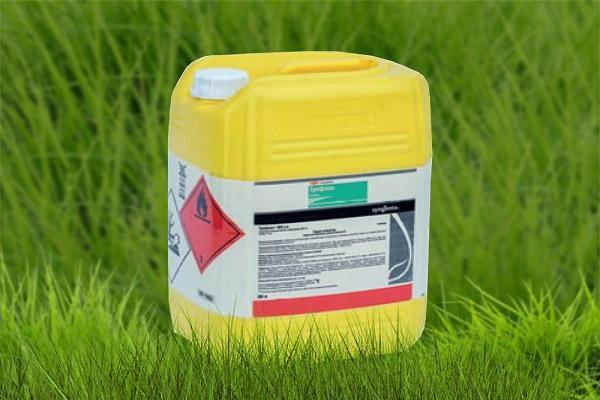
Treflan contains 480 g of trifluralin per liter. The manufacturer produces the product as an emulsifiable concentrate in 20-liter canisters. Treflan is a selective pesticide used to protect agricultural crops such as soybeans, sunflowers, onions, and rapeseed.
What weeds does it affect?
Treflan is effective not only after application but also after soil loosening. It protects crops from annual grasses and some biennial weeds and can be used in unstable weather conditions.
Mechanism of action and how quickly it works
Trifluralin, found in the product, is absorbed by weeds during germination or seedling stages. In susceptible species, it attacks the embryos or roots of seedlings. It disrupts nucleic acid production in root cells and photosynthetic reactions.
It retains its destructive effect even after loosening between rows (provided that the loosening depth is less than the depth of application of the preparation).
How long does the protective effect last?
"Treflan" is capable of protecting crops for 2 months.
Calculation of consumption
For soybeans, sunflowers, and onions grown for seed, the application rate of Treflan is 2-2.5 liters per hectare, and for rapeseed, 1.2-2 liters per hectare. Soil for soybeans and sunflowers is treated before sowing, during sowing, or before the crops have time to germinate. For onions and rapeseed, the soil is sprayed before sowing and immediately incorporated. The herbicide solution consumption per hectare is 200-300 liters. The waiting period is two months.
For incorporation into very wet soil, use disc harrows, while cultivators are used for moderately wet soil. To ensure proper incorporation, the machines must travel at a speed of 8-10 km/h. Maintaining the proper incorporation depth ensures adequate contact between the seedlings and moisture, even in dry weather.

How to make a working mixture and instructions for its use
The Treflan solution should be prepared just before spraying. First, prepare a stock solution: dilute a dose of herbicide in a small volume of water in a separate container, such as a bucket. Pour a quarter of the solution into the bucket, add the emulsion, and stir. Fill to three-quarters full. Pour the solution into the sprayer, which has been half-filled with water. Stir and add water to complete the solution. The prepared Treflan solution cannot be stored for more than 24 hours, so prepare only the amount needed.
How toxic is it?
Treflan is classified as a Class 2 toxicity agricultural product. When handling these products, wear protective clothing that covers the entire body. Wear gloves, goggles, and a respirator or gas mask. While working, do not remove protective clothing, drink, smoke, or eat. Keep other people and animals away. After spraying with Treflan, wash your hands and face with soap.
If the solution comes into contact with any part of the body, rinse the area with water. Rinse your eyes if any drops get into them.
If you are poisoned by the herbicide Treflan, you should first take immediate action: drink water and swallow activated charcoal tablets at a dose of 1 g per 1 kg of body weight. If symptoms persist, seek medical attention immediately.

Is there resistance?
When applied according to the manufacturer's recommended dosage and instructions, no resistance was detected. The herbicide does not exhibit phytotoxicity.
Can it be combined with other products?
Treflan can be combined with other herbicides, including prometryn and metribuzin. For soybeans and sunflowers, it is recommended to combine the herbicide with Dual Gold and Trophy. Treflan should not be combined with 2,4-D esters.

In any case, before using the product and another pesticide, they should be tested for possible incompatibility. To do this, take a small container, dissolve a small amount of both products in it, and check the reaction. If no adverse reactions are detected, then the main mixture can be mixed.
Storage terms and conditions
Treflan can be stored for up to 3 years in a ventilated, dry, and dark place. Store in a tightly sealed, original packaging. Storage temperature: -5 to +25°C. If stored incorrectly, the medication may explode or catch fire.
Analogues
Treflan has no analogues for trifluralin. However, this herbicide can be replaced with products with similar effects: Patrick, Triflurex-480, and Olitref.
The herbicide "Treflan" is applied to the soil to prevent weed growth in sunflower, rapeseed, and soybean fields. It reliably inhibits harmful vegetation at the earliest stages of development. A single treatment leaves a lasting effect that lasts for at least two months. During this time, crops are able to grow and develop to the point where new weed seedlings will not interfere. The only drawback of this herbicide is its toxicity to humans.
Related posts:
 How to properly grow a peach tree from a seed at home, planting and care
 Is it possible to grow an apricot tree from a seed in your garden? How to plant and care for it?
 The best eggplant varieties for growing in a polycarbonate greenhouse: planting and care
 Description of varieties of sowing peas and cultivation, to which family they belong
 Planting and caring for cherries, feeding and growing rules
 How to propagate and grow peas, cultivation technology, and care in open ground
 How to use and prepare manure as a fertilizer, its types and composition
 How to properly plant peas in a greenhouse and open ground