
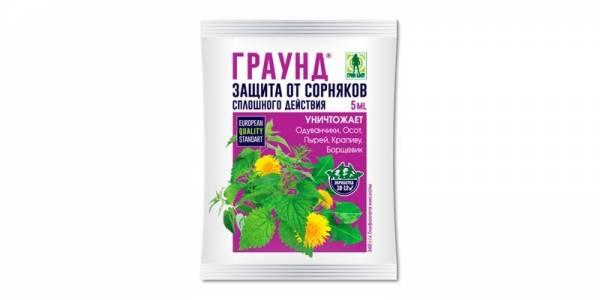
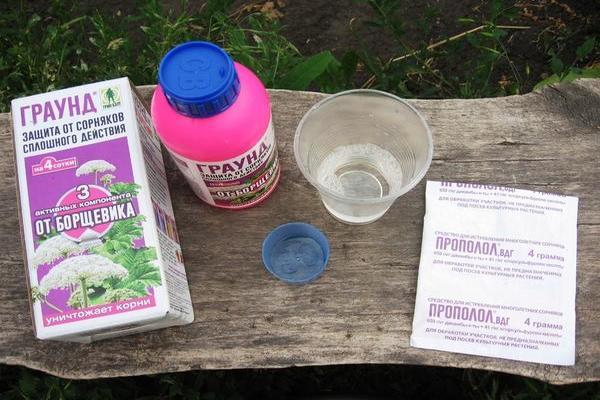
Many agricultural producers use various types of herbicides to control weeds. The instructions for the weed killer "Ground" provide a detailed description of the active ingredient, available forms, and basic instructions for use. This herbicide effectively kills all green weeds, completely destroying them. The active ingredient is isopropylamine salt. It has a toxicity class of 3.
What is included in the composition and existing forms of release
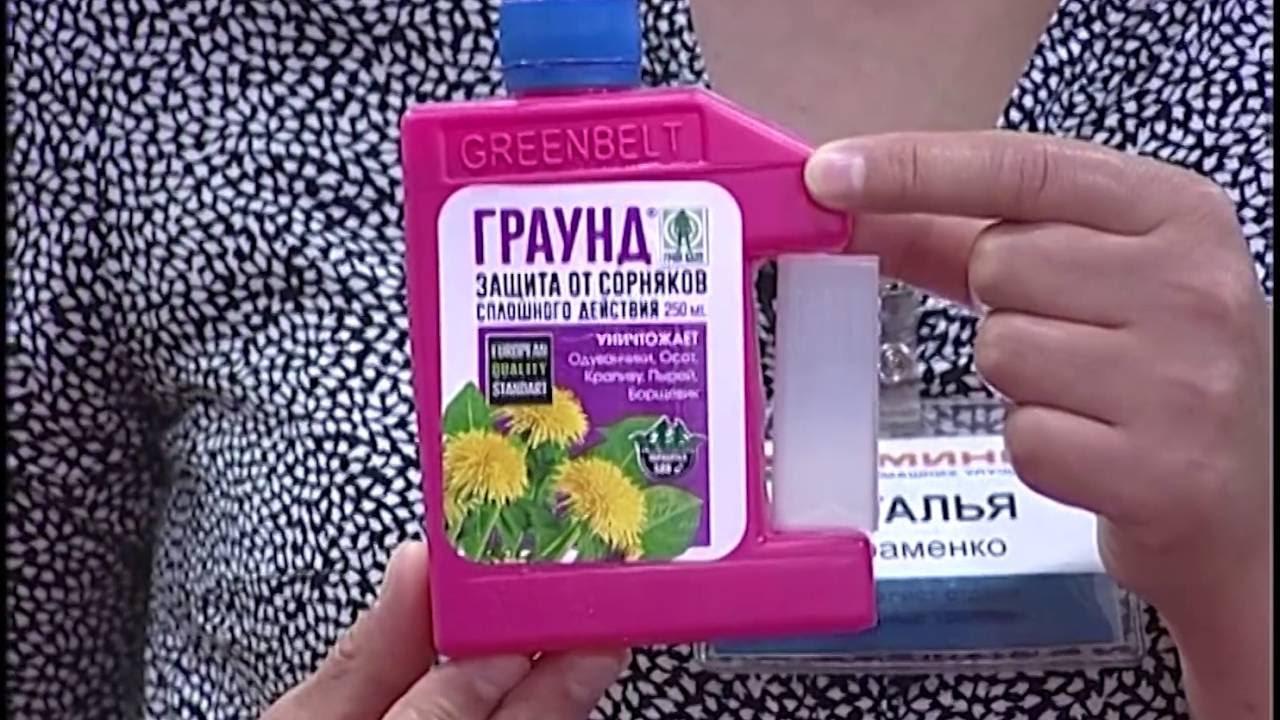
The substance is able to move through the vascular system of weeds, thanks to which it destroys all types of weeds and eared grasses. The herbicide is available as an aqueous solution. One liter of solution contains 360 grams of the active ingredient (isopropylamine salt). The herbicide is sold in tubes, vials, and ampoules of various sizes. Every gardener or agricultural producer can choose the most suitable form.
Pros and cons
Advantages of the pesticide:
- Thanks to its systemic action, it quickly destroys all types of weeds.
- The herbicide can be used to dry out the roots of cereal crops after harvest to clean the soil.
- Ground does not accumulate in the soil and does not cause the development of resistance in weeds.
- The result is noticeable 5-7 days after spraying.
- Low toxicity level.
Another advantage of the product is that it does not accumulate in the soil and does not cause plants to develop resistance to the active substance. Its only drawback is that handling the product requires special protective clothing.
What is it intended for and how does it work?
The herbicide's active ingredient penetrates the plant and is carried by the sap flow throughout its entire body. Once inside plant cells, it inhibits the production of the active enzyme, disrupts photosynthesis, and the plant dies.
The drug is intended for:
- soil treatment against sow thistle in early spring;
- destruction of couch grass before planting the soil with cereal crops and root crops;
- treatment of green recreation areas – parks, playgrounds, alleys;
- processing fields before sowing spring and winter crops;
- weed control under various embankments.
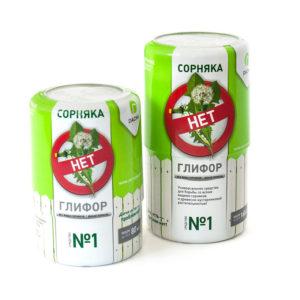
Due to the fact that the herbicide can be used on any green areas to combat all types of weeds, Ground is recognized as one of the best universal preparations.
How to prepare a working solution
The preparation of the working solution must be carried out in strict accordance with the table, taking into account the type of crop being treated and the type of weed.
Consumption rate
The application rate varies depending on the crops being treated and the weeds being targeted. It ranges from 2 to 8 liters of pesticide per hectare. Irrigation is best carried out during the active growing season, when weeds are most susceptible to chemical attack.

Instructions for use
The drug "Ground" VR should be diluted in the following proportions:
| Cultivated crop | Consumption of the preparation per 1 hectare, in ml. | Type of weed | Processing rules |
| Fruit and berry crops, grapes, lemon, orange, tangerine, bitter orange | 2000-4000 | Sow thistle, wild oats, bluegrass, humus, quinoa, forget-me-not, plantain, dandelion and others. | Spraying is carried out during the vegetation phase in April, May, June |
| Fruit and berry crops, grapes, lemon, orange, tangerine, bitter orange | 4000-6000 | Quinoa, shepherd's purse, wood sow thistle, sorghum, plantain, dandelion and others. | Spraying is carried out during the vegetation phase in April, May, June |
| Grape | 4000 | Blood-red crabgrass, rye brome, broom, turf grass and others. | Spraying is carried out during the vegetation phase in April, May, June |
| Sugar beet, corn | 2000-5000 | Quinoa, shepherd's purse, chickweed, sorghum, plantain, dandelion and others. | Treatment is carried out 14 days before sowing the fields. |
| Potato | 2000-3000 | Woodlice, rapeseed, blue cornflower, sow thistle, sorghum | Treatment is carried out no later than a week before the first shoots appear. |
| White cabbage, sunflower | 2000-3000 | Quinoa, shepherd's purse, chickweed, sorghum, plantain, dandelion and others. | Treatment is carried out 3-5 days before the start of sowing. |
| Flax | 2000-4000 | Quinoa, shepherd's purse, chickweed, sorghum, plantain, dandelion and others. | Treatment is carried out 3-5 days before sowing. |
| Fields prepared for sowing flax | 3000 | Couch grass | Cultivation is carried out in August-September on the stubble of the previous crop. |
| Soil prepared for different types of agricultural crops | 2000-4000 | Blood-red crabgrass, rye brome, broom, turf grass and others. | The treatment is carried out in late autumn, after harvesting. |
| Soil prepared for different types of agricultural crops | 4000-6000 | Common reed grass, barnyard grass, bluegrass, crabgrass, quinoa, plantain and others. | Spraying the soil should be done in late autumn after harvesting. |
| Soil prepared for different types of agricultural crops | 6000-8000 | Noxious weeds | The treatment is carried out in late autumn after harvesting. |
| Couples | 2000-4000 | Annual cereal, dicotyledonous weeds | Treatment is carried out during the period of active growth of weeds. |
| Couples | 4000-6000 | Perennial grasses and dicotyledonous weeds | Spraying should be carried out during the period of active weed growth. |
| Couples | 6000-8000 | Noxious weeds | The treatment is carried out during the period of active growth of greenery. |
| Alfalfa | 500-800 | Dodder | Treatment is carried out 7-10 days after mowing alfalfa. |
| Clover | 300 | Dodder | The treatment is carried out twice. The interval is 30 days. The first treatment is during the period of weed emergence. |

Precautionary measures
Treatment must be carried out only while wearing appropriate protective equipment: overalls, goggles, a respirator, and gloves. Only non-metallic equipment should be used, as metal can trigger chemical reactions and alter some properties of the herbicide. Work should be carried out in dry, windless weather. If the sky is clear and the air temperature is above 23 degrees Celsius, it is best to carry out treatment early in the morning or in the evening, before sunset.
No breaks for eating or smoking are allowed during treatment. After completing the work, take a shower and drink a glass of fresh, lukewarm milk.
When using Ground simultaneously with nitrogen-containing chemicals, the effect of the herbicide is enhanced.
What to do in case of poisoning
Ground herbicide is a chemical, so poisoning is possible. If the product comes into contact with exposed skin, rinse it with running water and soap. If it comes into contact with the mucous membranes of the eyes, rinse them immediately with running water.
If Ground gets into your mouth, rinse, drink a liter of clean drinking water, and induce vomiting. Then take activated charcoal at a rate of 1 tablet per 10 kg of body weight. If you accidentally inhale the substance, immediately get fresh air, ensure adequate oxygen supply, and drink 2-3 glasses of clean drinking water. If the poisoning results in a sharp deterioration in your condition, call an ambulance immediately.
Storage rules
Ground should only be stored in sealed, factory-made packaging. Store in a dry, well-ventilated area, out of reach of children and pets. Do not store the herbicide near food. The ideal temperature range is from 0°C to 30°C.
If the factory packaging is damaged, the preparation is neutralized with a two percent solution of bleach.
Similar means
In terms of its action and composition, Ground can replace some herbicides:
- Gleason;
- Roundup;
- "GLITTER"
- "Tornado".
Related posts:
 Instructions for use and composition of the herbicide Zeus, dosage and analogues
 Instructions for use of the weed killer Glider, dosage, and analogues
 Composition and instructions for use of the herbicide Ballet, application rates and analogues
 Composition and instructions for use of the herbicide Pilaraund, application rates
 Composition and instructions for use of the herbicide Fakel, application rates and analogues
 Instructions for use of the weed killer Propol and application rates
 Description and characteristics of the Bibo eggplant variety, cultivation and care
 Instructions for use of the herbicide Deimos against weeds and application rates
