
Even experienced gardeners face challenges when growing legumes. Unfavorable weather conditions or poor soil conditions require pea pests and diseases. Promptly addressing these factors helps maintain the quality and volume of the harvest. Controlling pests and plant diseases requires a comprehensive approach.
Pests
Factors that contribute to the emergence of dangerous pests in legumes include poor agricultural practices, sudden temperature fluctuations, inappropriate fertilizers, and excess soil moisture. Exposure to any of these factors can result in seedling death and reduced yield.
Different pea pests affect seedlings differently, so it's important to understand their characteristics and appropriate measures for prompt control. To detect pests, visually inspect the beds periodically and treat the plants as needed.
Pea aphid
During the budding period, the risk of pea seedlings being attacked by aphids increases. These pests can produce 5 to 10 generations per season. These insects damage plant leaves and stems, sucking out sap and leaving cracks that allow fungi and bacteria to enter.
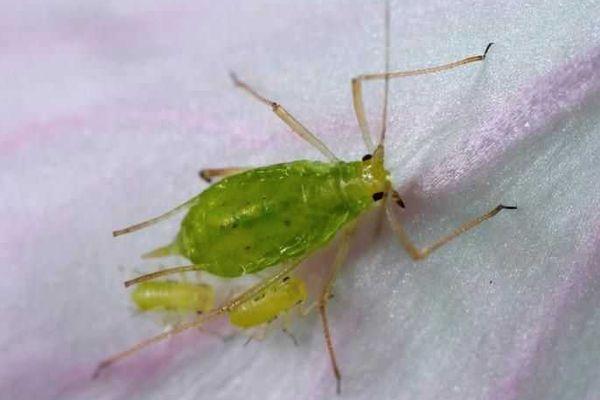
Insect excretions attract sooty mold, which clogs the pores on the leaf surface, accelerating the dieback process. The fungal spores can survive the winter, after which they reappear on new plantings.
To eliminate pea aphids, it is necessary to spray the crop with one of the following solutions:
- anabasine sulfate with soap emulsion or thiophos;
- a solution of soap and water;
- hexachlorane dust at a concentration of 12%.
To prevent the appearance of insects, it is recommended to plant early ripening varieties varieties of peas, which are less susceptible to pest damage.
Pea weevil
Small beetles with cross-shaped spots on their shells lay eggs on the undersides of leaves. The hatched larvae move into ripening pods and pupate. The weevil, also known as bruchus, appears on peas in hot, sunny weather. During the rainy season, the insects hide in dense foliage and are inactive.
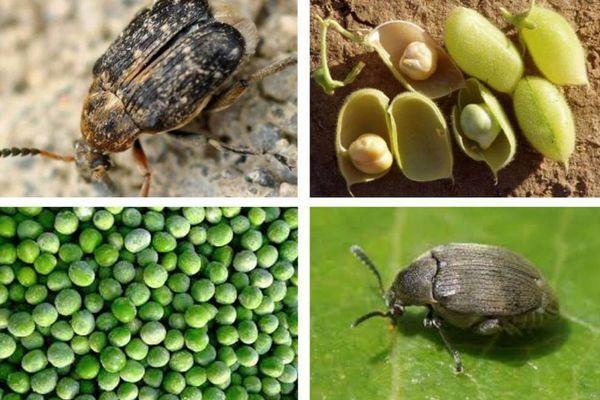
The peculiarity of the grain is that it can originate even in pea seeds, so it's possible to identify the danger in advance. To do this, treat the seed with a solution of table salt, which will cause the defective seeds to float to the surface.
Pea moth
The insects feed on the peas by burrowing inside the pods. The female lays eggs on leaves and in unopened flowers. The pests can be detected by visual inspection, as the caterpillars are light yellow and visible on green leaves.

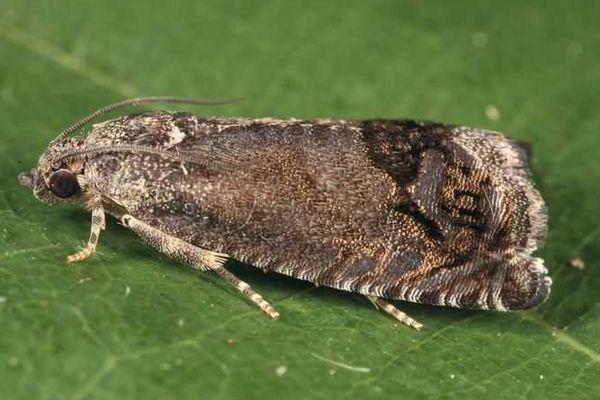
If the caterpillars have already laid eggs on the leaves and the larvae are eating the fruit, treat the seedlings with a disinfectant solution. Spray daily until the insects completely disappear from the seedlings.
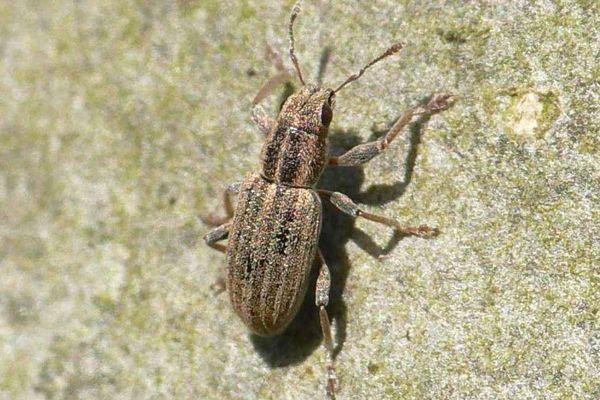
Tuber weevils
The weevil is a crop pest that feeds exclusively on early-emerging shoots. This small beetle, no more than half a centimeter in size, overwinters in unharvested plant debris, so it's important to clear the beds after each harvest.
The root-end weevil eats the upper part of plants, preventing seedlings from emerging, and lays eggs that feed on peas and the root system. Several generations of the pest occur within a single season, so repellents are necessary. Wood ash and tobacco dust are suitable for protection against weevils.
Colorado beetle
If the plant's leaves have chewed holes, there's a good chance the plant has been infested with Colorado potato beetles. These insects actively attack plantings in the spring and may remain in the beds for the winter in the fall. To repel the pests, it's recommended to use disinfectant solutions with a pungent odor.
Umbrella psyllid
Small psyllids burrow into leaf tissue and, remaining in one place, suck out plant sap. These pests cause stunted seedling growth and deformation of the above-ground parts. These insects can lay eggs inside the plant, causing long-term damage to the crop.
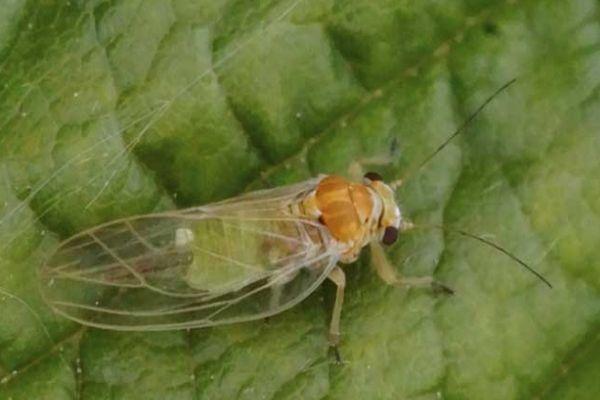
Pea moth
Pea armyworms resemble small moths, laying eggs in several rows on the undersides of leaves. After a few days, caterpillars emerge and feed on the plant. The pest's effects can be recognized by external signs such as leaf deformation and damage.
Diseases
Legumes are particularly in need of protection from diseases, as they saturate the soil with nitrogen compounds, something other plants are unable to do. Various pea diseases can significantly reduce the yield and spread the infection to neighboring plantings.
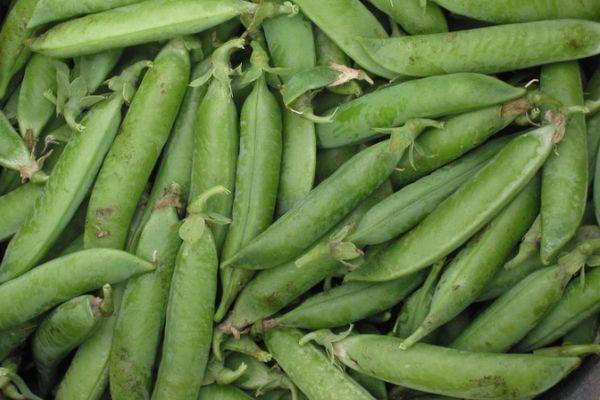
Preventative measures are required to prevent the development of diseases. To reduce the number of factors that can cause damage, it's important to follow crop rotation practices, treat the soil with fungicides, and avoid mixing different pea varieties in the same bed.
Ascochytosis
This fungal disease manifests itself throughout the plant as dark or pale spotted spots. The disease typically affects mature, maturing plants that are in the fruiting stage. Factors that contribute to the development of Ascochyta blight include excessively humid air and external damage to the protective layer on the leaves or stems.
Once signs of pea leaf spot are detected, control measures will include spraying with disinfectant solutions. If leaves are severely affected and cannot be restored, they should be carefully separated from the healthy leaves and destroyed.
Rust
Pea rust is a fungal disease. The infection is caused by a fungus transmitted by weeds growing in the garden. Rust manifests itself as changes in the shape of the leaf blades and the formation of small yellow spots.
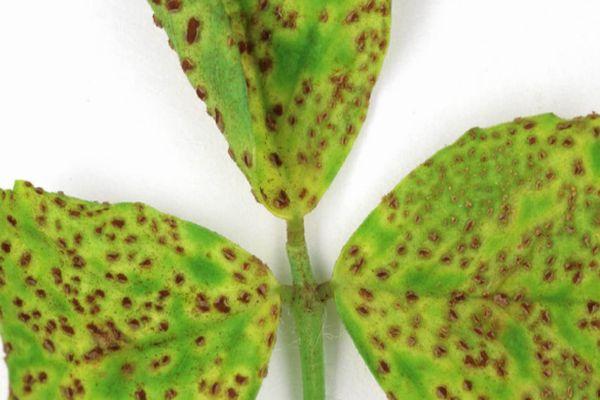
It is widely believed that rust-infected stems must be burned to prevent the infection from spreading to other plants. If the crop is infected before flowering, treating the peas with a 1% Bordeaux mixture solution is sufficient. After treatment, thoroughly weed the soil and remove all nearby weeds.
Peronosporosis
High humidity increases the risk of downy mildew. The disease attacks crops at any stage of ripening, forming yellow spots on the leaves. Over time, affected plant parts begin to dry out and fall off.
To combat downy mildew in peas, spraying with a Bordeaux mixture solution is recommended. It's also important to monitor watering frequency and ensure good wind circulation in the area. To prevent downy mildew, timely weeding of the beds and a constant source of light are essential.
Anthracnose
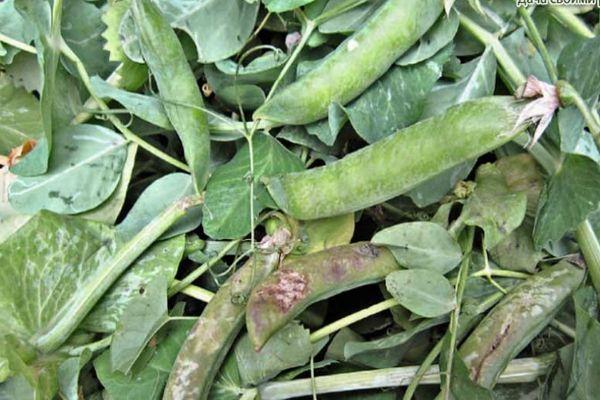
Anthracnose is caused by a fungus that spreads through precipitation or small insects. The disease causes gradual darkening of the above-ground parts of plants and subsequent rotting. Anthracnose can be controlled by treating the crop with disinfectants and fungicide fertilizers. When replanting, it is important to remove any remaining infected vegetation, till the soil, and water the soil with Bordeaux mixture.
Fusarium
The development of Fusarium root rot in peas can lead to significant yield reductions. Due to the disease, seedlings lag behind healthy ones in development, develop a dark pink bloom, the root system does not fully develop, and over time, the crop wilts.
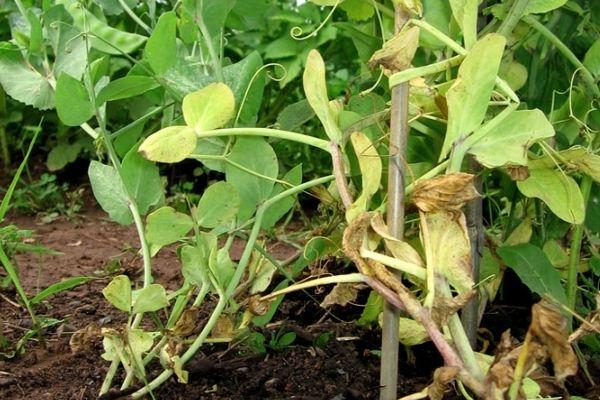
To prevent fusarium wilt in peas, pre-soak the seeds in a fungicide solution. If the plants are infected despite proper seed preparation, they should be destroyed, as this could infect neighboring plants.
Powdery mildew
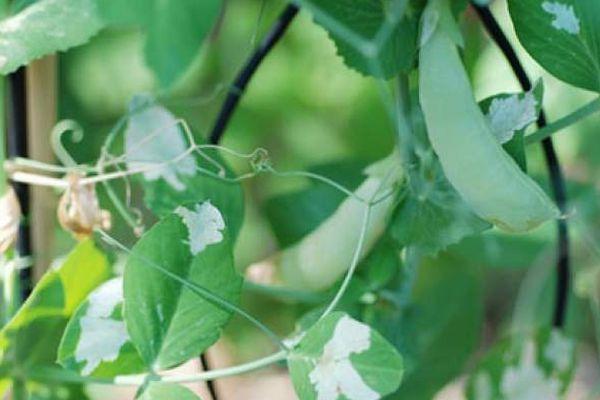
Powdery mildew attacks peas, killing the plant. The disease develops primarily at the beginning of the vegetative stage. During bud formation, light spots appear on the surface of the leaf blades, and spores develop on the underside. High humidity and sudden cold snaps promote the disease.
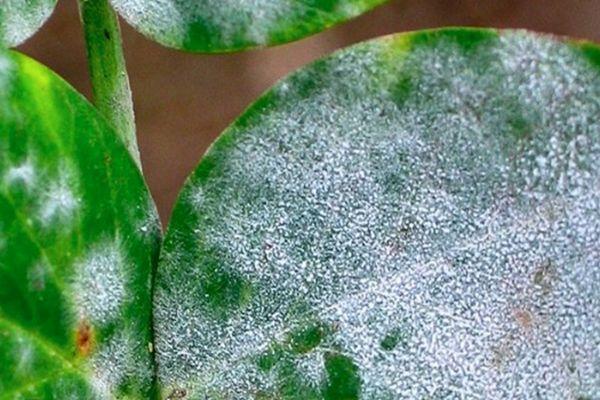
If powdery mildew is detected in its initial stages, dust the garden bed with lime. Timely treatment helps preserve the peas inside the pods. If the disease progresses and no control measures are taken, growth will stop completely and the plants will wilt.
Rot
Gray mold appears on the surface of plants. It is caused by a necrotrophic fungus, and its rapid development is facilitated by increased precipitation and temperatures below the permissible limit. Spoiled seeds, in which pathogenic microflora is preserved by mycelium, can trigger the development of gray mold.
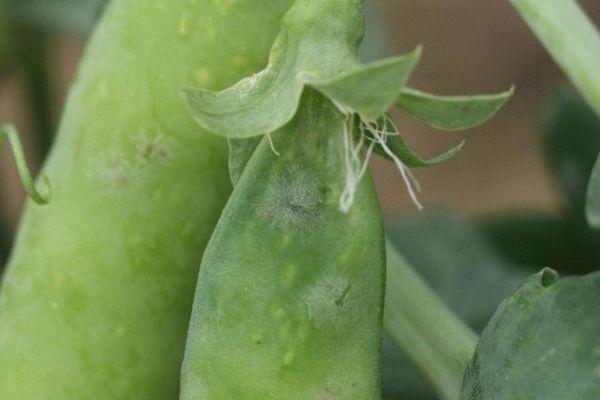
White rot develops on the basal portion of stems. It causes stems to wilt and break. Peas are also affected, initially becoming coated with a white coating and then completely rotting.
To combat rot, treat the beds with copper sulfate, apply fertilizer periodically, and thoroughly loosen the soil. When preparing the planting material, it is recommended to disinfect the seeds and use root stimulants.
Seed protection
Poor-quality or initially contaminated seeds are the source of many diseases and pests. To reduce the risk of pea failure, properly prepare the seed.
To do this, you need to do the following:
- Sorting seeds. By soaking the seeds in a salt solution, you can remove any unsuitable seeds that float to the surface.
- Heating. Heat exposure to seeds helps disinfect them and eliminate harmful bacteria.
- Hardening. Keeping the seeds in the refrigerator under a gauze soaked in water will help kill any remaining microbes.
- Growth stimulation. Before planting, soak the seeds in specialized solutions that stimulate accelerated growth.
Protecting Peas
To protect peas from planting until harvest, careful care is necessary, including regular watering, weeding, loosening, and fertilizing. It's also important to reduce damage factors in the following ways:
- Maintain proper crop rotation, select suitable predecessors of legumes, and do not plant peas in the same place for several years in a row;
- treat growing seedlings with fertilizers from the fungicide and insecticide categories;
- use zoned varieties of peas that are capable of developing properly in certain climatic conditions;
- visually inspect the beds to monitor for pests and the development of infections.
Related posts:
 How to properly plant peas in a greenhouse and open ground
 How to propagate and grow peas, cultivation technology, and care in open ground
 Description and characteristics of the best seeds of pea varieties and types
 Description of varieties of sowing peas and cultivation, to which family they belong
 How to plant, grow, and care for peas at home on a windowsill or balcony
 The health benefits and harms of peas for men and women, and recipes for treating diseases
 How to plant and grow peas indoors and in a greenhouse
 How to properly tie and create support for peas in open ground