
The Brigadir F1 white cabbage from the French agricultural firm HM.CLAUSE SA is known in Russia as a good, promising hybrid with stable fruiting. The variety was included in the State Register of Breeding Achievements of Russia in 2010 and is recommended for cultivation in various regions of the country.
General characteristics of the plant
Brigadier cabbage plants are compact, with relatively short, sturdy stems and a robust root system. In the loose soil of private gardens, even this doesn't prevent the heavy heads from toppling over, so it's recommended to hill the plants throughout the season.
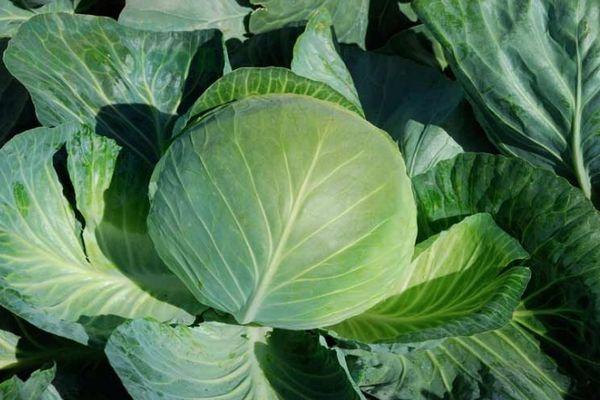
The rosette is horizontal, and the leaves are spreading but have very short petioles. This allows Brigadier cabbage to take up minimal space in the garden bed. Furthermore, the leaves don't tend to droop to the ground as they age, reducing the grower's labor and time spent raking old leaves.
The Brigadier hybrid is resistant to temperature fluctuations throughout the season and easily tolerates prolonged adverse environmental conditions, such as prolonged rains or hot, dry weather.
Cabbage is relatively undemanding when it comes to watering and can tolerate mild drought without slowing down its growth. Indoors, young seedlings will need to be watered daily if there is no natural rainfall, but as the plants mature, a generous watering every 5-7 days is sufficient.
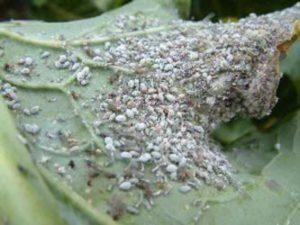
The Brigadir cabbage variety is resistant to Fusarium wilt and is virtually unaffected by this disease. It is rarely attacked by thrips, and the waxy leaves are resistant to aphid attacks. One of the most valuable characteristics of the Brigadir hybrid is its low susceptibility to head splitting. Even in a rainy summer, ripe cabbage, ready for harvest, remains well preserved on the vine for 2-3 weeks.
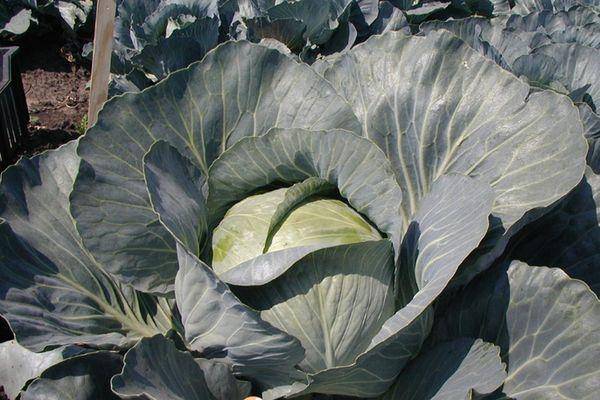
Four to five Brigadir cabbage plants can be planted per square meter. This allows for a yield of approximately 15 kg per unit area. This yield can be increased with proper care and timely watering. In terms of yield, the Brigadir variety surpasses the classic Russian varieties Podarok, Nadezhda, and Favorit.
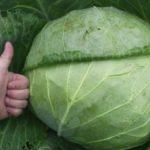
![Description of the best cabbage varieties for [year] for different regions](https://harvesthub.decorexpro.com/wp-content/uploads/2019/02/sorta-kapusty-na-2019-god-1-1-300x203.jpg)
Consumer properties
The Brigadier cabbage variety is a mid-late variety. Harvest time is 120-130 days from germination. The cabbage forms a round, almost spherical head, covered with glaucous-green, tightly packed leaves. The margins of the bracts may curl upward.
The density of the head is among the highest. On the Close scale, it is rated at 4.8. When cut, such a head appears solid, and the top layer does not yield when pressed by hand. Even small heads of cabbage reach an average weight of 2.5-4 kg. The largest cabbage grown at home can weigh up to 5 kg.
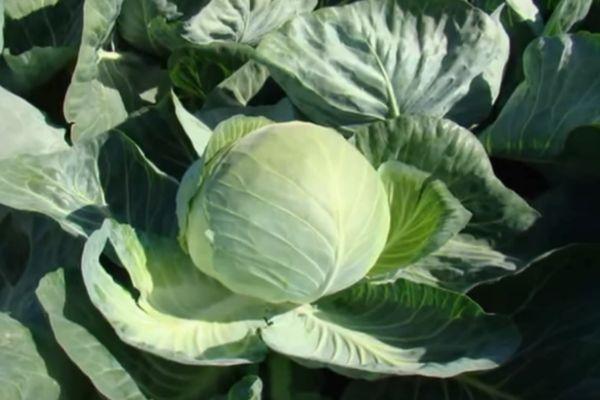
The head of cabbage is snow-white when cut, with a slight greenish tint along the edge. Very little waste is left during processing: the inner part of the stalk is short, not even reaching 1/3 of the head's diameter. Due to the lack of petioles, the cabbage leaves are particularly delicate. They are thin and tightly compressed, leaving no tough or large pieces when shredded.
The vegetable's sugar content is lower than that of the standard Slava variety. However, this has little impact on the cabbage's flavor; it is characterized as sweet or slightly sweet. The taste is completely free of bitterness.
The main use of cabbage is fresh consumption in salads and cabbage dishes. The tender, stemless leaves are ideal for stuffed cabbage rolls with meat or vegetables. The crisp, tender texture of cabbage makes it suitable for salads with coarsely chopped vegetables. Shredded leaves are used in hot dishes such as borscht, bigos, casseroles, or pancakes.
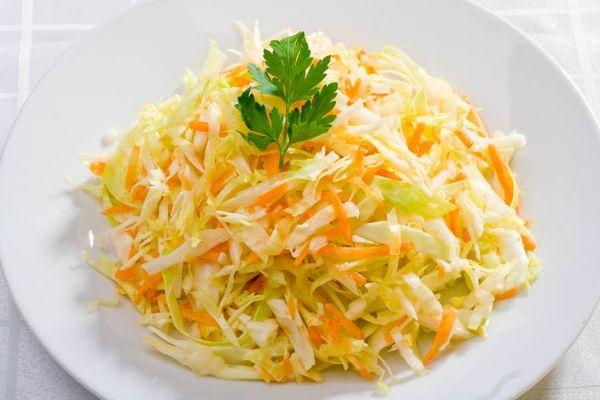
This variety is suitable for preparing winter preserves in a variety of ways. Brigadir is ideal for traditional pickling. No matter how large the cut, the sauerkraut contains no tough stems. The heads can be pickled even when cut into halves or quarters. This method prevents them from falling apart or becoming mushy.
Take a look Also
Besides pickling, Brigadier cabbage is pickled, shredded or sliced, and used in winter salads and appetizers. The heads can also be preserved whole. Fresh cabbage heads can be stored until spring.
Agricultural technology of the variety
Cabbage seedlings should be sown approximately 30-45 days before transplanting to their permanent location. Avoid keeping the seedlings in pots for too long, as they don't establish well after transplanting. The optimal age for planting in the ground is when they have 5-6 rosette leaves.
You'll have to buy Brigadier cabbage seeds annually. A hybrid plant won't retain its parent's traits when producing its own seeds. However, buying seeds frees the gardener from the need to prepare the seedlings for sowing: they're often already treated with chemicals and encapsulated in a capsule containing nutrients essential for the seedling's growth during the initial period after germination. These seeds are distinguished by their color: they're colored and resemble beads.
You can buy ready-made soil, but many gardeners prepare their own from equal parts humus, fine sand, and garden soil. To reduce acidity and enrich the mixture with calcium, they add ground chalk or eggshells (1 tablespoon per 5 kg of substrate).
You can disinfect the soil by baking it in the oven or soaking it in special solutions (Fitosporin or potassium permanganate). The easiest way is to make a hot solution of potassium permanganate by dissolving the crystals in boiling water until a dark pink liquid is obtained. Saturate the soil already scattered in the boxes with the solution, then let it cool.
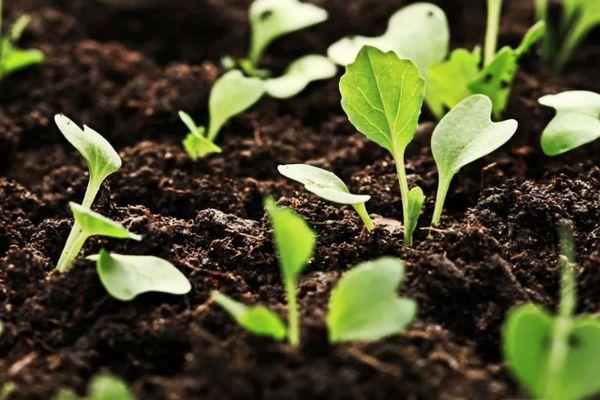
Scatter the seeds over the surface of the moist soil and cover with a layer of dry sand or substrate. The seeding layer should not exceed 0.5 cm, as the seeds are quite small. Cover the box with plastic film with holes for air circulation and place it in a warm place (+25°C) to germinate. Under these conditions, cabbage sprouts may appear as early as 2-3 days. After this, remove the film.
Young seedlings don't need to be watered during their first few days. However, as the soil dries out to a depth of 0.5 cm, water them with warm water supplemented with potassium permanganate (a light pink solution). After this, water regularly, depending on how dry the soil is.
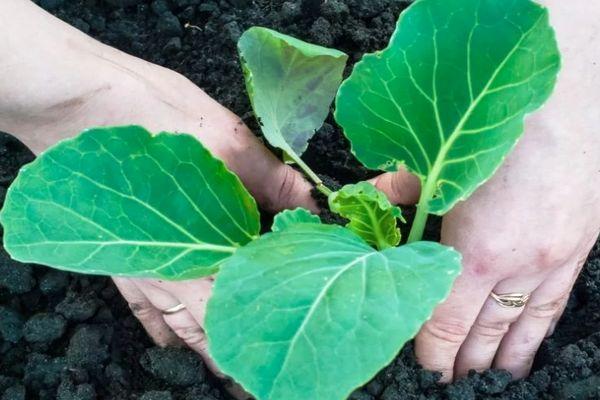
When the seedlings develop 2-3 leaves, they should be transplanted, planting them deep down to the cotyledons. They can be transplanted into individual containers or into a common box, using a 5x5 cm pattern. After this, continue to water the seedlings regularly. They do not require additional fertilizer.
Add one bucket of compost per square meter to the soil, along with a complex fertilizer containing potassium and phosphorus, as well as microelements (sulfur, boron, cobalt, etc.). To prevent clubroot, lime the soil by spreading 1-1.5 kg of dolomite flour or chalk per square meter under the soil.
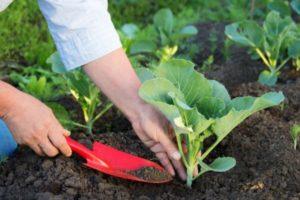
Before planting outdoors, it's recommended to place the boxes outside for a few days to acclimate the cabbage to sunlight. Unprepared seedlings should not be planted, as they will get sunburned. Plant in a 40x40 cm pattern. About a week after transplanting, the young plants should be earthed up.
Related posts:
 Planting, growing, and caring for cauliflower in open ground and greenhouses
 Why cabbage leaves wilt in the garden and what to do
 Why does cabbage grow tall in the garden and what can be done about it?
 Growing and caring for Chinese cabbage in open ground and greenhouses
 Description of the best cabbage varieties for 2025 for different regions
 Why do cabbage leaves turn purple and what can be done to treat them?
 Description of cauliflower diseases and pests, methods of treatment and control
 Using calcium nitrate for cabbage, how to feed it and the application rate
A good variety; I planted it last year. It takes a while to ripen, of course, but it's perfect for winter storage. I make it with cranberries; it's delicious, crisp, and the flavor is excellent!