
- Variety selection
- Description and characteristics of the culture
- Bush
- Ripening time and yield
- Taste properties of root vegetables
- Fruit
- Positive and negative qualities
- Necessary conditions for growing the crop
- Planting the Charodey potato on the plot
- Deadlines
- Selection of tubers and planting technology
- Plant care
- Watering and fertilizing
- Loosening and hilling the beds
- Diseases and pests: control and prevention
- Harvesting and storage
- Reviews of vegetable growers about the variety
The Charodey potato variety is grown commercially and for domestic consumption. It was added to the state register in 2000 and is considered one of the best domestic varieties. It is characterized by excellent flavor, good transportability, and long shelf life.
Variety selection
The Charodey potato was developed by Russian breeders in the late 1990s. In 2000, it was included in the state register of varieties for cultivation. Scientists from the Leningrad Agricultural Institute "Belogorka" and N.I. Vavilov's Institute of General Genetics worked on it. Charodey is among the top 10 domestic varieties.
Description and characteristics of the culture
The description of the crop includes characteristics of the bushes, tubers, ripening time and crop yield.
Bush
The bushes are upright and medium-sized. The branches and leaves are spreading, and the leaf edges are not wavy, which is unusual for potatoes and a distinctive feature. The leaves are large and light green.
Ripening time and yield
Charodey is a mid-season variety. Its growing season lasts 90-100 days. It is considered a medium-yielding variety. One bush produces 10 to 15 roots. One hectare of land yields 300-350 centners of fruit.
Taste properties of root vegetables
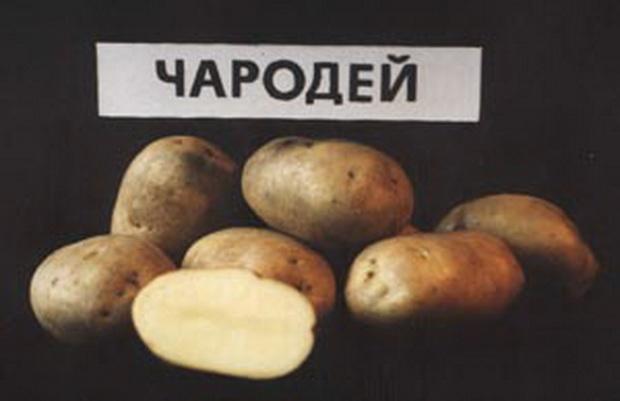
The taste of these root vegetables is rated by tasters as excellent. The potatoes do not darken when peeled. They are soft and succulent when cooked. They are suitable for making mashed potatoes and soups.
Fruit
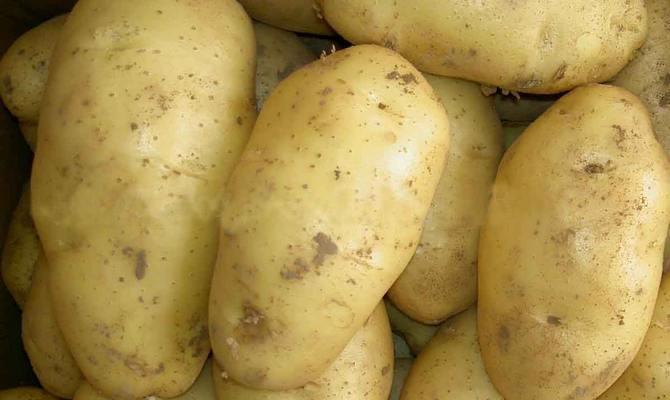
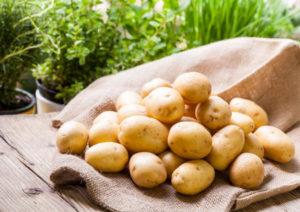
One potato weighs an average of 100 grams. They are round in shape and have a light brown skin. The flesh is creamy. The Charodey variety has good shelf life and transportability. It is suitable for commercial cultivation.
Positive and negative qualities
The Charodey potato has its positive qualities:
- good taste;
- ease of care;
- average yield;
- transportability of fruits and long-term storage;
- boiling ability during cooking.
The disadvantages of the variety include:
- low resistance to diseases;
- susceptibility to nematode infestation.
Necessary conditions for growing the crop
To grow the Charodey potato, certain conditions must be met:
- The landing site should be well lit.
- The soil for the beds is prepared in the fall, it is dug up, roots, weeds and stones are removed.
- Organic fertilizers and ash are added.
- The Charodey potato variety is not picky about soil, but light, loose soils are recommended.
- When forming beds, it is recommended to lay drainage.
- After the first shoots appear, spray against infections and pests.
- Potatoes grow well after cucumbers, pumpkins, squash, beans and cereals.
 Important! Do not plant potatoes after growing nightshade crops.
Planting the Charodey potato on the plot
To successfully grow the Charodey potato, it is necessary to follow the planting rules.
Deadlines
The sorcerer is planted in beds when the soil warms up to 10°C at a depth of 10 cm. In southern regions, this occurs in early May, in temperate regions – in mid-May, and in northern regions – in late May.
Selection of tubers and planting technology
Potato tubers for planting are purchased from reputable nurseries. Seeds are also taken from leftover potatoes from the previous year. Large root vegetables are selected, free of damage, cracks, and rot. Two weeks before planting, the seeds are moved to a well-lit and ventilated area. The potatoes are laid out separately from each other. Every two days, they are turned over and sprayed with water. Once the sprouts reach a height of 2-3 cm, the seeds are ready to be planted.
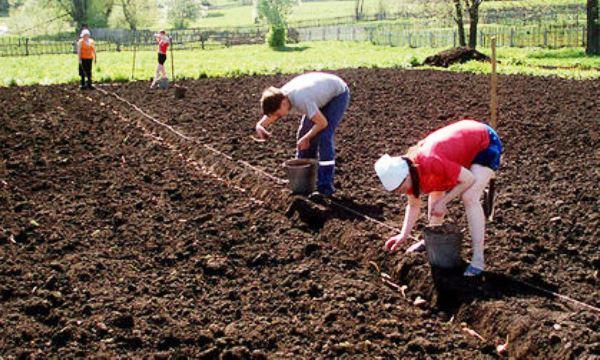
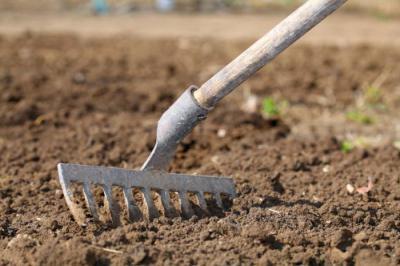
In the spring, after preparing the plot, form the beds. Dig 10-cm-deep holes for the seeds. Keep a distance of 25-30 cm between the holes, and 50 cm between the rows. Water each tuber and bury it. After planting, level the surface soil with a rake.
Plant care
To obtain a high yield of Charodey potatoes, it is necessary to monitor watering, fertilize, loosen the soil, hill up, carry out disease prevention, and harvest the crop in a timely manner.
Watering and fertilizing
Water three times per season. The first watering is done after the seedlings emerge. Three liters of water are applied to each plant. The liquid is distributed around the roots of the bush. The second watering is done at the beginning of flowering, and the third after flowering has finished. Watering is stopped two weeks before harvest.
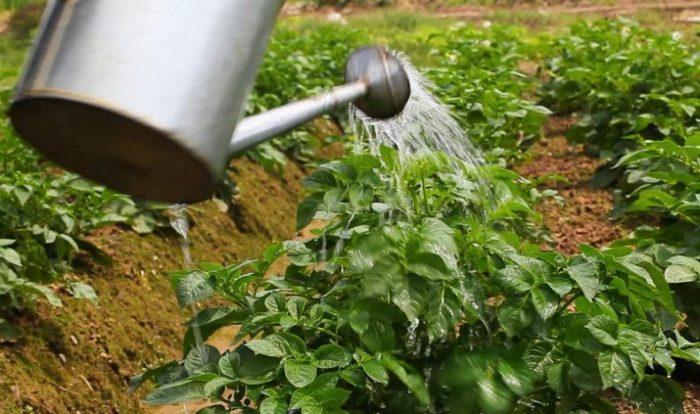 Important! Increase watering during dry weather and reduce it during frequent rainfall.
For fertilizing, use mineral fertilizers containing nitrogen, phosphorus, potassium, manganese, cobalt, and copper. Fertilizing is combined with watering. Water the crop first, then apply the fertilizer. Organic fertilizers are also used:
- manure;
- chicken manure;
- wood ash;
- herbal infusions;
- humus.
Take a look Also

Fertilizer is applied using both root and foliar methods. Root fertilization involves applying the fertilizer directly to the roots. Foliar fertilization involves spraying the fertilizer onto the plant's leaves.
Loosening and hilling the beds
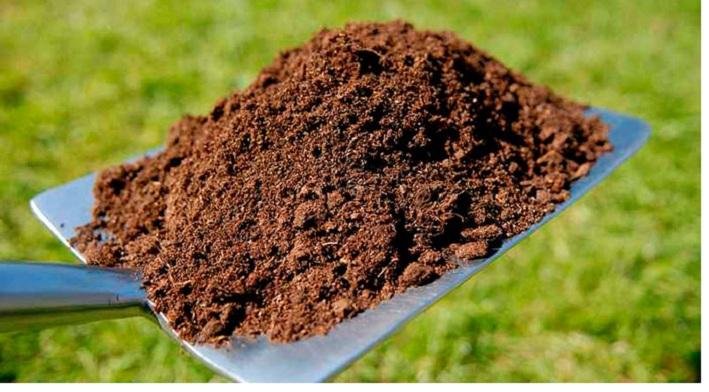
Loosening is carried out after each watering and fertilizing of the beds. This is necessary to prevent the formation of soil crusts, which prevent moisture and minerals from reaching the plant roots. All weeds in the bed are removed along with loosening.
Hilling helps retain moisture at the roots and promotes better root development. It's done three times per season: the first time when the seedlings reach 20 cm in height, the second two weeks later, and the third three weeks later.
Diseases and pests: control and prevention
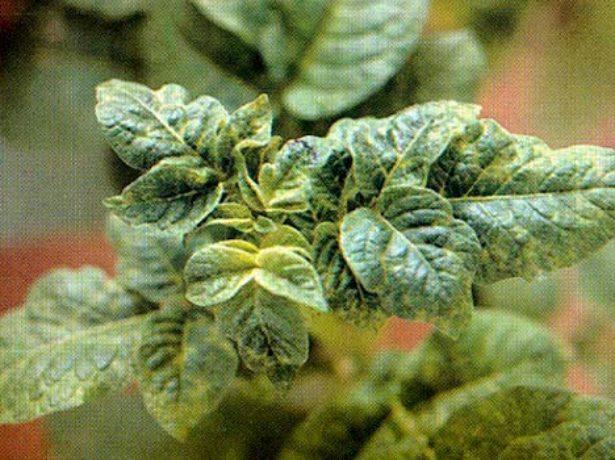
The Charodey variety is resistant to potato cancer. Other infections affect the crop, including nematodes. These include:
- Late blight. A microscopic fungus that attacks the tops and roots of plants. It spreads throughout the plant within 1 to 2 weeks.
- Fusarium wilt. A microscopic fungus that attacks the lower leaves of the plant, causing them to turn yellow, dry out, and fall off.
- Alternaria. This fungus attacks the plant's tops and fruits. It produces small black spots and causes the plant to develop poorly.
- Blackleg. This fungus causes the base of the stem to turn black, which gradually softens and rots. It also attacks the fruit, destroying up to 80% of the crop.
- Nematodes. These tiny parasites live in the soil and feed on potato tubers. The plant wilts and stops producing potatoes.
Fungicides and folk remedies are used to combat them. Special chemical pesticides are used to combat nematodes.
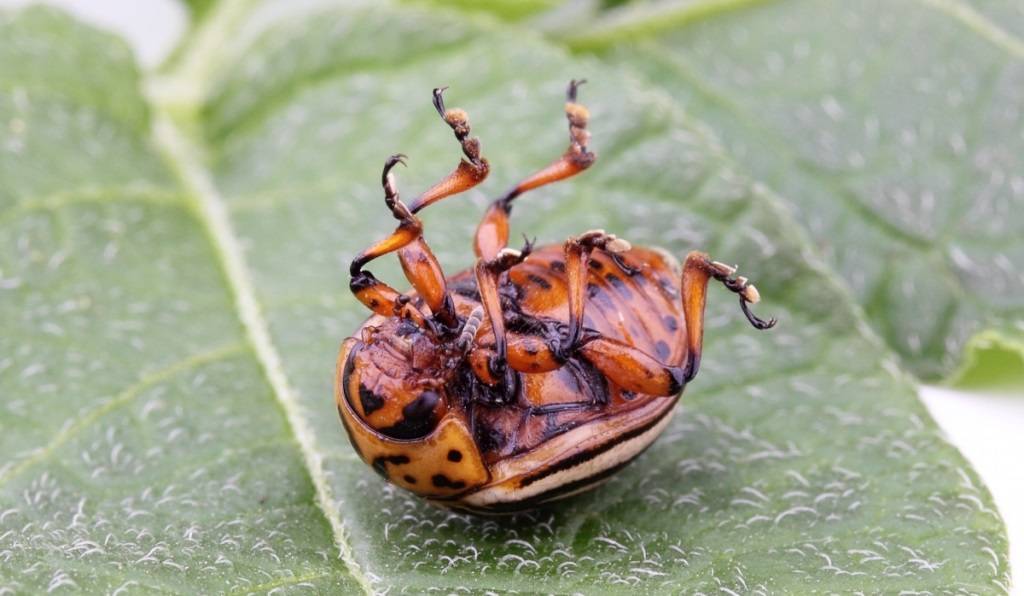
Pests of the crop include:
- Colorado beetle;
- Green aphid;
- Wireworm;
- Mole cricket.
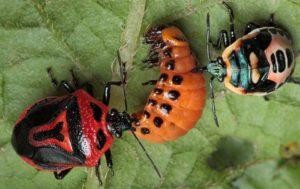
Colorado potato beetles and aphids feed on potato leaves. Insecticides are used to control them. Wireworms and mole crickets live in the soil and feed on roots and tubers. Wireworms die after insecticide treatment.
To combat mole crickets, insect traps are set up on the property and then destroyed.
To prevent pests and infections attacking the Charodey potato, you must:
- Follow the rules for planting crops.
- At the beginning of the growing season, treat with insecticides and fungicides.
- Mustard is planted next to potatoes; its smell repels the Colorado potato beetle and wireworm.
- Adding organic fertilizers attracts annelids, which eliminate the nematode problem.
- Hilling is mandatory.
- When planting, drainage is provided to drain excess moisture.
- Monitor watering to avoid overwatering the plants.
Harvesting and storage
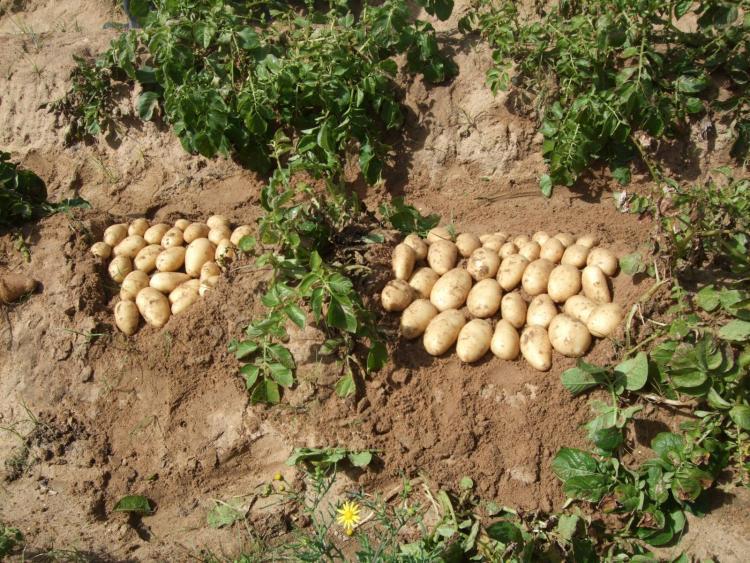
The potato harvest begins when the tops are completely dry and the tubers separate easily. This period typically occurs in late August or early September. The dug-up potatoes are spread in an even layer in a dark cellar and left for 1-2 weeks to dry. The harvest is then packaged in cloth bags or breathable boxes. The potatoes are stored in a cool place until the following season. Large, healthy tubers are selected for planting the following year.
Reviews of vegetable growers about the variety
Evgeniy, 35 years old, Kerch
I prefer growing mid-season potato varieties. This season, I bought the Charodey variety. I planted it in May. We harvested it in late August. At the beginning of the growing season, I treated it for insects and diseases. It didn't get sick once during the season. We dug up 10-15 tubers from each plant. I saved some of the harvest for planting next season.
Diana, 45 years old, Arkhangelsk
A neighbor shared some "Charodey" potatoes with me. I planted them in late May. The plot is prone to nematodes, and I was afraid the crop would be lost. I treated the area before planting. The nematodes did not attack. I also encountered a Colorado potato beetle, but they quickly retreated after spraying with insecticide. We dug up 12-13 potatoes from each plant.
Inna, 38 years old, Chekhov
I've been growing the Charodey potato variety for eight years in a row. I have loose, light soil in my garden. I change the planting location every year. I like this variety because the tubers store well and retain their appearance until the beginning of the next season. To prevent insect attacks and diseases, I regularly spray the plants and fertilize them.
Related posts:
 Description and characteristics of the Rodrigo potato variety, cultivation and care
 Why potatoes aren't growing well in the garden, and what to do to ensure a bountiful harvest
 Description of the best potato varieties of domestic and foreign selection
 Description and treatment of potato diseases, methods of control using folk and chemical means
 Description and characteristics of the Krasavchik potato variety, planting and care
 Description and characteristics of the Gulliver potato variety, planting and care
 Description and characteristics of the Bellarosa potato variety, planting and care
 Description and characteristics of the Zhukovsky potato variety, planting and care