
- History of selection
- Description of the variety and characteristics
- Bushes
- Yield and tubers
- Pros and cons of culture
- Necessary conditions for growth and fruiting
- Planting potatoes
- Deadlines
- We calculate the planting density
- Step-by-step algorithm for planting operations
- How to care for Jewel
- Irrigation
- Fertilizing
- Loosening and mulching the soil
- Diseases and pests: protection and treatment
- Harvesting and storing potatoes
- Reviews of vegetable growers about the variety
Among early-ripening potato varieties, the Jewel potato stands out for its high productivity and increased immunity to major diseases. The plants grow vigorously and quickly develop vegetative mass. Gardeners appreciate the Jewel potato's ability to yield twice a year. To achieve the desired results, it's important to understand the basics of planting and caring for this variety.
History of selection
The Jewel potato is a product of Bavaria-Saat GbR, Germany. This variety is marketed as a versatile one, widely grown not only by private farmers but also commercially. Jewel potatoes are suitable for cultivation in temperate and continental climates.
Despite the fact that the variety is not yet listed in the Russian State Register, it is still very popular among plant lovers.
Jewel Renata Bettini is the full name of the potato.
Description of the variety and characteristics
To ensure you always have a harvest, you need to familiarize yourself in more detail with the description of the Jewel variety and its characteristics.
Bushes
The Jewel potato is a low-growing variety with semi-erect, medium-sized leaves. They are bright green with wavy edges. During flowering, red-violet or light lilac flowers bloom. The dense stems are moderately dense, allowing the tubers to receive adequate nutrients.
Yield and tubers
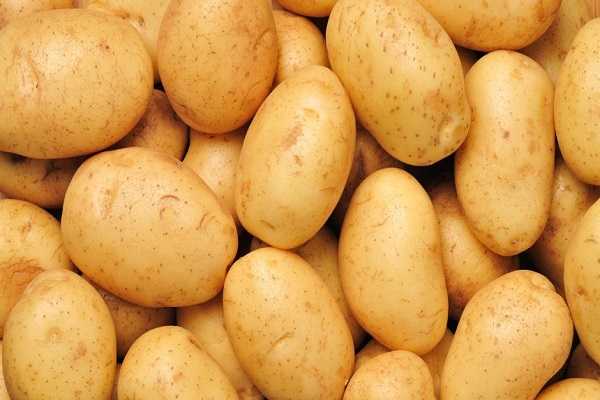
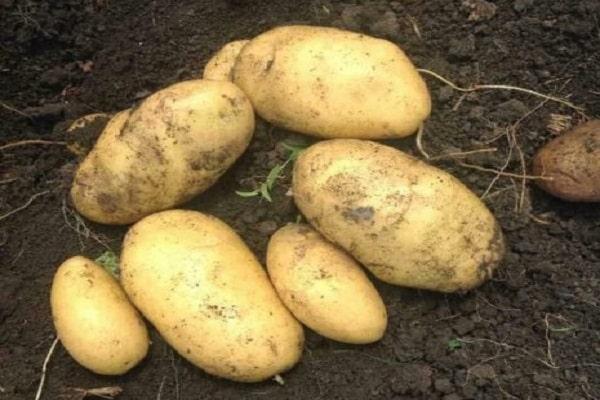
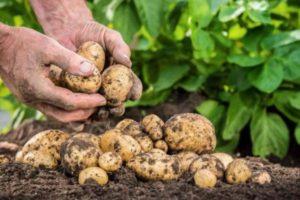
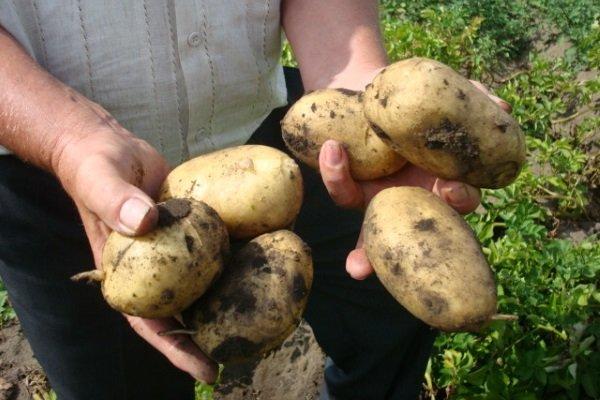
The roots are distinguished by their round, oval shape and dense yellow skin. The flesh is light in color, with a starch content of 10-15%. Consumer qualities are high: pleasant flavor, medium crispness. A single Jewel potato weighs between 80-150 grams.
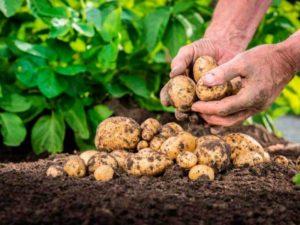
With proper care, the yield of Jewel potatoes reaches 700-800 centners per hectare of land.
Pros and cons of culture
Among the positive characteristics of the Jewel variety, experienced potato growers highlight:
- excellent taste;
- high productivity;
- increased immunity to late blight and nematodes;
- sufficient drought resistance;
- early maturity;
- universal use of the crop;
- high shelf life (up to 94%);
- resistance to adverse environmental factors.
But the Jewel potato also has its downsides, including:
- the growth of tubers directly depends on the quality of irrigation (if there is a lack of moisture, the root crops grow small);
- In conditions of high humidity, the future harvest loses its taste.
Necessary conditions for growth and fruiting
To speed up germination, Jewel potatoes are germinated a month before moving to their permanent location. The planting material should be turned green by constantly turning it, and kept in the light throughout this time. Before planting, it is recommended to treat the selected roots or sprinkle them with wood ash.
Such measures will reduce the likelihood of developing dangerous diseases during the active growing season.
To ensure good growth and development, Jewel potatoes require a well-lit location with fertile soil. Planting in the shade can result in low yields and deformed tubers.
Planting potatoes
To ensure that Jewel potatoes deliver high yields, you need to know when and how to plant them.
Deadlines
The optimal time for planting is the second ten days of April to the first ten days of May. The key is for the soil to warm to at least 8 degrees Celsius. Harvesting can begin as early as early June.
We calculate the planting density
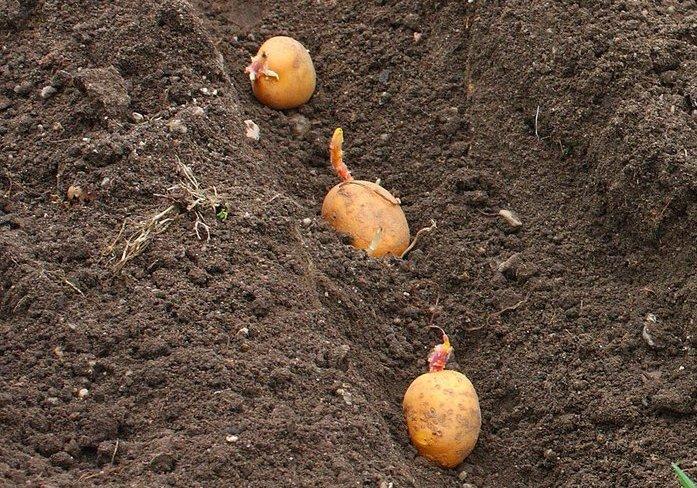
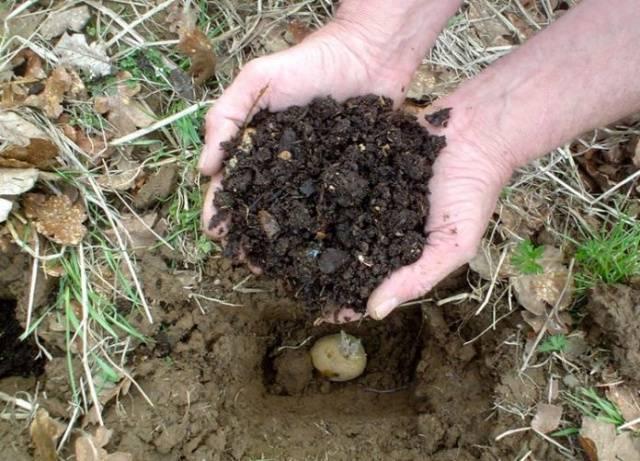
It's recommended to plant Jewel potatoes in furrows, maintaining a distance of 20-30 centimeters between tubers. The distance between rows should be 50-70 centimeters. The depth of the planting holes should be at least 20 centimeters.
Step-by-step algorithm for planting operations
The technology for planting Jewel seed potatoes involves the following steps:
- Digging a hole.
- Adding a handful of wood ash.
- Place the prepared root crop in the hole with the sprouts facing up.
- Covering the tuber with fertile soil.
Take a look Also
If the groundwater level at the planting site is too close (up to 1.5 meters), then it is optimal to plant Jewel potatoes using the ridge method.
How to care for Jewel
This versatile variety of German origin has proven itself to be relatively low-maintenance. However, to maximize yields, it's important to follow a few recommendations.
Irrigation
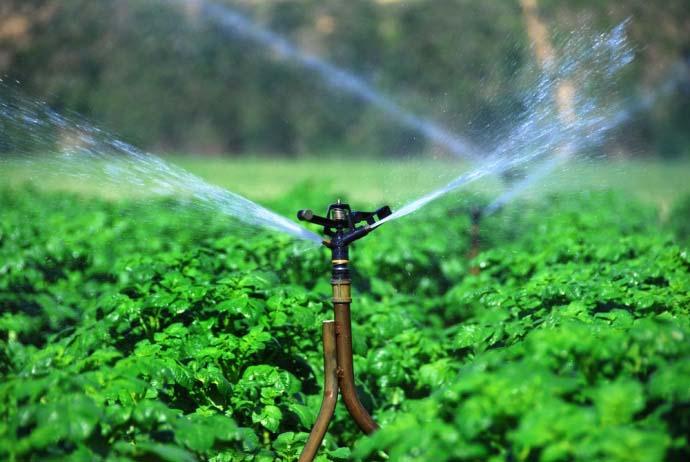
The frequency of irrigation determines not only the quantity of the future harvest but also its quality. If the soil is dehydrated, root crops shrink significantly, and if the soil is too wet, they begin to rot and become infected with fungal infections.
It is recommended to water Jewel potatoes twice every 7 days. Irrigation is not necessary during rainy weather, and during the dry season, it is increased to three times a week.
Fertilizing
The first feeding should be done after the seedlings emerge, using a working solution of urea (1 tablespoon), rotted chicken manure (0.5 liters), and 10 liters of water. The second feeding should be done at the bud formation stage.
Use a working solution based on 1 glass of wood ash, 1 tablespoon of potassium sulfate and 10 liters of water.
The third treatment is carried out during the active flowering phase. Fertilize the Jewel potato plants with a mixture of 1 cup of chicken broth, two tablespoons of superphosphate, and 10 liters of water. The application rate per plant is 0.5 liters of the solution. During the flowering phase, foliar treatment with a boric acid solution is effective, using 1 gram of the solution per 1 liter of water.
Loosening and mulching the soil
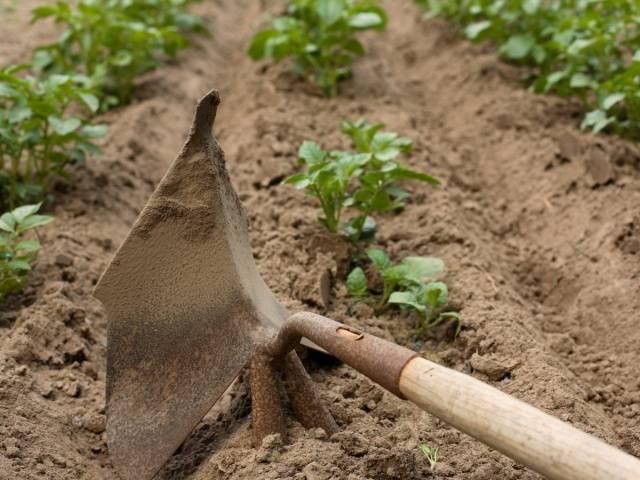
To prevent root starvation, the soil should be loosened periodically, preferably after each watering. Jewel potato plantings also need to be cleared of weeds, which rob the plants of both nutrients and moisture. To protect the roots from overheating and prevent moisture from evaporating quickly, the soil beneath the plants is mulched with freshly cut grass or hay.
Diseases and pests: protection and treatment
If care is not provided, plantings can suffer from late blight, which appears as brown spots on the leaves. Treat the disease with a solution of copper sulfate or Bordeaux mixture. If the plantings are attacked by wireworms or Colorado potato beetles, use agrochemicals such as Prestige, Tabu, or Karate. Medvetox is effective against mole crickets.

The use of agrochemicals is stopped 20 days before harvesting.
Harvesting and storing potatoes
The ripening of the Jewel potato crop is indicated by dried tops. Before storing, the roots should be sorted, spoiled ones set aside, dried, and then placed in boxes. Store the crop in a dark, well-ventilated room at a temperature of +3°C.
Reviews of vegetable growers about the variety
Anna, 56 years old, Saratov
I bought the Jewel variety and planted it in my garden in early May. The bushes grew small, with fleshy stems. It was a rainy season, so I didn't water it often. The variety yielded a good, tasty harvest. I was pleased.
Rostislav, 45 years old, Voronezh
I've been planting Jewel potatoes in my garden for several years now. I haven't found any drawbacks yet. They produce a high-quality, large harvest. I highly recommend them.
Tamara, 35 years old, Kyiv
This variety is truly versatile and high-yielding. I'm pleased that the potatoes ripen early, and the flesh crumbles well when cooked, which I really like. I'll be planting them again next year.
Related posts:
 Description and characteristics of the Rodrigo potato variety, cultivation and care
 Description of the best potato varieties of domestic and foreign selection
 Description and characteristics of the Krasavchik potato variety, planting and care
 Description and characteristics of the Zhukovsky potato variety, planting and care
 Description and characteristics of the Rocco potato variety, cultivation and care
 Description and treatment of potato pests, control measures
 Description and characteristics of the Gulliver potato variety, planting and care
 Why potatoes aren't growing well in the garden, and what to do to ensure a bountiful harvest