
- Description and characteristics of the Kalash insecticide
- Compound
- Release form and packaging
- Advantages and disadvantages of the product
- Spectrum of action of the drug
- How does it affect insects?
- Toxicity and danger to humans and animals
- Efficiency and duration of action
- How insecticides are used
- Timeframe for completion of works
- How to dilute and prepare a working solution
- Bush processing technology
- Precautionary measures
- Cross-reaction with other drugs
- Analogues
- What to replace it with
- Gardeners' reviews of the product
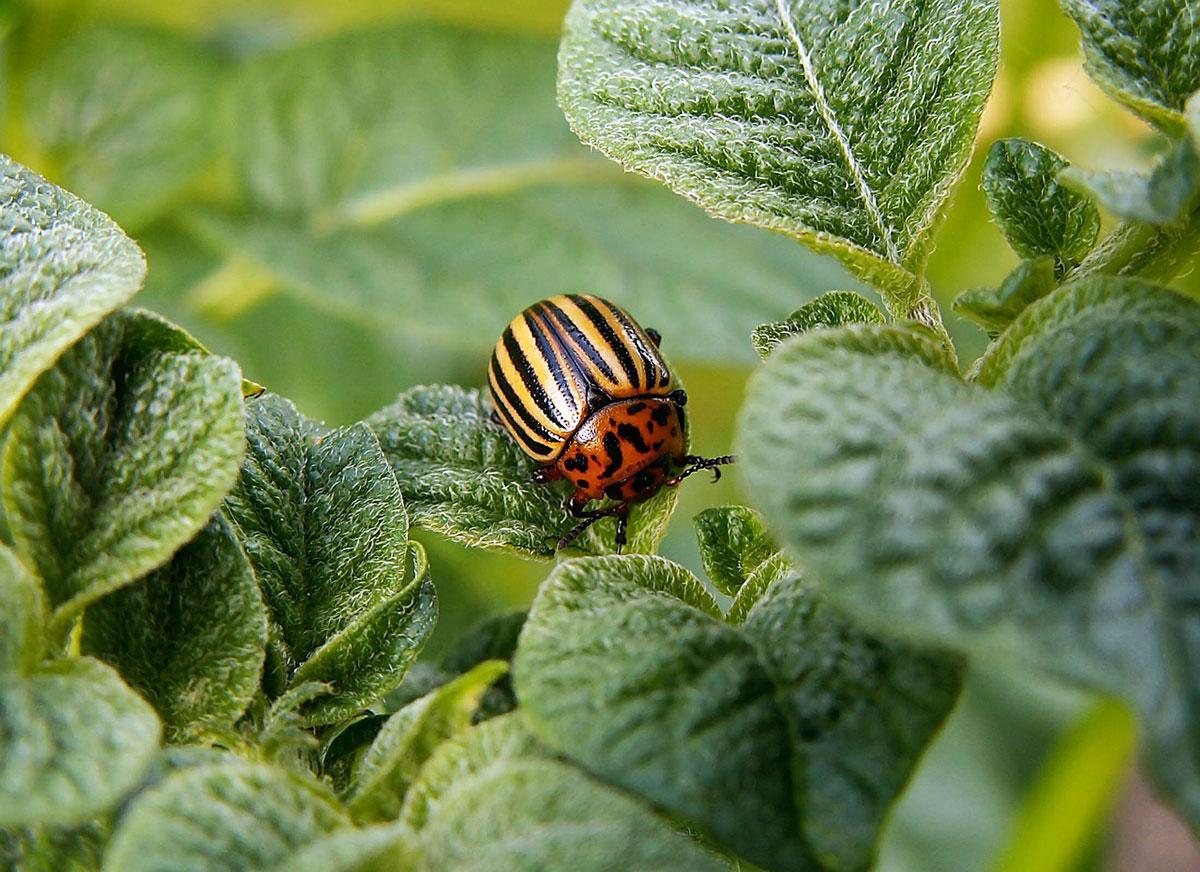
When cultivating vegetable crops, farmers devote a lot of effort to pest control. Insects can ruin a significant portion of the harvest, or even destroy it entirely. The Colorado potato beetle is considered an enemy of nightshade plantings.By feeding on plant leaves, it dooms them to death. The new-generation systemic insecticide Kalash is an effective product that helps combat this dangerous pest. The instructions for use explain how to dilute Kalash against the Colorado potato beetle.
Description and characteristics of the Kalash insecticide
Kalash is designed to combat a wide range of insect pests. It is highly effective and requires only a small amount of application. When used correctly, it does not pose a risk to humans or animals. It can be used to control harmful insects at any stage of development: egg laying, larval stage, and adult insects.
Compound
The active ingredient in Kalash is imidacloprid. It is a contact and systemic insecticide of the neonicotinoid class with an extended period of action.
Imidacloprid is a synthetic analogue of nicotine. It has long been known that this substance, found in tobacco, has a detrimental effect on living organisms. Our ancestors used infusions of tobacco and shag to spray plants, protecting them from insect pests.
Release form and packaging
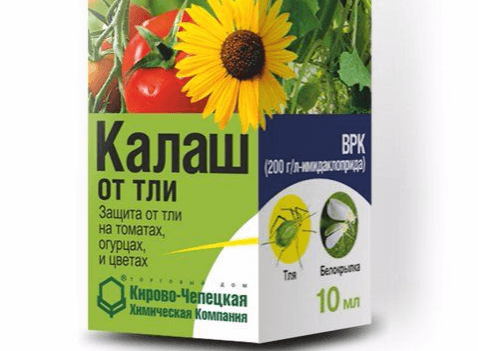
Kalash is a concentrated solution of imidocloprid (at a rate of 200 grams per liter of water). When preparing a spray solution, dilute it with water as directed in the instructions.
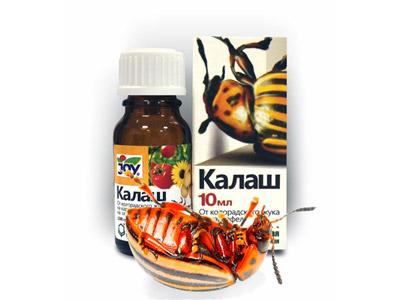
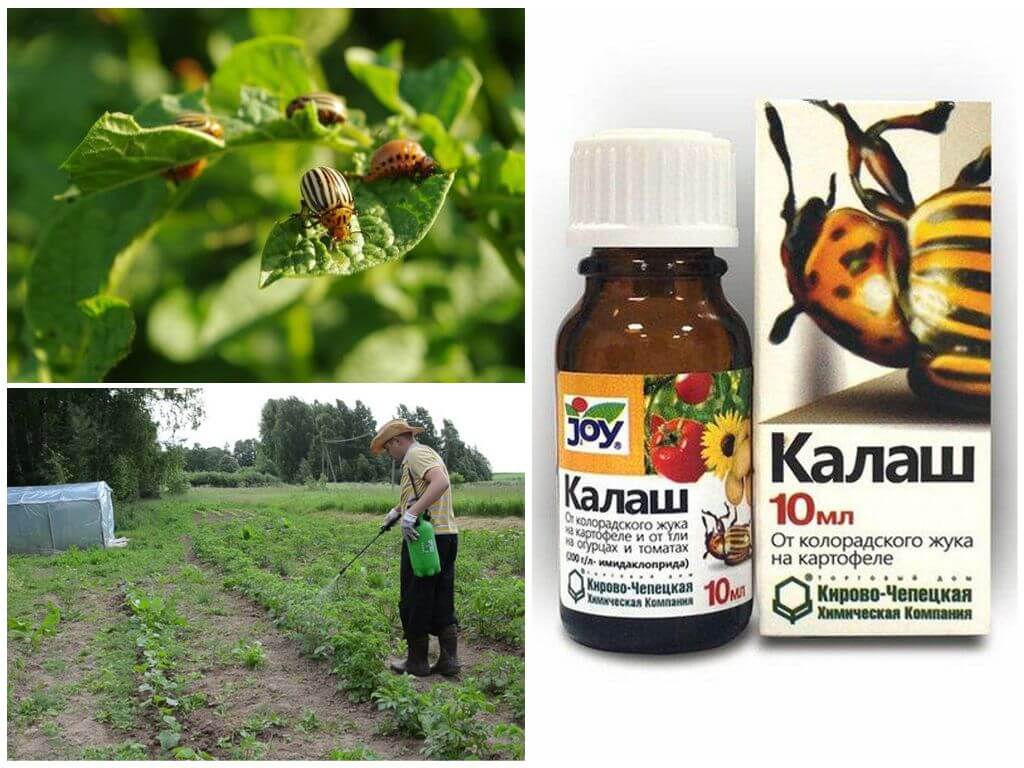
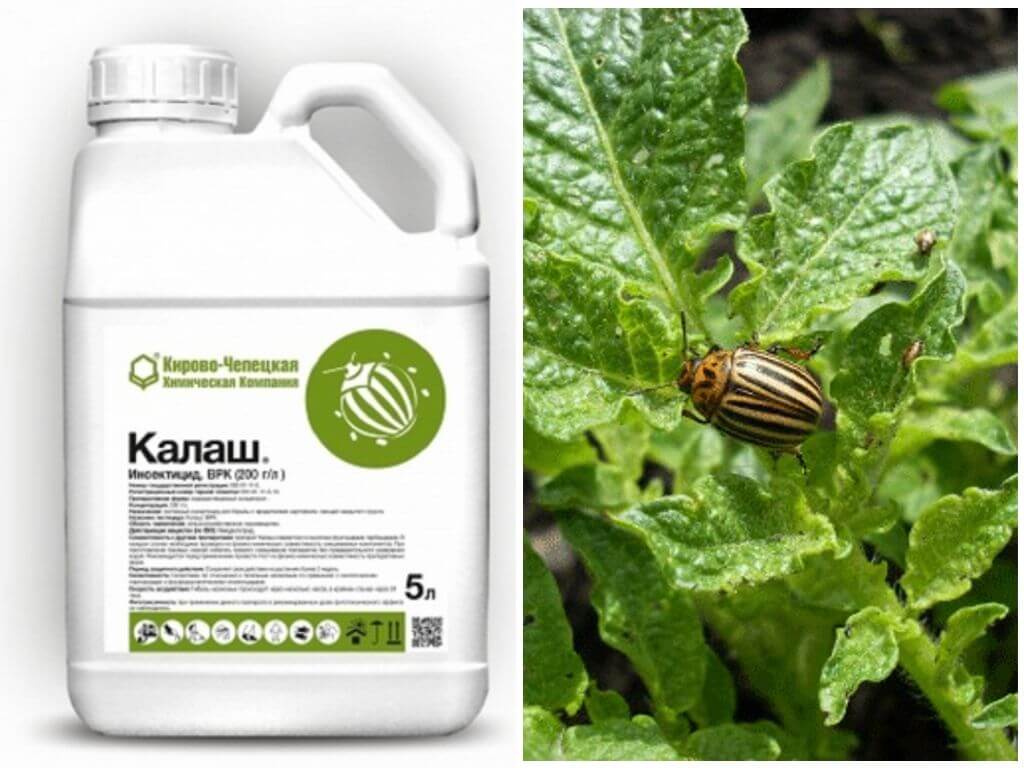
At the manufacturer, Kalash is packaged in containers of various sizes. For small farms, the following packaging options are available: a glass ampoule containing 1 milliliter of the product or a 10 milliliter bottle. For commercial potato growing, 1- or 5-liter canisters are used.
Advantages and disadvantages of the product
The product's advantages are undeniable. It effectively protects crops with minimal losses and side effects (provided the instructions are strictly followed). The following advantages are worth highlighting:
- Kalash is a broad-spectrum drug (it fights various types of insect pests).
- The product can be used in any weather (rain or hot sun do not affect its effectiveness).
- The drug acts for a long time, which allows you to save time and energy.
- A significant advantage is the optimal price-quality ratio.
- Kalash is economical. A small amount of the product can cover a large area.
- When used correctly, the preparation is not phytotoxic and does not affect the taste or commercial quality of potatoes.
- Kalash can be used for complex treatments, alternating with other insecticides.

One of the disadvantages is its high toxicity to bees. Special measures are in place to protect the insects. It is not recommended to spray the product near beehives.
Spectrum of action of the drug
Kalash has a broad spectrum of action. It is effective against members of the orders Homoptera, Coleoptera, and Lepidoptera. It helps combat sucking and chewing parasites.
Kalash is recommended for use in the following cases:
- on potato plantings (against aphids and Colorado potato beetles);
- in pastures and fields (against locusts);
- in greenhouses (against aphids, thrips, greenhouse whitefly).
How does it affect insects?
Based on its mode of action, Kalash is classified as a contact-intestinal insecticide. This means it poisons insects through direct contact or through ingestion. Products of this type are quite effective and allow for the complete eradication of pest populations infesting a given crop within a short period of time.
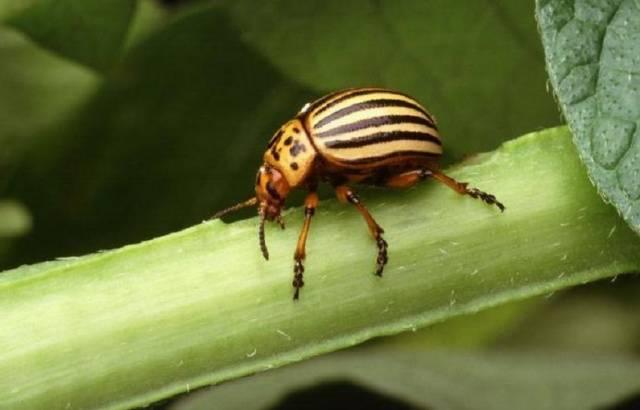
Kalash then acts neurotoxically, affecting the central nervous system. Post-synaptic and acetylcholine receptors are blocked, disrupting the transmission of nerve impulses to various parts of the body. Complete immobilization occurs, and then the insect dies.
Toxicity and danger to humans and animals
Kalash is classified as a low-toxicity drug with a hazard class of 3 for humans and animals. However, certain precautions must be taken during and after treatment.
The product is highly toxic to beneficial insects. Its hazard class for bees is 1. However, Kalash is considered selective for beneficial insects (it acts more selectively than other insecticides, such as synthetic pyrethroids).
Efficiency and duration of action
The drug's action is quite rapid, lasting from several hours to a day. Kalash has a prolonged effect—after a single treatment, the effect lasts for two weeks or longer.
How insecticides are used
When preparing and using the spray solution, it's important to strictly follow the instructions for use. This will help avoid unexpected complications and fully preserve the harvest with a minimal amount of product. Instructions for use of Kalash are included inside its original packaging.
Take a look Also
Timeframe for completion of works
Treatment of plantings with the Kalash preparation is carried out during the period when potato vegetationDepending on the degree of infestation, single or double spraying is used.
Repeated treatment is permitted no earlier than three weeks after the previous one.
Stop spraying no later than a month before harvest. This allows the product to fully neutralize.
How to dilute and prepare a working solution
Prepare the working solution for spraying potato crops according to the product's instructions. Use a container from which you will be spraying. First, fill it one-third full with water, add the measured dose of the product, and mix thoroughly. Then add water to the required volume and mix again.
Kalash is very economical to use. One ampoule is sufficient for a single treatment of a vegetable garden. One milliliter of the solution is diluted in 10 liters of water. This amount can treat an area of 200 square meters. Large farms prepare a much larger quantity of the working solution for potato fields, but the concentration remains the same in all cases.
Bush processing technology
It is recommended to treat potato plantings under the following conditions:
- warm weather (optimal air temperature is 12-25 degrees Celsius);
- early morning or late evening;
- calm weather (optimal wind speed is 2-3 meters per second);
- no rain (at least 3 hours before and after treatment).
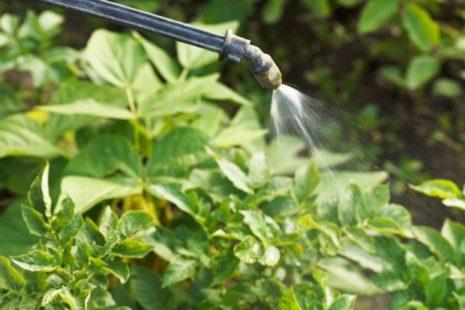
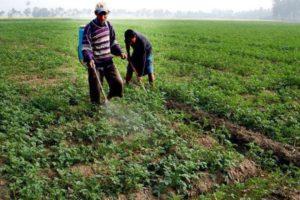
A special sprayer is used for the treatment. The bushes are thoroughly sprayed, paying attention to the undersides of the leaves, where the egg masses are attached. The solution settles on the stems and leaves, penetrates the vascular system, and through it, to the roots. After some time, you will notice the toxic effect on the pests surrounding the plant.
Precautionary measures
When using the product, precautions must be taken with respect to people, animals, and bees. These include the following:
- Before carrying out work, remove pets and children from the area where the drug is being used;
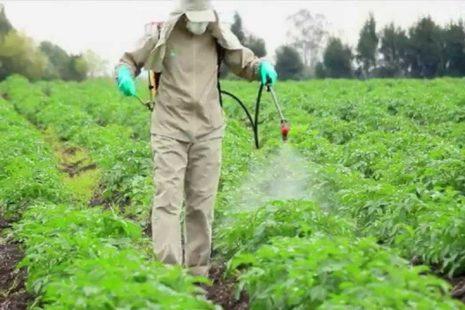
- The treatment should be carried out wearing long-sleeved clothing, a hat, and gloves.
- Protect your respiratory system with a respirator and your eyes with goggles;
- carry out the treatment continuously, without stopping until the end of the procedure, without taking food or water;
- do not spray during hot hours of the day;
- Do not carry out treatment near beehives, maintaining a protective strip at least 4-5 kilometers wide;
- During the active summer period of bees, do not treat flowering plants.
It's recommended to refrain from entering cultivated areas for a period of time. For mechanized work on large fields, this period is three days.
Cross-reaction with other drugs
The product is compatible with many herbicides and fungicides. Its effectiveness remains high when combined with them. However, physical and chemical compatibility testing is necessary. When mixing products, they must be diluted with water first.
Analogues
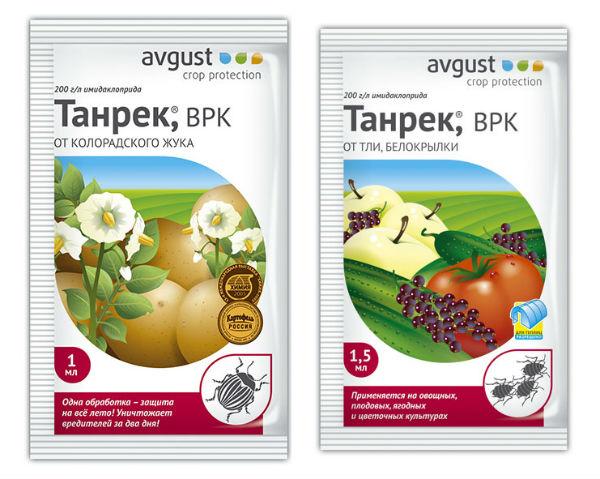
Other medications called necotinoids are analogs of Kalash. These include Tanrek, Imidor, Komandor, Zubr, Biotlin, and Musson.
What to replace it with
Regular use of Kalash in combination or in rotation with other necotinoid pesticides can lead to the development of pest groups resistant to these products. It's recommended to temporarily switch to products based on a different mechanism of action:
- Bordeaux mixture is a solution of copper sulfate in lime milk.
- Bitoxybacillin is a biological product containing bacterial spores that disrupt the motor activity of pests.
- Bankol is an insecticide. The active ingredient is bensultap (an annelid neurotoxin).
Gardeners' reviews of the product
Many gardeners, using Kalash on their plots to protect against pests, have left positive reviews. Here are some of them:
- Alexander: "I've been using Kalash for a long time. It's not very toxic, so I use basic pest control when spraying. The potato flavor doesn't change after treatment. It sprays well."
- Nadezhda: "I used to collect beetles by hand. Someone recommended using Kalash. It's very cost-effective; one ampoule is enough for a single area. I'm happy with the results."
- Alexey: "I use Kalash every year. The effect is visible almost immediately. The pests don't develop a tolerance to this product, so it's a reliable and cost-effective way to control them."
Related posts:
 Instructions for use of Tanrek against Colorado potato beetles, how to dilute
 Instructions for use of the Lightning remedy for the Colorado potato beetle
 Instructions for use of the "Alatara" remedy against the Colorado potato beetle
 Instructions for use of the Colorado potato beetle repellent Inta-Vir
 The best eggplant varieties for growing in a polycarbonate greenhouse: planting and care
 Types of fungicides for cucumbers in a greenhouse and instructions for use
 Instructions for use of Corado against the Colorado potato beetle
 Causes and treatment of eggplant pests and diseases, how to combat them at home