
- Why this remedy
- How does ammonia work against Colorado potato beetles on potatoes?
- Features of application
- How to prepare a solution
- When to perform the procedure
- Precautionary measures
- Ammonia and Coca-Cola for Colorado potato beetles
- Fertilizing potatoes with ammonia
- Other methods of controlling the Colorado potato beetle
- Beetle prevention
- Feedback from our readers
This seemingly harmless insect can devastate a field of nightshade crops in a short time. The Colorado potato beetle quickly adapts to chemicals, rendering them ineffective. Getting rid of this pest is very difficult, as it burrows deep into the soil, where it thrives for years. Some gardeners claim that using ammonia to control Colorado potato beetles on potatoes has protected their vegetable crops, despite the fact that three generations of the insects emerge per season, not just one.
Why this remedy
Ammonia not only brings a person out of a faint, induces vomiting, which alleviates the condition, reduces pain in neuralgia, but also finds use in everyday life, used in the garden.
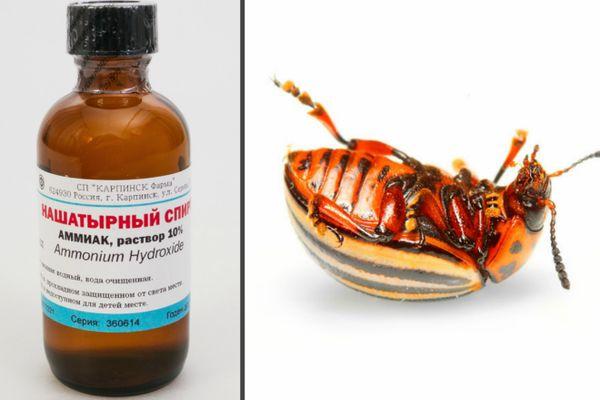
The solution has a pungent odor that is intolerable to:
- aphids and mole crickets;
- wireworm and ants;
- onion and carrot fly.
Colorado potato beetles don't like ammonia, but since the aroma dissipates over time, potatoes and eggplants need to be treated not once a month, but every week.
Ammonia, unlike various insecticides, is not harmful to root crops, humans, or beneficial insects. In addition, it is used as a fertilizer for onions, garlic, and cucumbers.
How does ammonia work against Colorado potato beetles on potatoes?
The female beetle lays several hundred eggs per season, which hatch into larvae. After munching on the leaves of the nightshade plant, they grab the stems. The pungent smell of ammonia deprives the Colorado potato beetles of their appetite and repels the pests from the plants.
Features of application
Potatoes can be treated and fed with an ammonia solution at the same time. Some gardeners soak strips of material in it and lay them between the rows of potatoes. Colorado potato beetles, smelling the aroma, will feast on the tops in another area free of the ammonia smell.
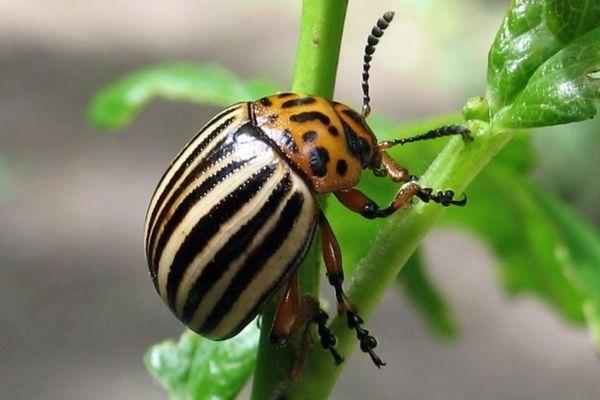
How to prepare a solution
A positive result in the fight against the striped pest is observed after spraying the beds with a solution obtained by diluting half a liter of ammonia in a bucket of water.
A solution for treating potatoes can be prepared in a different way. It adheres to the leaves, retaining a pungent odor that helps destroy eggs and repel adults. An effective solution is made by mixing:
- 50 ml of ammonia;
- shavings from a quarter of a bar of laundry soap;
- 10 liters of water.
You can add ammonia under each plant. The tops will grow, and the potatoes will be rewarded with large tubers.
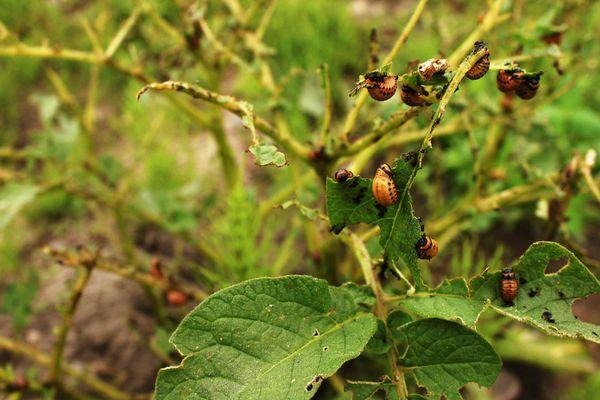
When to perform the procedure
It's recommended to treat the crop as soon as the first insects appear, otherwise, the pest will be impossible to control. Spray the bushes when there's no wind and the weather is dry. It's best to do the procedure first thing in the morning. You'll have to treat the potatoes multiple times, but insecticides aren't effective against the Colorado potato beetle in a single application. Some time after spraying, the larvae reappear and ravenously attack the foliage.
Gardeners who have used ammonia warn that it evaporates when sprayed with a spray bottle, so it is better to treat plants with a watering can.
Precautionary measures
The pungent odor of ammonia can negatively impact human health. Care must be taken when preparing an ammonia solution to repel insects and destroy egg laying eggs. Asthmatics and people with hypertension should exercise particular caution when using this product. A strong inhalation can trigger a coughing fit and increase blood pressure.

You cannot ignore the simple rules for handling ammonia:
- Ammonia must not be mixed with chlorine.
- The solution is prepared in the open air or in a well-ventilated room.
- When working with the product, protect your face with a mask and your hands with gloves.
Ammonia, like any medication, should be kept out of the reach of children. It can cause burns and respiratory arrest. Ammonia causes an unbearable burning sensation when it comes into contact with skin; avoid allowing the solution to come into contact with eyes.
Ammonia and Coca-Cola for Colorado potato beetles
Gardeners will go to great lengths to protect nightshade crops from this voracious pest. The refreshing carbonated drink, beloved by both children and adults, is absolutely loathed by Colorado potato beetles. Coca-Cola contains not only dyes, additives, and caffeine, but also orthophosphoric acid, which kills many insect species. This trace element is found in malathion and other chemicals produced to combat garden pests.


The soft drink has no negative effects on the human body. Coca-Cola can be used to treat potatoes in various proportions with water:
- 1 to 1;
- 5 to 1;
- 2 l to 7.
Spraying the bushes with undiluted solution is not recommended; it will have no effect. Apply the solution to the leaves, ensuring it doesn't affect the flowers.
It is not recommended to mix Coca-Cola with insecticides, but at the same time you can pour an ammonia solution under the bushes.
Fertilizing potatoes with ammonia
For vegetables to grow quickly and produce a good harvest, fertile soil is essential. Adding minerals such as potassium and phosphorus fertilizers, ammonium nitrate, and urea helps improve its composition.
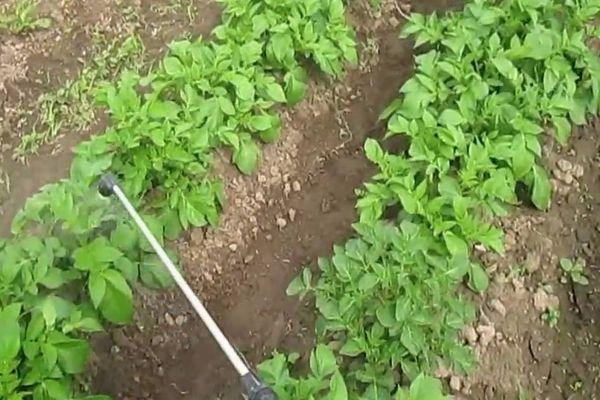
Potatoes respond positively to ammonia fertilization. Mix 3 tablespoons of the solution in a bucket of water. Add 2 cups of the ammonia solution to each plant. This replenishes nitrogen, a deficiency that causes leaves to turn yellow and tops to dry out.
Other methods of controlling the Colorado potato beetle
Many gardeners and summer residents try to avoid using insecticides on their plots. To protect potatoes from dangerous insects, they sow the following between the rows:
- coriander;
- dill;
- calendula;
- beans.
The pest doesn't particularly like the smell of these plants. All Colorado potato beetles remain, but they lay far fewer eggs on the bushes.
Urea repels insects. In the spring, before planting, dissolve urea in two liters of water and add a kilogram of potatoes. After 24 hours, remove the tubers and spread them out in the garden bed. Adults die the next day. To kill larvae, mix urea with equal parts water and spray the plants.

Tar, produced by distilling wood, contains ash, which Colorado potato beetles dislike. A solution is prepared by diluting 100 grams of the liquid in a bucket of water with alcohol or lye added. Spray the growing potato plants several times a week until the insects disappear.
Beetle prevention
Fertilizing with onion peels helps grow healthy potatoes. Adding them to the hole will keep pests away for the entire season. If bugs have already appeared, pour half a kilogram of peels into a bucket of boiling water and add some shavings of laundry soap. Apply this solution to each potato plant.
Wood ash is poured into the holes when planting tubers; pests don’t like this treat.
Feedback from our readers
Gardeners are experimenting with various methods to rid their plots of voracious insects. Not everyone is willing to spray their plants with insecticides, as they are concerned about their family's health.
Oleg Ivanovich, 55 years old, Pskov region:
"Last summer, I treated my potato plants with ammonia and water. The Colorado beetles did decrease, but when the smell disappeared, they started appearing again. I had to spray the tops every week, but I got a wonderful harvest without using insecticides."
Polina Andreevna, Mozyr, Gomel region:
"As soon as the potato seedlings emerged, they were already infested with Colorado potato beetles. I'd previously sprayed the tops with chemicals, and my neighbors relied solely on folk remedies. I decided to try my own version of pest control. I treated each plant with a solution of ammonia and water, adding soap shavings to the solution. I sprayed the potatoes when the odor dissipated. It took a lot of time and effort, but I managed to get rid of the beetles."
Related posts:
 Using ammonia to fertilize onions, how to dilute and water
 Using ammonia in the garden and vegetable garden: how to make a solution
 Why potatoes aren't growing well in the garden, and what to do to ensure a bountiful harvest
 Description and treatment of potato pests, control measures
 Pre-plant potato treatments for Colorado potato beetle
 Description and treatment of potato diseases, methods of control using folk and chemical means
 Is it possible to feed peppers with ammonia and the rules for processing?
 How to properly feed cucumbers with ammonia, application instructions