
- Characteristics of the Elizabeth variety
- History of origin
- External description of the bush
- Productivity and taste of root crops
- Pros and cons
- What does culture "love"?
- Suitable climate
- Lighting, humidity and temperature conditions
- Required soil composition
- Favorable and unfavorable neighbors
- How to plant potatoes in a garden
- Selecting and preparing a landing site
- Preparing planting material
- Timing and step-by-step algorithm for planting
- How to care for potato plantings
- Regularity of watering
- How and what to feed the plant with
- Loosening and hilling the beds
- Prevention and treatment of diseases
- Protection against parasites
- When to harvest and how to store
- Gardeners' reviews of the crop
According to reviews from gardeners and summer residents, the Elizaveta potato variety lives up to its description. It thrives in any climate, is easy to care for, and produces large, beautiful fruits. It is considered a table potato due to its flavor. It contains 15% starch, as well as vitamin C and potassium.
Characteristics of the Elizabeth variety
The characteristics of a potato variety include its origin history, the appearance of the bush and tubers, and its yield.
History of origin
The Elizaveta variety was developed by Russian breeders in the 1990s. Scientists at the Leningrad Research Institute of Agriculture "Belogorka" worked on it. In 1996, the variety was included in the Russian state register. It is intended for cultivation in the northern regions of the country, but also thrives in the southern regions, where a double harvest can be achieved in a single season.
External description of the bush
The bush is medium-sized and upright. It produces long shoots with small leaves. Flowering lasts only 7-10 days. The flowers are purple or white. The root system is strong, promoting good tuber formation.
Productivity and taste of root crops
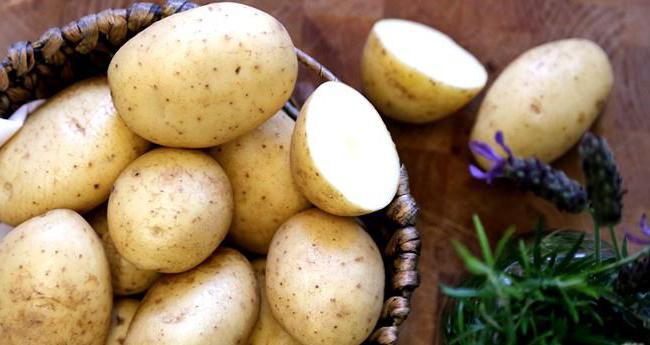
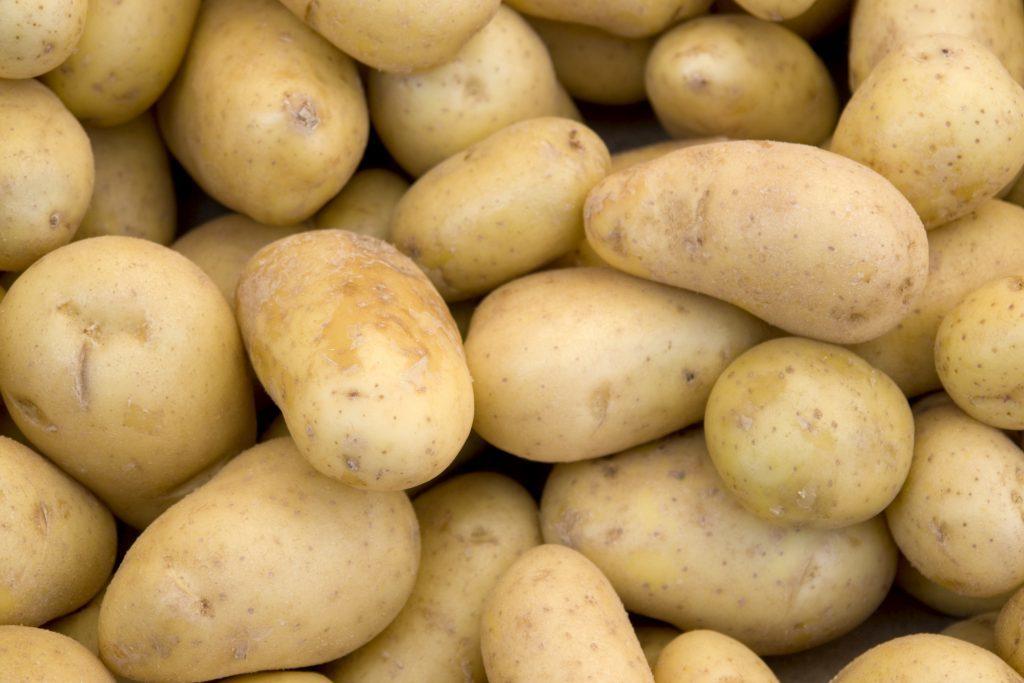
The roots are round or elongated, covered with a light yellow skin. The flesh is white inside. The Elizaveta variety is considered a table potato and has a pleasant taste. It does not darken or change color after peeling. It contains 15% starch. The potato is low in calories and contains potassium and vitamin C.
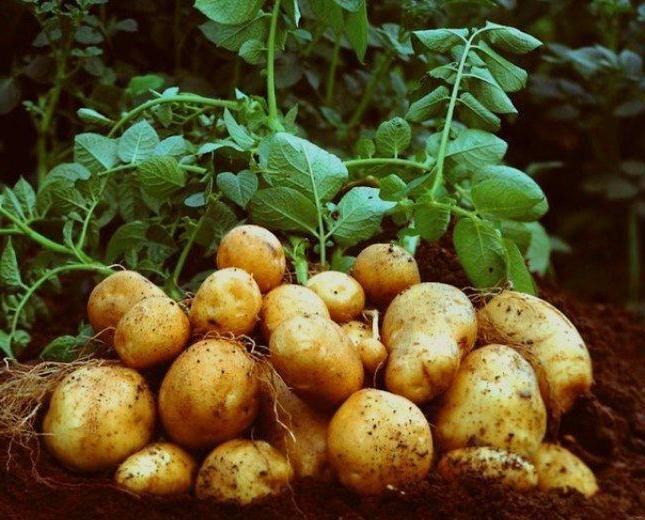
Up to 10 tubers are harvested from a single bush. Each potato weighs between 80 and 140 grams. The yield is approximately 400 tons per hectare.
Pros and cons
The Elizabeth potato has its pros and cons. The pros include:
- long-term storage of root crops;
- strong immunity to infections;
- presentable appearance of fruits;
- good transportability;
- pleasant taste;
- Potato ripening in 60–85 days.
Among the disadvantages one can note the predisposition Elizabeth potato susceptible to late blight, and the yield is not very high.
What does culture "love"?
The Elizabeth potato variety is easy to care for, but has its own preferences in climate, soil, and humidity.
Suitable climate
The Elizaveta potato grows and thrives in any climate. It was bred for cultivation in northern regions. However, it produces high yields in temperate and southern climates.
Lighting, humidity and temperature conditions
Potatoes prefer well-lit, draft-free areas with humid air. The ideal growing temperature is 20–24°C. Elizaveta is a moisture-loving variety and requires adequate watering.
Required soil composition
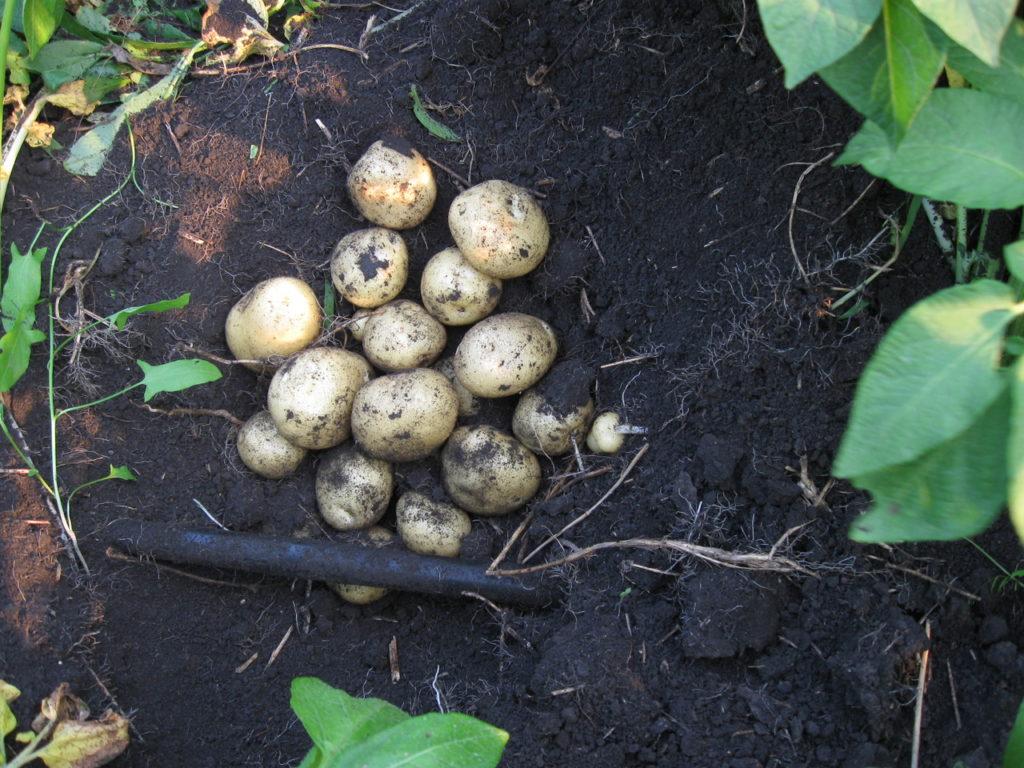
Potatoes prefer light, loose soils with adequate drainage. Sandy and sandy loam soils are suitable, but when growing in clay or loamy soils, it is recommended to add sand to the soil.
If your soil is highly acidic, apply lime in the fall or spring, using slaked limestone, dolomite flour, or chalk. The application rate varies for each soil type and is indicated on the product packaging.
Favorable and unfavorable neighbors
It is recommended to plant the following next to potato beds:
- Mustard. It repels the Colorado potato beetle.
- Oats. They enrich the soil with nitrogen.
- Pumpkin and squash enrich the soil with nitrogen and purify it.
- Cucumbers. Do not affect potato growth.
Crops that are unfavorable for potatoes include members of the nightshade family and vegetables that form root crops.

These include:
- tomatoes;
- beet;
- carrot;
- Jerusalem artichoke.
How to plant potatoes in a garden
Potatoes must be planted in the right location and prepared in a timely manner. Seeds are prepared in advance, and planting is carried out according to a specific procedure.
Selecting and preparing a landing site
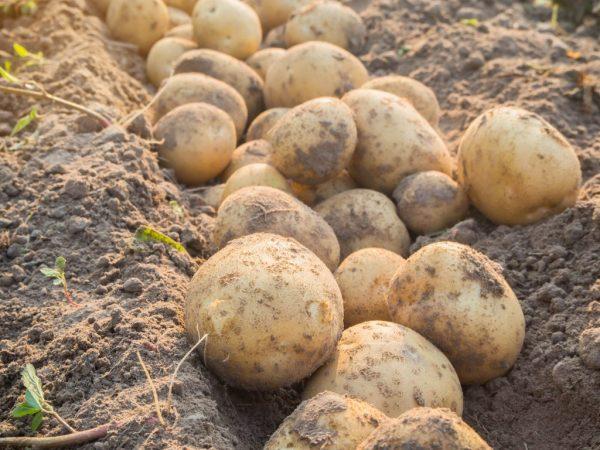
The potato planting site is prepared in the fall. The soil is dug over, removing all roots, weeds, and stones. Organic fertilizers are added:
- wood ash;
- manure;
- chicken manure;
- compost.
In spring, repeat the digging and add mineral fertilizers containing nitrogen, phosphorus, potassium, and manganese. Choose a well-lit location, and practice crop rotation. Loose, easy-to-grow soils are recommended. If this isn't possible, add drainage material during planting.
Preparing planting material
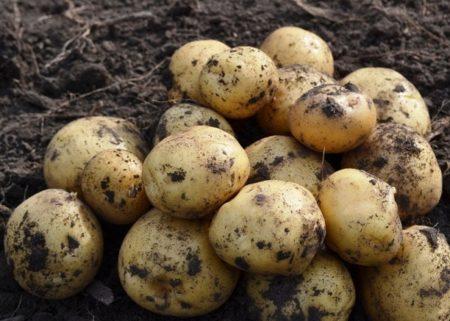
Seeds are purchased from nurseries, trusted sources, or last year's root vegetables. Two weeks before planting, they are brought to a well-lit area and laid out in an even layer. Every 2-3 days, the potatoes are sprayed with water and turned over. By planting time, sprouts should be 2-3 cm long.
Important! The room must be well ventilated.
Timing and step-by-step algorithm for planting
Potatoes are planted in May, depending on the region. They are planted in early May in southern regions, mid-May in temperate regions, and late May in northern regions. By the time they are transplanted, the soil should warm to 10°C at a depth of 10 cm.
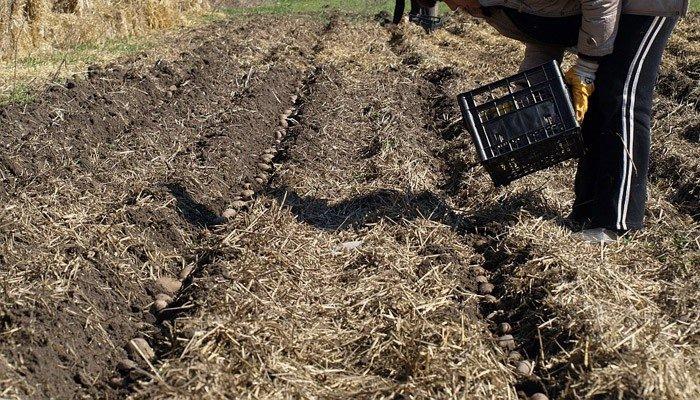
Planting is carried out according to the following algorithm:
- On the prepared area, beds are formed, the distance between bushes should be 20 - 25 cm, and between rows 50 cm.
- They dig holes.
- Drainage material is placed in each hole and water is poured in.
- Before planting, the seeds are kept in a solution of potassium permanganate for 30 minutes.
- The seeds are placed in the holes and buried.
- The soil is leveled with a rake.
How to care for potato plantings
To ensure a good and healthy harvest, it's important to monitor watering, fertilize, loosen, and hill up the soil. Spray the bushes to protect against pests and insects.
Regularity of watering
Elizaveta is a moisture-loving variety. Water three times per season. The first time is when the seedlings reach a height of about 15-20 cm, the second time during flowering, and the third time after flowering has finished. Watering is stopped two weeks before harvest.
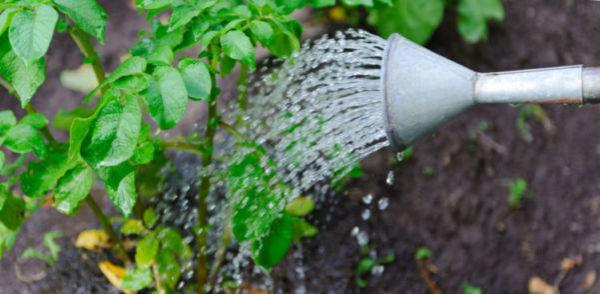 Important! Increase watering during hot weather and reduce it during frequent rainfall.
How and what to feed the plant with
Fertilizing potatoes is done in conjunction with watering. Water the plants first, then apply fertilizer.
Mineral complexes containing nitrogen, phosphorus, potassium, and manganese are used. Organic fertilizers are also used.
Fertilizer is applied using both root and foliar methods. Root application involves spreading liquid and dry fertilizers around the potato plant, while foliar application involves spraying the plants with solutions.
Loosening and hilling the beds
Loosen the soil after each watering and rain, when the soil has dried out slightly. Weeds are removed along with the loosening. This prevents the formation of soil crusts, which impede the normal development of root crops.
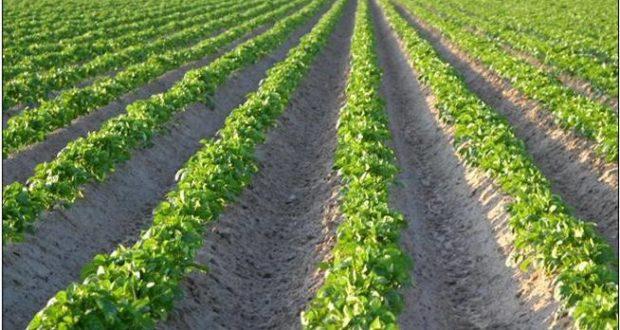
Hilling is done three times per season. The first time is when the potato tops reach 20 cm in height. The plant is covered with soil until 2-3 pairs of leaves remain. The second hilling is done two weeks after the first, and the third three weeks after the second.
Prevention and treatment of diseases
The Elizaveta potato is resistant to nematodes, potato blight, potato cancer, and blackleg. If care is not followed and weather conditions are unfavorable, the plant is susceptible to fusarium, late blight, rhizoctonia, and alternaria.
To combat diseases, plants are treated against fungal and infectious diseases. Spray plants at the beginning of the growing season. Any fungicide can be used for this purpose. Treatments are repeated several times per season, if necessary.
Protection against parasites
Potatoes are affected by the following insects:
- Colorado beetle;
- black aphids;
- wireworm;
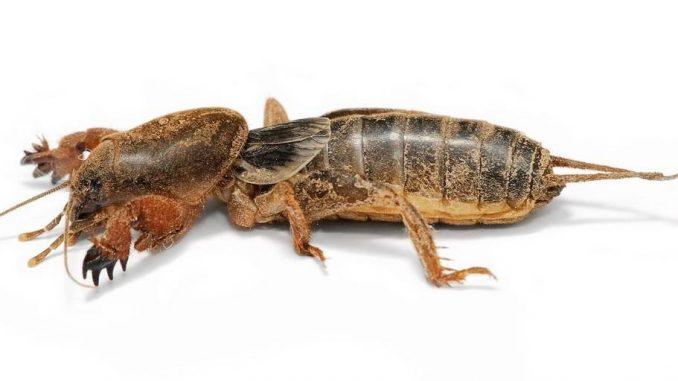
- mole cricket.
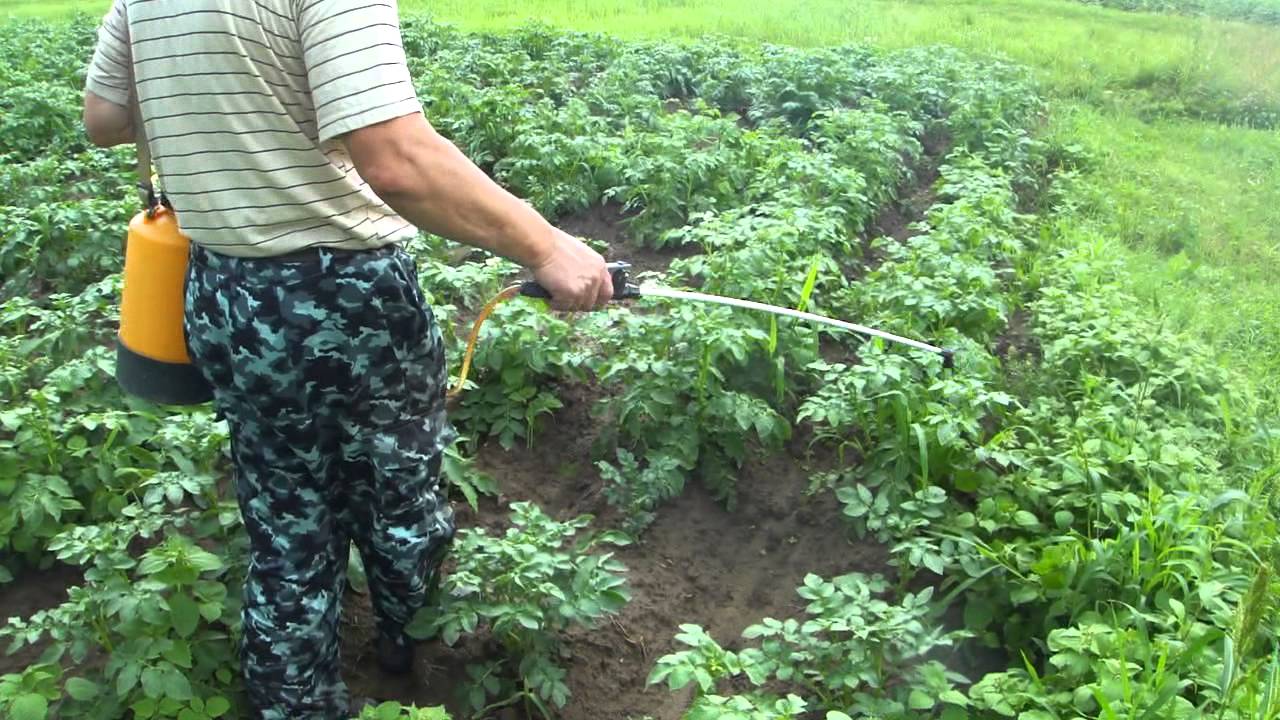
Insecticides are used to control insects. After spraying, the effect lasts for 10 to 20 days, so repeat treatments are necessary. The final treatment should be performed no later than 20 days before harvest.
Take a look Also
Important! It is recommended to change insecticides annually, as insects develop resistance to the active ingredient.
When to harvest and how to store
The growing season of the Elizaveta potato variety lasts 60 to 85 days. At the end of this period, the tops gradually dry out and turn black, and the potatoes are easily separated from them. The potatoes are dug up with a shovel. The harvested potatoes are placed in a dark room to dry, spread out in an even layer, and left for 1 to 2 weeks. The room should be well ventilated.
Next, the root vegetables are packaged in fabric bags or breathable boxes. The firmest and largest potatoes are selected for seed. The bags are placed in a cool, dark place for storage. The tubers retain their appearance until the beginning of the next season.
Gardeners' reviews of the crop
Oksana, 36 years old, Moscow
I bought Elizaveta potatoes from a nursery for seed. I chose a suitable plot and planted them in mid-May. The plants grew strong and medium-sized. The variety doesn't require much care. I treated it for Colorado potato beetles and other pests at the beginning of the growing season. The potatoes ripened in mid-August. We dug up 6-10 potatoes from each plant. They are all uniform and beautiful, but there weren't many.
Olga 43 years old, Arkhangelsk
We've been planting the Elizaveta potato variety for four years now. Our loose soil is perfect for it, and I change the planting location every year. I follow all the care instructions. The crop ripens in mid-August. We dig up the new potatoes for testing at the end of June. We're pleased with the harvest; we get 8-10 large tubers from each plant.
Alexandra, 59 years old, Tyumen
I'm growing the Elizaveta potato variety for the second season in a row. The plants produce only a few tubers, but I really like their flavor. The tubers don't darken when peeled, and they retain their shape after cooking. This variety is easy to care for. The plants haven't had any problems in two seasons; I fertilize them with wood ash. I also plant mustard between the rows. I'll continue growing this variety.
Related posts:
 Description and cultivation of the Elizabeth strawberry variety, planting and care
 Description of the best potato varieties of domestic and foreign selection
 Description and characteristics of the Rodrigo potato variety, cultivation and care
 Why potatoes aren't growing well in the garden, and what to do to ensure a bountiful harvest
 Description and characteristics of the Krasavchik potato variety, planting and care
 Description and characteristics of the Gulliver potato variety, planting and care
 Description of the best potato varieties for 2025, selection for regions
 Description and treatment of potato diseases, methods of control using folk and chemical means