
- Molly Potato: Variety Characteristics
- History of selection
- External descriptions of culture
- Bush
- Productivity and root crops
- Taste qualities and scope of application
- Susceptibility to diseases and insects
- Main advantages and disadvantages
- What conditions are necessary for the growth and fruiting of Molly potatoes?
- Planting potatoes
- Deadlines
- Preparing the site and planting material
- Scheme and depth of seedling planting
- Care
- Regular watering and loosening
- Hilling and fertilizing
- Preventive treatments
- Harvesting and storage
- Reviews from vegetable growers
The Molly potato variety is distinguished by its early maturity. Fruits ripen in 55 to 60 days. This variety is grown for commercial production, starch processing, and for home consumption. It requires little care and is suitable for cultivation in all regions.
Molly Potato: Variety Characteristics
The characteristics of the variety include the history of its creation, the appearance of the bush and root crop, yield, area of application, and the immunity of the crop.
History of selection
This ultra-early variety was developed by German breeders. In 2007, it was included in the Russian state register. It is intended for cultivation in the Central and Northwestern regions.
External descriptions of culture
Bush
The bushes reach a height of 50–70 cm. They have bright green, spreading leaves with characteristic wavy edges. The flowers are white and bloom for a short time. The foliage spreads in various directions.
Productivity and root crops
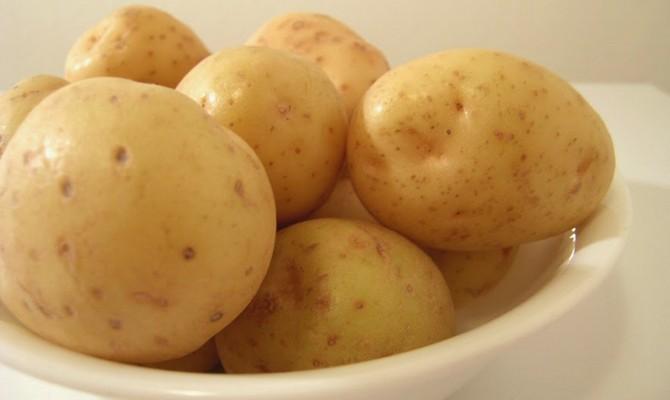
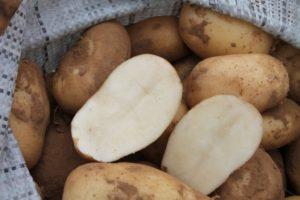
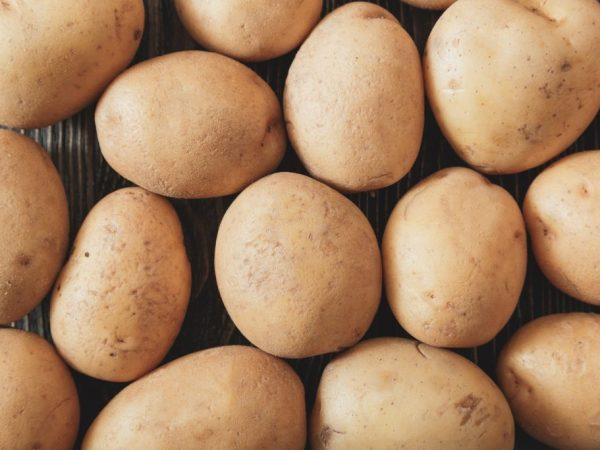
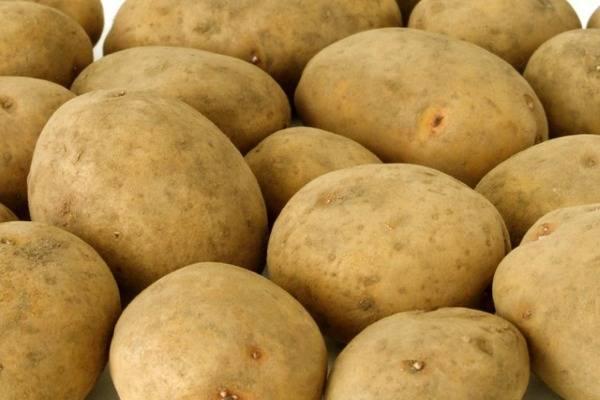
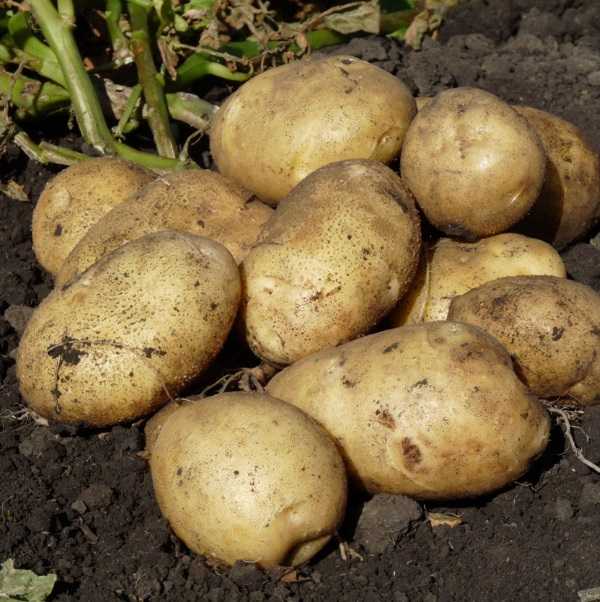
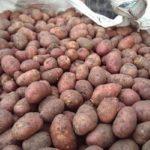
The roots are uniform, with a smooth, light-brown skin. The tubers are white inside, contain 18% starch, and cook easily. Up to 25 tubers are harvested from a single plant. The yield per hectare is up to 500 centners.
Taste qualities and scope of application
The fruit has excellent flavor, and is considered a table potato. It is widely grown commercially and in private gardens. The potato is used to make mashed potatoes, salads, and soups. Starch is also extracted from it.
Susceptibility to diseases and insects
This variety has strong immunity, but if care and cultivation guidelines are not followed, it is susceptible to fungal diseases and insect attacks. These include:
- late blight;
- fusarium;
- scab;
- blackleg.
These diseases are caused by microscopic fungi. Fungicides are used to combat them. All damaged plant leaves are removed and sprayed several times until the disease subsides.
Important! Intervals between treatments are 1 week. Repeating the procedure too frequently can cause burns to the green parts of the potatoes.
The crop is also attacked by insects that feed on potato leaves and tubers. These include:
- Colorado potato beetle and its larvae;
- wireworm and click beetle;
- mole cricket;
- nematode;
- potato cancer;
- black aphids.
To control pests, insecticide treatments are used. These repel insects with their scent and cause paralysis when they consume plant parts. These treatments are applied 2-3 times per season, depending on the duration of action. Insect control is stopped two weeks before harvest.
Main advantages and disadvantages
The variety has its advantages and disadvantages. The advantages include:
- early ripening of fruits;
- high productivity;
- commercial appearance of tubers;
- ease of care;
- transportability of fruits.
Disadvantages include susceptibility to nematode infestation and potato cancer.
What conditions are necessary for the growth and fruiting of Molly potatoes?
To grow Molly potatoes, you need to meet several conditions:
- Choose areas with stable lighting, protected from drafts.
- The crop prefers fertile, loose soils with moderate acidity.
- Planting is carried out when the soil warms up to 10°C to a depth of 10 cm.
- The beds and seed material are prepared in advance.
- In clay and loamy soils, drainage is provided.
Planting potatoes
Potatoes are planted according to the planting dates, following the planting pattern, and having prepared the site and seed material in advance.
Deadlines
This variety is intended for cultivation in northern regions. There, it is planted in late May. In moderate and southern climates, Molly thrives and can produce a double harvest.
In these regions, planting begins in late April in the south and in mid-May in central Russia.
Preparing the site and planting material
The site is prepared starting in the fall. To do this, it is dug over, removing all roots, weeds, and stones. If the soil is highly acidic, dolomite flour or other limestone-based compounds are added.
I increase soil fertility with the help of:
- manure;
- chicken manure;
- herbal decoctions;
- wood ash;
- compost.
In spring, digging is repeated and mineral nitrogen compounds are added.
Important! In early spring, you can sow oats in your plot; they cleanse the soil, improve its fertility, and enrich it with nitrogen.
Potato seeds are purchased from reputable nurseries or tubers harvested from last year's crops. Two weeks before planting, the tubers are placed in a well-lit, ventilated area. Every two days, they are turned over and sprayed with water. When the sprouts reach 2-3 cm in height, they are transplanted into the soil.
Scheme and depth of seedling planting
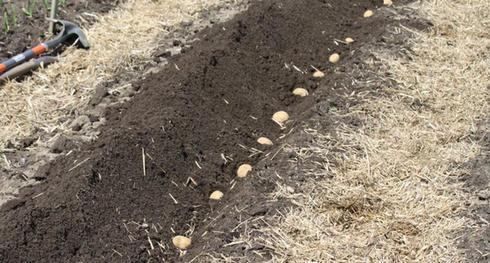
In the prepared area, form beds. Leave a 50 cm gap between them. Dig holes 30 cm apart. Depending on the soil density and moisture content, plant the seedlings deeper:
- dry and sandy – 15 cm;
- airy and humidified – 10 cm;
- clayey and loamy – 5 cm.
Care
To obtain a good harvest, it is necessary to regularly water, carry out hilling and fertilizing, and carry out preventative treatments against pests and diseases.
Regular watering and loosening
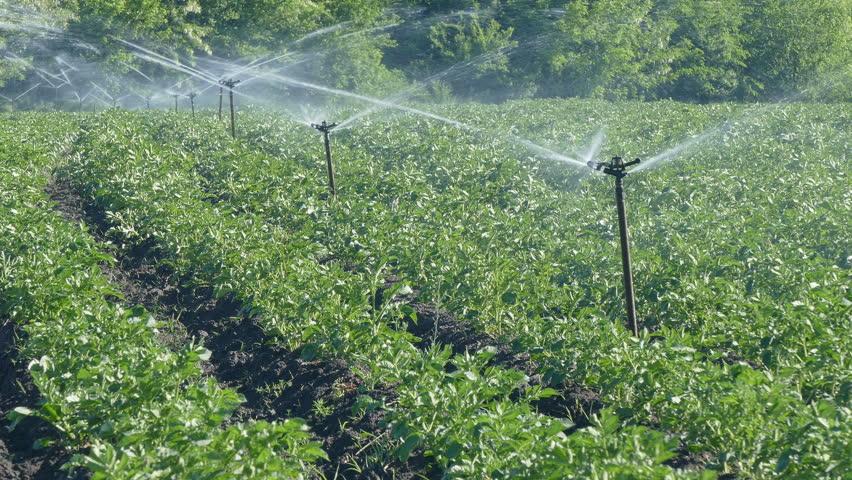
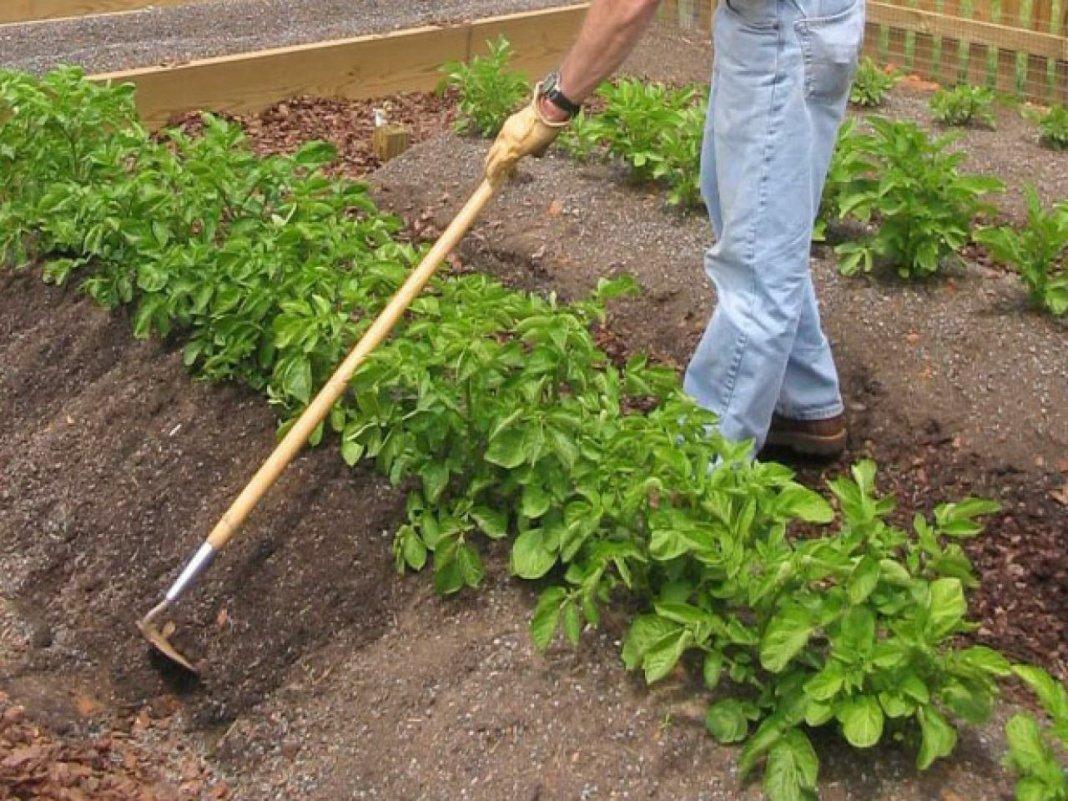
Water the plant three times per season: once when the plants reach 15-20 cm in height, a second time during flowering, and a third time after flowering has finished. After each watering and rain, loosen the soil with a hoe.
The tool's teeth are pushed several centimeters into the soil, and the top layer is lifted with gentle movements. This loosening process enriches the soil with oxygen.
Hilling and fertilizing
Hilling the tops of the plants increases the number of tubers. This procedure is performed twice: once when the sprouts reach 15 cm, and again two weeks later. The plant is covered so that 2-3 pairs of leaves remain above the ground.
Preventive treatments
To prevent insect attacks and disease, preventative treatments with insecticides and fungicides are necessary. These should begin before the crop begins to bloom.
Harvesting and storage
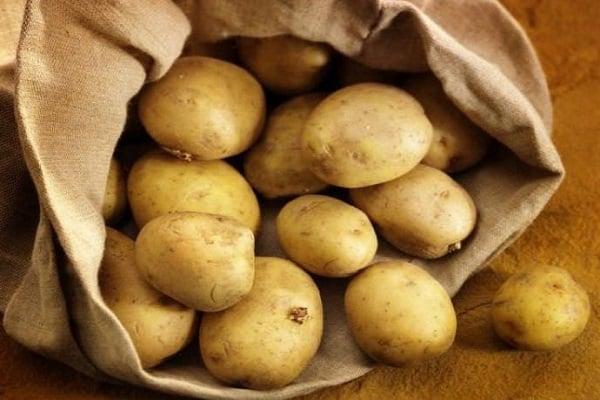
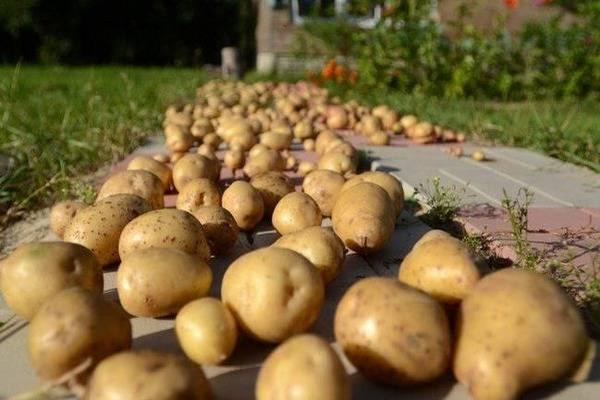
Once the growing season is complete, harvesting begins. It occurs 55 to 60 days later, typically in mid-July or early August. The tubers are dug up and transferred to a dark, ventilated area to dry for 1 to 2 weeks. They are then packaged in fabric bags and breathable boxes. The potatoes are stored in a cool, dark place until the next season.
Reviews from vegetable growers
Mikhail, 58 years old, Tver
Molly potatoes are one of my favorite varieties. I set aside a bed for this variety every year. The early maturity of the tubers allows us to enjoy fresh potatoes in midsummer. We dig them up as new potatoes, 40 days after planting. The skin is thin and easy to peel, the roots are delicious, and they're suitable for any type of cooking.
Anna, 46 years old, Perm
I really like the Molly potato variety. We dig up about 20-25 tubers from one plant. They're all smooth and uniform in shape. It's best to provide drainage on clay and loamy soils. I use fine crushed stone for this. Before flowering, I treat the plants for fungi and beetles. Two treatments are enough, and the plants haven't had any problems. I'll be growing them regularly.
Sofia, 39 years old, Novosibirsk
I've been growing Molly potatoes for four years in a row commercially. They're sold for starch processing. I also save some of the harvest for my own consumption. They're easy to care for, as long as you water them regularly and maintain good soil fertility. To get rid of the Colorado potato beetle, I spray Tanrek.Two treatments are enough for the season. When cooked, the tubers soften, become soft and crumbly, have a sweet taste, and are suitable for mashed potatoes.
Related posts:
 Description and characteristics of the Rodrigo potato variety, cultivation and care
 Description of the best potato varieties of domestic and foreign selection
 Description and characteristics of the Zhukovsky potato variety, planting and care
 Description and characteristics of the Rocco potato variety, cultivation and care
 Description and characteristics of the Colombo potato variety, planting rules and care
 Characteristics and description of the Queen Anna potato variety, planting and care
 Description and characteristics of the Krasavchik potato variety, planting and care
 Description and characteristics of the Picasso potato variety, planting rules and care