
- Breeding history
- Description of the variety and characteristics
- The main advantages and disadvantages of the Udacha potato
- Rules for growing crops
- Sprouting tubers
- Preparing the land
- Classic potato planting
- Care instructions
- Watering
- Hilling
- Top dressing
- Diseases, pests, prevention
- How to properly harvest and store crops?
- Feedback from farmers and gardeners
It's hard to imagine a plot of land where potatoes aren't grown. This vegetable is probably the most popular among gardeners. One of the best hybrids for planting is the Udacha potato variety.
Breeding history
The Udacha potato hybrid was developed in the 1990s. The variety was created by crossing the Anoka and Vilnya potatoes. The breeders' goal was to develop a high-yielding variety suitable for cultivation in all climates.
Description of the variety and characteristics
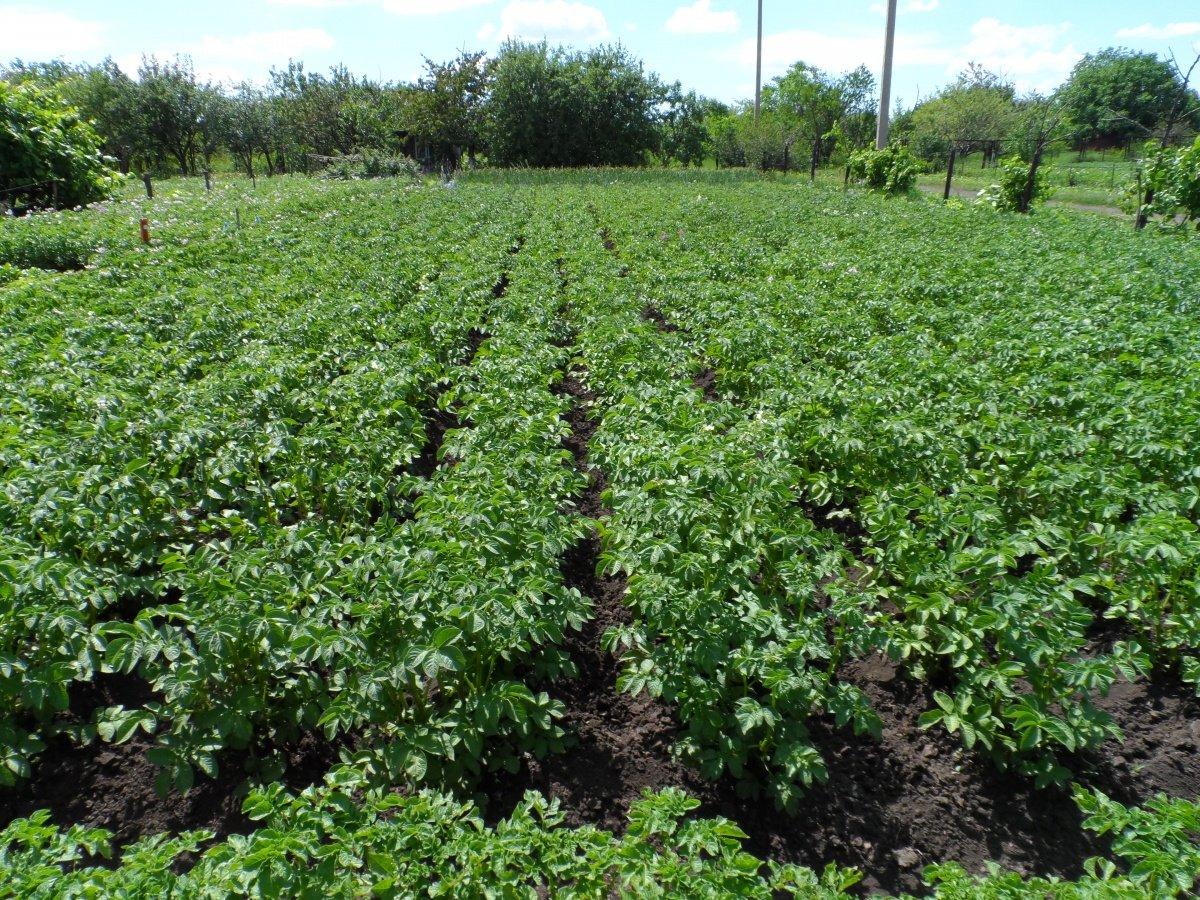
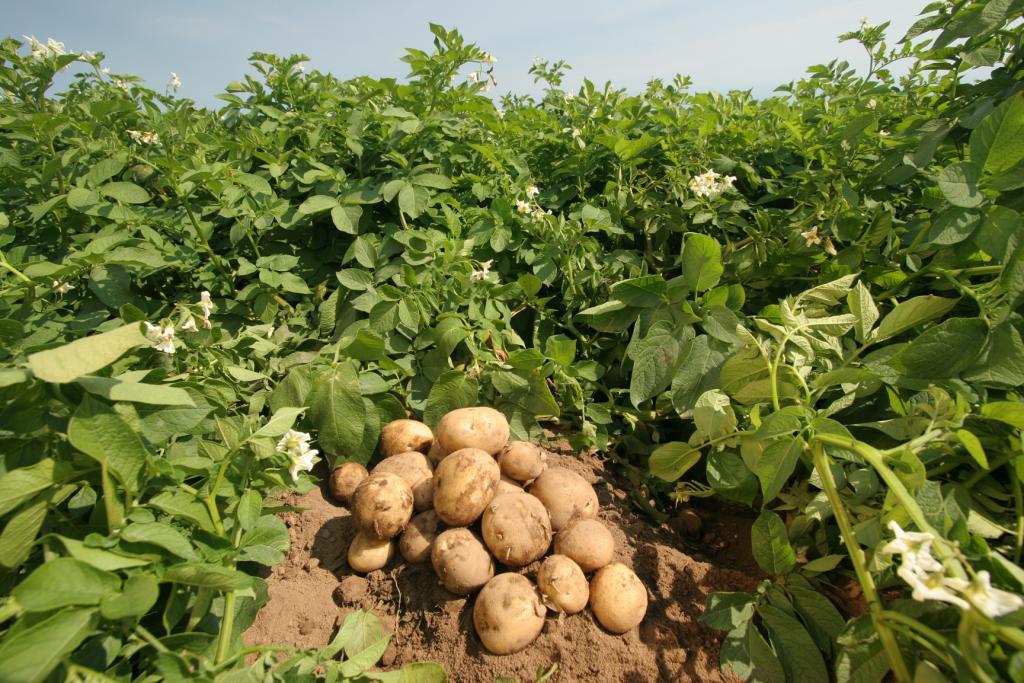
The Udacha variety grows tall and spreading bushes. The foliage is a rich green, with large leaflets. Flowering is short, with the inflorescences gathered in small clusters. The petals are white. After a while, seeds form. Ripening takes 89-95 days. A single bush can yield 7-12 flowers. The yield largely depends on the fertility of the soil in which the potatoes are grown and the care of the bushes.
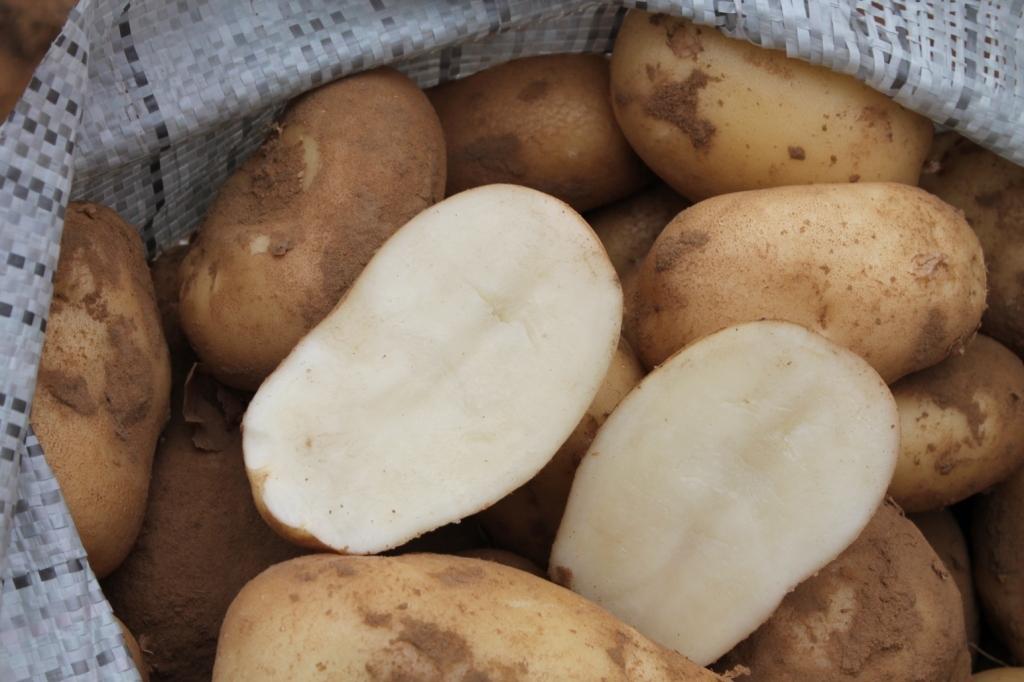
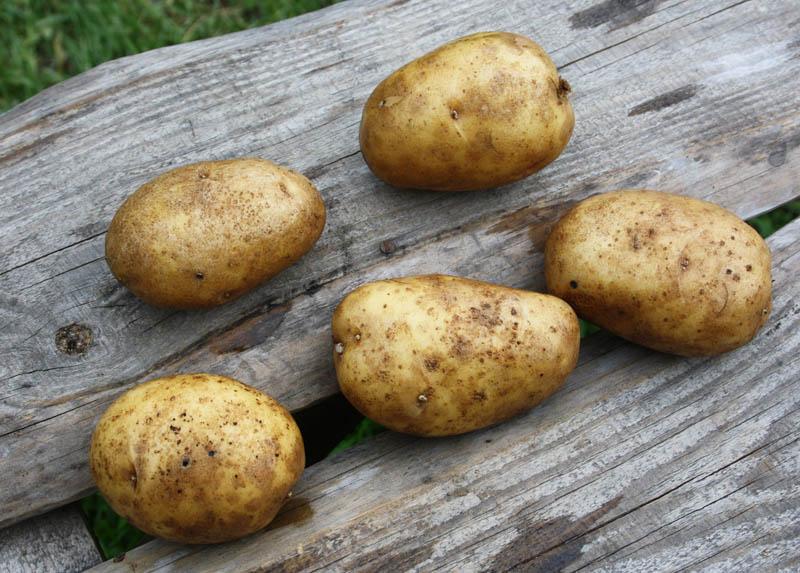
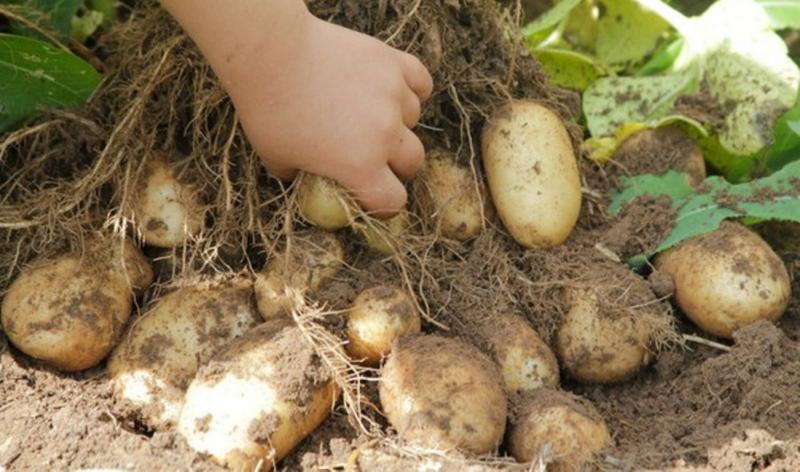
The roots are oval-shaped, with very few eyes on the skin. The skin is quite thin. The inside of the tubers is creamy. After cooking, the flesh may acquire a yellowish tint. The taste is excellent. After harvest, the roots have a long shelf life. Due to their appearance and shelf life, the Udacha potato variety is suitable for sale.
The main advantages and disadvantages of the Udacha potato
Advantages of the potato hybrid Udacha:
- High yield.
- Early ripening period of the crop.
- Resistance to sudden temperature changes and cold snaps.
- The harvest is preserved for a long time after harvesting.
- High taste qualities of root vegetables.
- The variety is distinguished by its immunity to diseases.
Although this variety is disease-resistant, it is still susceptible to late blight, early blight, and golden nematode if the plants aren't cared for properly. If the potatoes are planted in unheated soil, the roots germinate slowly, and emergence may be delayed by several weeks.
Rules for growing crops
Potatoes are very easy to grow and aren't picky about soil conditions. Black soil or loamy soil is best. Planting potatoes is also quite easy.
Sprouting tubers
To speed up the germination of planted potatoes, they are pre-germinated. There are several germination methods. However, this process is not quick and typically takes up to a month, so you'll need to prepare the planting material in advance.
The first method is wet germination. This method requires peat, sawdust, or sand. Seed potatoes are placed in boxes and covered with damp peat or sawdust. As the substrate dries, it is moistened. It should be kept constantly moist. This method is beneficial because the potatoes not only develop eyes but also begin to grow roots.
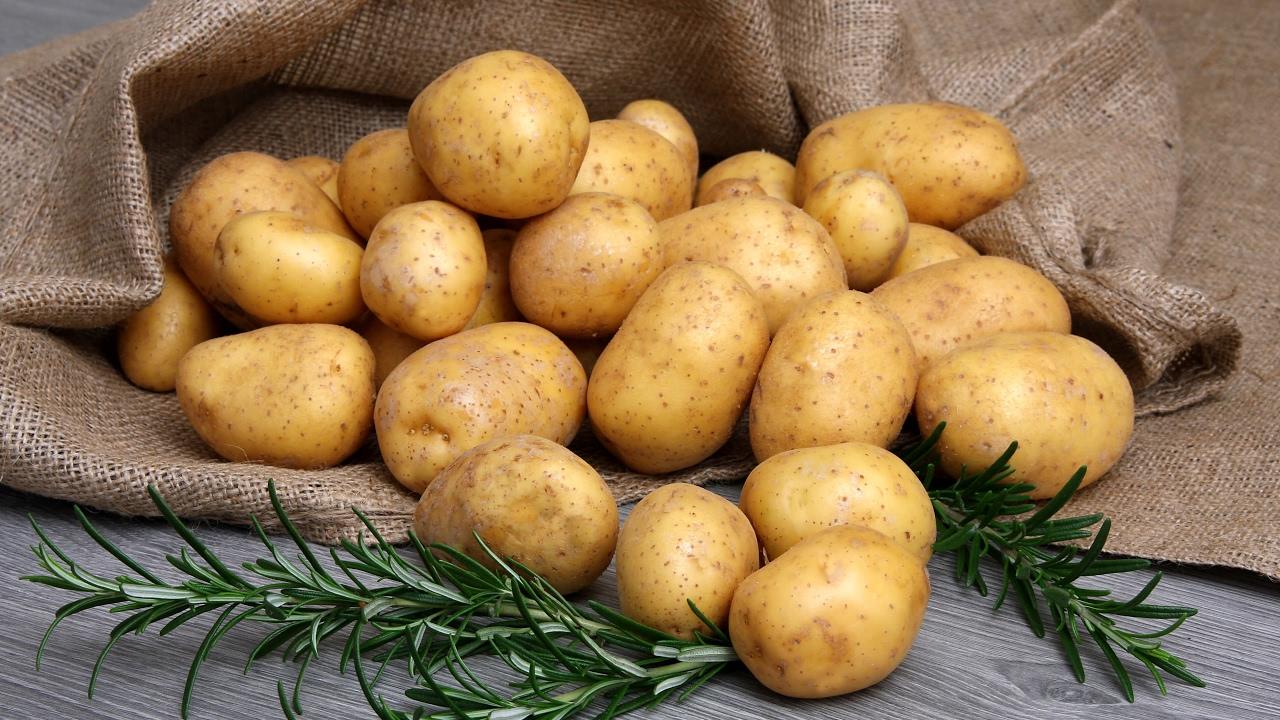
Another option is to expose the planting material to the sun. Spread the potatoes out in a single layer. The light will cause green sprouts to appear. When planting, carefully place the roots into the holes to avoid damaging them.
You can also sprout potatoes if you place them in a dark room at a temperature of +18 to +20 degrees.
After two weeks, the potatoes will begin to develop eyes. After this, reduce the temperature to 14°C (55°F) and store the roots in these conditions until planting.
Preparing the land
Preparing the soil for planting potatoes begins in the fall, after the harvest. The soil is dug to a depth of at least 15 cm and rotted manure is added. All weeds and remaining foliage after the harvest are removed. In the spring, when it's time to plant the potatoes, the soil is dug again and disinfected. To do this, the soil is watered with a weak solution of potassium permanganate or iodine.
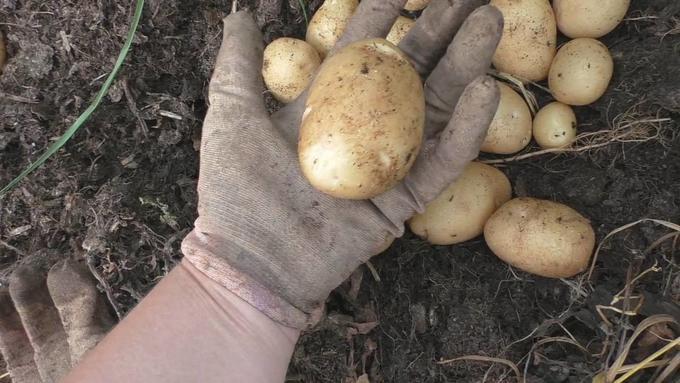
It's not advisable to plant potatoes several times in a row in the same area. The best predecessors for root crops are greens, cucumbers, onions, cabbage, garlic, peppers, and beets. It's best to choose open, sunny areas for planting potatoes so that the plants receive sun for most of the day.
Classic potato planting
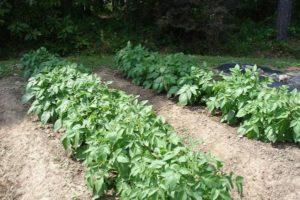
Planting potatoes is easy. Probably easier than any other crop. Root vegetables are planted in dry weather. It's important that the soil isn't too wet, otherwise it will be difficult to dig deep holes.
The process of planting potatoes:
- Dig a hole 10 cm deep.
- Place the planting material into the hole.
- Cover with soil.
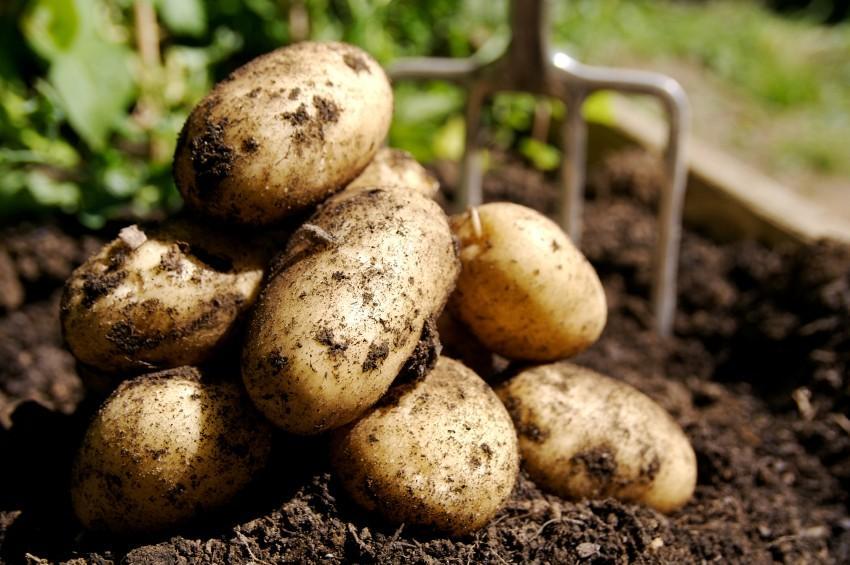
At the end of planting, you can water the area so that the seedlings sprout faster.
Care instructions
Potatoes are one of the most undemanding crops, requiring little care. Many gardeners only weed and hill their potatoes. Otherwise, the crop grows beautifully on its own.
Watering
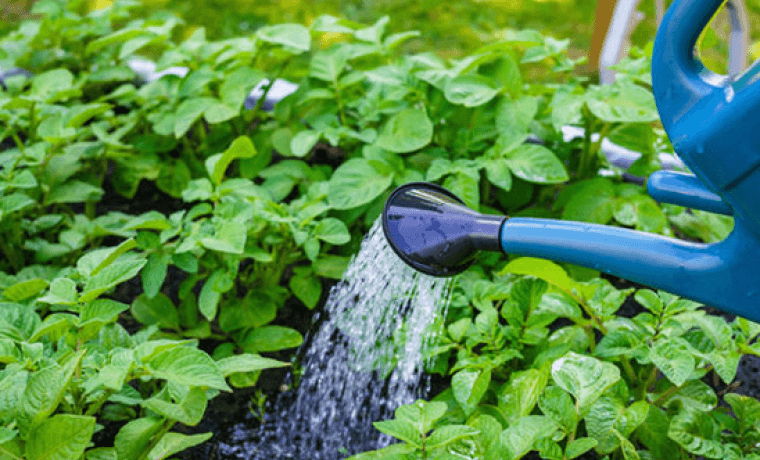
Watering potatoes regularly isn't necessary. Especially if it rains regularly, you can avoid watering the soil altogether. It's best to water the beds after planting. If the weather is hot for a long time, water the plants 2-3 times a month, but be sure to water thoroughly. Warm water is recommended for watering.
Hilling
Hilling is carried out after the bushes have grown at least 15 cm. Hilling should be done in dry weather. Rake some soil to the base of the stems, covering 5-9 cm of the stems. Be careful not to accidentally cut the stems with the rake while hilling.
Top dressing
After planting the potatoes, mineral fertilizers are added to the soil, primarily nitrogen-containing fertilizers. After the seedlings emerge, chicken manure or urea is added to the soil. Throughout the growing season, the soil is fertilized with well-rotted manure diluted in water.
Weed-based infusions are also effective. To prepare the fertilizer, finely chop the weeds, add water, and let them ferment for several days. To speed up the fermentation process, you can add a small amount of yeast to the water.
Diseases, pests, prevention
When growing potatoes, gardeners most often encounter the Colorado potato beetle. The Colorado potato beetle and its larvae consume not only foliage but even root vegetables. If left untreated, the insects can ruin the entire crop. The only way to get rid of the pest is by spraying the plants with chemicals. Spraying should be done in dry, windless weather. It's crucial to avoid rain in the next few days. The most effective pesticides are "Taboo," "Aktara," and "Colorado."
The diseases that most often affect potatoes are:
- scab;
- late blight;
- Alternaria.
Preventing scab is helped by following crop rotation rules and treating root crops before planting. If the plant is already infected, treating the bushes with Maxim, Prestige, and Ditan helps.
Treatment with Ridomil Gold and Agat is effective against late blight. Regular application of mineral fertilizers to the soil is also helpful as a preventative measure.
Spraying plants with Bordeaux mixture and copper oxychloride will help cure Alternaria wilt. Crop rotation and regular weed control are also important.
How to properly harvest and store crops?
The potato harvest begins in late August. Digging can be done at any time of day. The dug-up roots are cleaned of soil and placed in bags. Potatoes are also stored in wooden boxes. Store the harvest in a cool, dark place with low humidity. A root cellar is ideal for this purpose. First, you should sort through the harvest to discard damaged root vegetables and select the largest tubers for future planting.
Feedback from farmers and gardeners
Antonina, 56: "This is the best potato variety I've ever grown in my garden. The plants sprouted quickly, and we were already digging up the new potatoes in mid-July. It's a very productive and easy-to-harvest variety. The potatoes are delicious after cooking. They store well and don't spoil for a long time. They lasted until spring."
Matvey, 32: "A neighbor from her dacha recommended the 'Udacha' variety. We planted the root vegetables late, but they sprouted very quickly, and by the end of August we were already harvesting. Each plant had over 10 root vegetables. We managed to harvest a decent amount from a small plot. The variety is very good, and most importantly, delicious."
Related posts:
 Description and characteristics of the Rodrigo potato variety, cultivation and care
 Description of the best potato varieties of domestic and foreign selection
 Why potatoes aren't growing well in the garden, and what to do to ensure a bountiful harvest
 Description and characteristics of the Gulliver potato variety, planting and care
 Characteristics and description of the Queen Anna potato variety, planting and care
 Description of the best potato varieties for 2025, selection for regions
 Rules and methods for quickly sprouting potatoes before planting
 Description and treatment of potato diseases, methods of control using folk and chemical means