
- What is the Mittlider technique?
- Advantages and disadvantages of growing potatoes using this method
- What varieties of potatoes are suitable?
- Planting technique
- Preparing tubers and seedlings
- Planting pattern and bed arrangement
- We care for the culture correctly
- Daily care and watering of plantings
- Top dressing
- Hilling
- Harvesting technology
- What mistakes do gardeners most often make?
- Incorrect watering of potatoes
- The wrong fertilizer was chosen
- Poor mixing of fertilizers
- Uneven alignment of the ridge
Potatoes are a popular crop grown by gardeners around the world. Over the long history of potato cultivation, numerous methods have been developed to increase yields at the end of the year. The method developed by American agronomist Jacob Mittlider is considered the most consistent and popular among professionals. Below, we'll explore the specifics of growing potatoes using Mittlider's method and which potato varieties it applies to.
What is the Mittlider technique?
The Mittlider method differs from other, more traditional methods in that it varies the row spacing. Conventional methods use uniform spacing between rows.
The Mittlider method takes a different approach and achieves abundant harvests through:
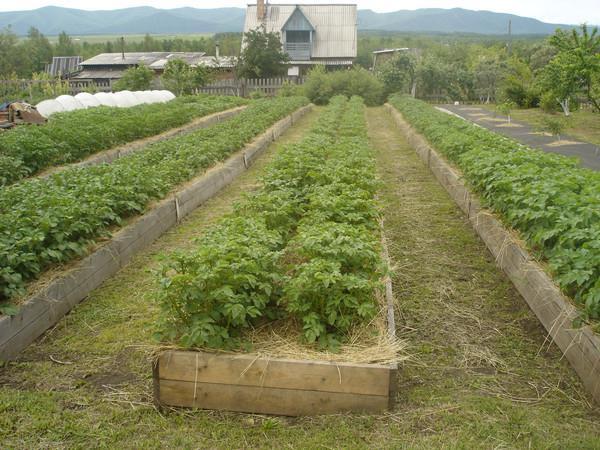
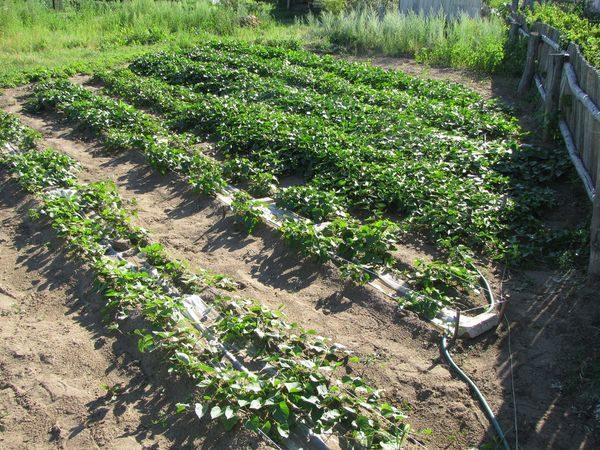
- Wide row spacing and narrow beds. The distance between potato rows ranges from 900 centimeters to 1.5 meters, while the bed width is only 450 millimeters.
- Unique fertilizer application system.
- Potato planting patterns. Tubers are planted in a staggered pattern, in two rows.
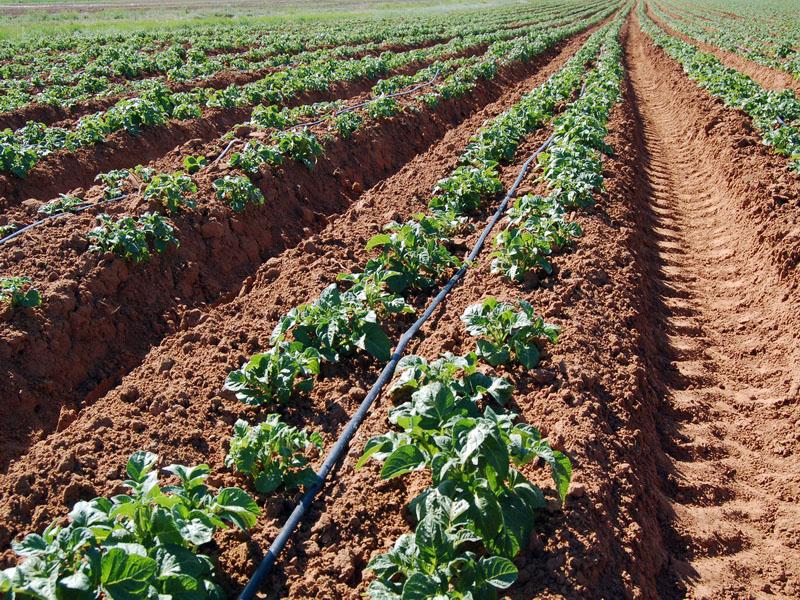
- Irrigation systems. Watering occurs daily. Water is supplied to the beds through a hose running down the center of the bed, with small holes punched along its length.
Advantages and disadvantages of growing potatoes using this method
Among the advantages of this method, thanks to which it has gained great popularity among summer residents around the world, are:
- Increase in yield by 15-25% compared to traditional planting patterns.
- No need to loosen the soil.
- There is no need to hill up the beds.
- The land required for planting is reduced. The freed-up land can be used for growing other crops.
Flaws:
- the method is expensive, since its use requires frequent purchases of fertilizers;
- Difficulty in selecting a planting site. This method is not suitable for low-lit areas, low-lying areas, or areas prone to flooding.

Please note! If there is insufficient sunlight, potato yields will drop significantly.
What varieties of potatoes are suitable?
This method is equally good for all potato varieties. It can be used for:
- late;
- early;
- mid-early varieties.
According to experienced gardeners, to achieve maximum effect it is advisable to use zoned varieties.
Planting technique
When planting tubers according to Mittlider, the planting technique plays a key role. Failure to adhere to it significantly reduces yield. Key technical factors that influence the final yield include:
- seedling preparation process;
- compliance with the planting scheme and arrangement of beds.
Preparing tubers and seedlings
Preparation of tubers for planting in the ground occurs according to the following algorithm:
- we select large specimens;
- heat the water to 55 o;
- we put potatoes in it;
- wait 15-20 minutes;
- we make a solution based on potassium permanganate or copper sulfate and place the tubers into it;
- let them soak for 5 minutes;
- We take shallow boxes and place the seedlings in them. The tubers should lie in a single layer in the box;
- we put the boxes in a sunny place;
- we make a solution based on water and superphosphate;
- Once every 7 days we spray the potatoes in the boxes with it;
- we wait for eyes to appear on the tubers;
- as soon as the eyes have formed, cut the tuber into several equal parts;
- Each slice should have at least one formed eye.

Preparing the seedlings:
- We take the boxes and line their bottoms with a layer of sawdust. The thickness of the layer ranges from 2 to 4 centimeters.
- Sawdust is sprayed with a 0.2% solution based on copper sulfate.
- We place pieces of potatoes on the sawdust, close to each other.
- Sprinkle another centimeter of wood shavings on top.
- We put the boxes in a cool room, the temperature of which fluctuates around 13 o.
- Within a week, small shoots and a weak root system will form on the seedlings.
- A few hours before planting, treat the potatoes with complex fertilizers.
Please note! Don't over-store potatoes in the boxes. Overly large sprouts don't transplant well, often breaking due to their fragility.

Planting pattern and bed arrangement
Place the beds on the site as follows:
- The beds begin on the north side of the plot and end on the south.
- The distance between individual beds is 0.9-1.5 meters.
- The width of the bed is 0.45 meters.
- The height of the beds is 10 centimeters.
- Two rows of holes are dug in the garden bed. To prevent the tubers from competing for sunlight and nutrients, the holes are staggered.
- The depth of the holes should not exceed 12 centimeters.
- The distance between holes in one row is 30 centimeters.
There is no need to dig up the space between the rows, and in subsequent years, try not to move the beds, forming them in the same place.
We care for the culture correctly
Proper care of the crop consists of:
- systematic irrigation of plantings;
- top dressing;
- hilling;
- proper harvesting.

Daily care and watering of plantings
According to Mittlider's own recommendations, watering should be done daily, preventing the soil from drying out. Watering is done using:
- a regular hose. Direct the stream of water under the root of the potato bush;
- drip irrigation.
Irrigation and fertilizing stop as soon as the potato bushes have finished flowering.
Top dressing
An American specialist has developed his own fertilizer complex, the composition of which varies depending on the selected soil. The first mixture is made from:
- five kilograms of dolomite flour;
- 40 grams of boric acid.
100 grams of fertilizer is used per square meter of soil. The second mixture is prepared using:
- Potassium sulfate. To prepare the mixture, you will need 5 grams of the substance;
- magnesium sulfate – 500 grams;
- 5 grams of boric acid;
- 5 grams of molybdic acid;
- saltpeter – 1.4 kilograms;
- 600 grams of ammophos.

50 grams of fertilizer is used per square meter of soil.
Hilling
Hilling is not required, which gives this method an advantage over other traditional planting options.
Harvesting technology
The harvesting technology is no different from the usual method. There are no special techniques involved.
When digging, try to do it carefully so as not to destroy the beds too much and not damage the tubers.
What mistakes do gardeners most often make?
The Mittlider method is not difficult to implement. Simply follow the guidelines outlined in the method's description. However, some gardeners make serious mistakes that significantly reduce the method's effectiveness. Among the most common are:
- incorrect watering of potatoes;
- incorrect selection of ingredients for feeding;
- cultivation of uneven beds;
- careless mixing of fertilizers.

Incorrect watering of potatoes
Daily watering of the beds is necessary to ensure the complete dissolution of the fertilizers applied to the soil. If you water the plantings haphazardly, the fertilizer will gradually accumulate in dry areas without being distributed throughout the bed. This will weaken the plants and lead to disease.
The wrong fertilizer was chosen
Fertilizer formulated with the wrong ingredients will prevent the plant from fully developing and producing a bountiful harvest. The proportions specified by the method's creator are also extremely important. Too much or too little of any component will cause the plant to wilt. Don't change the recipe yourself, otherwise, unpleasant consequences cannot be avoided.
Poor mixing of fertilizers
Scattering fertilizer haphazardly across the soil is a bad idea. It leads to an overabundance of nutrients in one area and a shortage in another. The carefully planned system collapses, and instead of large, tasty potatoes, you'll end up with dried-out tops and microscopic potato pieces.
Uneven alignment of the ridge
Crooked beds, created at a slope, will not allow water to fully irrigate the soil. This will leave one part of the bed overwatered, while the other half suffers from a lack of moisture and nutrients. Mittlider recommends dividing the beds into individual segments, creating a stepped structure if it's not possible to create a single bed at the same level.
Please note! Experienced gardeners recommend using a different method if you are unsure whether you can follow all the instructions for planting tubers in the ground.
Related posts:
 Why potatoes aren't growing well in the garden, and what to do to ensure a bountiful harvest
 Description and treatment of potato diseases, methods of control using folk and chemical means
 Description and treatment of potato pests, control measures
 Features and rules for growing potatoes using Dutch technology
 Characteristics and description of the Sineglazka potato variety, planting and care
 Description and characteristics of the Zorachka potato variety, planting and care
 How to properly prepare planting material and when to plant potatoes to get a rich harvest
 Description of the best potato varieties of domestic and foreign selection