
Foliar or foliar feeding of potatoes Quickly ensures the absorption of beneficial microelements into plant sap. Many formulations can be purchased ready-made at gardening stores, or you can prepare them yourself from weeds and grasses. Organic fertilizers are considered safer, while mineral fertilizers are more effective. Apply the formulations strictly according to the instructions, as excess minerals can be detrimental to plant development.
Peculiarities of choosing and applying fertilizers for potatoes
The timing of foliar feeding depends on the potato's growing season. Nitrogen and phosphate fertilizers are used when planting the crop. After the first shoots emerge, the amounts of manganese, potassium, and copper are increased. Ready-made mineral fertilizers are also used. Many gardeners prefer to use folk remedies.
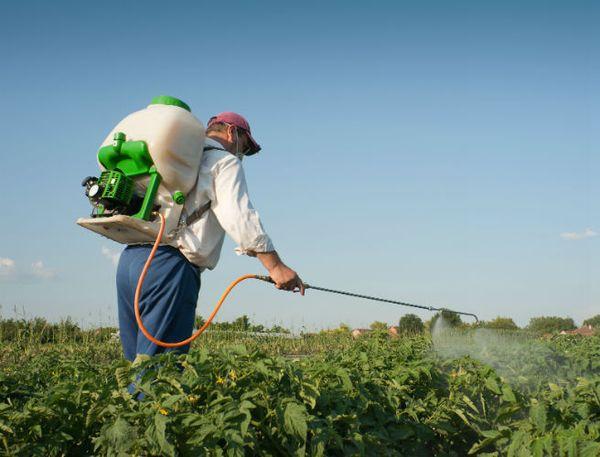
Fertilizer is applied using a sprayer. This method is also known as foliar feeding. Fine droplets of fertilizer fall on the potato leaves and are absorbed through the stomata located on the underside of the leaf blade. This method ensures rapid delivery of nutrients to the plants.
Types of foliar feeding
For foliar feeding, select carbide, phosphate fertilizers, humates, nettle infusion, and organic compounds. Fertilizers are selected based on the nutrient deficiencies in the soil.
Carbide
Also known as urea, it increases crop yields and stimulates the growth and development of green mass. It is available as a soluble powder. The dissolved powder is applied in dry weather and early morning hours.
Phosphorus
Superphosphate, bone meal, and rock phosphate are used for foliar feeding of potatoes. They are diluted according to the instructions and sprayed onto the affected area. Phosphorus promotes tuber development, stimulates green growth, and promotes resistance to low temperatures.
Bone and phosphate meal are diluted with water and sprayed on the bushes.
Humates
Humates activate soil microflora, which converts organic matter into useful mineral components. They enrich the soil with nutrients and stimulate plant absorption. Available in soluble tablets, liquid concentrates, and powder.
Take a look Also
Nettle infusion
Nettle infusion is a natural fertilizer that enriches the soil with nitrogen. It's easy to prepare. All you need is fresh nettles, water, and additional ingredients. Prepare the solution according to the instructions:
- A ten-liter container is half filled with nettle plants.
- Fill with water up to the 10 liter mark.
- Infuse for 10 days.
- The concentrated solution is diluted 20 times.
- Nettle is mixed with wormwood, mullein, weeds and other herbs.
- Spray the potato bushes.
Important! Fertilizer is applied after seedlings emerge.
Chemicals
Chemical fertilizers are made up of several complexes. They must contain certain substances:
- boric acid;
- zinc sulfate;
- copper sulfate;
- potassium iodide;
- iron sulfate;
- urea;
- potassium magnesium sulfate;
- cobalt chloride;
- potassium monophosphate.
This is an optimal composition that will enrich potatoes with all the necessary chemicals.
Organic
Organic fertilizers are the safest for any crop. They enrich potatoes with essential minerals and cause no harm. Several recipes are used:
- Weed infusion. After weeding the garden bed, the weeds are thrown into a container and filled with water. The container is left to ferment for 14-21 days, and then the plants are sprayed with the solution.
- Peat with straw. Peat is collected and placed in a barrel, straw is added, and the mixture is filled with water. The mixture is left to steep for several days. The crops in the area are then sprayed.
- Nettle and wormwood infusion. Place equal amounts of fresh herbs in a container and add water. Let it sit and then spray the potatoes.
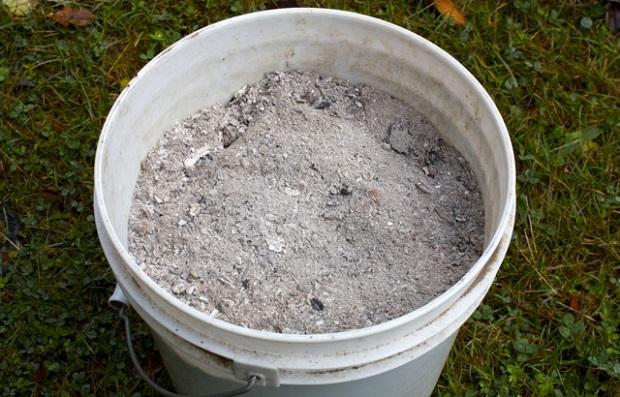
- Wood ash is mixed with water and sprayed on potatoes.
 Important! Wormwood protects potatoes from Colorado potato beetle attacks.
Dosage
Nitrogen is the most beneficial element for potatoes. It strengthens plants, stimulates growth and fruit development, and extends the shelf life of the harvest. Nitrogen fertilizers are applied in the spring after the first shoots emerge. At the end of the season, phosphorus and potassium are added.
Each mineral composition contains a high percentage of a specific component. This can be identified by its name.
Prepare the solutions strictly according to the instructions on the packaging. Apply organic homemade fertilizers every 2-3 weeks. These solutions are considered more beneficial due to their safety. Applying more solution than recommended will not cause significant harm.
Rules for foliar feeding of potatoes
Foliar feeding ensures rapid penetration of nutrients into the plant's system. Different formulations are used for different growing seasons. Spraying is performed in open ground.
Before landing
Before planting, it's preferable to apply nitrogen and phosphate fertilizers. These stimulate the development and growth of root crops, strengthen them against spring frosts, and encourage increased fruit production. Apply urea and nettle infusion every two weeks. Seeds can also be treated with a manganese solution to protect against infection and improve the flavor of the future harvest.
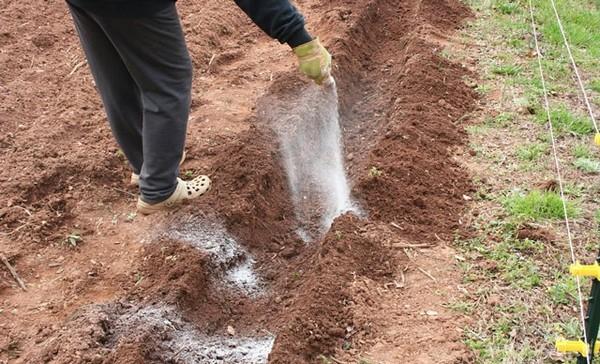
After landing
After planting, once the first shoots emerge, spray with humates and carbides, as well as organic compounds. These protect against diseases and pests. During this period, potatoes are actively growing and require additional nutrients. Treatment is carried out two weeks after sprouting, and then again two weeks later.
During the growing season
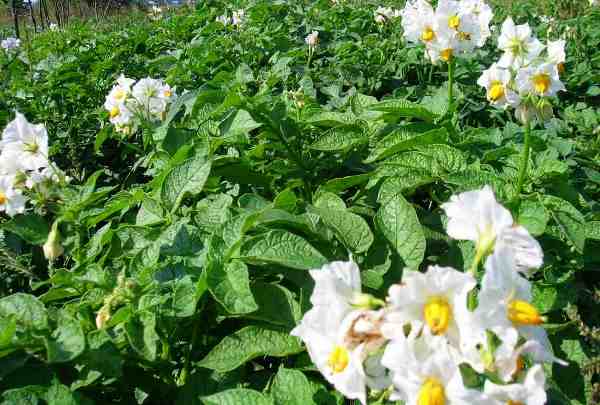
During bud formation and flowering, it is recommended to use fertilizers containing potassium, magnesium, nitrogen, and copper. Chloride-containing fertilizers should be limited, as they slow plant growth. Many potato varieties are very sensitive to chlorine, which can cause plant death.
After flowering, spray with a boron and manganese solution. Manganese improves root quality, while boron prevents the formation of voids inside the root. This fertilizer protects against late blight.
Rules for applying fertilizer
The application of any fertilizers is carried out according to certain rules:
- Solutions that are too concentrated burn the leaves and leave dark yellow spots after spraying. The first spraying should be done with a dilute solution, then the concentration is increased in the second stage.
- The intervals between treatments are at least 10 days.
- Spraying of the liquid begins after sunset, since when direct sunlight hits the droplets, they evaporate rather than being absorbed through the leaves.
- Avoid spraying in wet weather as rain will wash away the fertilizer.
- It is recommended to add laundry soap to the liquid; it coats the potato leaves and promotes better absorption.
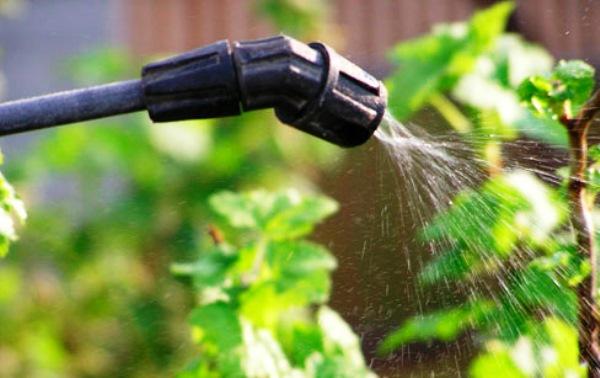
- Spraying is done at the finest droplet setting. The finer the droplets, the greater the likelihood of absorption.
- The water used for preparing the fertilizer should be rainwater or spring water. Tap water contains a lot of chlorine, which is detrimental to potato growth.
Take a look Also
Equipment for foliar feeding
To apply foliar fertilizer, you need to purchase specialized equipment. To do this, you'll need:
- Spray.
- Containers for diluting solutions.
- Rubber gloves.
- Protective glasses.
- Large capacity container, about 100 liters, for preparing organic compounds.
- Measuring utensils for preparing solutions according to the instructions.
All of this can be found in farm stores.
Related posts:
 Why potatoes aren't growing well in the garden, and what to do to ensure a bountiful harvest
 Description and treatment of potato diseases, methods of control using folk and chemical means
 Description and characteristics of the Sante potato variety, planting rules and care
 Description and treatment of potato pests, control measures
 Description and characteristics of the Gala potato variety, planting and care instructions
 Types of fertilizers for potato flowering, the best folk remedies and preparations
 What is the best way to feed tomato seedlings to make them plump?
 Description and characteristics of the Charodey potato variety