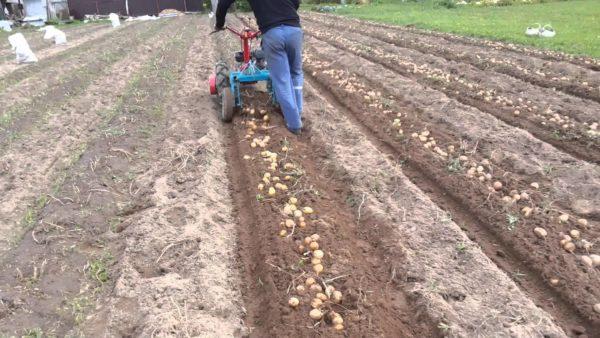
Digging potatoes Potato harvesting can be done with a walk-behind tractor. This process requires little physical effort and allows for large areas to be harvested in a short time. To avoid damage, it's important to follow proper crop digging procedures and consider all the intricacies of setting up the potato digger.
Advantages of mechanical cleaning
Potatoes can be dug up manually or mechanically. However, since nightshades are most often dug up in the fall, when weather conditions frequently fluctuate, gardeners try to speed up the harvesting process by using special techniques.
Mechanical harvesting of nightshade crops has the following advantages:
- the harvesting process is carried out quickly;
- Using a mini tractor allows you to harvest large areas of plantings without loss;
- tubers are less damaged during harvesting;
- During harvesting, a person does not make any physical effort;
- The collection of tubers into bags is carried out quickly.
Using a walk-behind tractor for harvesting also helps prepare the plot for further work. A walk-behind tractor helps gardeners remove excess tops and weeds.
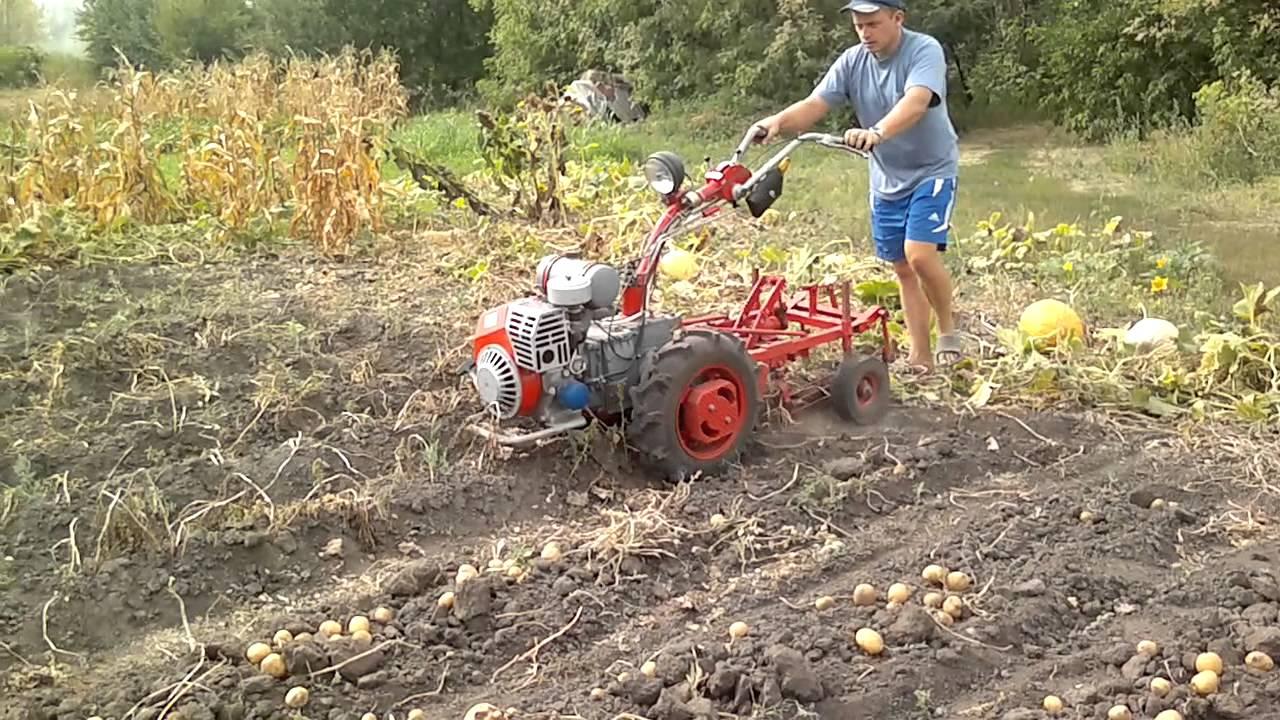
How to properly set up a walk-behind tractor for digging potatoes?
To avoid damaging tubers during harvesting with a motor cultivator, it's important to set up the equipment beforehand. To do this, follow these steps:
- Adjust the depth of the plow during digging; most often, a depth equal to the spade blade is used for this.
- Adjusting the ground level of the land board is done using a screw handle. The rear of the board should be raised 2-3 cm from the ground.
Once the required parameters have been adjusted, a test run should be carried out on a site without potato beds. If necessary, further adjustments to the equipment are made.
Types of potato diggers
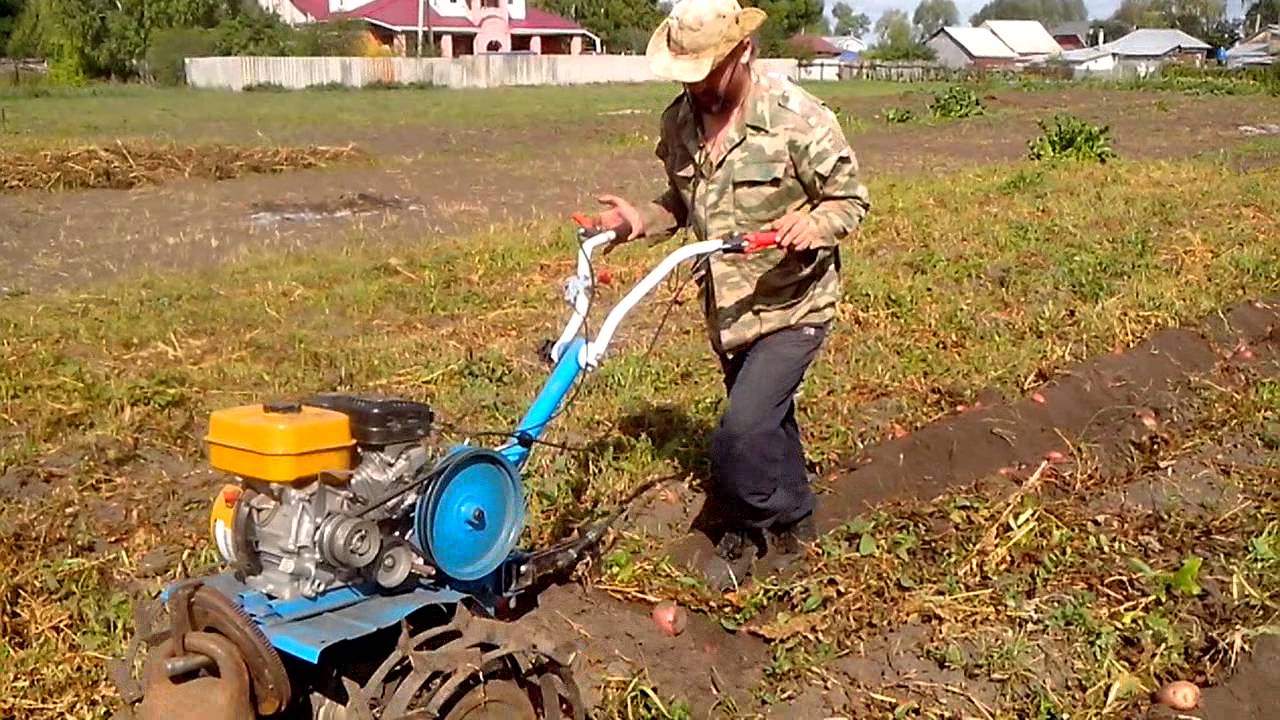
All potato diggers work on the same principle, but can be handmade or purchased.
Factory
Factory-made potato diggers can be of the following types:
- Arrow-type diggers are used in conjunction with a walk-behind tractor. They resemble shovel-like tools with welded rods. During harvesting, the soil is lifted and sifted through the rods, leaving the tubers on the surface.
- A vibrating table digger uses a vibrating table to collect the soil and potatoes. The soil is sifted, leaving the tubers behind. Suitable for cultivating large areas.
- A conveyor potato digger works by lifting soil and potatoes onto a table with a conveyor belt. The soil is sifted, and the potatoes are stacked in rows.
The choice of potato digger largely depends on the size of the plot, as well as the personal preferences of the gardener.
Homemade
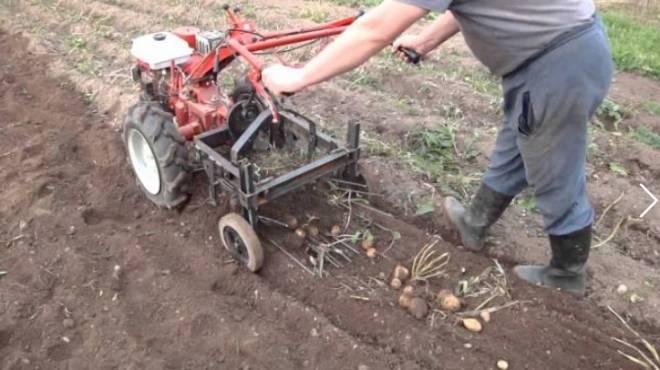
Using a homemade device not only saves money but also allows you to customize the digger's features. To build your own potato digger, follow these steps:
- weld a rectangle from a square pipe, this device will act as a frame;
- Using a piece of square pipe half the length of the frame, weld the base for the traction structure;
- on the other side of the frame, an axle for the wheels is welded;
- using sheets of metal, you need to make a plough and weld it to the bottom of the frame;
- A chute board is welded to the same level as the plough; for this, 10 rods of the same length are welded to a metal plate and fixed to the digger frame.
After completing all the procedures, you get a simple DIY potato diggerEvery gardener can customize the device to suit their personal preferences.
 Important: To ensure the plough penetrates the soil to the required depth, the metal on one side must be filed down.
Tips for choosing
To ensure that the selected design copes with the tasks set, it is necessary to follow the following selection tips:
- the device must be powerful, especially if used for large areas;
- When digging, the use of a digger must be safe for the gardener;
- the size of the digger must correspond to the walk-behind tractor; excessive size may lead to damage to the crop;
- During operation, losses should be minimal, therefore, when choosing a device, it is necessary to first evaluate the plough immersion depth.

The potato digger should be made of durable metal, this will increase the service life of the device.
How to dig potatoes with a walk-behind tractor
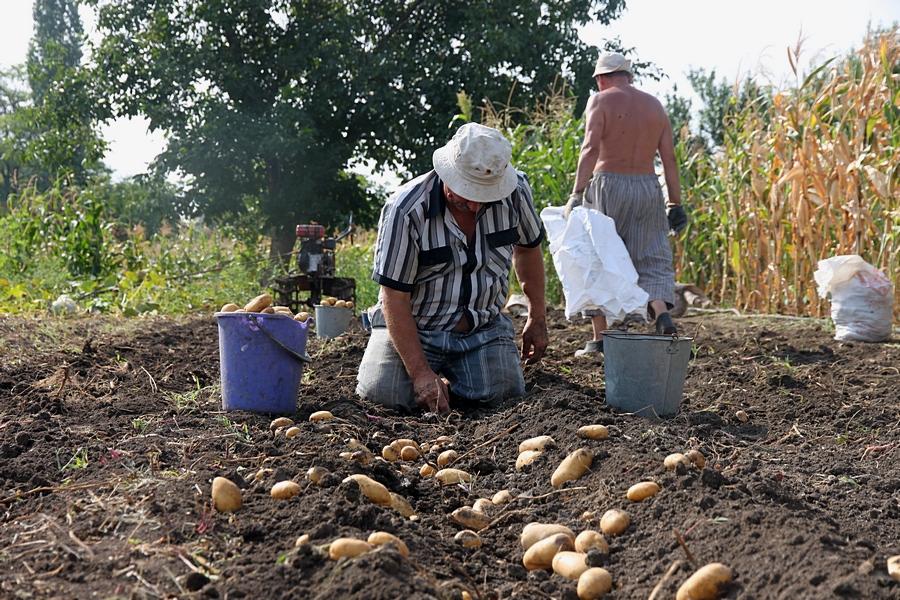
The process of digging nightshades using a walk-behind tractor is practically no different from the manual method.
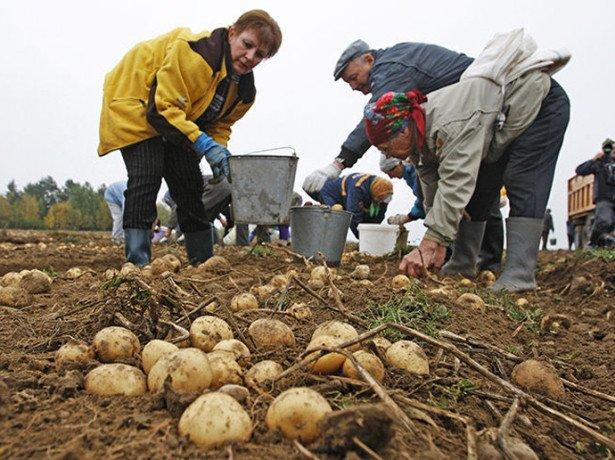
Potato harvesting
Digging up potatoes is carried out according to the following algorithm of actions:
- adjust the walk-behind tractor directly to the area where nightshades are planted;
- walk 2 meters in a row and carefully inspect the resulting crop; if there is damage to the tubers or the potatoes are not completely removed from the soil, additional adjustments to the device are made;
- After re-adjustment, the crop is inspected.
The tiller should be operated at a leisurely speed to avoid damaging the potato tubers. Properly selected depth allows for harvesting up to 90% of the potatoes without visible damage.
Features of the digging process
To prevent potatoes from spoiling during digging, the following precautions must be observed:
- It is necessary to dig potatoes every other row; this action will reduce damage to the tubers caused by wheels;
- Also, on loose soil, the walk-behind tractor will regularly move to the side, which will lead to damage to the rows.
By following all the guidelines for harvesting potatoes with a walk-behind tractor, you can harvest large volumes of crops in a short period of time without exerting any physical effort.
Reviews
Irina Morozova, 36, Oryol: "We regularly grow potatoes at our dacha. Using a walk-behind tractor allows us to avoid days of manual digging and cultivate 600 square meters in 45 minutes."
Igor Nikolaevich Vasiliev, 45, Novoselova, Moscow Region: "Using a potato digger, you can quickly harvest the potato crop without damaging the tubers. The advantage of this method is that the potatoes are neatly stacked in rows for later collection in bags."
Potatoes are a popular vegetable used in cooking. Planting and harvesting can be time-consuming. However, using specialized mechanized equipment not only makes the process easier but also preserves the harvest.
Related posts:
 Description and treatment of potato diseases, methods of control using folk and chemical means
 Why potatoes aren't growing well in the garden, and what to do to ensure a bountiful harvest
 How to plant grapes step by step, with a description of the process and care
 How to properly plant peas in a greenhouse and open ground
 Description and treatment of potato pests, control measures
 How to properly hill potatoes with a walk-behind tractor: step-by-step instructions
 How to propagate and grow peas, cultivation technology, and care in open ground
 Description of the best potato varieties of domestic and foreign selection
Take a look Also