
- Description and characteristics of the Lugovskoy potato
- Appearance of the plant
- Productivity and taste of root crops
- Benefits and culinary uses
- Are there any disadvantages to the variety?
- What conditions do potatoes require?
- Planting a crop on a plot
- Deadlines
- Preparing the planting site and seedlings
- Potato planting diagram and step-by-step algorithm
- How to organize the care of potato plantings
- Watering and fertilizing
- Loosening and applying mulch
- Hilling
- Diseases and pests: prevention and control
- Harvesting
- Reviews of the variety
According to descriptions and reviews from vegetable growers, the Lugovskoy potato variety matures in 70-80 days, producing a high yield and attractive, uniform tubers. It is grown commercially and for personal consumption. Classified as a table potato, it is included in the Russian state register and is intended for cultivation in northern climates.
Description and characteristics of the Lugovskoy potato
The description of the Lugovskogo variety includes the appearance of the plant and tubers, yield, area of application, disadvantages and advantages.
Appearance of the plant
The bush is medium-sized and compact. The stem is upright, with medium-sized, dark green leaves. The foliage is lightly pubescent, matte, and has characteristic wavy edges.
Flowering is short-lived, the flowers are white or cream, collected in dense corollas.
Productivity and taste of root crops
This mid-season variety is characterized by high, consistent yields. Each bush yields 10 to 15 tubers weighing between 80 and 160 grams. Up to 514 centners of harvest can be harvested from one hectare of land.
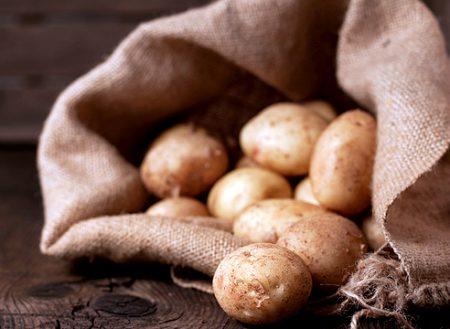
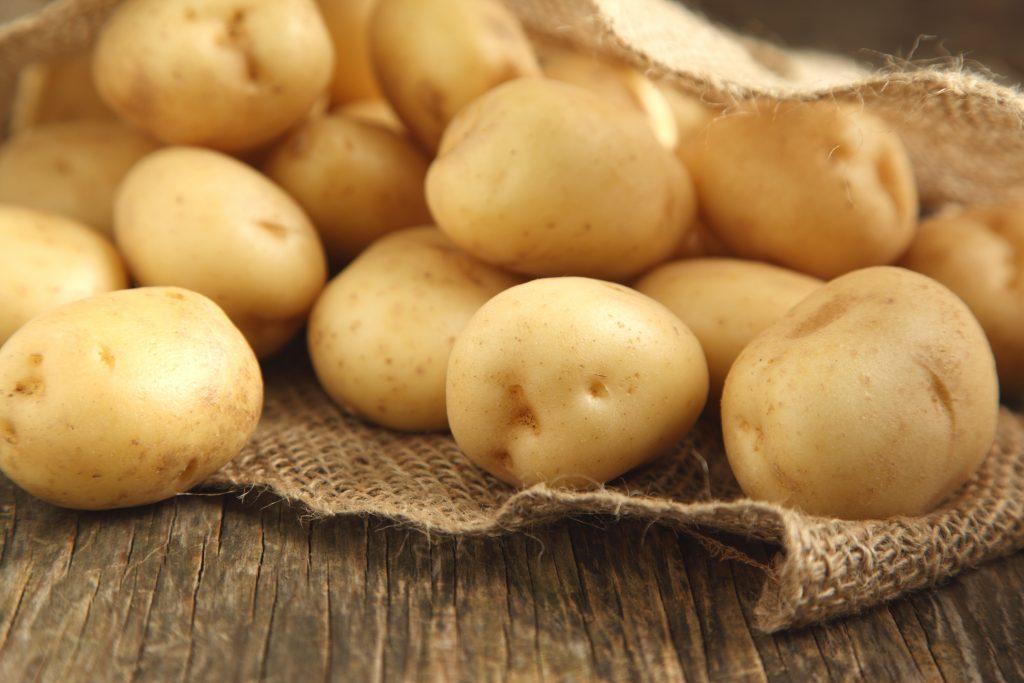
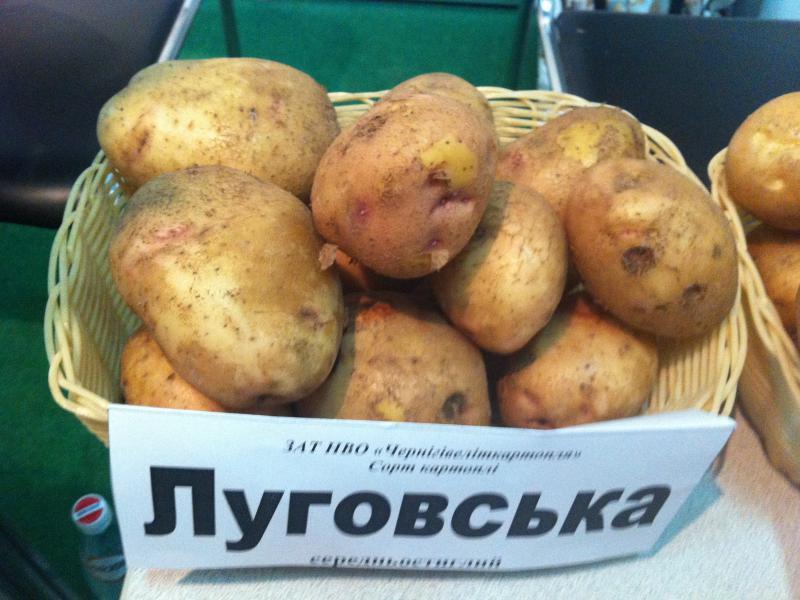
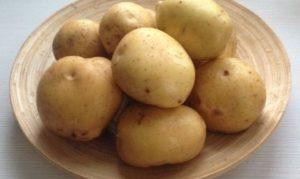
The roots are covered with a light-brown skin, and the flesh is light yellow. They contain 18% starch. Lugovskoy potatoes are considered a table variety and are characterized by excellent flavor.
Benefits and culinary uses
Potatoes have many benefits:
- good taste;
- rapid ripening of the crop;
- high yield;
- high shelf life of the crop;
- transportability;
- no cracks form on the tubers;
- ease of care;
- strong immunity to viral diseases;
- nutritional value of fruits.
The tubers contain a lot of starch, and the potatoes become mushy when cooked. They are suitable for baby food, mashed potatoes, salads, and soups. Commercially, this variety is grown for processing into freeze-dried potato puree.
Take a look Also

Are there any disadvantages to the variety?
The Lugovskoy variety has virtually no drawbacks. It thrives in all regions and produces high yields. Its drawbacks include its demand for watering and soil fertility.
What conditions do potatoes require?
To grow potatoes, certain growing conditions must be met:
- Choose a well-lit place, without drafts and frequent flooding.
- The soil should have medium acidity.
- Lugovskoy prefers sandy, loose soils; it produces less yield on clayey and loamy soils.
- Preparation of seed material and the site for planting begins in advance.
Planting a crop on a plot
To plant a crop, it is necessary to adhere to the planting dates, prepare the site and seeds, and follow the planting algorithm.
Deadlines
This variety is intended for cultivation in northern regions; seeds are sown in late May. In the south, potatoes are planted in late April or early May, which allows for a double harvest. In temperate climates, seeds are transplanted to the ground in mid-May.
Preparing the planting site and seedlings
Site preparation begins in the fall. The soil is dug over, weeds, roots, and stones are removed. If the soil is highly acidic, dolomite flour or slaked lime is added.
The soil is fertilized with organic compounds:
- manure;
- chicken droppings;
- herbal decoctions;
- compost;
- wood ash.
In the spring, 2 weeks before planting, the digging is repeated and the soil is fertilized with mineral compounds containing nitrogen, phosphorus, potassium and manganese.
Important! Manganese improves the flavor of potatoes.
Potato planting diagram and step-by-step algorithm
Potato planting is carried out according to a specific algorithm:
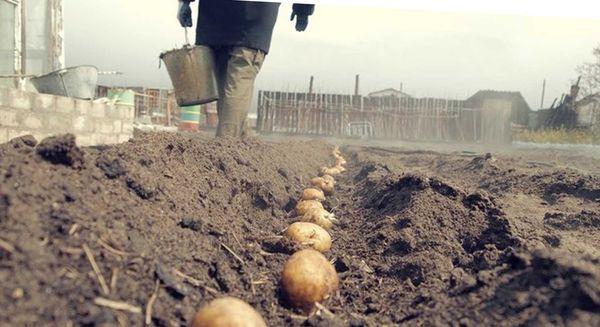
- On the prepared area, beds are formed at a distance of 50 cm from each other.
- Dig holes at intervals of 25 cm.
- Pour 300 ml of water into each hole.
- The seed material is soaked in a solution of potassium permanganate for 30 minutes.
- Each tuber is transferred to a hole.
- They cover it with soil.
- The bed is leveled with a rake.
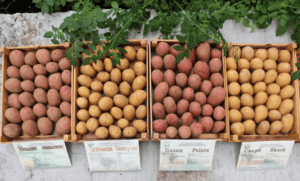
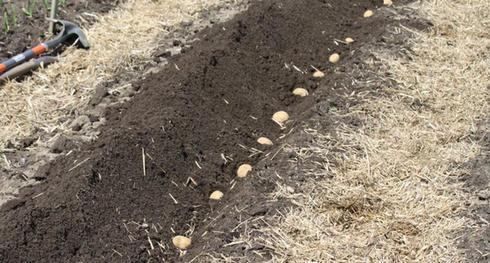
In loose and light soils, seeds are planted 15 cm deep, in light and sandy soils 10 cm deep, and in heavy and wet soils 5 cm deep.
How to organize the care of potato plantings
To obtain a high yield, it is necessary to follow the rules for caring for Lugovskoy potatoes.
Watering and fertilizing
Water three times per season. The first time, when the shoots reach 20 cm in height, the second time during flowering, and the third time after the flowers have fallen. Increase watering during hot weather, and reduce it during frequent rainfall. Use 3 liters of settled water per bush.
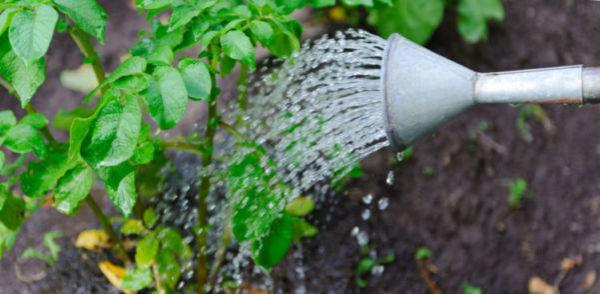
Fertilizing is combined with watering. Fertilizers are applied after watering. Dry or liquid mineral fertilizers containing nitrogen, phosphorus, and potassium are used.
Loosening and applying mulch
The soil is loosened regularly to prevent crusting and to oxygenate the tubers. Weeds are removed during this process. Mulching your garden beds makes growing potatoes easier.Mulch retains moisture at the roots, preventing weed growth and disease. Straw, wood shavings, and dry grass are used.
Hilling
Hilling increases tuber formation. The procedure is performed three times per season: the first time when the plant reaches 20 cm in height, the second time two weeks later, and the third time three weeks later.
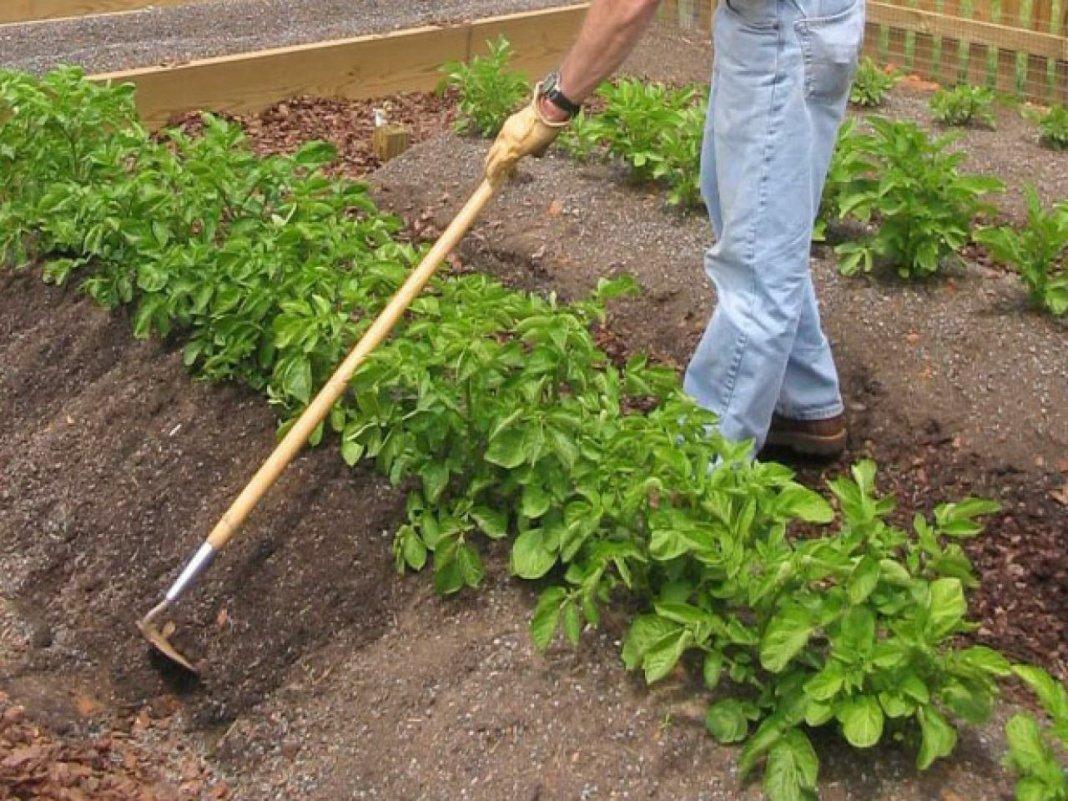 Important! Cover the plant with soil so that 2–3 pairs of leaves remain above the soil.
Diseases and pests: prevention and control
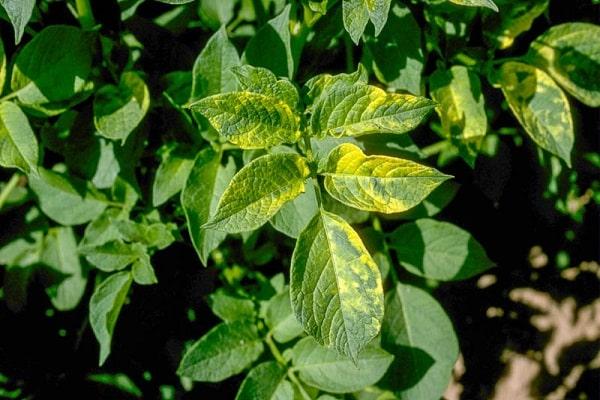
The Lugovskoy variety is resistant to potato cancer, scab, and viral infections. Its early maturity prevents late blight. Frequent flooding exposes it to Alternaria and Fusarium wilt.
Attacks by the Colorado potato beetle, mole cricket, and wireworm are also noted.
To combat infections and pests, preventative treatments with insecticides and fungicides are recommended before flowering. If beetles or diseases are present, the damaged areas of the plant should be removed and sprayed with appropriate treatments.
Harvesting
The harvest begins after the tops have blackened and dried out. This occurs 70 to 80 days after planting. The potatoes are dug up, transferred to a dark, ventilated area, and left to dry for 1 to 2 weeks. The harvest is then packaged in fabric bags or breathable boxes and stored in a cool, dark place. The largest and firmest tubers are reserved for seed.
Reviews of the variety
Igor, 31 years old, Vladivostok
Lugovskoy grew potatoes for the first time this year. The harvest was good, with 14-15 tubers dug up from each plant. They have a slightly sweet taste and soften when cooked, producing a very soft, airy puree. They're easy to care for, and I watered them regularly.
Margarita, 46 years old, Astrakhan
I bought the Lugovskoy potato from a nursery for seed. The seller was very complimentary about the variety. This summer was cool and rainy, so I thought the harvest would be low. But I was mistaken; each plant yielded 10-12 tubers, all of them uniform and beautiful. I saved the seeds for next year.
Svetlana 54 years old, Kemerovo
I grew the Lugovskoy variety once two years ago. My soil is heavy and wet, so I wasn't able to get a good harvest. During flowering, I noticed signs of fusarium wilt. The fruits were uniform and beautiful, but only 6-8 fell from each bush.
Related posts:
 Why potatoes aren't growing well in the garden, and what to do to ensure a bountiful harvest
 Description of the best potato varieties of domestic and foreign selection
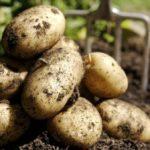 Description of the best potato varieties for 2025, selection for regions
 Description and treatment of potato diseases, methods of control using folk and chemical means
 The best grape varieties for growing in the Urals, planting and care rules in summer
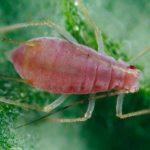 Description and treatment of potato pests, control measures
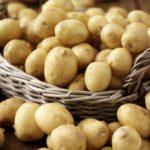 Description and characteristics of the Gulliver potato variety, planting and care
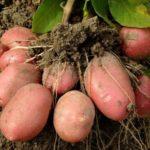 Description and characteristics of the Rodrigo potato variety, cultivation and care