
- Description and characteristics of the Sineglazka potato
- Advantages and disadvantages of the variety
- Specifics of growing potatoes
- Planting time
- Planting site and soil preparation
- Preparing seed potatoes
- Planting pattern and crop rotation
- Features of potato care
- Watering
- Hilling and loosening
- Fertilizing
- Protecting Blue-Eyeds from Diseases and Pests
- Harvesting
- Storage rules
- Reviews from experienced farmers and gardeners
For decades, gardeners and vegetable growers have remained loyal to this variety, despite the many new varieties that have appeared. Its excellent taste, high yield, versatility, and disease resistance make it a truly ideal choice for planting. Interest in this variety is fueled by the unusual coloring of its tubers and the potato's beautiful, fairytale-like name—Sineglazka.
Description and characteristics of the Sineglazka potato
The Sineglazka variety was developed in the 1950s at the Institute of Starch Products by breeder S. Domin. Testing revealed that the potato variety was unsuitable for commercial cultivation. However, it quickly gained a leading position in amateur gardening. Despite its venerable age, it remains consistently popular among gardeners and vegetable growers..
Sineglazka is a mid-season variety, but tuber formation begins early. It is ready for harvesting 65-80 days after planting. It has an extended fruiting period, with the first harvest beginning in June and harvesting completed in September. Suitable for cultivation throughout most of the country, it is zoned for the temperate climate. It is excellent for amateur gardening, growing in a summer cottage, garden plot, or private farmstead.
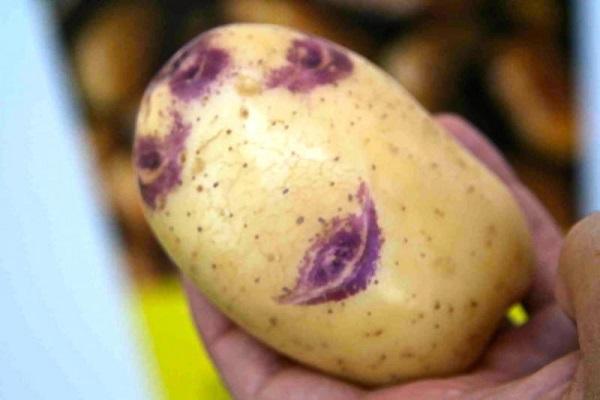
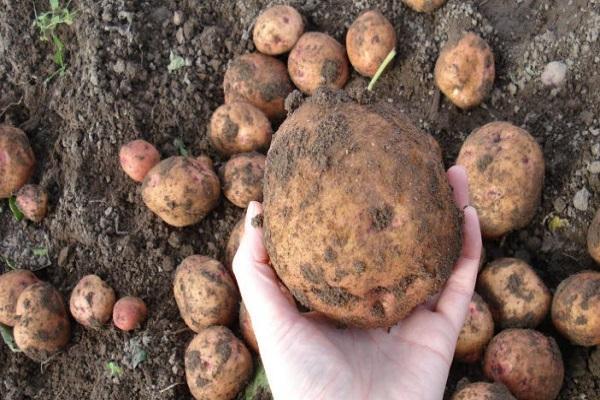
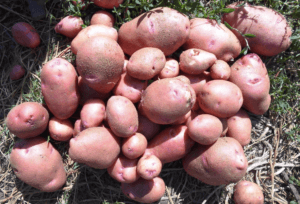
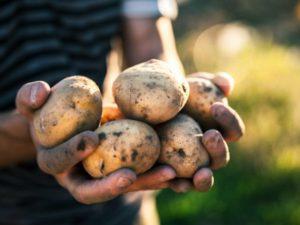
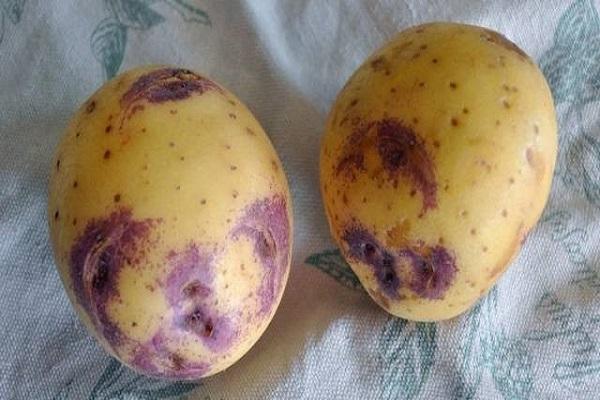
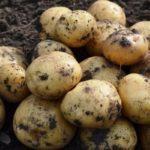
The bush is large, well-foliated, with medium-sized, dark green leaves. This variety boasts vigorous growth, strong stems, and a developed, fibrous root system. The flowers are small and light blue. The tubers are medium to large, weighing from 100 to 200 grams. They are oval in shape and slightly flattened. The skin is creamy, sometimes pinkish-gray, with a slight bluish tint.
The potato's flesh is firm and white. The skin is thin, with a few dark blue or purple eyes, which gives it the name "Sineglazka." The starch content is average, ranging from 15.0 to 15.5%. Sineglazka produces good yields, up to 500 kilograms per 100 square meters. A single plant produces 8-12 tubers.
Advantages and disadvantages of the variety
Like any vegetable variety, the Sineglazka potato has its positive and negative qualities. But, to its credit, the Sineglazka potato has far more positives than negatives.
Strengths:
- extended fruiting period, allowing you to harvest over several months;
- unpretentiousness of potatoes in agricultural technology;
- suitable for growing in various climatic conditions;
- high tasting characteristics;
- suitable for preparing various dishes - potatoes are fried, boiled, stewed, mashed and added to soups;
- good, stable yield;
- unusual, impressive appearance;
- high content of B vitamins, minerals and protein;
- resistance to adverse weather conditions and most potato diseases;
- in small volumes it has normal shelf life and transportability.
Take a look Also

Weaknesses:
- the variety is not suitable for cultivation on an industrial scale;
- When storing large volumes of potatoes, they quickly spoil, 70-80% of the crop rots;
- There is currently a shortage of seed material for Sineglazka;
- Without protective measures, blue-eyed rhizome can be affected by late blight, scab and rot.
Specifics of growing potatoes
To obtain a bountiful, timely harvest of large and tasty tubers, it is necessary to know the specifics of potato growing techniques.
Planting time
Potatoes are typically planted early, with timing influenced by weather conditions and the growing region. Blue-eyed potatoes are planted in April-May; timely planting positively impacts yield and ensures early ripening. However, there's no need to rush; the soil should warm to between 8°C and 10°C.
At lower temperatures (+3°C to +5°C), potato plants are at risk of disease, particularly rot and rhizoctonia. However, delaying the harvesting period is also undesirable, as this will result in smaller tubers.
Even light frosts can be dangerous for young potato sprouts. For protection, cover the beds with 50-60% agrofibre or greenhouse film. However, remember to open the film during the day. Otherwise, the sprouts will simply rot. The agrofibre can be opened much less frequently.
Planting site and soil preparation
For planting, blue-eyed lilies choose sunny, wind-protected locations. In partial shade potato tops The plant is stretching, turning yellow, and blooming poorly. Bed preparation begins in the fall or early spring. The area is weeded, organic matter (rotted manure, compost) and granular mineral fertilizers (nitroammophoska, azofoska, and superphosphate) are added.
Wood ash, at a rate of up to 5 kilograms per 100 square meters, is beneficial. It acts as a potassium fertilizer and prevents fungal diseases. The area is then plowed or deeply dug. Closer to planting time, the soil is leveled with a rake. For potato tubers to reach their desired size, well-fertilized, light, well-drained, loose soil with a neutral or slightly acidic pH is essential.
Loamy, sandy, black soil, or peaty soils are suitable. Clayey, heavy soils are absolutely unsuitable. Potatoes also grow well in sandy soils, but require generous amounts of fertilizer and frequent watering. This is especially true in southern regions. Mulching the beds is a good idea.
Preparing seed potatoes
The health of plants, the size of tubers, and the yield of the future harvest directly depend on high-quality planting material. But simply choosing good seeds is not enough; it's important to properly prepare them for planting. Only healthy, undamaged potatoes are selected and then calibrated for size. The optimal tuber size for planting is 40-50 grams. Larger potatoes (over 100 grams) are cut into equal pieces, ensuring that all cut pieces have eyes.
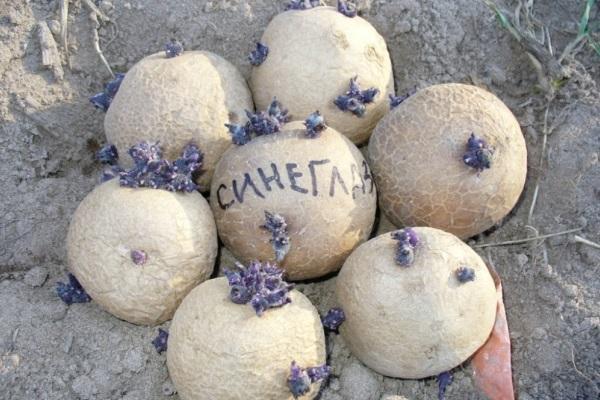
After sorting, the tubers undergo vernalization. This is a complex process involving heating, soaking in stimulants and seed treatments, and germination in diffused light. Immediately before planting, the tubers are soaked in a seed treatment to prevent disease and pest damage. Common varieties include Prestige, Maxim, and Shedevr.
Planting pattern and crop rotation
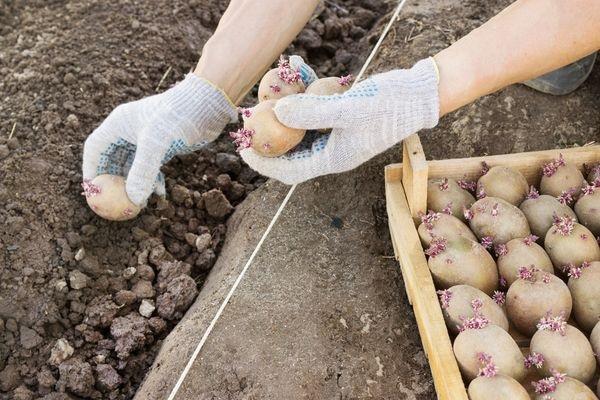
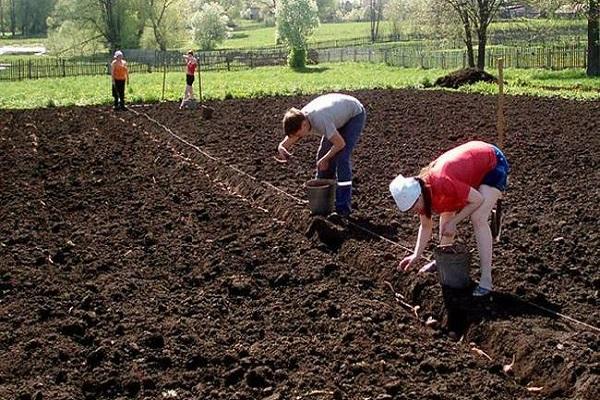
The distance between rows during planting depends on the variety's maturity. When planting early varieties, the row spacing is 60-75 centimeters, and the optimal distance between tubers in a row is 25-30 centimeters. When planting mid-season and late varieties, the row spacing is 70-90 centimeters, and the distance between tubers in a row is 35-40 centimeters. The first planting pattern is more suitable for Sineglazka.
Features of potato care
Blue-eyed jasmine does not require much effort to grow, but the gardener must know how to properly water, care for the soil, and feed the variety.
Watering
First of all, the frequency of watering is determined by the region's climate, soil type, and the potato's development stage. The most critical period is from the beginning of bud formation until the end of top growth. If the potatoes suffer from drought during this period, a good harvest cannot be expected.
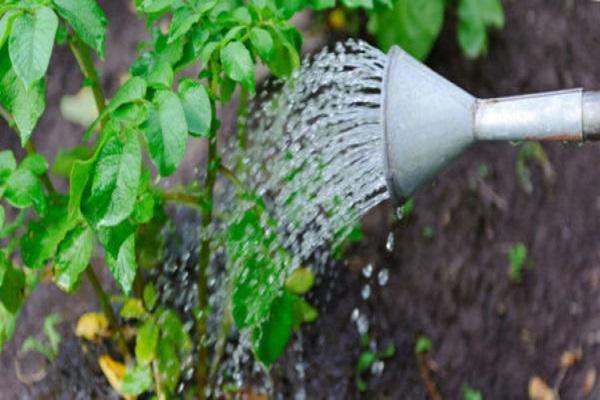
The first watering is done immediately after planting if the soil is not sufficiently moist. The next watering is done a couple of weeks after emergence, when the tops reach 10 centimeters. Subsequent waterings are done every 10-14 days, depending on weather conditions.
Hilling and loosening
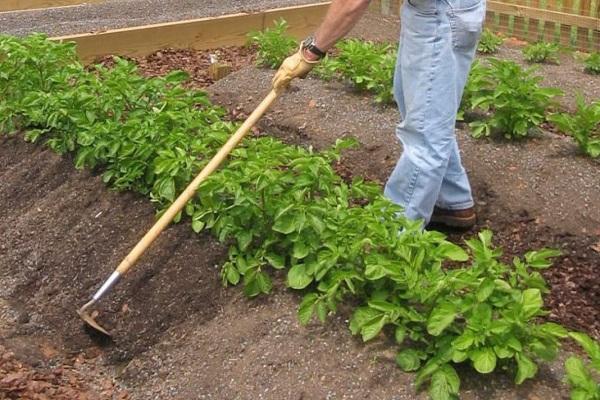
Early hilling of potatoes partially replaces loosening and weeding. This technique also protects against recurring spring frosts. Hilling of Sineglazka begins a couple of weeks after planting, when the sprouts reach a height of 10-15 centimeters. The second flowering occurs immediately before the variety blooms.
Hilling is performed up to four times per season, especially if the plants are falling apart and potato tubers are visible. Loosening the soil helps control weeds, improves soil aeration, and enhances moisture and fertilizer absorption. This procedure is performed every 7-10 days, depending on the soil type. Mulching the plantings with organic matter helps minimize the frequency of loosening.
Fertilizing
At the beginning of the growing season, potatoes require more nitrogen, and during flowering, they require more potassium and phosphorus. Regular foliar application of fertilizers yields good results. Plantafol 30.10.10, 5.15.45, and a universal fertilizer with a formula of 20.20.20 are used. A solution of Master fertilizer with a formula of 20.20.20 is applied to the roots.
Protecting Blue-Eyeds from Diseases and Pests
Blue-eyed succulents have moderate resistance to diseases and pests. To maintain their health and ensure a productive harvest, preventative treatments with plant protection products are necessary. Pre-planting treatments can be helpful in the initial stages, including against tuber infestation by cockchafers.
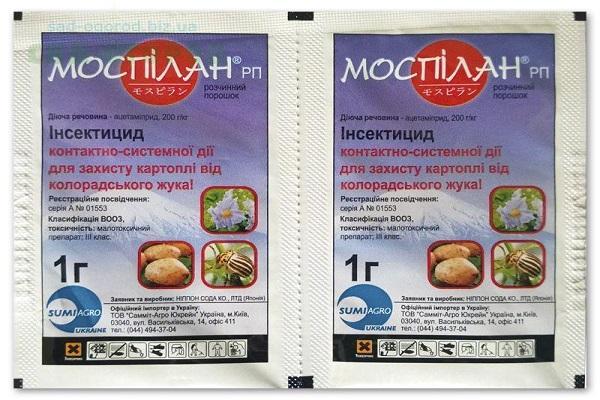
For disease prevention and control, including late blight and early blight, use Quadris and Ridomil Gold. For pest control, including the Colorado potato beetle, a dangerous enemy of nightshade crops, use Aktara, Mospilan, Actellik, and Karate Zeon.
Harvesting
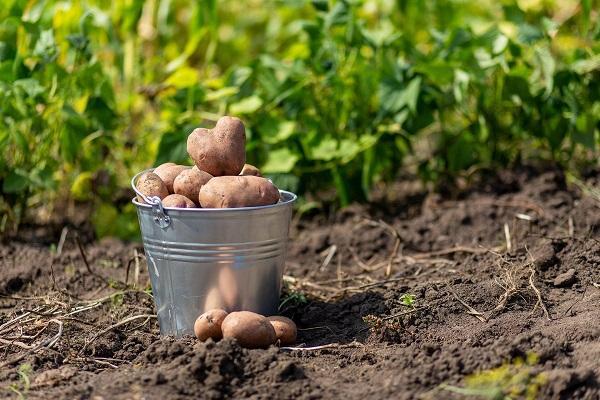
Potatoes are dug up in dry weather; if it rains, harvesting begins later. A few weeks before harvest, the tops are mown down to a depth of 10 centimeters to allow the tubers to accumulate nutrients. Potatoes are dug from the row spacing; a pitchfork is considered the best tool for digging, as it causes minimal damage to the potatoes. After digging, the potatoes are dried for a couple of hours, sorted, and stored.
Storage rules
During the first stage, the potatoes are placed in boxes and placed in a dark, warm room with a temperature of +15°C to +18°C. Over the course of 3-4 weeks, the tubers develop flavor, their consistency improves, and their skin thickens. After this potatoes are sent for permanent storage, with an average temperature of +2°C and a humidity level of 85-90%. The most important condition for successful storage is the presence of ventilation..
Reviews from experienced farmers and gardeners
Stepan Fedorovich, Samara.
"I've been growing this variety for a long time, and I'm very pleased with everything, especially the taste! I store it in wooden boxes in the cellar; it survives the winter very well."
Inna Samsonova, Moscow.
"My darling little blue-eyed potato! I remember my grandmother growing it, and I've loved this delicious potato since childhood. Now I plant it all the time at my dacha."
Related posts:
 Description of the best potato varieties of domestic and foreign selection
 Description and characteristics of the Rodrigo potato variety, cultivation and care
 Description and characteristics of the Gulliver potato variety, planting and care
 Description and characteristics of the Krasavchik potato variety, planting and care
 Description of the best potato varieties for 2025, selection for regions
 Description and characteristics of the Zhukovsky potato variety, planting and care
 Why potatoes aren't growing well in the garden, and what to do to ensure a bountiful harvest
 Description and characteristics of the Arosa potato variety, planting and care