
To improve vegetable crop productivity on depleted soils, specialized agricultural practices are used. Senication and desiccation of potatoes significantly increase root weight and quality. These procedures are used not only in home gardens but also on large farms. To ensure the desired results from these agricultural practices, it's important to understand their specific application.
Potato senication, what is it?
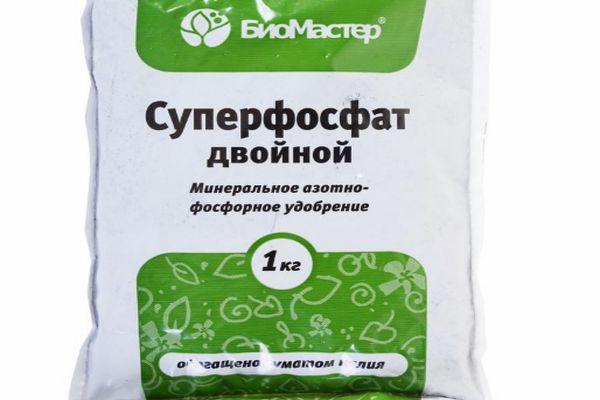
Potato senication refers to the pre-harvest treatment of the above-ground portion of the vegetable crop with agrochemicals. In most cases, non-toxic products such as double phosphate are used for this purpose. liquid complex fertilizer.
Experienced vegetable growers highlight the following as the main reasons for carrying out this event:
- The outflow of photosynthetic products from the above-ground part of the plant to the tubers is activated, and the ripening process is much faster. This is due to the inhibition of vegetative growth during spraying with working solutions.
- Reducing nitrate levels to safe levels. After treatment, root vegetables become completely safe to eat, and their starch and protein content significantly increases.
- Formation of a thick skin on root crops. Agronomic practice known as senication reduces the risk of potato damage during harvest. Ultimately, the productivity of the vegetable crop increases by 15-20%.
- Reducing the likelihood of infection of soil and vegetation by late blight and rhizoctonia.
- Normalization of plant metabolism. The working solutions used for senication contain biogenic elements, which facilitate the normalization of chemical reactions within plants.
Pre-harvest treatment of potato tops has a beneficial effect on the tubers, extending their shelf life. Senication increases the starchiness of the roots and thickens the cork tissue.
Potatoes harvested after senication are not only healthy, but also have high commercial qualities.
When to carry out senication
Gardeners' opinions on this matter vary greatly: some argue that foliar feeding should be done immediately after the flowering phase, while others say it should be done 15-20 days later. The main thing to know is that the treatment of vegetable crops with a concentrated substance should be carried out 20 days before harvesting. So, varieties with an early ripening period are processed 7 days before potato harvesting, and ultra-early varieties are not subject to spraying at all.

Mid-season plants should be treated 7 days after flowering. For mid-late-season varieties, the best time for senication is 15-20 days after flowering.
Foliar feeding is most effective in clear, windless weather; applying foliar fertilizer after or before precipitation will be ineffective. It's recommended to schedule the application for midday, when the plantings are no longer dewy. Foliar fertilizer can also be applied in the evening, which will enhance the movement of nutrients from the tops to the roots at night.
Senication with superphosphate
Apply the agrochemical at a rate of 2 kg per 10 liters of water. It's important to let the solution sit for 24 hours, stirring occasionally. The light-colored solution should be drained and applied using a special sprayer. The recommended rate of application is 2 liters per 100 square meters.
To enhance the effect, add 0.1 g of a chemical weed killer (herbicide) to 1 liter of the working solution. This product helps remove carbohydrates and nitrogenous components from the above-ground portion of the plant, releasing them into the root crops.
When done correctly, senication results in the complete death of the above-ground portion of the potato plant. This procedure eliminates the need for gardeners to manually remove the tops.
Other drugs
In addition to superphosphate, a complex solution containing ammonium polyphosphate is effective for potato weed control. However, a 0.01% herbicide should also be added beforehand. The recommended application rate per 100 square meters of garden space is 30 liters of liquid fertilizer and 10 g of weed killer.
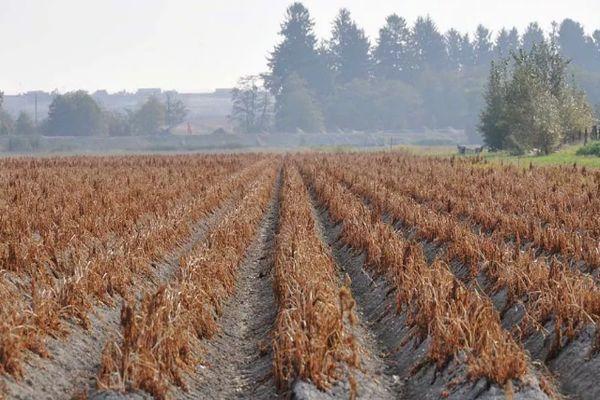
Crop productivity can be improved by using a complex solution consisting of superphosphate, ammonium nitrate, and potassium sulfate, each at a concentration of 2-5%. The consumption rate of this mixture is 10 liters per 60-75 m. Foliar feeding is performed during the flowering stage.
Desiccation: Description
This procedure is designed to completely dry out and destroy the above-ground portion of the potato plant. Chemical treatment modifies the metabolic and photosynthesis processes in the tops, promoting uniform ripening and improving the biochemical content of useful components in the harvest. Potatoes are desiccated in two stages, with a short interval between treatments. It is important to prevent the formation of new shoots, which only further attract parasitic insects such as aphids and cicadas.
When is it applied?
Chemical treatment of potato tops is used when potato crops are heavily infested with late blight. The results of this treatment can be seen after 10-14 days, when the above-ground portions of the plants dry out and break off. This agricultural technique is also useful when there is an abundance of tops, which significantly complicates harvesting.
The use of desiccants is necessary in cases of high humidity and cool weather, as well as in cases of uneven ripening of crops.
How is it carried out?
The principle of this method for drying the above-ground part of the crop is quite simple. The working solution is drawn into a spray bottle and sprayed onto all plantings. Desiccation is carried out 7 days before harvesting root crops for food crops and 10-12 days before harvesting for seed varieties.
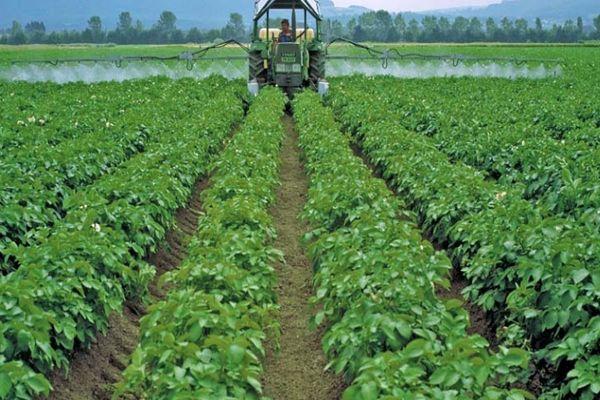 To increase the effectiveness of the event, the chemical agent should be sprayed as evenly as possible.
Desiccants
Among the popular means for desiccation are:
- magnesium chlorate with a concentration of 60% for processing food potatoes (25-30 kg per 1 ha);
- Reglon with a concentration of 20% for spraying seed varieties (2 l per 1 ha);
- Harveyd 25 F universal purpose (3 kg per 1 ha).
Removing tops
By removing the above-ground material from the plantings, gardeners ensure adequate absorption of herbicides, which prevents re-leafing. If the tops are removed after desiccation, the green vegetation is also destroyed, and the dried residue is removed after 7 days. This procedure is necessary if thick stems interfere with the passage of potato harvesting equipment.
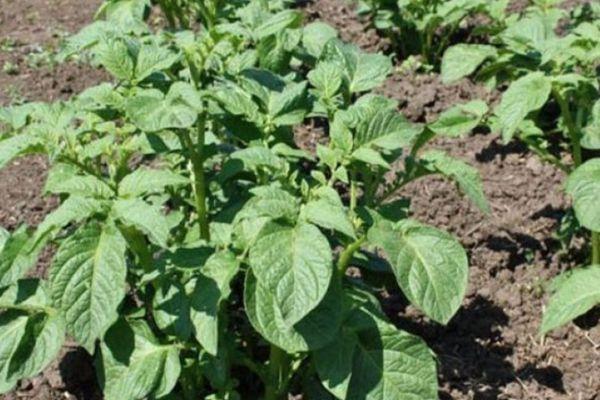
When the tops are removed promptly, the peel growth process is much more active, allowing the root vegetables to absorb the beneficial components. To achieve the desired effect, follow these recommendations:
- It is strictly forbidden to remove vegetation before the prescribed time (7 days), since leaving root crops in the ground for a long time without a thick skin often leads to infection of the crop.
- Tops infected with late blight should be burned on a fire; this is the only way to prevent the spread of this dangerous disease.
- The manipulation should be carried out in two approaches: first, cut off the upper part of the tops, and then, after 7 days, the rest.
- To avoid complicating the process of finding fruit nests, don't cut the stems to ground level. Leaving 20-25 cm of tops is sufficient.
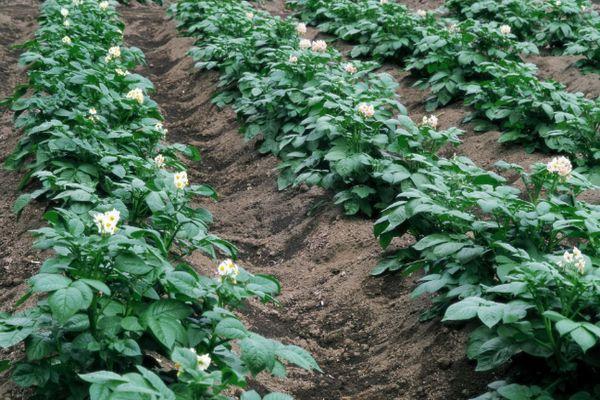
Removing the above-ground portion of potato plants can be done either manually or with specialized equipment. Using haulm harvesters equipped with cutting blades makes the process quite quick. Depending on the soil and haulm type, both methods are used alternately; this approach simplifies the task.
Senication and desiccation are quite effective agricultural practices that accelerate the ripening of root crops and bring the harvest closer. The key is knowing how to perform them correctly and with what tools.
Related posts:
 Why potatoes aren't growing well in the garden, and what to do to ensure a bountiful harvest
 Description and treatment of potato diseases, methods of control using folk and chemical means
 Description of the best potato varieties of domestic and foreign selection
 Description and treatment of potato pests, control measures
 Reasons why potato tops turn yellow and dry out, what to do about it, treatment methods, and protection
 The best eggplant varieties for growing in a polycarbonate greenhouse: planting and care
 The period of potato ripening from planting to harvesting, what is vegetation?
 How to control carrot flies with medications and folk remedies