
- When to water potatoes
- Do I need to water potatoes after planting?
- Is it possible to water potatoes during flowering?
- Tuber formation and growth
- Watering methods
- Under the root
- Along the furrows
- Irrigation
- Drip irrigation
- Dry watering
- How to water potatoes properly to ensure a good harvest
- Signs of excess and lack of moisture
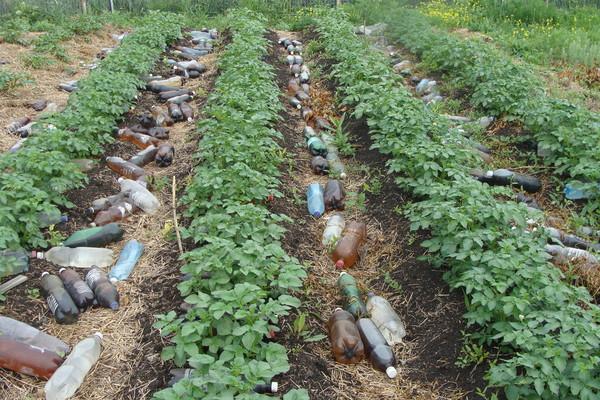
- Mulching as a supplement to watering
- Features and timing of watering early-ripening varieties
Any plant needs moisture to grow. The timing of watering potatoes depends on the soil conditions before planting, the presence of rain during other stages of development, and the air temperature. Potatoes planted in a low-lying area will receive the necessary moisture initially, but if dry weather sets in, this will not be sufficient. Maintaining soil moisture is crucial. Mulching is used for this purpose.
When to water potatoes
When planting potatoes outdoors, it's important to create favorable conditions for their growth. One key factor is soil moisture. Without it, the plants won't develop, and the young seedlings will dry out completely.
Do I need to water potatoes after planting?
Potato tubers contain enough moisture to initially nourish young sprouts. After that, everything depends on soil conditions. Potatoes planted in May fall into soil wet from melting snow and continue to develop. Low-lying areas remain moist for a long time. In such cases, watering is not necessary.
Where the soil is sandy and dries quickly, it's important to ensure continued watering. This is when the root system, which determines the size of the plant, begins to form. Add about 10 liters of water to the planting hole, mix it with soil, place the potato, and cover. When cutting furrows, water them along their entire length.
After planting, there's no need to water the potato plots. This is actually harmful, as shallow watering encourages shallow roots, which will require constant watering and will not provide the plant with sufficient moisture.
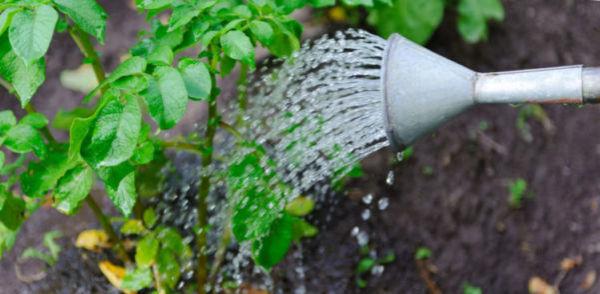
Important! In high sandy areas, potatoes are planted after the snow melts, and to conserve moisture, furrows are cut across the slope to trap meltwater.
Is it possible to water potatoes during flowering?
A flowering plant requires moisture. Tubers are forming, and the amount of water consumed affects their number. In dry weather, pour 10 liters of water under the bush every 3-5 days. Add water in portions, allowing the previous amount to be absorbed.
Tuber formation and growth
During tuber formation and development, the plant especially needs water to produce a good harvest. During dry summers, pour up to 20 liters of water under the plant each week. It's helpful to irrigate the bushes with a watering can—do this in the morning, before the heat sets in. When the tops begin to wilt, reduce watering. Stop watering two weeks before harvesting.
Watering methods
The following methods are used to provide potatoes with moisture:
- root watering;
- along the furrows;
- soil irrigation;
- drip irrigation;
- dry watering.
Each method has its advantages and disadvantages. The choice depends on the conditions and the plant's development period.
Under the root
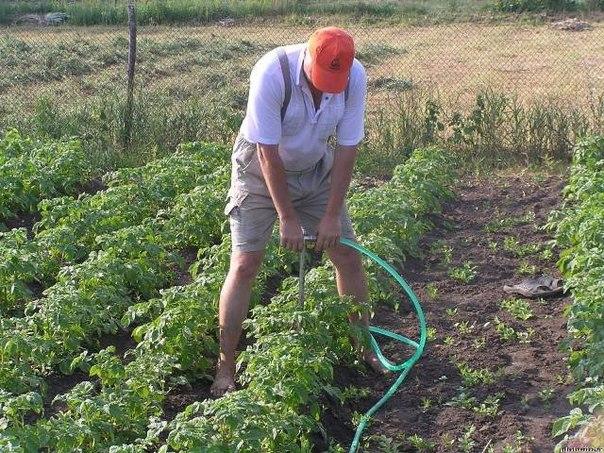
The amount of water applied to the roots depends on the plant's development stage, humidity, and ambient temperature. Typically, it's 10-20 liters per bush. The greatest amount is required during flowering and tuber formation. Early in the morning, you can water the potatoes using a watering can on the green shoots.
Along the furrows
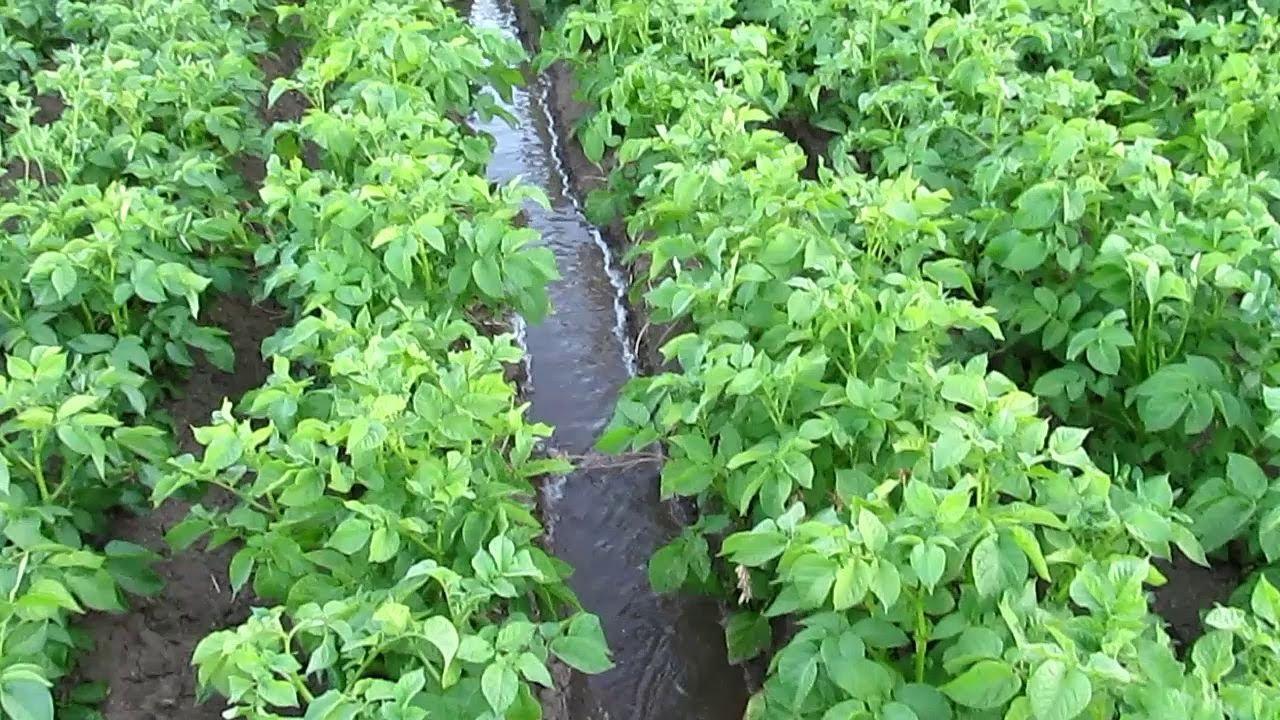
Furrow irrigation is used for large plots of potato plants. This can be done after the initial hilling, when the furrows are well defined and deep enough. Watering is done using a hose connected to a garden water supply, where the water is heated by the sun.
At the end of each furrow, rake the soil to prevent water from leaking out. Water in several stages, allowing the previous portion to be absorbed. The next day, loosen the soil to prevent crusting, hill up any areas washed out by the water, and add soil if necessary.
Irrigation
Irrigation is done with a diffused stream of water at low pressure. This method is also called sprinkling. It's applied using a hose with a spray nozzle. The stream breaks into a fine mist, preventing soil erosion and leaving the tubers uncovered. This method is suitable for arid regions.
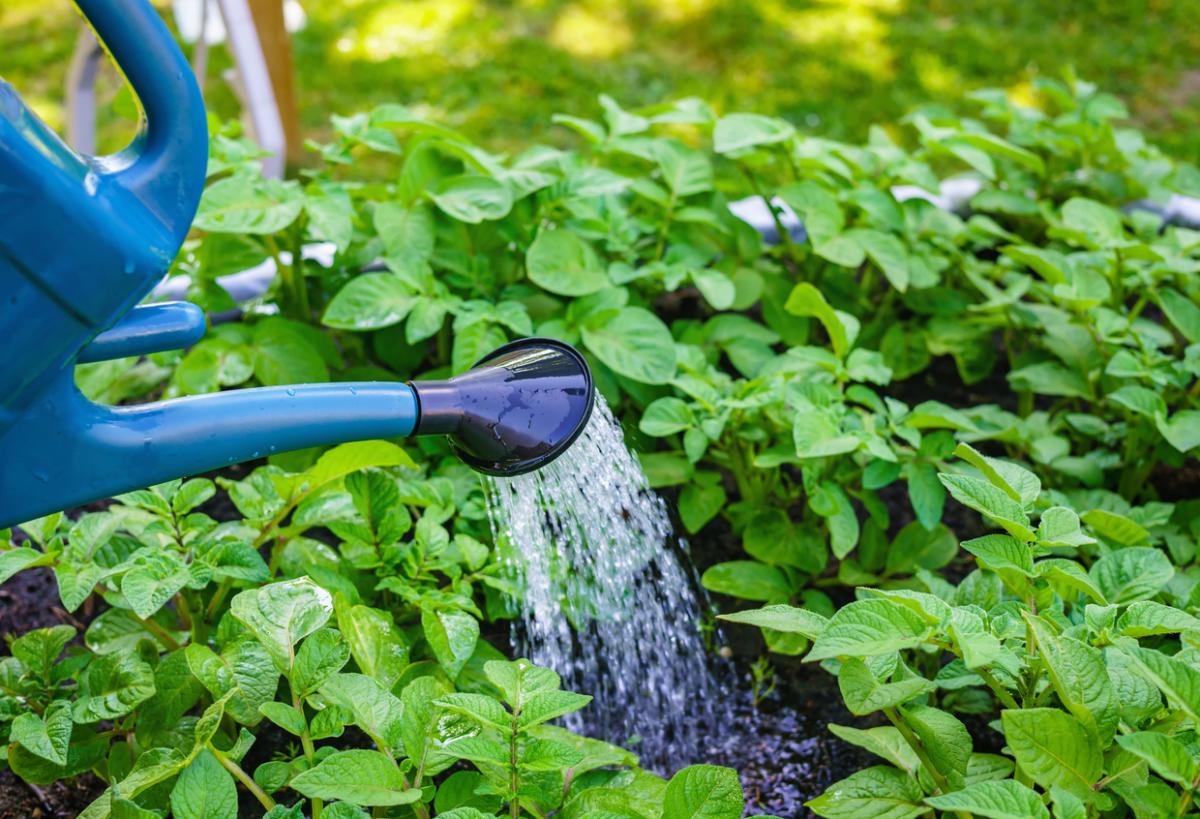
Irrigation should not be continuous. Constantly wet soil will lead to fungal diseases, soil compaction, and the need for frequent tilling.
Please note: With any watering method, it is essential to loosen the soil to prevent a surface crust from forming, which would prevent oxygen from reaching the roots.
Drip irrigation
Drip irrigation is cost-effective in regions where water is scarce. Slotted irrigation tapes are installed between rows along the furrows. They are laid directly on the soil, and water is injected into the tapes under a pressure of 0.5-0.7 atmospheres. The tapes are connected to the garden's water supply system.
The soil is moistened as it dries, maintaining a constant moisture level. This prevents soil crust formation and ensures root respiration is not impaired throughout the plant's growth cycle.
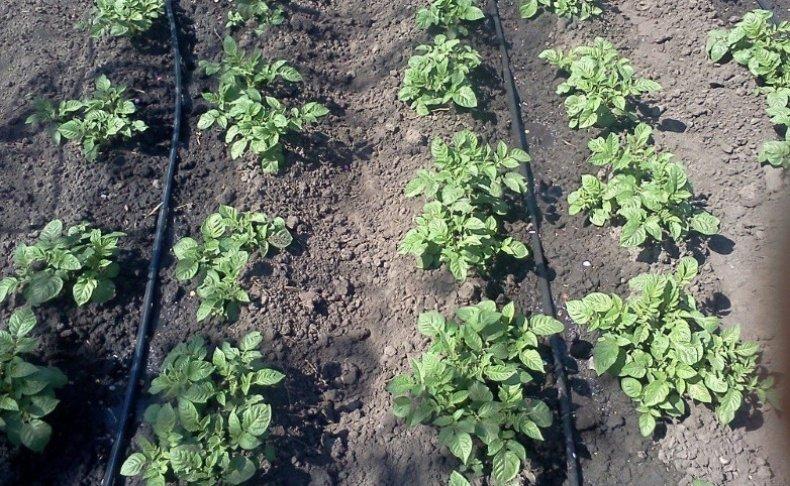
Note: Drip irrigation is conveniently combined with liquid fertilizers, making the fertilizer solution less concentrated. The disadvantage of this method is the high cost of the equipment. You can build your own drip irrigation system using a proven method. Sometimes the material costs are worth it—the resulting harvest will be abundant.
Dry watering
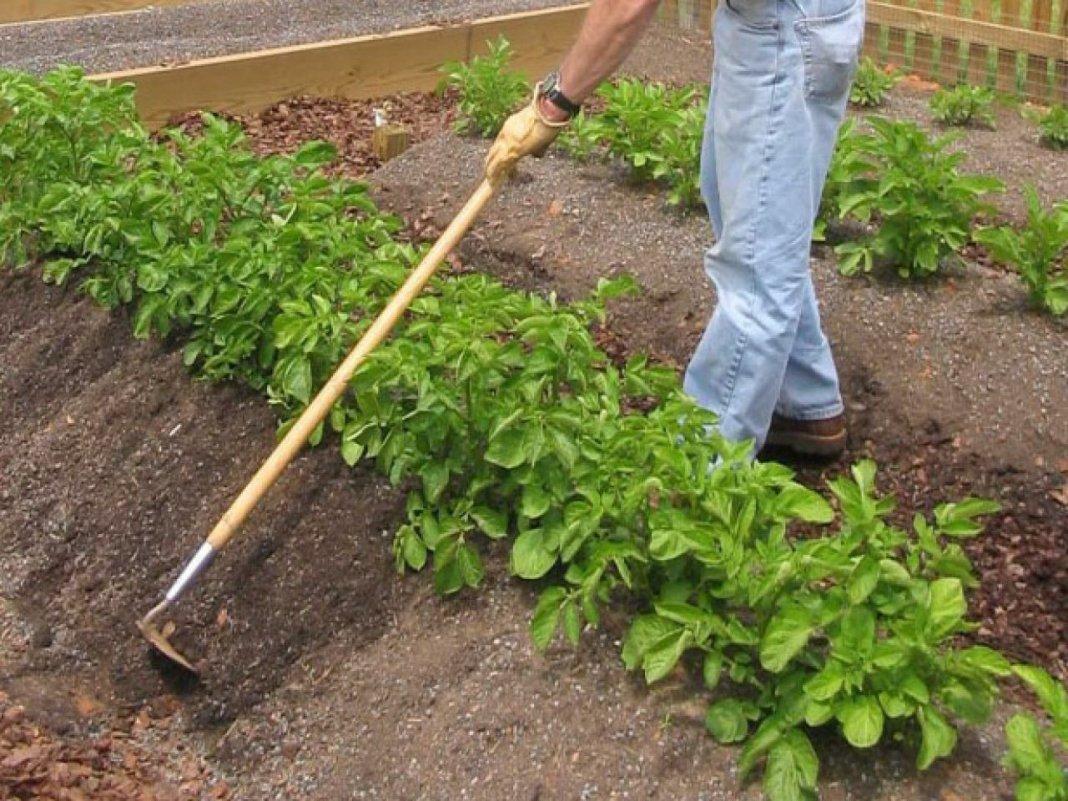
Dry irrigation involves conserving soil moisture through hilling and loosening. These actions increase soil aeration and provide oxygen to the roots. Loosening is especially beneficial in humid climates and heavy soil.
The first hilling of potatoes is performed after watering; you can cover low-growing plants with soil. This is especially important in hot weather. This procedure is repeated three times before flowering. Subsequently, dry watering consists of shallow loosening of the soil. This is done carefully to avoid disturbing the growing tubers and damaging the roots.
How to water potatoes properly to ensure a good harvest
When watering potatoes, certain rules must be followed. First, decide how often to water. This depends on the soil condition and the surrounding climate. Sandy soils dry out faster, requiring more frequent watering. If there's no rain, water up to twice a week; in wet weather, it all depends on how quickly the soil dries out. The amount of moisture needed depends on the plant's developmental stage. Typically, watering once every 7-10 days is sufficient.
The best time to water is in the evening. Watering on a hot day is harmful, and morning watering can leave water droplets on the leaves, which is unacceptable. Remember not to use cold water, as this will cause root and tuber rot. As the plant's growing season ends, the tubers begin to ripen. They need time to develop a better shelf life and preserve well over the winter. By this time, you should stop watering the potatoes.
To protect against the Colorado potato beetle, spray the bushes with a saline solution. Dissolve a cup of salt in a bucket of water. This is effective during the pest larval emergence period. Salt water is also used to soak the tubers before planting. This disinfects the material and inhibits pathogenic microbes. The number of times potatoes need to be watered per season is influenced by many factors. This amount varies by region, depending on the amount of rainfall and air temperature. The number varies from year to year.
Signs of excess and lack of moisture
Improper care affects the appearance of potato plants. Healthy and well-maintained plants, receiving adequate nutrition and water, have upright shoots and bright, lush leaves. Insufficient or excess moisture can manifest itself in specific ways. Underwatered plants exhibit the following symptoms:
- light-colored drooping or curled leaves;
- the buds do not bloom, dry up and fall off;
- the tops dry out before the due date.

Drying potato bushes need to be watered immediately, while observing all necessary conditions.
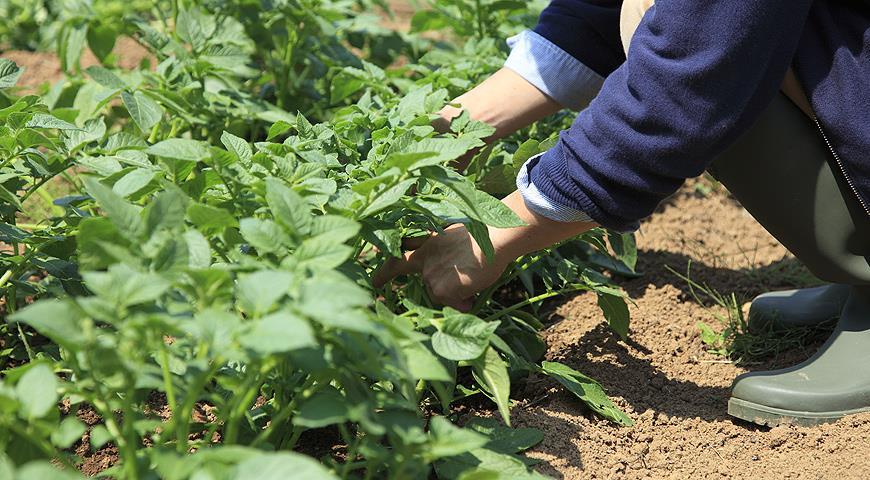
Excess moisture is just as dangerous for potatoes as drought. A plant suffering from overwatering takes on the following appearance:
- the leaves become dark and droop, as in drought;
- wet spots appear on the stems, fungus and mold form;
- the tubers rot and become watery.
The soil around these bushes should be loosened, and you can add some dry soil and mix it with damp soil. Stop watering for a while.
Mulching as a supplement to watering
Mulching helps retain soil moisture, reduce the frequency of watering, save water, and suppress weed growth. Organic material is used for this purpose, such as:
- Dry peat.
- Rotted sawdust.
- Freshly cut or weeded grass.
- Green manure.

Mulch is also beneficial because it forms fertilizer after decomposition. It also improves the soil structure, making it looser.
Features and timing of watering early-ripening varieties
Early potato varieties require frequent watering as they grow and develop quickly. Apply 3-5 liters of water at a time. It's important to ensure the soil doesn't dry out. Check the soil moisture by touch. If the soil doesn't stick to your hand at a depth of 10 centimeters, watering is needed immediately.
Overwatering is also undesirable. Soil that sticks to your fingers and leaves a wet mark is a sign of this. Loosen the soil and do not water for a while.
Some early potato varieties don't flower, sometimes producing a few buds. It's important to remember that during flowering, the plant needs to be provided with sufficient moisture, and this should be done without fail. A week before harvesting, when the tops begin to dry out, stop watering.
Related posts:
 Why potatoes aren't growing well in the garden, and what to do to ensure a bountiful harvest
 The best eggplant varieties for growing in a polycarbonate greenhouse: planting and care
 Description and treatment of potato diseases, methods of control using folk and chemical means
 Description and treatment of potato pests, control measures
 How to water cucumbers in a greenhouse and open ground, timing and water consumption rates
 The period of potato ripening from planting to harvesting, what is vegetation?
 How often should you water pumpkins in open ground in August during hot weather?
 Methods for planting and propagating cherries at home