
- What is a pomidofel?
- Advantages and disadvantages of grafted plants
- How to successfully combine tomatoes and potatoes?
- Necessary tools
- Methods of grafting
- Copulation
- Grafting into clefts
- Ablation with tongue
- Caring for potatoes after
- Cut processing
- Watering
- Top dressing
- Loosening and mulching the soil
- Do I need to hill up the soil?
- The nuances of harvesting tomatoes and potatoes
- Vegetable growers' reviews of crop combinations
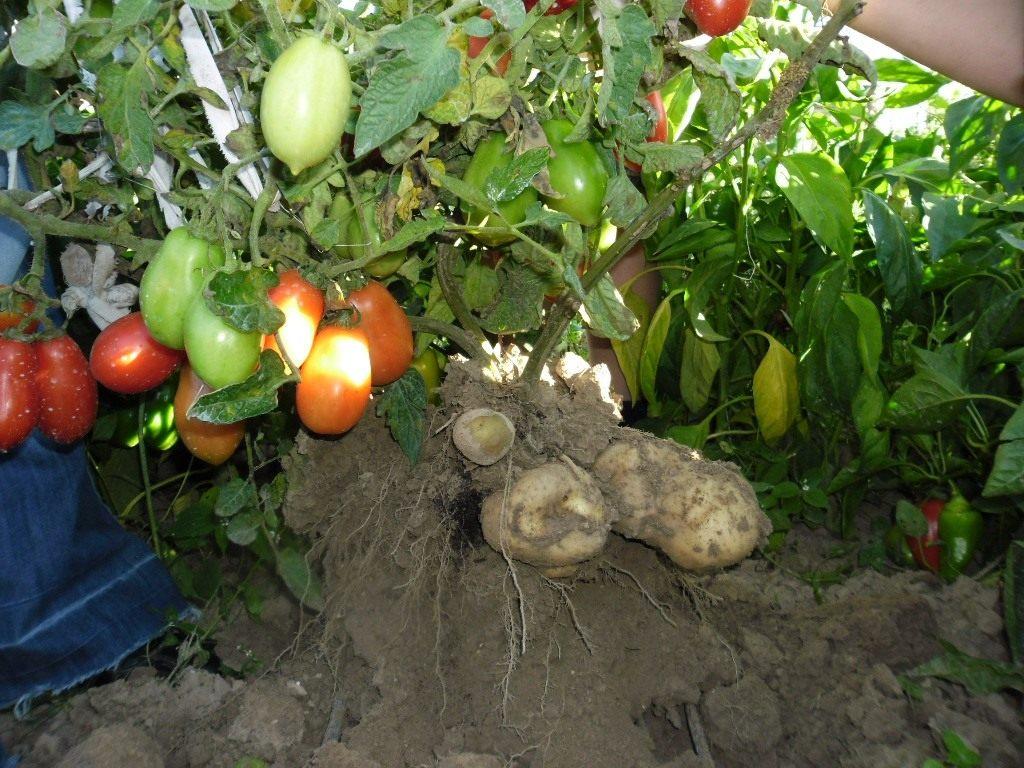
The tomato plant has many other names, including tomofel, kartomat, tomatofel, pomitofel, and kartofemidor. From a single plant of this unique vegetable, you can enjoy both potatoes and tomatoes. To get a bountiful harvest, you need to understand how to properly graft these two crops and what care they require.
What is a pomidofel?
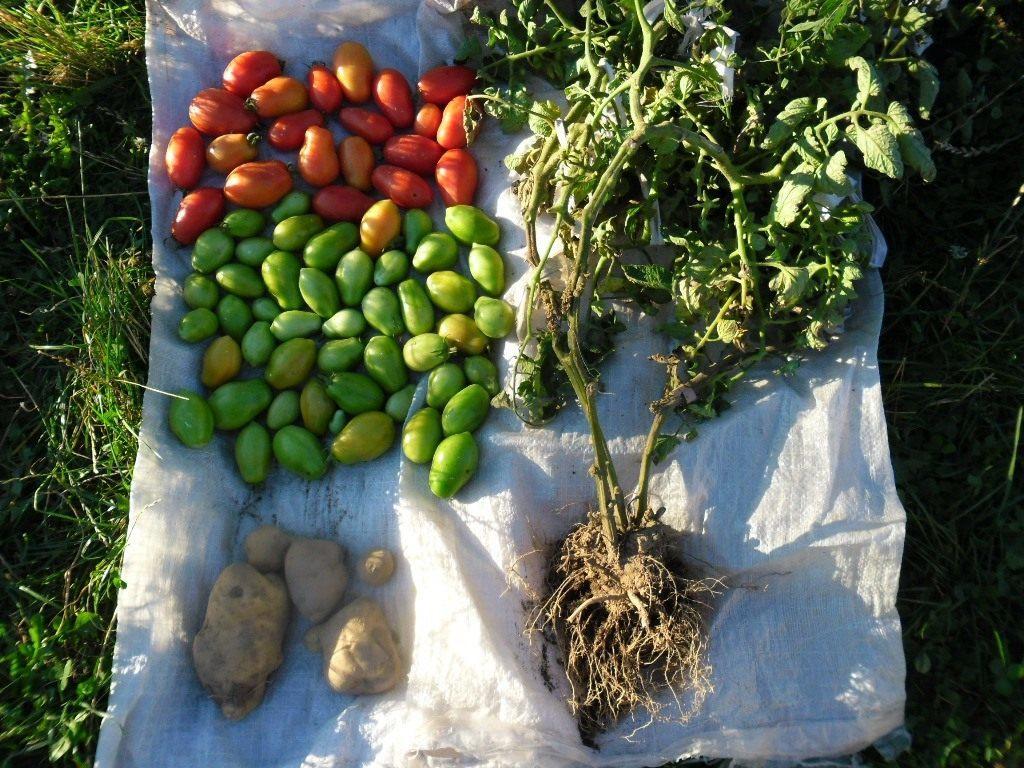
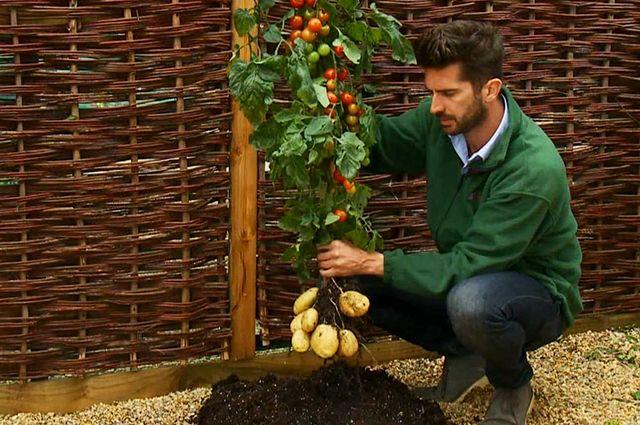
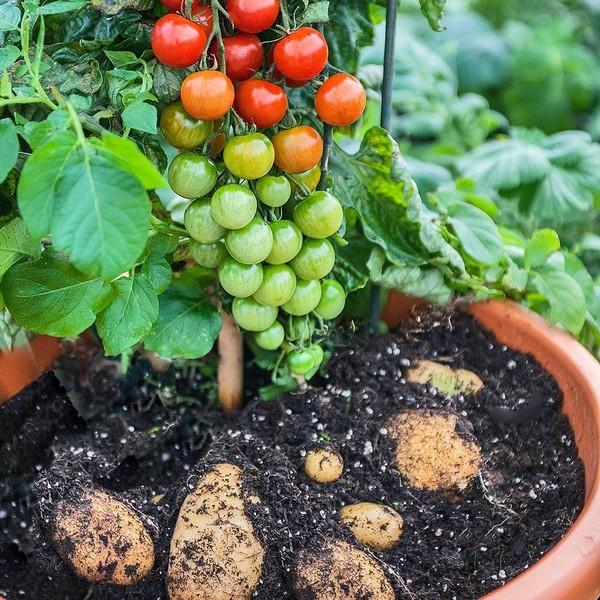
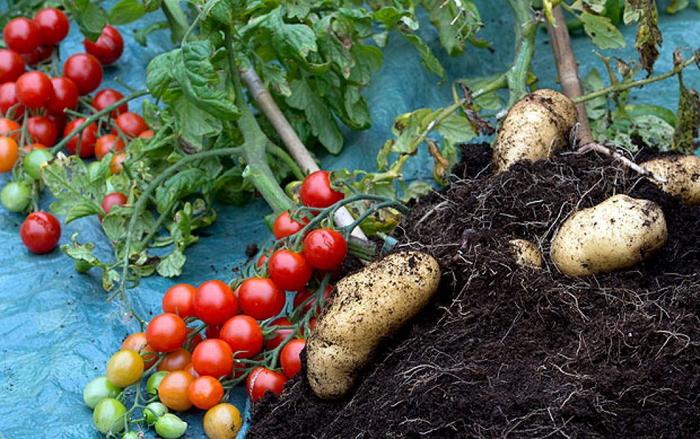
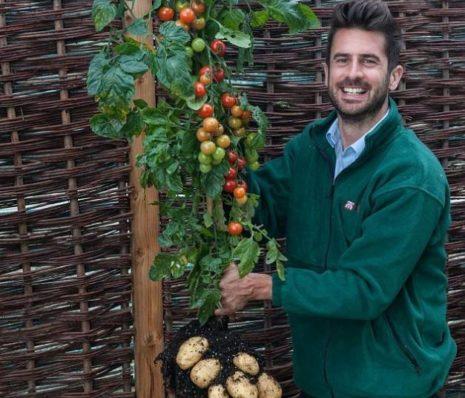
The tomato is a hybrid vegetable that combines the characteristics of both the tomato and potato. It features potato tubers, with the tops replaced by tomato fruits, typically cherry tomatoes. The tomato entered the mass market in 2013, when scientists from the renowned British company Thompson and Morgan introduced seedlings of the unusual plant. The new product was given the original name TomTato—a shortened version of the words "tomato" and "potato."
Attempts to cross-breed the tomato and potato had been made before, but were not as successful. American plant breeder Luther Burbank (1849-1926) developed a potato variety with yellow tubers and fruits comparable in taste, aroma, and texture to tomatoes. In the 1930s, retiree N.V. Brusentsov, living in the Moscow region, succeeded in grafting a tomato onto a potato. This resulted in a vegetative hybrid plant called Dwarf Brusentsov.
In 1977, a similar experiment was carried out in the German city of Tübingen, at the Max Planck Institute for Developmental Biology.
Advantages and disadvantages of grafted plants
The hybrid plant variety has undeniable advantages, but it is also not without its disadvantages, which are important to consider.
The main advantages of tomato are:
- saving space on a plot of land due to the simultaneous growth of two crops in the same area;
- the exclusivity of the plant and its high value among gardeners;
- yield of both crops;
- long-term storage;
- good taste properties of fruits of both types;
- adaptation to any climatic conditions;
- resistance to pest influence.
The following are noted as disadvantages:
- the high cost of tomato seedlings, due to the complexity of crossing crops;
- the need to use large volumes of fertilizers to form the yield of both crops;
- the possibility of obtaining a hybrid plant solely by grafting the root system of a potato and the stem of a tomato.
Take a look Also
How to successfully combine tomatoes and potatoes?
The process of obtaining a hybrid consists of several stages:
- Growing tomato and potato seedlings separately.
- Carrying out correct vaccination.
- Planting plants in a greenhouse or open ground after 7-10 days.
- Removing the bandages from the vaccination sites (another week later).
- Hilling up the plant using agricultural techniques used for processing tomato bushes.
It is also necessary to take into account the requirements for seedlings:
- the thickness of the stems is not less than 5 millimeters (for potatoes a little thicker is allowed);
- Tomato seeds should be sown and potato tubers should be sprouted 1-1.5 months before grafting and 2-2.5 months before planting.
Necessary tools
To work on creating a hybrid, you need to prepare the following tools:
- a blade or a very thin construction knife, previously cleaned with alcohol;
- a wooden stick used as a support for the grafted plant;
- cling film tape (it can be replaced with foil or a special clip for plants);
- a glass jar filled with water.
Methods of grafting
It is necessary to consider the available methods of plant grafting in order to choose the optimal one.
Copulation
This method is designed for grafting stems of the same diameter. In this case, tomatoes should be cut as close to the roots as possible, while potatoes should be cut slightly higher, at the thinnest point of the stem.
The cuts should be made diagonally and through the core of the stems. To ensure proper alignment, they must be the same size. Make tongues on each stem 1/3 from the cut edge. When joining the plant sections, they should overlap.
 Improved copulation ensures a high survival rate due to the maximum contact area between the grafted plant parts. They should be secured with clips, tape, or foil.
Grafting into clefts
The simplest and most common method is called cleft grafting. The top of the potato plant is cut off completely, while the top of the tomato plant is cut off just above the rootstock or the first two leaves. The tip is sharpened on both ends and placed in a jar of water. Then, a cleft is made in the rootstock corresponding to the wedge-shaped cut of the scion—1-1.2 centimeters. After this, the scion is inserted into the rootstock and secured with film, foil, or a clip. The grafted plant is tied to a wooden stick, previously anchored in the soil.
Ablation with tongue
The tongue grafting method involves joining two vines together without cutting off the rhizome. The plants must be placed as close to each other as possible to prevent damage during grafting.
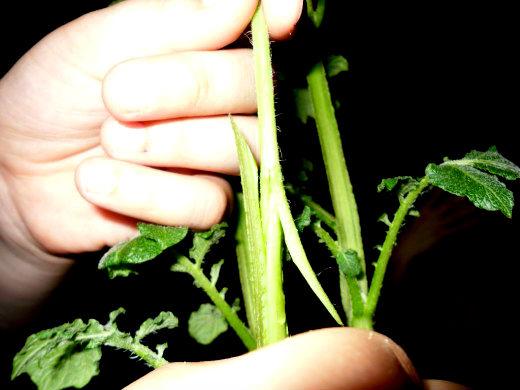
The rootstock should be carefully cut with a sharp knife from the bottom up, and the scion from the top down. The cut length should be approximately one-third to one-quarter of the total stem thickness. The cut stems should be joined by inserting the tongues into each other.
When ablactating, the plant is fed by two roots, which has a positive effect on survival.
Caring for potatoes after
The adaptation period for the tomato plant from the moment of grafting is about two weeks. After this, the resulting hybrid can be transplanted into open ground:
- To make it easier to remove the plant from the pot, moisten the soil.
- Dig holes on the land plot.
- Add 50 grams of wood ash and 5 grams of saltpeter to the holes.
- Move the bushes into the holes, sprinkle with soil, water and cover with agrofibre.
- After a week, remove the agrofibre and film securing the cut.
Cut processing
To treat the cut surface of a grafted plant, use garden pitch. It can be prepared by mixing wax, propolis, rosin, and turpentine in a ratio of 3:2:6:1. Melt the wax and propolis over low heat, add the crushed rosin, stir, and bring to a boil. After cooling, add the turpentine and stir again. Properly treating the cut surface will protect against disease.
Watering
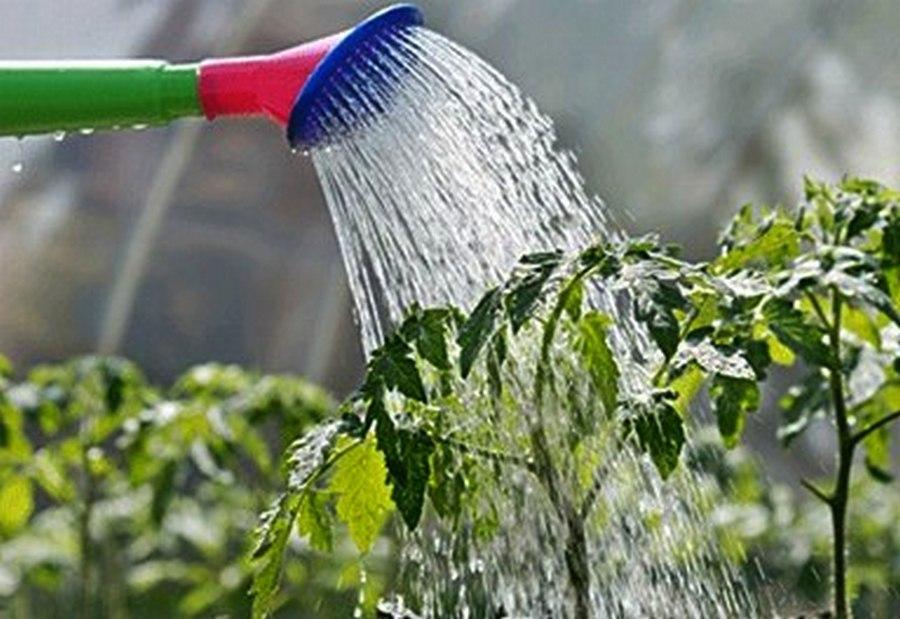
The frequency of watering tomato plants depends on climate conditions. Watering is not required immediately after planting, as the soil contains sufficient moisture in the spring.
Top dressing
Fertilizer should be applied to grafted hybrids three times during the growing season. The first application, containing nitrogen and potassium, is done at planting time. The second application is done during bud and flower formation. To do this, dilute 20 grams of superphosphate in 10 liters of water. Pour 2 liters of the prepared solution under the roots of each bush. The third application is necessary during fruit set. To do this, dilute 20 grams of superphosphate and potassium sulfate in 10 liters of water.
Loosening and mulching the soil
Regular loosening will prevent weeds, remove soil crust, and protect against excessive evaporation. It also has a positive effect on root health, as it promotes the penetration of oxygen and warm air into the soil layers. The soil should be loosened every 7-10 days.
Take a look Also

Mulching with peat, sawdust, straw, or perforated synthetic film reduces moisture evaporation and protects against weeds. However, this method is not suitable for areas with high groundwater levels.
Do I need to hill up the soil?
Hilling is optional but recommended, as it strengthens the root system and protects the stems from adverse weather conditions. It's recommended to hill the bushes 2-3 days after rain, when the soil is most pliable and loose. It's best to perform the procedure on a cloudy morning or evening.
The nuances of harvesting tomatoes and potatoes
One tomato plant can yield approximately 6 kg of tomatoes and 3 kg of potatoes. Tomatoes emerge within a few months of planting. You can tell when new potato roots are appearing by lightly loosening the soil.
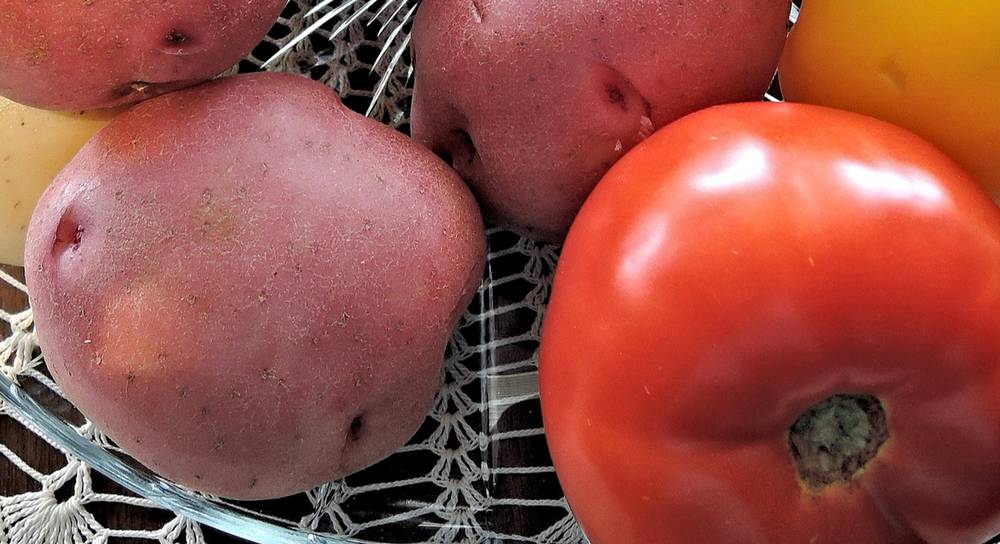
The fruits of both plants have an attractive presentation and good shelf life, making them suitable for long-term storage. Refrigeration, shelving, or crates are suitable for this purpose.
Important conditions are minimum lighting and cool air.
Vegetable growers' reviews of crop combinations
Tamara: "I've always loved crossing different plant varieties, so the idea of the tomato plant really resonated with me. I used the ablactation method, which allowed the potato and tomato to coexist perfectly. The whole family is delighted with the result. The fruits are beautiful and delicious!"
Igor: "I can now harvest my favorite vegetables from a single plant, something I couldn't even imagine before. At first, I ordered seedlings from a breeding station, and later I started experimenting on my own. The plants took root well, and the bushes grew healthy and fruitful. It's a great space saver. A one-square-meter bed produces at least 10 kg of potatoes and 15 kg of tomatoes."
Related posts:
 Why potatoes aren't growing well in the garden, and what to do to ensure a bountiful harvest
 Description and treatment of potato pests, control measures
 Description and treatment of potato diseases, methods of control using folk and chemical means
 Causes and treatment of eggplant pests and diseases, how to combat them at home
 Carrot care guidelines for outdoor cultivation to ensure a good harvest
 Instructions for the use of herbicides for potatoes, similar preparations
 Description and characteristics of the Zorachka potato variety, planting and care
 How to properly grow a peach tree from a seed at home, planting and care