
If potato leaves begin to curl, the first thing to do is identify the cause and begin treatment immediately. This symptom is extremely dangerous for vegetables, as failure to treat the disease promptly can result in a loss of up to 100% of the entire harvest, which is especially detrimental for those growing commercial plants.
Why do potato leaves curl?
There may be several reasons why potato leaves curl when grown in open or greenhouse soil:
- diseases;
- herbicides;
- pests;
- improper care.
To avoid making a mistake in diagnosis, you should read each point in detail.
Potato diseases
Potatoes are susceptible to viral, bacterial and fungal diseases, and curling or drying lower and upper leaves are just one of the symptoms of the disease.
Viral diseases
If potatoes are infected with a virus, this can lead to stunted growth and reduced yield.
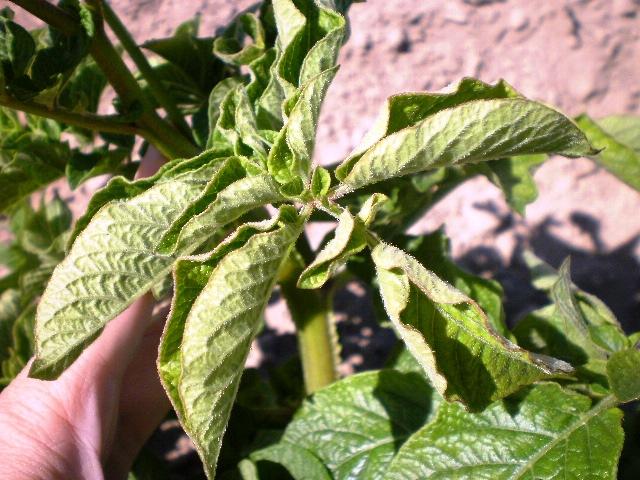
Wrinkled mosaic
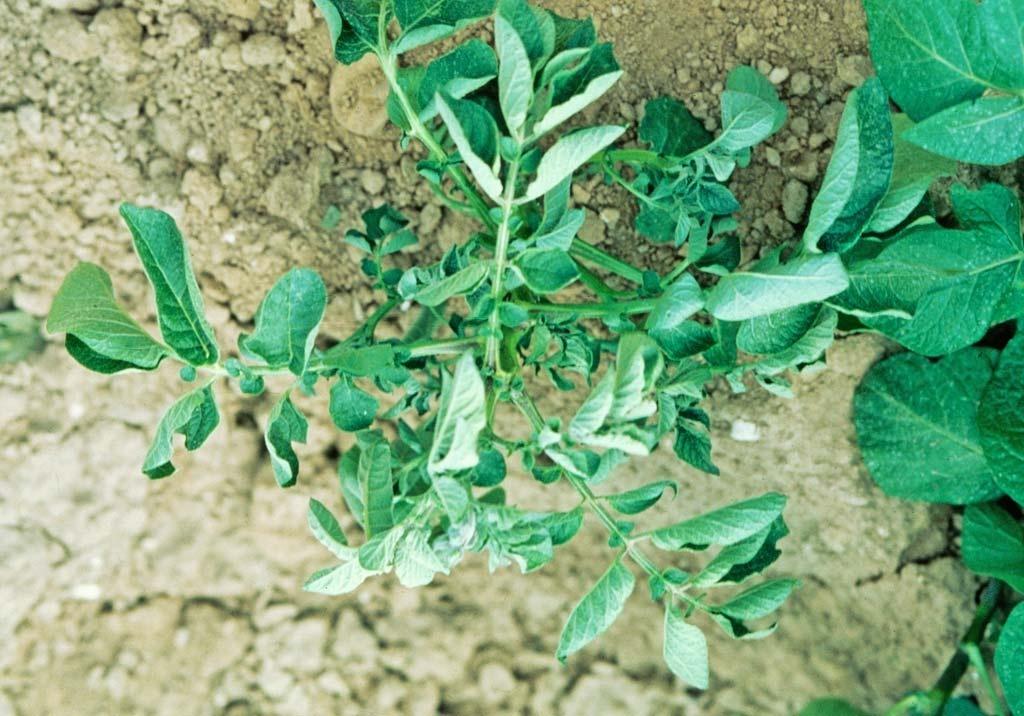
It manifests as swollen wrinkles and yellowing of the leaf, after which the affected shoot curls, bends, and hangs lifelessly without falling off. Infected potatoes fail to develop, their tops wither, and the fruits fail to grow to normal size. The disease spreads to other plants and can destroy up to 90% of the crop. The virus is active during dry summers, and is transmitted by insects.
Mottling
Or common mosaic. Unlike rugose mosaic, mottled potato leaves do not curl. Instead, light spots form on the green leaves, which darken over time and eventually die. Infection occurs mechanically, when one plant touches another. Fruit development and growth are slowed, and yield losses can reach up to 25%.
Important! In the early stages, the disease is barely noticeable.
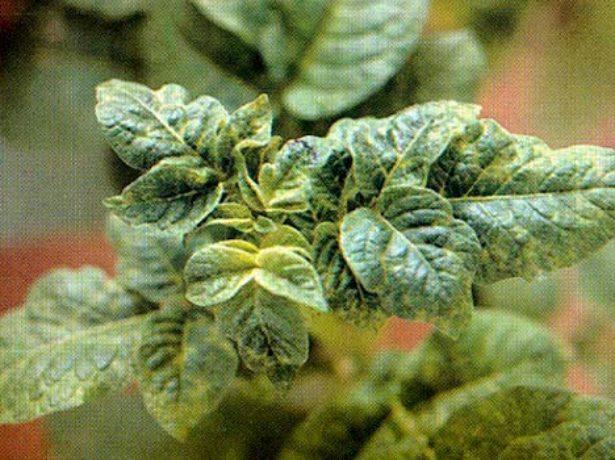
Gothic Tubers
The virus first affects the leaves, then damages the tubers. The foliage shrinks, becomes narrow, and grows at an acute angle. The tops turn yellow immediately after flowering. The potatoes become elongated, smaller, and the number of eyes increases. The skin of the tubers cracks, discolors, and the fruit loses its marketability. Losses reach 90%.
Take a look Also
Important! The disease begins to actively manifest itself in the second year of infection.
Striped mosaic
The first symptoms appear on the underside of the leaf, spreading to the upper surface. Dark spots and stripes form on the green foliage, after which the leaf curls, dries, and dies. The plant stops growing, and yields are reduced by up to 30%. The virus is transmitted by aphids.
Fungal diseases
Fungus is the most contagious disease, which is difficult to cure, and the losses from infection are great.
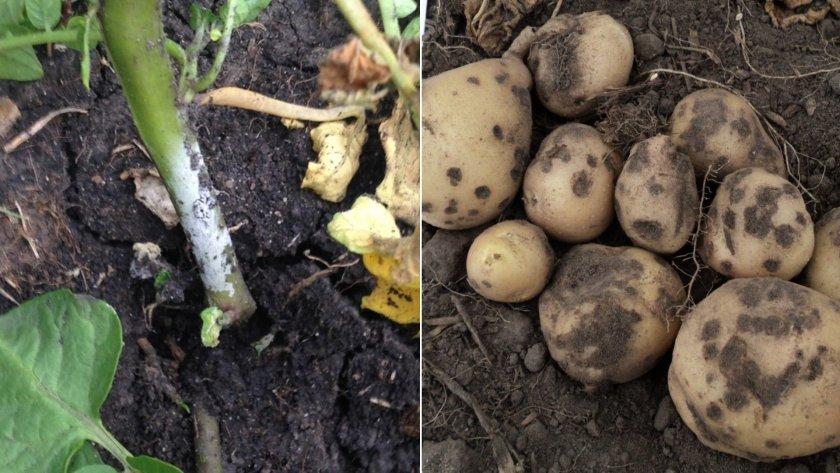
Late blight
A rapidly developing fungal disease. During the incubation period (3 to 16 days), the infection can infect 15% of the crop, and in advanced cases, it can destroy up to 50%. Its active period is during humid, warm weather. During drought and heat, the fungus dies.
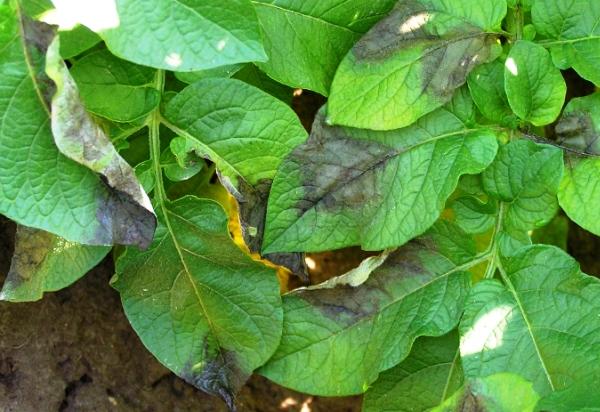
Signs of the disease:
- formation of a white coating on the underside of the leaf;
- darkening of greenery, drying and curling;
- Brown spots appear on the tubers.
Black scab
When infected, the fungus affects not only the stems and leaves but also the tubers. The infection manifests itself on the potato skin, which partially hardens and darkens, and then spreads to the fruit itself, causing the flesh to become scabby, crack, and rot, taking on the appearance of rotten wood. The leaves curl, darken, and dry out. Yield losses can reach up to 40%. The cause is poor-quality planting material.
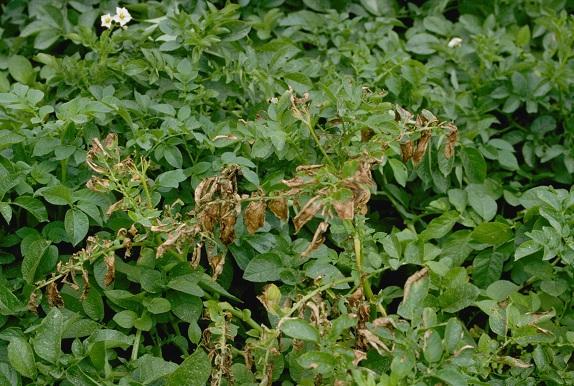
Potato crayfish
The most dangerous fungal disease, which renders tubers unfit for consumption, is the main symptom of potato cancer: the appearance of growths on the fruit, similar in shape to cauliflower. These growths emerge from the potato's eyes. The growths vary in size, and their color ranges from light to black. The affected tuber rots.
The disease sometimes affects the tops as well. The crop loss rate is 60%.
Dry rot
A dangerous fungus that develops on both underground tubers and harvested potatoes. Fungal spores remain in the soil and storage areas for a long time. Symptoms of infection include:
- the leaves begin to lighten;
- a pinkish coating appears on the stems;
- on the tubers (ripening and harvested) brown growing spots appear, which begin to rot;
- the development of the bush slows down and the plant dies.
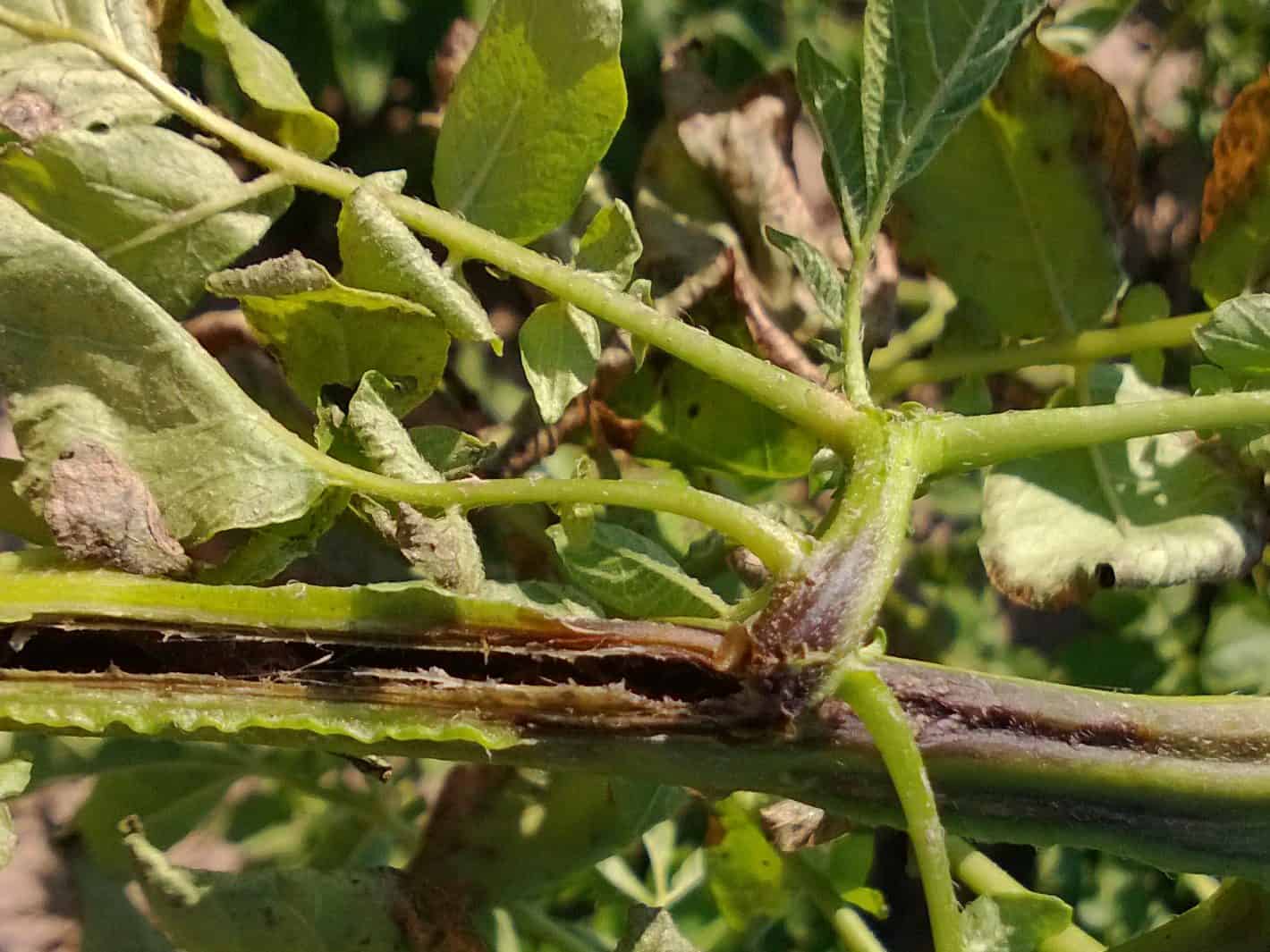
The yield loss rate is 20%.
Alternaria
It appears two weeks before flowering as dry, brown spots on the leaves. The disease begins in the center of the leaf, gradually spreading to the edges, causing the leaf to curl and the affected areas to become brittle and easily crumbled. Twenty days after infection, the leaves become covered with a white coating containing fungal spores. Spots and coating also appear on the tubers. Yield loss under favorable weather conditions and without treatment can reach up to 50%.
Macrosporiosis
An early-onset disease that infects the crop before flowering. Round, well-defined yellow spots appear on the foliage, darkening over time, and the undersides of the leaves become covered with a gray, spore-containing fluff. In dry weather, the dead tissue falls off, causing holes to appear in the foliage. Initially, the disease affects the lower part of the plant, moving upward and affecting the stem. Fruit becomes infected when dug up and comes into contact with contaminated soil.
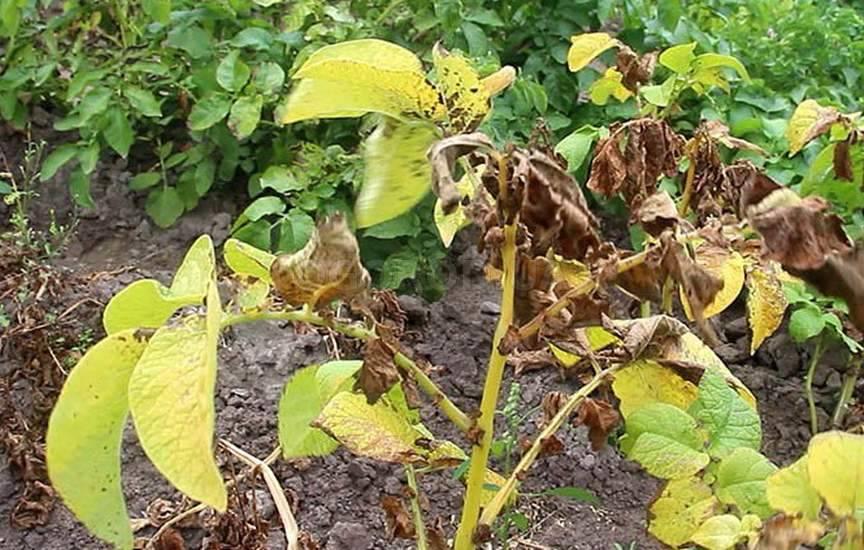
The percentage of losses due to illness is 40.
Bacterial diseases
They are caused by microbes that spread throughout the entire vegetable.
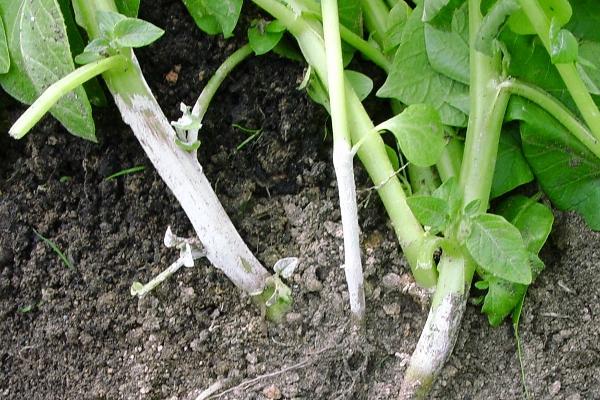
Blackleg
Bacteria become active during periods of regular drought or, conversely, frequent rainfall. In hot weather, the disease progresses differently than in humid weather: the stems slowly begin to blacken, the leaves turn yellow, and the fruits rot, after which the plant stops developing and dies. During regular rainfall, the disease progresses more rapidly:
- the sprouts soften and fall off;
- mucus appears on the stem;
- Rotten scabs and cracks appear on the tubers, from which smelly pus flows, and the fruit itself decreases in weight.
Ring rot
The early stage of infection affects the roots and tubers, with damage visible only when cut. Brown rings run along the edges of the core, oozing pus when pressed. Further symptoms appear after flowering, as yellowing of shoots and curled foliage, as well as on the roots. Fruit collapses and rots. The disease destroys 40% of the harvest.
Herbicide damage
Herbicides are used to kill weeds, but these chemicals often damage useful crops as well. Chemicals spilling onto potato leaves or the surrounding soil cause the plants to curl. Herbicides can also be carried by the wind from neighboring gardens. If the treatment is industrial and widespread, crop losses can reach 50%.
Take a look Also
Pests of crops
Curled greenery is an indicator of a parasite infestation:
- aphids (in addition to causing serious damage, aphids carry dangerous diseases);
- bedbugs (if these omnivores appear, not only a significant portion of the potatoes, but also other vegetables and fruits may suffer).
Improper care
This is caused by either too little or too much moisture. With excessive watering, the water that isn't absorbed by the roots stagnates in the soil, causing the roots to rot and the leaves to curl. In arid soil, the tops dry out due to constant thirst.
Methods of treating culture
How to deal with the causes:
- diseases - chemical and folk remedies; complete treatment and disinfection of the soil; burning of damaged bushes and crops away from the garden;
- pests – chemical and folk remedies; soil disinfection and removal of nearby weeds;
- herbicides - such damage cannot be cured;
- Incorrect care: in case of overwatering – cultivate the soil, remove rotting leaves; in case of drought – mulch.
Preventive measures
To prevent leaves from curling and to avoid the need for treatment, it is necessary to follow some rules:
- disinfection of planting material;
- changing the landing site every couple of years;
- spraying 3 times per season;
- loosening the soil;
- removal of plant debris.
Related posts:
 Why potatoes aren't growing well in the garden, and what to do to ensure a bountiful harvest
 Description and treatment of potato diseases, methods of control using folk and chemical means
 Reasons why potato tops turn yellow and dry out, what to do about it, treatment methods, and protection
 Description and treatment of potato pests, control measures
 Why do cucumber leaves curl inward and what to do about it?
 What to do if your pepper's leaves are curling, proper care and treatment
 Why cabbage leaves wilt in the garden and what to do
 The period of potato ripening from planting to harvesting, what is vegetation?