
Don't throw away worn-out iron or plastic containers with a capacity of 100-200 liters. In the spring, you can grow potatoes in an old barrel. By the end of summer, the harvest will be impressive in both quality and quantity, provided you follow the proper container preparation, planting, and care procedures.
What is this?
The method of growing potatoes in barrels has long been known. Experienced gardeners often tell the story of a farmer who, at the beginning of summer, dropped a potato into a barrel of food and vegetable waste, and in the fall, shook out a whole bucket of potatoes.
Today's gardeners are experimenting with various planting methods, some simply out of curiosity, others to save space in the garden. Judging by reviews, many experienced vegetable growers are achieving a decent harvest. Therefore, planting potatoes in barrels can be considered a good alternative to traditional methods of growing in holes, furrows, and ridges.

Productivity
The productivity of the method is judged by the amount of planting material and the final result. The yield depends on the quality of the seeds, soil, planting pattern, container size, the presence of fertilizers, and the quality of care.
Negative reviews about growing potatoes in barrels are common, but these usually come from people who don't follow the basic planting and care guidelines. Those who do get three buckets of excellent potatoes from a 200-liter barrel, even though they only plant eight seed potatoes.

Pros and cons of this method
Saving space is the first advantage. This is especially true for gardeners. There's never enough room for planting, yet you want to plant everything: vegetables, flowers, berry bushes, fruit trees. For many, a potato growing barrel allows you to allocate space for other vegetable crops.
Saving time is the second plus. Potato care It's simplified. This method eliminates the need for weeding and hilling. This gives you more free time. Planting maintenance requires less physical effort, and there's no need to strain your back.

Potatoes are dug earlier than with traditional planting. This accelerates ripening because the seedlings emerge earlier due to the rapid warming of the soil in the barrel. In temperate climates, potatoes can be planted this way as early as mid-April. If there is a risk of frost, the barrel can be covered with covering material and film.
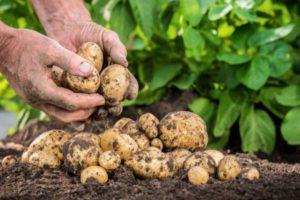
The method has a drawback: the soil dries out quickly. For gardeners who rarely visit their dachas, this method can significantly reduce yields. In overheated, dry soil, potatoes won't have time to develop.
Suitable varieties
Early-ripening potatoes planted in barrels in April will yield a harvest in midsummer. A good early harvest (45 days after germination) can be expected from domestic varieties: Snegir and Udacha. Snegir potatoes form medium-sized tubers (up to 90 g) early and consistently, and are distinguished by excellent flavor. The Udacha variety produces larger fruits (up to 150 g), tolerates heat and drought well, and does not rot in overwatered soil.
Varieties with increased drought tolerance can be planted in barrels; their yield will not be affected by short-term drying out of the substrate. Heat-tolerant varieties deserve attention:
- Nevsky;
- Rosara;
- Slav.
Any of these varieties in a barrel will form large potatoes due to well-leafed stems and a powerful root system.
Tools
When growing potatoes in barrels, conventional tools like a shovel, hoe, or flat-cutter aren't necessary. For maintenance, you'll need a bucket and a watering can. You can water the potatoes in the barrel with a hose. Tools are needed when preparing the barrel for planting. A drill, a drill bit, a hammer, and a chisel are needed for drilling holes and removing the barrel bottom.

Necessary conditions
Choosing the right location solves most of the problems that arise when growing potatoes in barrels. During the day, the barrels should be in the shade or partial shade. This will prevent the soil from drying out or overheating.
You'll need to create artificial shade (netting, covering material) if the only available space is in full sun. It's a good idea to have a container of water or a faucet near the potato barrel. This will make care much easier and reduce the time spent watering.
How to build a barrel
You can use a plastic or metal barrel. Any kind will do. The main thing is that it hasn't previously stored toxic substances. For a good potato harvest, its dimensions are important. The most suitable capacity is between 100 and 200 liters, with a minimum height of 0.6 to 1 m.

Preparing the container for planting takes little time if you have a power drill handy. Drilling the holes takes no more than 30 minutes. Drill holes in the sides at 20 cm intervals and in the bottom at 3 cm intervals. The bottom can be simply knocked out.
A major mistake vegetable growers make is not drilling holes in the barrel. Their potatoes don't receive the oxygen they need, and excess moisture stagnates at the bottom. This is why they can't boast large harvests.
Soil preparation
The planting soil is prepared from one part garden soil to one part compost or humus. If the soil is prepared in the fall, it will freeze during the winter, killing the pest larvae. To be on the safe side, it can be treated with an insecticide in the fall.
When preparing the substrate in the spring, use a strong solution of potassium permanganate or Fitosporin for disinfection. Ash should be added to the soil along with complex fertilizer for potatoes From Fasco and Fertica. If you don't have these on hand, superphosphate and ammonium nitrate will do.

Step-by-step cultivation technology
Grow potatoes A short step-by-step instruction will help, many summer residents have already used it:
- the seeds are germinated until shoots appear;
- for one 200 liter barrel take 8 potatoes;
- potatoes are treated against pests with a liquid solution of insecticide;
- a 15 cm layer of soil is poured onto the bottom of the barrel;
- the soil is moistened;
- Spread the potatoes evenly, leaving at least 7 cm between the walls of the barrel and each other;
- fill in a layer of 10-15 cm;
- watered.
This is the planting process. During June, you'll need to add soil at least 6-7 times. Each addition is made when the stems reach 10 cm in length. By July, the barrel will have a sufficient layer of soil to support a strong root system. In July and August, the potatoes require care, including watering and fertilizing.
Top dressing
The volume of substrate in the barrel is small, so fertilizing is necessary. During the initial growth period, prepare a herbal infusion with ash added. Nitrogen fertilizers are not used. During flowering, the bushes are fertilized with superphosphate or a special potato fertilizer. Fertilizing is best combined with watering.
Necessary care
Potato care in a barrel is minimal. In May and June, this includes watering and adding nutrient-rich soil. In July, only watering and fertilizing are required. Since there's no need to hill the potatoes, physical labor is eliminated.

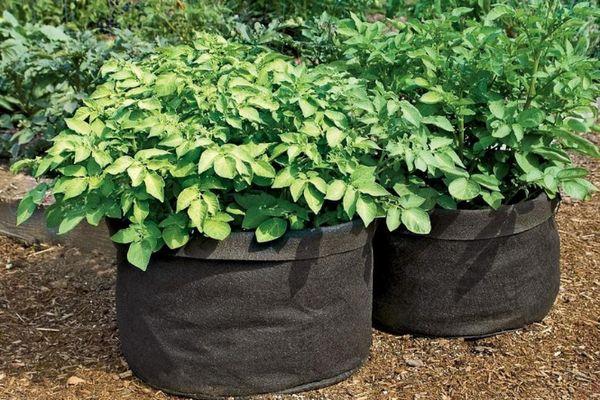
Throughout the summer, monitor the condition of the potato tops. Pest and disease control treatments are applied when symptoms of disease or pest larvae appear. Insecticides should only be used when planting late-season potato varieties.
Harvesting
The drying yellow tops signal the start of harvesting. The timing will depend on the variety and time of planting. It will take a man's strength to turn the container over and empty its contents. Harvesting takes little time. Simply loosen the soil and remove all the tubers.
Diseases and pests
Potatoes rarely suffer from diseases and pests. Disinfecting the tubers when planting is a good preventative measure. In case of prolonged bad weather, the container can be covered with plastic wrap to protect against excess moisture and thus prevent fungal diseases (late blight, rot).

Comparison with planting in bags and boxes
Summer residents use other methods potato plantingsWooden and plastic boxes and shopping bags are used instead of barrels. The differences in technology are minor; the difference lies in the volume of soil added to the container.
The substrate composition is the same. Because the soil is small, it dries out quickly, so potatoes planted in bags need to be watered daily. The advantage of small containers is that they can be easily transported from one location to another.
If you have a greenhouse at your dacha, you can plant potatoes in a bag or box in early April and move them outside in May. If you're aiming for an early harvest, it's better to plant potatoes in bags or boxes.
Related posts:
 Why potatoes aren't growing well in the garden, and what to do to ensure a bountiful harvest
 Description and treatment of potato pests, control measures
 Description and treatment of potato diseases, methods of control using folk and chemical means
 The best eggplant varieties for growing in a polycarbonate greenhouse: planting and care
 How to properly care for potatoes to ensure a good harvest
 How to properly prepare planting material and when to plant potatoes to get a rich harvest
 Description and characteristics of the Rodrigo potato variety, cultivation and care
 Description of the best potato varieties of domestic and foreign selection