
- History of origin
- Description and characteristics of the Zhuravinka potato variety
- Frost resistance
- Productivity
- Bloom
- Taste qualities
- Plant parameters
- Main advantages and disadvantages
- Peculiarities of growing Zhuravinka potatoes
- Choosing a location
- Planting dates
- Soil cultivation
- Seed material
- Planting potatoes
- Recommendations for caring for the variety
- Watering regime
- Fertilizers
- Hilling up bushes
- Diseases and parasites
- Harvesting
- Reviews
The Zhuravinka potato variety meets international standards. It has won the hearts of both gardeners and professional farmers thanks to its high yields, resistance to common diseases, and excellent shelf life. The plant requires little maintenance and minimizes growing costs. It is cultivated in all regions of the country where agriculture is well-developed.
History of origin
The development of the Zhuravinka potato variety was a joint effort between Russian and Belarusian breeders. The fruit of this fruitful collaboration was achieved over a decade ago. In 2005, the variety was added to the State Register and recommended for cultivation in all regions. A patent was filed by the Belarusian State Unitary Enterprise Scientific and Production Center of the National Academy of Sciences.
Description and characteristics of the Zhuravinka potato variety
The characteristics of the Zhuravinka potato immediately attract the close attention of both experienced gardeners and novice amateur gardeners.
Frost resistance
The variety has good cold resistance and is suitable for cultivation in harsh climates, although yields are reduced in this case.
Productivity
If agricultural practices are followed, 8 kg of Zhuravinka potatoes are harvested from each square meter of the garden. It is possible to collect 170-242 centners of harvest per hectare.
Bloom
This variety produces large, reddish-purple inflorescences. It produces almost no seed-bearing berries.
Taste qualities
The starch content of Zhuravinka potatoes depends on growing conditions. On average, it ranges from 15% to 19%. The flesh softens well when cooked and does not form large particles when mashed. The potato does not change color when cooked. It has excellent taste when fried, in salads, appetizers, first courses, and after stewing.
Plant parameters
The potato plant is semi-erect and medium-height. The leaves are small, dark green, and slightly wavy at the edges.
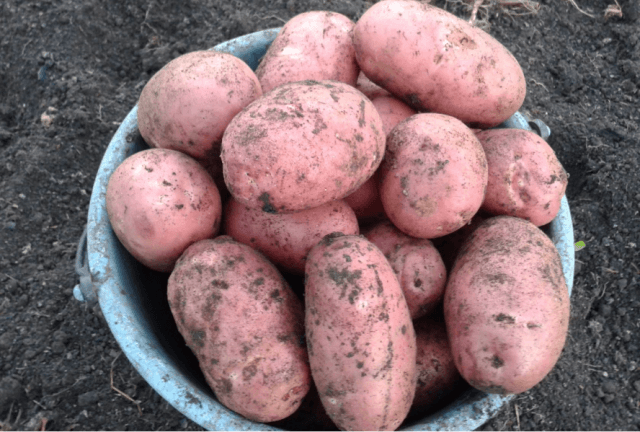
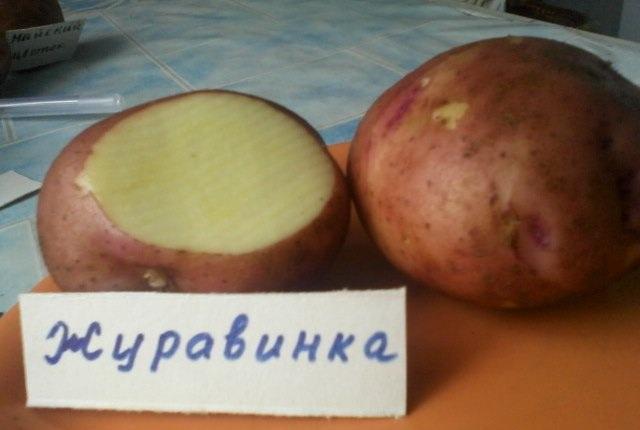
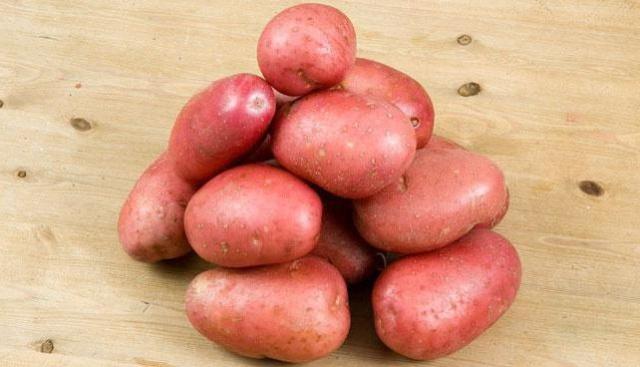
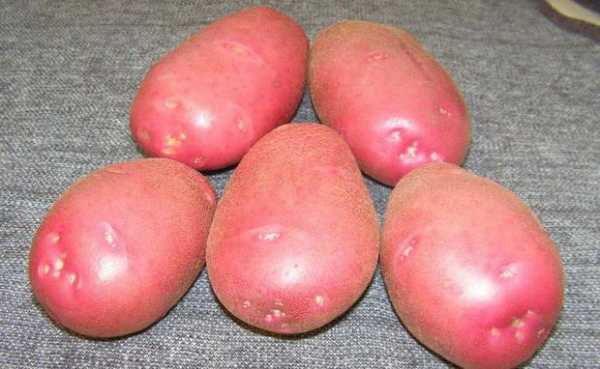
The tubers are oval-shaped, weighing up to 160 g, with light yellow flesh and red skin. The eyes are located just under the skin, and there are only a few of them. Under proper cultivation conditions, each plant produces up to 25 tubers.
Main advantages and disadvantages
The Zhuravinka variety has won the love of gardeners thanks to its numerous advantages, which include:
- good cooking properties during cooking;
- quick cooking;
- excellent taste;
- excellent winter preservation;
- high yield rates;
- unpretentiousness and undemanding care;
- cold resistance;
- suitability for long-distance transportation;
- good immunity to common diseases.
Zhuravinka is not without some shortcomings that gardeners have to put up with:
- unsuitability for dietary and baby food due to high starch content and low vitamin and microelement content;
- slow formation of new tubers and roots.
Peculiarities of growing Zhuravinka potatoes
Potatoes of this variety have certain agricultural technical features that must be taken into account in order to obtain a high-quality harvest.
Choosing a location
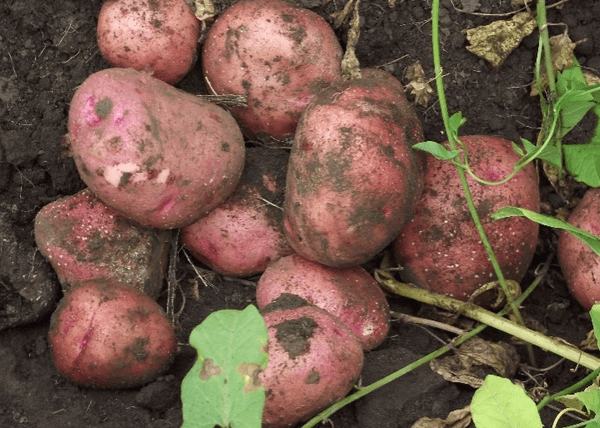
A well-lit area with shallow groundwater is ideal for planting Zhuravinka. The soil should be rich in nutrients and well-drained. Avoid planting potatoes in low beds, as this can lead to excess moisture retention. Crop rotation is essential.
Planting dates
The approximate planting date for Zhuravinka potatoes is early to mid-May. The exact planting time depends on specific climate and weather conditions. By the time the tubers are planted in the garden bed, the threat of recurrent frosts should have completely passed, and the upper layers of soil should have warmed up to a depth of 10 cm.
Soil cultivation
The area for planting potatoes should be dug in the fall. Fertilizers should be added at the same time:
- rotted manure;
- superphosphate;
- wood ash.
When digging the plot, weeds, roots, and excess debris are removed. In the spring, just before planting potatoes, the selected area is dug again.
Seed material
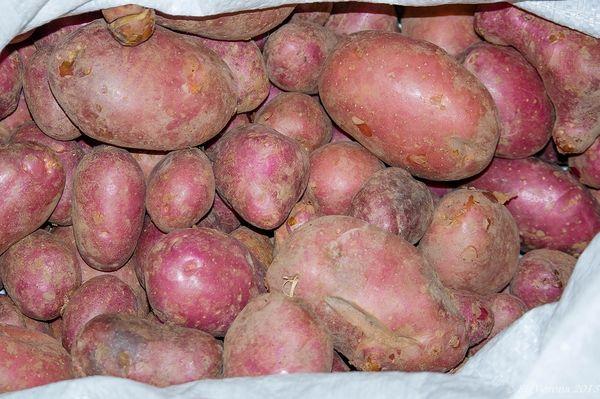
Before planting, Zhuravinka tubers are sorted and graded. The best specimens are considered to be those roughly the size of a chicken egg. Small ones won't have enough nutrients to produce a good harvest, and large ones will rot. Potatoes that show signs of disease, pest infestation or mechanical damage should not be planted.
A month before planting, the potatoes are treated with a weak solution of potassium permanganate, allowed to dry, then laid out on pallets or wooden boxes and placed in a well-lit room with a temperature of about +10 °C.
After the sprouts reach 10 cm in length, they are planted.
Planting potatoes
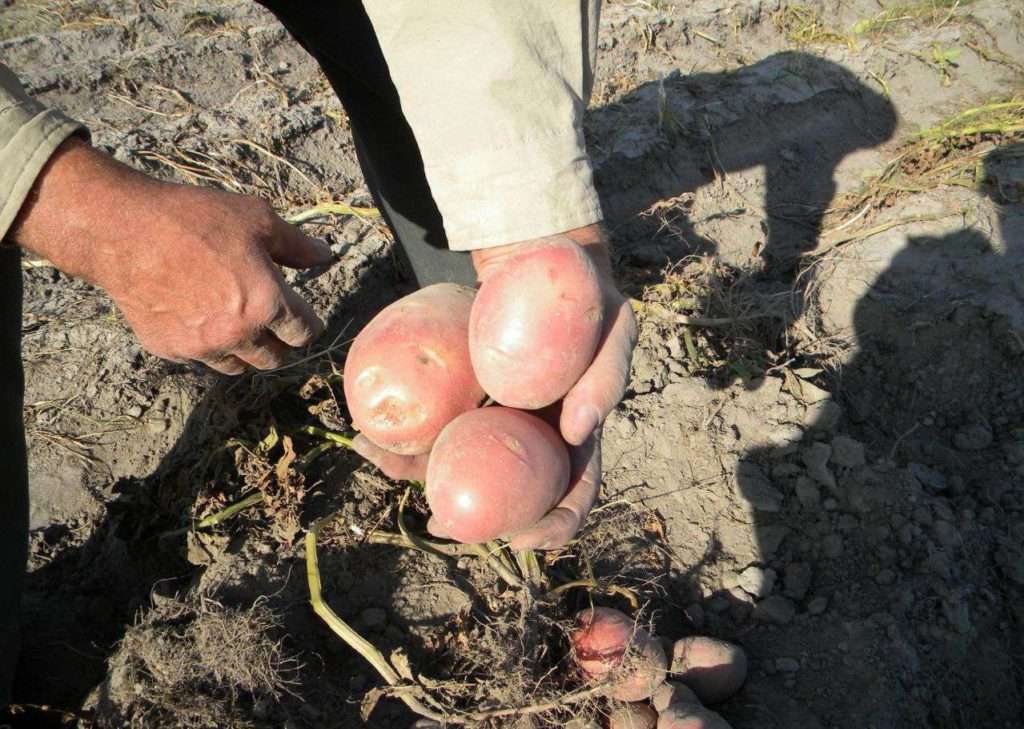
Planting holes for Zhuravinka potatoes are dug to a depth of 20 cm, with a distance of up to 50 cm between them. A few hours before planting, the tubers are taken outside to allow them to acclimate. Afterwards, place 1-2 potatoes in each hole, with the sprouts facing upward. Bury the seedlings carefully, being careful not to damage the sprouts. Afterwards, you can harrow them with a rake.
Recommendations for caring for the variety
The future harvest depends not only on the quality of the planting material and the correctness of planting, but also on subsequent care.
Watering regime
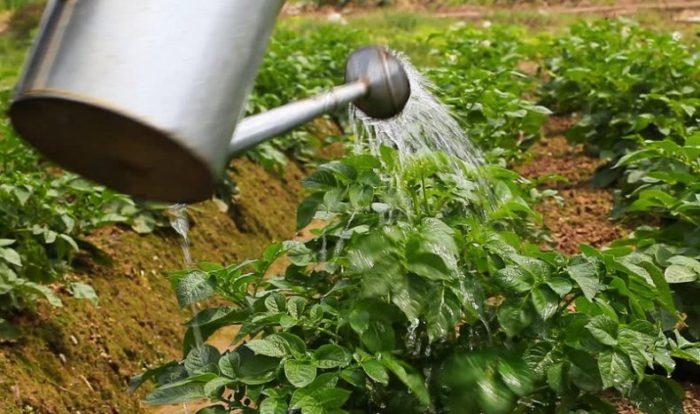
The Zhuravinka potato does not tolerate prolonged drought and requires moderate, regular watering. The amount of watering depends on the frequency of precipitation and the condition of the topsoil. If there is no rain for a long period, water the potatoes in the morning or evening at a rate of 3-5 liters per plant.
Fertilizers
Fertilize Zhuravinka potatoes using the standard method: apply fertilizer twice before and during bud formation, and a third time during active flowering. The following fertilizers are used:
- urea;
- wood ash;
- superphosphate;
- organic fertilizers.
It is necessary to strictly adhere to the recommended dosages and not allow excess nitrogen in the soil, since in this case the potatoes will stop growing and will not form many ovaries.
Hilling up bushes
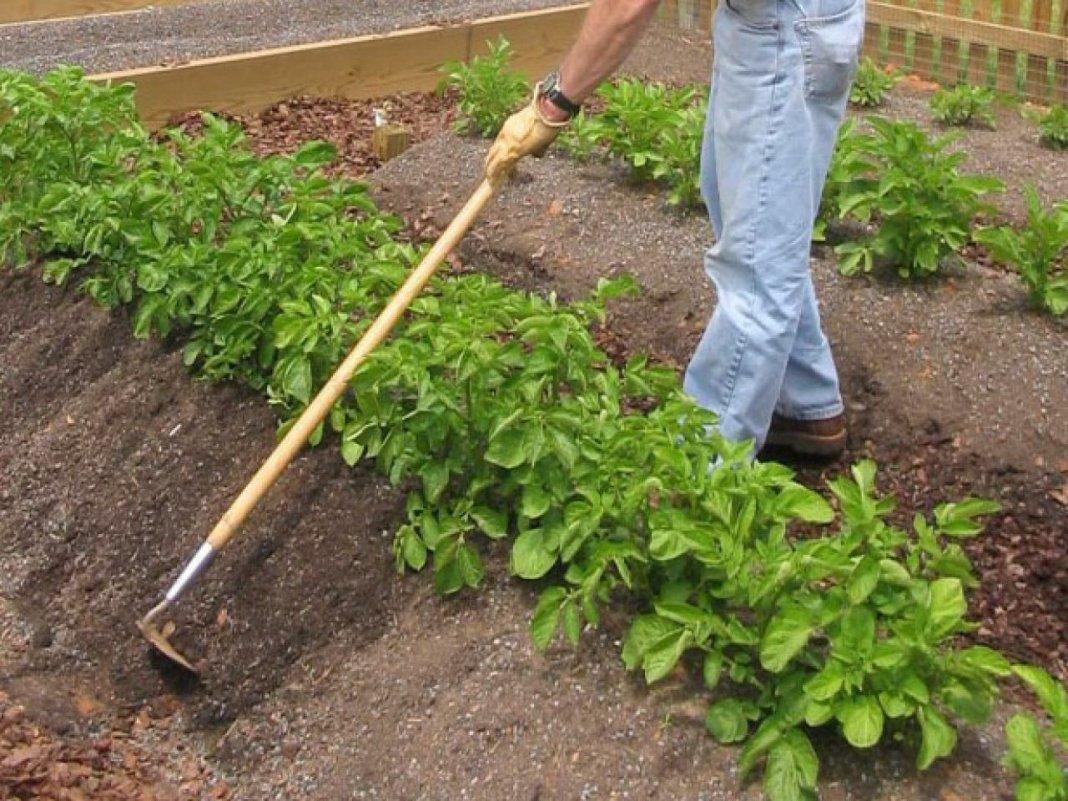
When the potato plants reach a height of 15 cm, they should be earthed up. A small mound is formed around the trunk, and the soil is carefully loosened to ensure better airflow to the root system and moisture circulation. The second earthing up of Zhuravinka plants is done before flowering.
Diseases and parasites
The Zhuravinka potato variety exhibits increased resistance to diseases such as:
- common scab;
- viruses X, M, S;
- blackleg;
- potato nematode;
- Cancer.
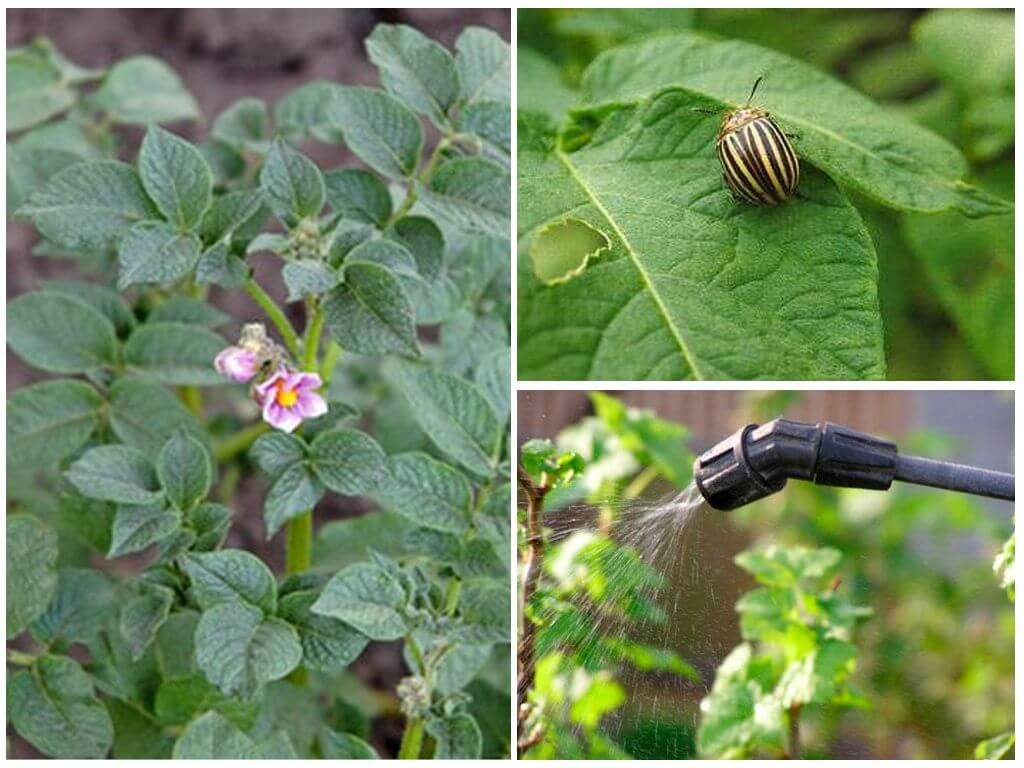
However, plantings are susceptible to late blight, which most often occurs when the soil is too wet. The Colorado potato beetle poses the greatest threat to this potato variety. Also damaging to the future Zhuravinka harvest, if not prevented and protected, are:
- wireworm;
- mole cricket;
- potato moth;
- cicadas;
- moths;
- aphid.
Harvesting
Harvesting begins approximately 100 days after the Zhuravinka potato sprouts. The exact timing depends on the growing region and climate. The condition of the above-ground portion of the plant is a good guide. As soon as the tops turn yellow and begin to dry out, the tubers can be dug up and prepared for storage.
Reviews
Every year, the Zhuravinka potato is gaining increasing popularity among gardeners, who are happy to share their reviews.
Violetta Vladimirovna, a novice gardener: "After purchasing our dacha, we started thinking about what vegetables to grow there. We bought three potato varieties, including Zhuravinka. It showed the best results, even under poor care (my husband and I work and can't devote much time to the garden). We'll probably only grow this variety in future seasons."
Valentina Vladimirovna, pensioner: “We’ve been working on our dacha for a long time; before, we only grew Sineglazka potatoes"But over time, it degenerated and stopped producing good yields. After a long search for a replacement, we chose Zhuravinka. Its characteristics met our family's needs: it stored well until late spring, boiled well, and was suitable for frying. Timely treatments helped protect the potatoes from pests, and so far, we haven't had any problems with diseases. A very successful variety, which I will definitely recommend to friends and acquaintances."
Ignat Vasilyevich, retiree: "I've been growing potatoes for my family's needs my entire adult life. I've tried many varieties, including Zhuravinka. However, I've had to limit my plantings to a minimum. Doctors prescribed a diet for my daughter and wife, but this variety is high in starch and can't be used for dietary meals. However, the rest of the family enjoys the harvest, which is easy to grow."
Related posts:
 Description of the best potato varieties of domestic and foreign selection
 Description and characteristics of the Rodrigo potato variety, cultivation and care
 Why potatoes aren't growing well in the garden, and what to do to ensure a bountiful harvest
 Description and characteristics of the Krasavchik potato variety, planting and care
 Description and characteristics of the Gulliver potato variety, planting and care
 Description and characteristics of the Bellarosa potato variety, planting and care
 Characteristics and description of the Queen Anna potato variety, planting and care
 Description and treatment of potato diseases, methods of control using folk and chemical means