
- History of strawberry breeding
- Advantages and disadvantages of culture
- Description and characteristics of the Kupchikha variety
- Bush and shoots
- Flowering and fruiting
- Berries ripening time
- Harvesting and storage
- Immunity to diseases and parasites
- Resistance to low temperatures and drought
- Planting technology
- Preparing the site and beds
- The best predecessors and neighbors
- Timing and rules for planting bushes
- Further care
- Watering and fertilizing
- Loosening and weed removal
- Protection from insects and diseases
- Methods of reproduction
- Reviews of the variety
The Kupchikha strawberry variety is remarkable for combining the best qualities of both strawberries and wild strawberries. This delicious and aromatic fruit, developed by Russian breeders, has become very popular among gardeners. Let's look at the main advantages of this hybrid, its planting and care requirements, and effective propagation methods.
History of strawberry breeding
Kupchikha is the first variety of a new strawberry called Zemleklunika. This unique hybrid was developed in the 1980s by Soviet breeders at the Bryansk Agrarian University. The parents used were garden strawberries (with large fruits) and European Muscat strawberries.
The hybrid variety received its name thanks to the elegant and lush appearance of its bushes.
Advantages and disadvantages of culture
The Kupchikha strawberry has both advantages and disadvantages, which you should be aware of before starting to grow it on your own plot.
The undeniable advantages of strawberries include:
- self-fertility exceeding 90%;
- high yield;
- attractive appearance of bushes during flowering;
- no need for additional shelter for the winter due to cold resistance;
- strong immunity to fungal and other types of diseases;
- easy adaptation to changing climatic conditions;
- resistance to mites and other insect pests;
- large size and excellent taste of fruits;
- independent reproduction by tendrils;
- good transportability due to the dense texture of the pulp;
- long shelf life under proper conditions;
- universal use of picked ripe berries.
This variety also has some disadvantages:
- uneven size of ripening fruits, possibility of irregular shape;
- thickening of the planting with abundantly flowering flower stalks - to solve the problem, you need to separate the mother plants from the fruiting bushes;
- the likelihood of incomplete ripening of strawberries in regions with short summers and rainy climates;
- a small number of tendrils, which are sufficient only for renewing plantings;
- decreased yield and reduced fruit size due to non-compliance with agricultural practices.
Description and characteristics of the Kupchikha variety
Let's look at how the Kupchikha strawberry differs from other strawberry varieties grown in our climate. We'll learn about the bush's appearance, the characteristics of the fruit, as well as the specifics of harvesting and subsequent use.
Bush and shoots
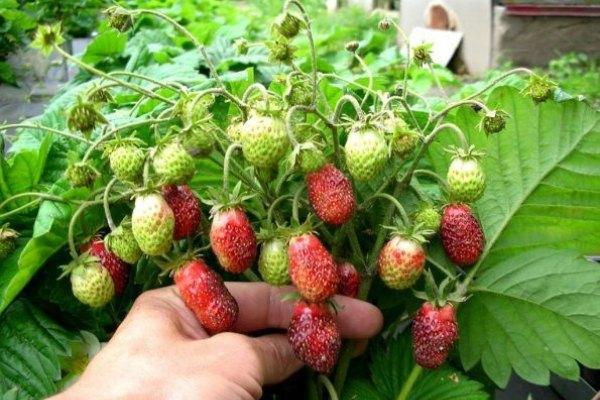
The Kupchikha strawberry bush is vigorous and relatively tall (up to 30 centimeters), spherical in shape, with dense foliage. The leaf blades are green, ribbed and wrinkled, and covered with a light fuzz. They have wide, blunt teeth along the edges.
At the level of the foliage, flower stalks form—upright and long. They droop slightly under the weight of the ripening fruit.
Flowering and fruiting
Kupchikha blooms so profusely that numerous snow-white flowers with a yellow center hide the leaf mass.
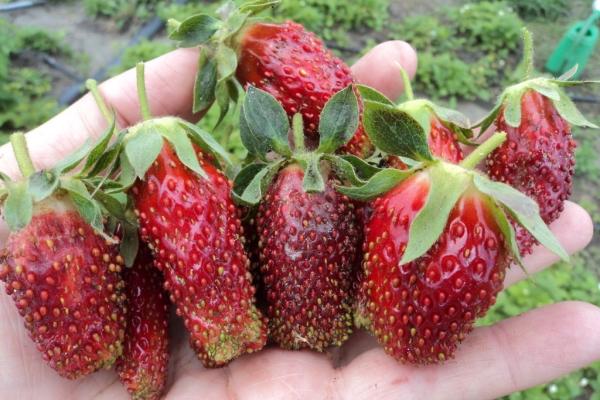
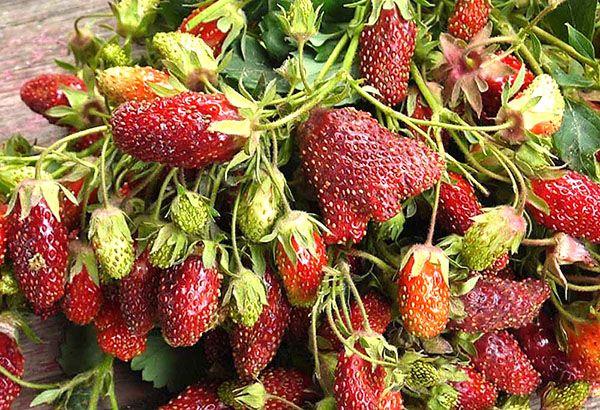
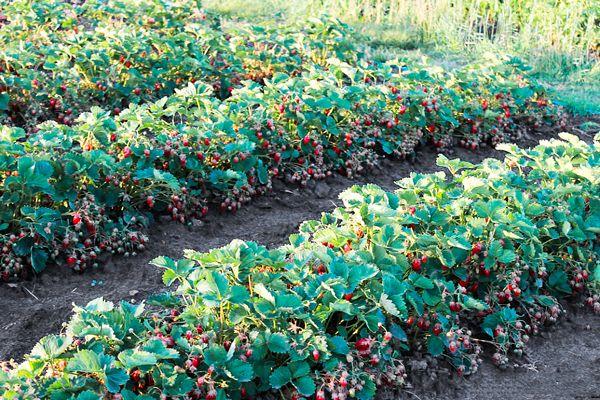
The fruits have an unusual shape—elongated and slightly flattened, forked at the tips. They are a rich, dark red-purple color. Berry size may vary depending on ripening time, climate, and agricultural practices.
Berries ripening time
The Kupchikha variety is characterized by a mid-season ripening period. The first harvest occurs in mid-June.
Harvesting and storage
Due to uneven ripening, the harvest season can last up to seven weeks. Berries should be picked every 1-2 days. Ripe fruits have a thick, firm skin, preventing them from bruising or leaking juice. They also transport well.
At room temperature, the Kupchikha strawberry preserves its properties for 3-4 days. In the refrigerator, this period is longer—up to one week.
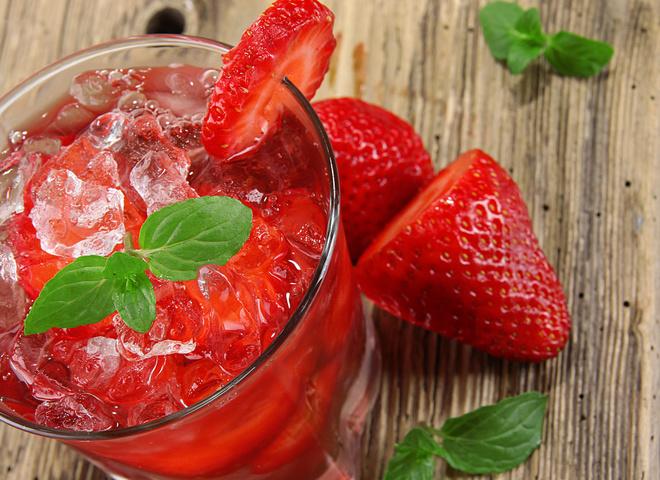
Ripe Kupchikha fruits can be used in a variety of ways: fresh, dried, and frozen, as a filling for desserts, for preserving for the winter, in cocktails and fruit salads, and for making homemade wine.
Immunity to diseases and parasites
Kupchikha hybrid strawberry bushes are practically not susceptible to such common diseases as gray mold and powdery mildew.
Resistance to low temperatures and drought
The Kupchikha strawberry easily tolerates hot and dry summer periods. It also tolerates winter frosts down to -24°C.
Take a look Also
Planting technology
When planting Kupchikha strawberry bushes, it is necessary to adhere to the allotted timeframes and also to select the right neighboring plants.
Preparing the site and beds
Strawberries prefer sunny areas. A semi-shaded, well-ventilated location is also suitable.
Before planting, treat the soil with a disinfectant solution such as copper sulfate or potassium permanganate. Then add simple organic fertilizers—20 liters of compost with two cups of wood ash per square meter.
The best predecessors and neighbors
Kupchikha strawberries should be planted after onions, carrots, garlic, dill, and beets. Good companion plants include radishes, spinach, sorrel, beets, jasmine, ferns, marigolds, and peonies.
Timing and rules for planting bushes
The optimal time for planting Kupchikha strawberry bushes is from mid-April to early May. Before planting, soak the seedlings in water for 2-3 hours and treat the roots with growth stimulants.
Planting should be carried out in the following order:
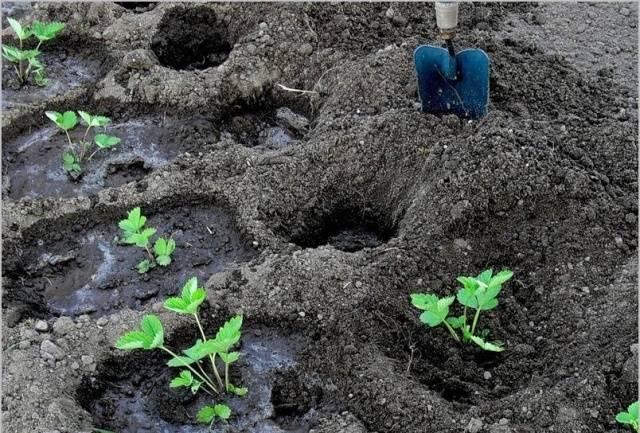
- Dig several holes in the garden bed, spaced 35-40 centimeters apart. Their size should correspond to the volume of the root system.
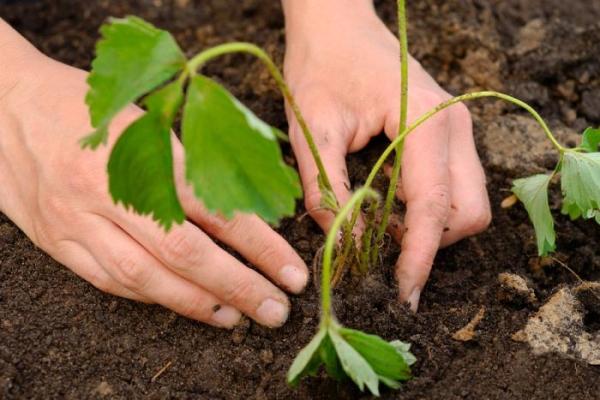
- Place the seedling in the center of the planting hole and straighten the roots.
- Cover the rhizome with soil, leaving the petioles with leaves above its surface, as well as the bud in the center of the bush, called the heart.
- Gently press the soil down with your hands, then use a shovel to form a furrow up to 5 centimeters deep and water it.
- Level the furrow and mulch the soil with hay, sawdust or dried grass.
Further care
After planting the Kupchikha strawberry bushes, you need to properly care for them - water them, feed them, remove weeds and protect them from pests.
Watering and fertilizing
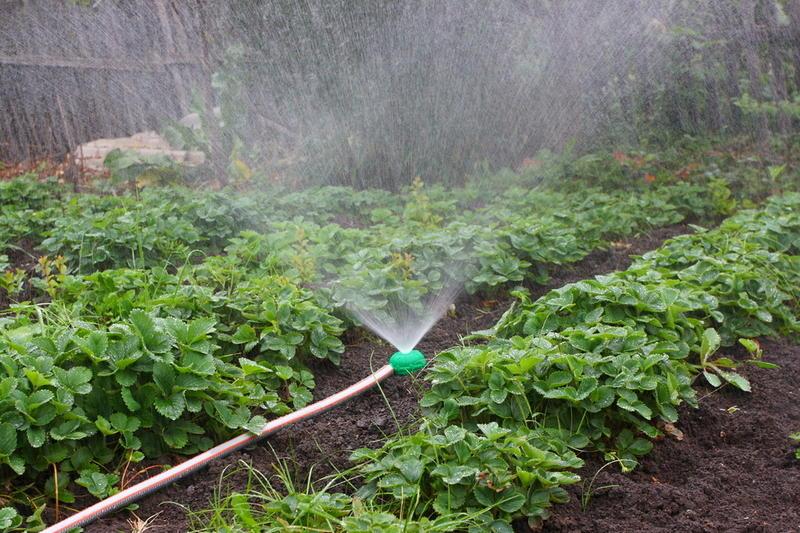
It's important to keep the soil where the Kupchikha strawberry grows moist at all times. Each plant will require 1-2 liters of water.
Until the fruits have ripened, you can water from above, over the leaves, and then under the rhizome.
In the autumn, in the absence of natural precipitation, 2-3 liters of water should be used for each bush.
At different periods, the following fertilizers should be used:
- in spring - complex fertilizers based on nitrogen and minerals;
- during flowering - herbal decoctions with the addition of wood ash and boric acid;
- when buds are forming (in August) - with a urea solution (50 grams of the product per 10 liters of water).
Loosening and weed removal
It is necessary to maintain the soil in a loose state, and also periodically remove weeds that suppress flowering and fruiting of the Kupchikha strawberry.
Protection from insects and diseases
To protect against weevils, strawberry mites and other pests, after harvesting the fruit, treat the bush with Aktara, Karbofos or Intavir.
In case of infection with gray mold, as well as white and brown spot, plants are sprayed with preparations containing copper, whey, or a solution of potassium permanganate.
Methods of reproduction
Since the Kupchikha strawberry is a hybrid variety, propagation by seeds is not suitable - the resulting fruits will not have the qualities of the parent plants.
For propagation, it's best to use tendrils. The first-order rosettes left on them should be dug into the soil. After they root and produce five leaves, the rosette can be separated from the mother plant and transplanted to the desired location.
Reviews of the variety
Alina: "I have several strawberry beds at my dacha. Kupchikha is one of my favorites. The berries are delicious, aromatic, and ripen earlier than the others."
Svyatoslav: "I've been successfully growing strawberry berries for several years. I like their low maintenance and ease of care. The ripe berries store well and are suitable for various processing. Kupchikha also actively reproduces via tendrils and doesn't require pollination. The harvest is always abundant."
Related posts:
 Description of the Florence strawberry variety, planting and care features
 How to grow strawberries at home
 Description and characteristics of the Vima Zanta strawberry variety, planting and care scheme
 Description of the everbearing strawberry variety Selva and cultivation technology
 Description and characteristics of the Zenga Zengana strawberry variety, planting and care
 Description of the early-ripening tomato Kupchikha, cultivation and care instructions
 The best varieties and cultivation of everbearing strawberries, fertilizing and propagation
 Timing and rules for fertilizing strawberries, and the best fertilizer for a good harvest