
Almost no dish is complete without onions. Everyone knows what this vegetable looks like, but few people think about how to grow it. Large onion fruits can only be obtained from the first harvest if grown from sets. These planting materials can be purchased at the store or grown from seeds. Gardeners planning to grow onions need to know when to harvest them for storage.
How to determine the ripeness of onions and speed up their ripening
Onion sets are onions from the first harvest grown from seed. They typically reach 1.5-2.2 centimeters in size. To obtain good planting material, it is essential to purchase high-quality seeds with a good shelf life. Each year of storage reduces the germination rate by half.
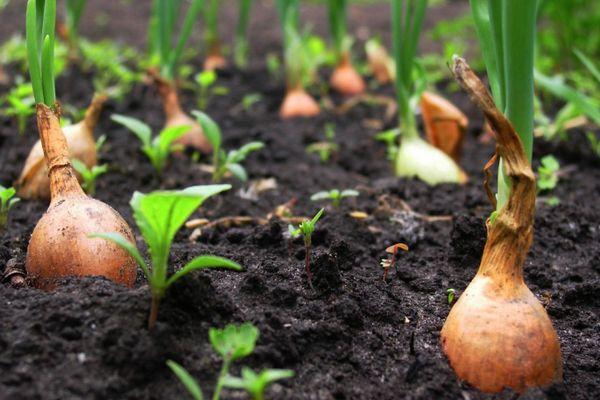
To speed up the ripening process, you can sow onions early, in early February. Maintain the ambient temperature at 18-25 degrees Celsius until the seedlings emerge, then lower it to 14-16 degrees Celsius to prevent the seedlings from sprouting.
It's recommended to plant onion sets in sunny areas of well-cultivated and fertilized soil in late April to early May. It's best to use beds previously used for growing tomatoes or cucumbers.
Plants are spaced 2-3 centimeters apart. If they are planted too close together, the bulblets will be very small and will not produce a good harvest. Planting them too sparsely will allow for vigorous growth, making the onion sets unsuitable for use as planting material.
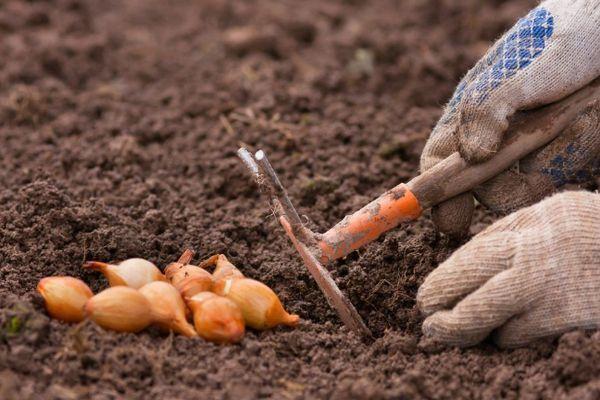
It takes an average of 70 days for onion sets to mature. In sunny, dry weather, this period may be slightly shorter. You can tell when onions are ripe by the following indicators:
- the feather begins to turn yellow;
- the tops become soft and fall onto the ground;
- the fetal neck becomes thinner.
When these signs appear, it's time to harvest the onions.
Preparing for cleaning
Failure to properly harvest onion sets can reduce their shelf life. In temperate climates, harvesting occurs 70-90 days after planting. Onions planted in April will be ready for harvesting in July or early August. Typically, only two-thirds of the plants show signs of ripening. Some time before harvesting, you can clear the tops of the onions of soil and allow the outer scales to dry. This will help determine the number of fully formed onions.
If the temperature is favorable for harvesting, the onion sets need to be helped to ripen. A week before the predetermined harvest date, dig up the soil beneath the bulbs to prevent them from absorbing nutrients from the roots. This will speed up the formation of the surface scales, which will help the onions store well.
The remaining upright stems should be carefully "pulled down." This will stop leaf growth and help the bulb ripen. Mowing down the stems is not recommended, as this can damage the bulb.
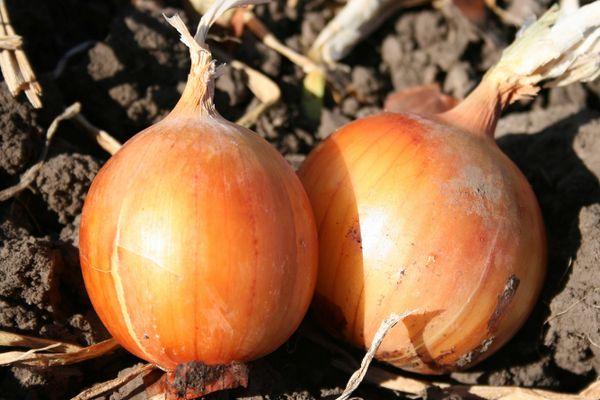
What weather should I start cleaning in?
When planning your onion harvest, check the forecast for the near future. Onion sets should be harvested on clear days. Typically, dug-up onions are left on the ground for the immediate future to ripen and dry.
Harvesting is not recommended in damp weather. If the onions are ready to harvest and clear days are not forthcoming, it's best to dig them up. Remove any dirt from the bulbs and place them outside to dry under cover.
If the summer is rainy, the onion sets are harvested at the standard time, without waiting for the bulbs to fully form. This is the only way to prevent them from rotting and completely losing the harvest.
Trimming
Onions can be harvested with the greens still attached. The leaves and roots are cut only after they're completely dry, leaving 2-3 centimeters on each side. For onions, the greens are removed if you plan to store them in braids. There are many ways to braid onions, but experience shows that storing them with the greens trimmed off is best. Inadequately dried greens can cause the bulb to rot, potentially resulting in the loss of several onions.
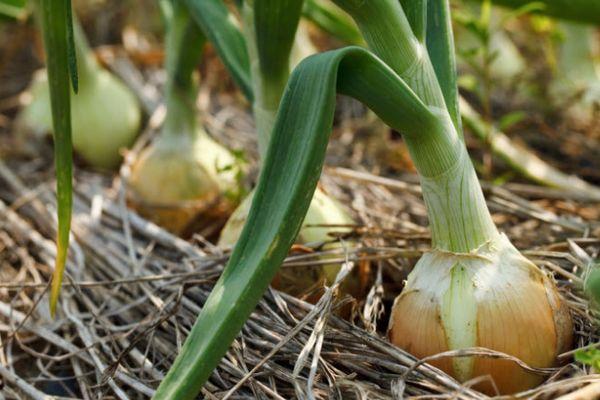
Everyone knows how to trim onions before planting them in the ground. To remove the dry neck, it's better to use pruning shears rather than a knife. Be careful not to disturb the growing point.
When to stop watering
Stopping watering is one of the stages in preparation for harvesting. During the first stage of onion ripening, watering and fertilizing are done once every 7-10 days, then the frequency of soil watering is reduced. Approximately four weeks before harvest, watering should be stopped completely. This is because onion bulbs develop poorly in wet soil, as all their energy is devoted to developing the tops. As soon as the soil dries out, all the moisture absorbed through the roots begins to stimulate bulb growth.
When fruit is actively forming, it is very important to prune the "arrows" in a timely manner, otherwise there may be problems with preserving the harvest.
Cleaning times
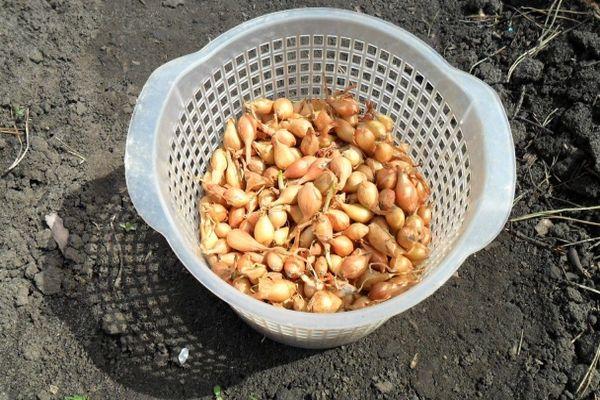
It's impossible to predict the exact date for harvesting onion sets. On average, they reach full maturity two months after planting, but the timing of harvesting depends on the following factors:
- climatic conditions of the region;
- landing dates;
- seed size;
- varieties;
- quality of care.
Without experience, it is very difficult to determine whether the seed onions are ready for harvesting, so it is better to rely on mathematical calculations and the recommendations of seed sellers.
Harvesting a week early will prevent the bulbs from forming protective scales, making it difficult to preserve the harvest. Harvesting late will also result in the plants developing new root systems, which will also negatively impact shelf life.
Lunar calendar
The phases of the moon have a powerful influence on plant development. The moon affects each crop differently, so even experienced gardeners sometimes consult the lunar calendar before harvesting onion sets.
If the weather is dry on favorable harvesting days, there will be no discrepancies between the lunar calendar and the harvest. When the moon is in a favorable phase and there's heavy rain outside, you need to make your own decisions, guided by principles of practicality.
Country life hack
Some gardeners, to obtain an early harvest of select onions, prefer to plant sets in October. This method has its advantages:
- the issue of storing planting material in winter is removed;
- the harvest ripens at least 2 weeks earlier;
- by the time pests appear, the plant is already fully formed;
- The bulbs are much larger than those from sets planted in the spring.
Plant the onion sets before winter at a depth of 5 centimeters. It's best to choose a site in open ground, on a hill. With the onset of the thaw, snow melts faster in such areas, and meltwater doesn't stagnate.
At the first frost, cover the bed with plastic wrap to protect the crop from freezing. Despite their cold tolerance, onions are susceptible to frost, so they should be planted under the following temperature conditions:
- air temperature: +10-12 degrees;
- soil temperature at a depth of 10 centimeters is more than 5.
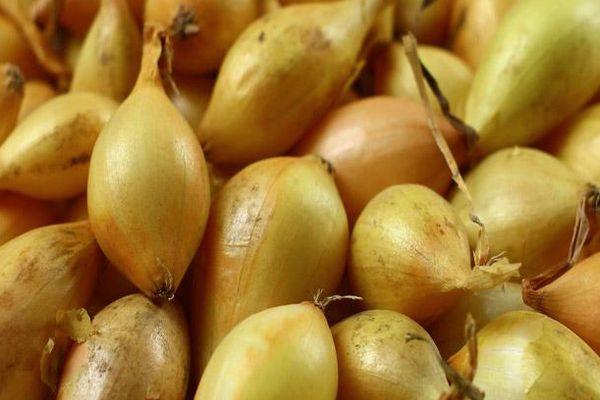
Much depends on the choice of planting material. The best varieties of onion sets for winter planting in the temperate zone are:
- Senshui;
- Red Baron:
- Ellan;
- Sturon.
Take a look Also

Drying
Drying the onion sets is the most crucial step before storing the harvest. In clear weather, the onions are dried outdoors in direct sunlight for a week. Ultraviolet light acts as a natural disinfectant.
The bulbs are left on the ground or laid out in small pieces on a cloth. To protect them from the morning dew, they are covered with plastic or lutrasil. To ensure even drying, the bulbs should be turned daily.
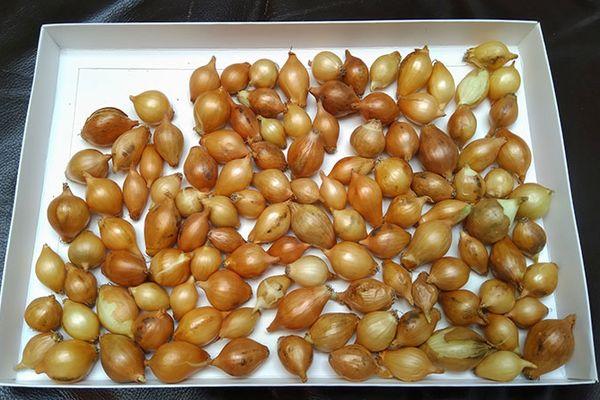
In damp weather, the vegetable should be stored in a ventilated area. However, this will double the time it takes to prepare the sets for storage.
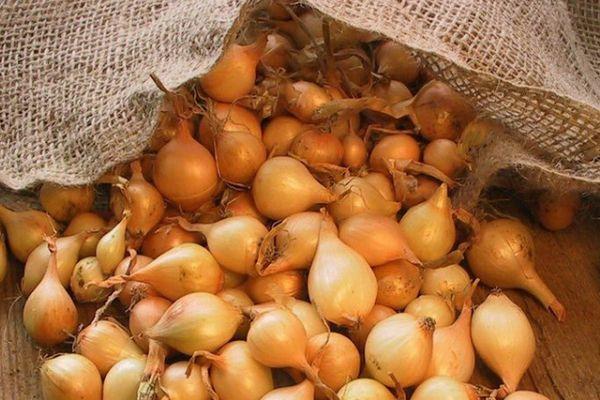
To grow a solid harvest of select onions in the future, you need to know how to store onion sets before planting. After complete drying onions The tops are trimmed and the roots are pruned, leaving stumps of 2-3 centimeters. Damaged fruits and onions with unformed scales are then discarded, and the planting material is sorted.
The selected bulbs are placed in boxes, bags made of breathable fabric or vegetable nets in portions of 2-3 kilograms and left in a dry, dark room.
It's important to check the condition of the onions periodically. This is because if even one bulb rots, the entire batch could be lost.
Related posts:
 When to harvest leeks from the garden for storage, ripening times
 How and when to plant onions to get large bulbs
 50 types and varieties of perennial onions with descriptions, cultivation, and care
 The beneficial properties of white onions, description of varieties, cultivation and care
 Description of the best varieties of onions, planting and care in open ground
 Planting, caring for, and growing onion sets in open ground, diseases, and how to save the crop
 Description of the Exhibition onion variety, growing from seedlings, planting and care
 Description of varieties and cultivars of wild onions, the subtleties of cultivation